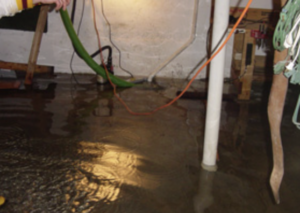
24/7 Emergency Basement Flood Cleanup Upper Darby Services in Springfield, PA
A flooded basement can quickly damage flooring, drywall, insulation, stored belongings, electrical systems, and the structural materials beneath your home. If you need basement flood cleanup in Upper Darby, the priority is to stop the source of the water when possible, remove standing water, dry affected materials, and address hidden moisture before it causes additional damage.
PuroClean of Springfield provides professional water removal and drying services for homeowners in Upper Darby and surrounding Delaware County communities. Whether the flooding came from heavy rain, a plumbing failure, a sump pump problem, or water entering through the foundation, professional cleanup can help reduce secondary damage and restore the affected area safely.
Call 610-541-8606 for Free Estimate
Basements are particularly vulnerable to water damage because they are located below or partially below ground level. Water can enter from outside the home, originate from plumbing inside the property, or accumulate when a drainage system cannot keep up with incoming water.
Common causes of basement flooding include:
The source of the flooding matters because it can affect how the basement should be cleaned and which materials can safely be restored. A clean-water plumbing leak, for example, requires a different approach than contaminated water from a sewage backup.
Once you discover water in the basement, reducing continued water entry is the first priority. If the flooding is caused by a plumbing fixture or supply line and it can be done safely, shut off the appropriate water supply.
Do not enter standing water when electrical outlets, appliances, extension cords, or an electrical panel may have been exposed. Electrical hazards should be addressed before entering the affected area.
If conditions are safe, move undamaged belongings away from the affected area and avoid placing cardboard boxes, furniture, or other porous materials directly on wet flooring.
For significant flooding or rapidly accumulating water, professional emergency water removal can begin the extraction and drying process before moisture spreads further through the structure.
Removing visible standing water is only the first stage of basement flood cleanup. Water can move underneath flooring, into wall cavities, behind baseboards, and through porous building materials even when the floor appears mostly dry.
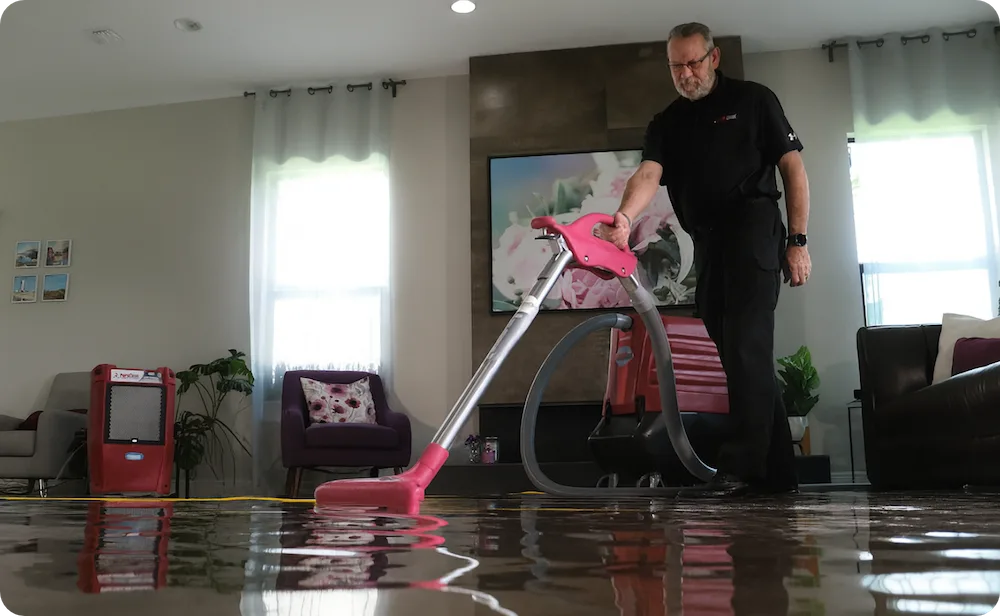
Professional water extraction equipment can remove larger volumes of water much more efficiently than household wet vacuums or towels. Extraction also reduces the amount of moisture that must later be removed through evaporation and dehumidification.
Depending on the extent of the flooding, technicians may use water extractors, moisture meters, thermal imaging tools, air movers, and commercial dehumidifiers to locate and remove moisture throughout the affected area.
A basement is not necessarily dry simply because the standing water is gone. Concrete, wood framing, drywall, insulation, carpeting, subflooring, and other materials can retain moisture after extraction.
Professional structural drying in Springfield combines controlled airflow and dehumidification with moisture monitoring to remove water that has been absorbed into building materials.
Drying conditions are monitored throughout the process rather than relying only on how surfaces look or feel. Moisture meters can help determine whether materials have returned to appropriate moisture levels before equipment is removed or reconstruction begins.
Basement flooding often extends beyond the areas where water is immediately visible. Moisture can travel through porous materials and settle in enclosed spaces where it evaporates slowly.
Hidden moisture may be found:
This is one reason professional water damage restoration in Springfield typically includes moisture inspection in addition to visible water removal.
Every basement flood is different, but a professional cleanup generally follows several core steps.
The affected area is evaluated to determine where the water originated, how far it traveled, which materials are wet, and whether there are safety concerns or contamination issues.
When possible, the source of ongoing water intrusion is stopped or controlled before restoration continues. This could involve shutting off a plumbing supply, addressing a failed appliance, or coordinating repairs to the source of the leak.
Professional extraction equipment removes water from floors, carpeting, and other affected surfaces. Removing as much liquid water as possible helps make the drying process more efficient.
Some materials may need to be removed depending on the type of water, duration of exposure, level of contamination, and extent of damage. Saturated insulation, carpet padding, drywall, or other porous materials may not always be salvageable.
Air movers and dehumidifiers are positioned according to the size and configuration of the affected area. Moisture levels are monitored as water evaporates from structural materials.
Cleaning methods depend on the source and category of water involved. Contaminated water requires additional precautions compared with clean water from a plumbing supply line.
Technicians can periodically measure moisture levels in affected materials to determine whether additional drying is necessary.
Homeowners dealing with basement water damage can also learn more about PuroClean’s basement flood cleanup services.
Not every basement flood can be prevented, but routine maintenance can reduce several common sources of water intrusion.
Homeowners can also review general flood-preparedness guidance from Ready.gov.
Small spills on a nonporous basement floor can sometimes be handled without professional restoration. More substantial flooding is different because water may extend into materials and spaces that are difficult to inspect or dry with household equipment.
Consider professional basement flood cleanup when:
PuroClean of Springfield provides professional basement flood cleanup and water damage restoration for homeowners in Upper Darby and surrounding communities. The goal is not simply to remove visible water but to identify affected materials, remove trapped moisture, and properly dry the structure.
Cleanup should begin as soon as conditions are safe and the source of incoming water has been controlled. The longer water remains in contact with drywall, flooring, insulation, wood, and personal belongings, the greater the opportunity for moisture to spread and materials to deteriorate.
A very small amount of clean water may sometimes be manageable with household equipment. Professional help is generally more appropriate when there is substantial standing water, widespread saturation, possible contamination, electrical concerns, or moisture inside walls and flooring.
Drying time depends on the amount of water, the materials affected, humidity, airflow, temperature, and how quickly extraction begins. Professional restoration companies monitor moisture levels during drying rather than relying on a fixed number of days.
Not automatically. Whether drywall can be dried or should be removed depends on how wet it became, how long it remained wet, the type of water involved, and the condition of the material. Moisture readings and inspection can help determine the appropriate approach.
Persistent moisture creates conditions that can support mold growth. Prompt water extraction, drying, humidity control, and attention to hidden moisture can help reduce the risk of mold developing after a basement flood.
Coverage depends on the cause of the water damage and the specific insurance policy. Sudden plumbing failures may be treated differently from groundwater, surface flooding, sewer backups, or long-term seepage. Homeowners should document the damage and contact their insurance carrier to determine what their policy covers.
If your basement has flooded, removing the visible water is only part of the cleanup. Moisture may remain inside flooring, walls, framing, and other building materials even after the surface appears dry.
PuroClean of Springfield provides professional water extraction, structural drying, and basement flood cleanup for property owners in Upper Darby and surrounding Delaware County communities.
Call 610-541-8606 for Free Estimate
:::
What Our Customers Say:
Find answers to common questions about our services
You can check the walls and ceilings for water stains, the floors for warping and buckling, and the pipes for corrosion, leaks, missing grout, and mold. Attics and basements may have damaged flooring, mildew or mold, dampness, and odors. Also, be sure to inspect the exterior of the home for cracked roof tiles, puddles, standing water, and whether the ground is sloping away from the house.
First, if safe, shut off the utilities in your home to avoid further damage. Don’t enter your home if it has suffered structural damage. Don’t walk through floodwater if electricity hasn’t been turned off, and avoid contaminants. Next, contact a water-damage restoration company, such as PuroClean of Springfield, PA, as soon as possible. Don’t wait, as water can cause mold and irremediable damage to the wood, walls, and carpet. Then, depending on the extent of the damage and the recommendation of the remediation company, contact your insurance provider to start the claim process.
There are many variables that determine whether a flooded property can be saved: the amount of water, and even more important, the amount of time the water was in/around the property. Every situation is different, and PuroClean of Springfield, PA expert restoration professionals can determine what can be salved once one site.
Property water damage can pose several dangers including structural instability, electrical hazards, mold and mildew growth leading to health issues, contamination from sewage or chemicals, and potential collapse of weakened structures.
Water flooding can cause extensive damage including structural damage to walls, floors, and foundations, damage to personal belongings, electrical hazards, and potential health risks from mold and bacteria growth. The longer water sits, the more severe the damage becomes.
Water damage can result from unexpected leaks, flooding from storms, plumbing failures, or appliance malfunctions. Our certified teams focus on rapid water removal, drying, and stabilization to help prevent further damage and mold growth.
 Explore Our Water Damage Mitigation Services
Even after a fire is extinguished, smoke, soot, and odor can continue to affect your home. Fire damage restoration services address visible damage while also helping reduce lingering effects that impact indoor air quality and surfaces.
Explore Our Fire and Smoke Damage Restoration Services
Mold often develops as a result of unresolved moisture or hidden water damage. Professional mold remediation helps identify affected areas, contain growth, and restore healthy indoor conditions.
Explore Our Mold Removal and Remediation Services
Biohazard situations, including crime scene cleanup and virus decontamination, require specialized cleaning and handling to protect health and safety. Biohazard cleanup services address contamination using proper protocols and professional care.
Explore Our Biohazard Cleanup Services
In some cases, property damage requires repairs beyond cleanup and mitigation. Reconstruction services help restore damaged areas of the home after water, fire, or other incidents, supporting a smoother transition from damage to recovery.
Explore Our Reconstruction Services Services
When water gets into a business space, the biggest losses often come from what it reaches—equipment, inventory, electrical systems, and critical infrastructure. PuroClean of Springfield, PA helps Springfield-area owner-operators stabilize the loss, start extraction and drying, and document conditions so you can reopen in phases without sacrificing your assets. Commercial water damage is not just structural—it is the machinery, inventory, electrical systems, and data infrastructure at stake.
Explore Our Commercial Water Damage Restoration Services
In multi-occupancy buildings, mold isn’t just a cleanup issue—it can trigger tenant notifications, access coordination, and owner/insurer reporting. PuroClean of Springfield, PA focuses on source-driven remediation with containment and clearance-ready documentation so you can make defensible re-occupancy decisions.
Explore Our Commercial Mold Remediation Services
For facilities managers, fire damage isn’t just cleanup—it’s a staged recovery with milestones that determine when suites, common areas, and building systems can return to service. PuroClean of Springfield, PA helps you move from assessment to phased re-occupancy with documented scope, coordinated trades, and clear re-entry planning. Commercial fire recovery is a multi-phase process with defined milestones—assessment, stabilization, structural work, and re-occupancy—not a single cleanup event.
Explore Our Commercial Fire Damage Restoration Services
When a workplace biohazard occurs, your priority is protecting staff from exposure and trauma while restoring a safe, normal environment. PuroClean of Springfield, PA provides discreet, access-controlled cleanup with clear documentation to support confident re-entry decisions. Biohazard events in workplaces create an immediate duty-of-care obligation — protecting employees from pathogen exposure, psychological trauma, and the risk of improper cleanup.
Explore Our Commercial Biohazard Cleanup Services
Water damage can result from unexpected leaks, flooding from storms, plumbing failures, or appliance malfunctions. Our certified teams focus on rapid water removal, drying, and stabilization to help prevent further damage and mold growth.
Explore Our Water Damage Mitigation Services

PuroClean of Springfield, PA
(610) 541-8606
1001 Baltimore Pike, Suite 201 #15, Springfield, PA 19064
© 2026 PuroClean. All Rights Reserved.