


Table of Contents
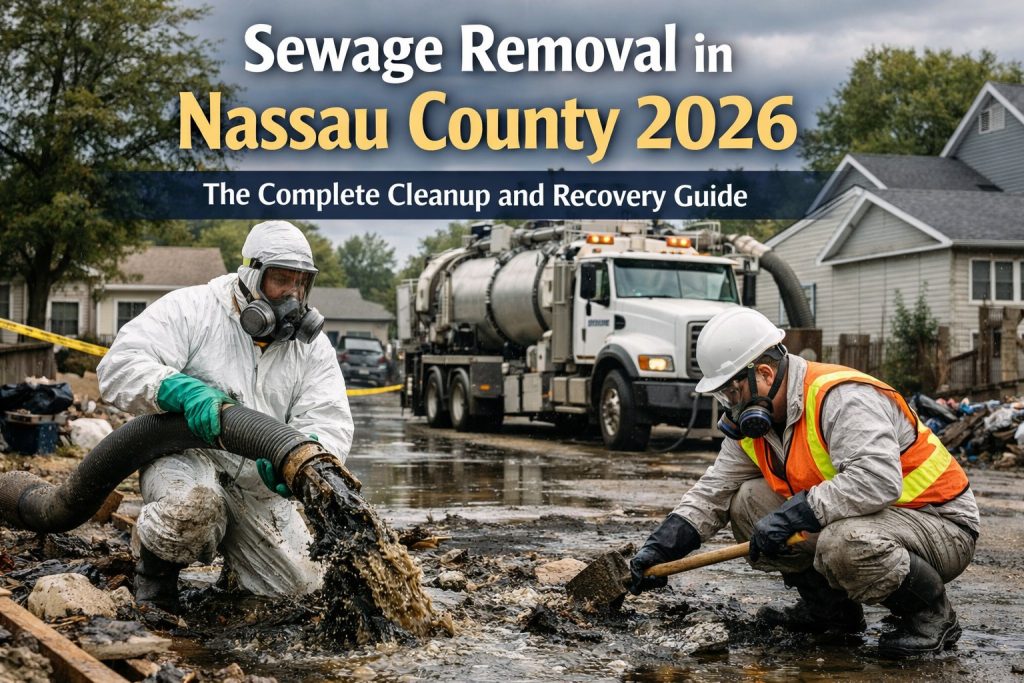
Fast Sewage Removal in Nassau County: The 2026 Homeowner Guide to Safe Cleanup and Fast Recovery
If sewage backs up into your basement, bathroom, crawl space, or commercial property, you are not dealing with ordinary water damage. You are dealing with a contaminated event that can affect your flooring, drywall, air quality, belongings, and health in a matter of hours.
That is why fast sewage removal in Nassau County is one of the most urgent restoration services a homeowner or business can ever need.
Across Long Island and especially throughout Nassau County, sewage backups can happen for many reasons. Aging sewer lines, root intrusion, old cast iron pipes, clogged drains, heavy rain, sump pump failure, and overwhelmed municipal systems all contribute to this problem. In neighborhoods with finished basements and older plumbing systems, the risk can be even higher.
If you are searching for answers after a backup, this guide will walk you through:
- What sewage damage really means
- Why it is dangerous
- What to do in the first hour
- How professionals clean and sanitize the space
- How to protect your home from it happening again
This article is written specifically for homeowners, landlords, and property managers in Nassau County, New York, so the advice is practical, local, and designed for what properties here actually face in 2026.
Why Sewage Backups Are So Serious in Nassau County Homes
A sewage backup is not simply dirty water. It is typically classified as Category 3 water, the most hazardous type of water intrusion in restoration. It can contain bacteria, viruses, parasites, waste matter, chemicals, and other contaminants that make the affected area unsafe.
This is why fast sewage removal in Nassau County is important.
In many Nassau County communities, homes were built decades ago. While these neighborhoods offer character and value, they also often come with older plumbing infrastructure. Add in basement living spaces, seasonal storms, frozen line damage, grease buildup, wipes in drain systems, and tree root invasion, and you have the perfect conditions for a serious backup.
Some of the most common warning signs include:
- Toilets bubbling or backing up
- Slow drains in multiple rooms
- Foul smells coming from floor drains
- Water rising in tubs or showers after flushing
- Gurgling sounds in sinks or toilets
- Basement floor drain overflow
If more than one fixture is acting up at the same time, the problem may not be isolated. It may be tied to your main sewer line and you need fast sewage removal in Nassau County.
Fast Sewage Removal in Nassau County: What To Do in the First 60 Minutes
When sewage enters your home, your response time matters hence fast sewage removal in Nassau County is important.
The first hour can make a major difference in how much damage occurs, how much material can be saved, and how safe the environment remains for your family.
1. Stay Out of the Affected Area
Do not walk through the contaminated water unless absolutely necessary. Sewage can expose you to harmful pathogens and can also hide sharp debris, electrical risks, and slippery surfaces.
2. Shut Off Water if Needed
If the source appears tied to a plumbing fixture, stop water use immediately. Avoid flushing toilets, running sinks, or using showers until the issue is assessed.
3. Turn Off Electricity Only If Safe
If sewage is in a basement or near electrical outlets, appliances, or panels, do not enter the area to shut anything off unless it can be done safely. If not, wait for professionals.
4. Remove People and Pets
Children, seniors, pets, and anyone with respiratory issues or weakened immunity should stay away from the affected area.
5. Call a Professional Restoration Team
The sooner a certified team begins fast sewage removal in Nassau County, the better the outcome for sanitation, odor control, and structural recovery.
6. Start Documentation
Take photos and videos from a safe distance for your insurance claim. Capture standing water, affected materials, damaged belongings, and visible contamination.
Why DIY Cleanup Is a Bad Idea
Many homeowners initially think they can mop it up, disinfect the floor, and move on. Unfortunately, it does not work that way hence fast sewage removal in Nassau County is not to be joked with.
Raw sewage can soak into:
- Carpet and padding
- Drywall and insulation
- Baseboards and trim
- Subflooring
- Wood framing
- Cabinets and built ins
- Stored belongings and porous furniture
Even if the visible water is gone, contamination can remain trapped in porous materials and hidden cavities. This can lead to:
- Persistent odor
- Bacterial contamination
- Indoor air quality issues
- Mold growth
- Long term material damage
The U.S. Environmental Protection Agency notes that contaminated water and wet building materials can create significant health and indoor air risks, especially if cleanup is delayed
For that reason, fast sewage removal in Nassau County should involve more than extraction. It should include containment, disposal, sanitization, drying, and verification.
What Causes Sewage Backups in Nassau County
If you understand what causes a sewage emergency, you are in a better position to prevent the next one.
Aging Sewer Infrastructure
Many Long Island homes have aging drain and sewer systems that become more vulnerable over time. Cracks, corrosion, and collapsed sections can all trigger backups hence it is very important to take fast sewage removal in Nassau County serious.
Tree Root Intrusion
Mature trees are common across Nassau County neighborhoods. Their roots naturally seek moisture and can infiltrate sewer lines through tiny cracks.
Grease and Drain Buildup
Kitchen grease, food waste, wipes, paper towels, and hygiene products can create stubborn blockages in home plumbing and main sewer lines.
Storm Related Overload
During heavy rainfall, municipal systems and private drainage setups can become overwhelmed, especially in lower level or below grade spaces.
Sump Pump or Drain Failure
Homes with finished basements rely heavily on proper drainage systems. When those fail, contaminated water can backflow into living areas.
Improper Flushing Habits
“Flushable” wipes are one of the biggest causes of residential drain blockages. Despite the label, they often do not break down safely in plumbing systems.
These are exactly the kinds of local realities that make sewage removal in Nassau County a highly specialized service rather than a simple cleanup job.
The Hidden Health Risks Homeowners Often Underestimate
The biggest mistake property owners make is focusing only on the mess and not the health danger when it comes to fast sewage removal in Nassau County.
Sewage can carry microorganisms and pollutants that create immediate and delayed risks. Exposure can happen through:
- Skin contact
- Inhalation
- Contaminated surfaces
- Aerosolized particles
- Cross contamination through shoes, tools, or HVAC systems
Possible health concerns include:
- Gastrointestinal illness
- Respiratory irritation
- Skin and eye irritation
- Headaches and nausea from odor and gases
- Increased risk for vulnerable individuals
That is why professional PPE, containment barriers, and disinfection protocols matter so much.
If sewage touches your HVAC system, ducting, or vents, contamination can spread beyond the visibly affected room. This is one more reason why professional fast sewage removal in Nassau County should happen quickly and thoroughly.
How Professional Sewage Cleanup Actually Works
A proper restoration process should be systematic and health focused, not rushed or cosmetic.
Here is what a professional cleanup typically includes:
1. Emergency Assessment
Technicians inspect the source, category of contamination, affected materials, moisture migration, and safety concerns.
2. Containment
Plastic barriers and negative air control may be used to keep contaminants from spreading into clean parts of the home.
3. Extraction and Removal
Standing sewage and contaminated water are removed using professional pumps and extractors.
4. Disposal of Unsalvageable Materials
Porous materials such as soaked carpet padding, insulation, some drywall, and contaminated contents may need to be safely removed.
5. Deep Cleaning and Sanitization
Hard surfaces are cleaned and disinfected using restoration grade antimicrobial products and proper contact times.
6. Structural Drying
Industrial air movers, dehumidifiers, and moisture meters are used to dry framing, subfloors, and hidden cavities.
7. Odor Treatment
Professional deodorization may include air scrubbing, filtration, and odor neutralization methods designed for sewage events.
8. Restoration
After cleanup is complete, the property can move into repair and reconstruction as needed.
This full process is what separates basic water removal from true fast sewage removal in Nassau County.
Can You Save Carpet, Drywall, or Furniture After a Sewage Backup?
This is one of the most common voice search questions homeowners ask:
“Can anything be saved after sewage gets on it?”
The honest answer is: sometimes, but not always.
Usually Not Salvageable
- Carpet padding
- Insulation
- Pressed wood furniture
- Wet drywall below the contamination line
- Stuffed items and porous decor
- Cardboard storage boxes
Sometimes Salvageable
- Hardwood if addressed quickly
- Tile and sealed concrete
- Metal and non porous furniture
- Some solid wood items
- Washable hard surface contents
The longer contamination sits, the more likely materials will need to be removed.
In Nassau County homes with finished basements, this is especially important because lower level materials can trap contamination beneath visible surfaces.
How Long Does Sewage Cleanup Take?
Another common search question is:
“How long does sewage cleanup take in a house?”
The answer depends on:
- The size of the affected area
- How long the contamination sat
- Whether drywall or flooring must be removed
- Whether the source was corrected immediately
- Whether hidden moisture spread behind walls or under flooring
Typical Timelines
- Minor contained issue: 1 to 2 days for mitigation
- Moderate sewage loss: 2 to 5 days for mitigation and drying
- Larger or basement wide contamination: several days plus restoration work
That is why a fast response is so important. Delays increase demolition needs, odor penetration, and microbial risk.
This is another reason why fast sewage removal in Nassau County is not something to postpone until “tomorrow.”
Will Insurance Cover Sewage Damage?
Insurance is often one of the first concerns after the emergency itself.
Coverage can vary based on:
- The source of the backup
- Your homeowner policy language
- Whether you have sewer backup endorsement coverage
- Whether the event was sudden or related to maintenance neglect
What Helps Your Claim
- Fast reporting
- Clear photos and videos
- A documented cause
- A professional mitigation report
- Moisture readings and itemized affected areas
A reputable restoration team should help document the loss in a way that supports your claim process.
If you are dealing with a basement backup in Nassau County, do not throw away everything immediately unless advised. Documentation matters.
How to Prevent Future Sewage Backups in Nassau County
The best cleanup is the one you never need.
Here are practical ways to reduce risk:
Schedule Sewer Line Inspections
A camera inspection can reveal root intrusion, cracks, bellies, and buildup before they become emergencies.
Stop Flushing Wipes
Even “flushable” wipes can contribute to major sewer problems.
Dispose of Grease Properly
Never pour cooking grease or oils down the drain.
Install a Backwater Valve
This can help prevent sewage from flowing back into your home during system overload.
Maintain Sump and Drainage Systems
Make sure pumps, check valves, and drainage routes are functioning properly before the heavy rain season.
Address Slow Drains Early
Small warning signs often appear before major failures.
For homeowners in flood prone or lower elevation parts of Long Island, these prevention steps are especially important.
Why Local Experience Matters in Nassau County Restoration
A sewage emergency in New York is not just about cleanup. It is also about understanding the realities of local homes, local weather patterns, basement construction, occupancy needs, and the urgency families feel when a living space becomes unsafe.
That is where a truly experienced local restoration team makes the difference.
A company that understands Nassau County homes knows how to respond to:
- Basement contamination in finished living areas
- Multi fixture backups from main line blockages
- Post storm sewage events
- Odor and sanitation concerns in attached homes
- Moisture migration into older framing and subfloors
When handled correctly, fast sewage removal in Nassau County becomes more than an emergency service. It becomes a fast, structured path back to safety and normalcy.
Why Homeowners Trust a Professional Restoration Partner
When the water is contaminated, speed alone is not enough. You need a team that understands health risk, proper containment, drying science, and what it takes to return a home to a sanitary condition.
That is why so many local property owners turn to expert restoration providers when the unexpected happens.
Near the end of the process, what homeowners often remember most is not just who arrived fast, but who explained the situation clearly, protected the home properly, and restored confidence during a stressful moment.
That is exactly where PuroClean Emergency Property Recovery stands apart. With a professional approach, emergency response mindset, and strong understanding of local property damage events, PuroClean Emergency Property Recovery helps Nassau County property owners move from contamination and uncertainty to clean, safe recovery.
Final Thoughts: Do Not Wait on Sewage Damage
If there is one thing every homeowner should remember, it is this:
Sewage damage gets worse with time.
What looks like a small backup can quickly become a bigger structural, odor, sanitation, and insurance issue. The right response in the first few hours can save materials, reduce contamination spread, and speed up restoration significantly.
If you are dealing with a backup now or want to prepare before one happens, the smartest move is to act early and work with professionals who understand exactly how these events unfold in Nassau County homes.
When you need fast, safe, and complete fast sewage removal in Nassau County, do not take chances with your health or your property.
Call to Action
Need Immediate Help With Sewage Cleanup in Nassau County?
If your home or business has experienced a sewage backup, overflow, or contaminated water intrusion, get expert help right away.
Call now for emergency response: (718) 301-8055
Fast action can protect your health, limit damage, and help restore your property safely.