


Table of Contents
Mold Cleanup in New York: The Complete 2026 Homeowner Guide
If you own or rent property, mold cleanup in New York is not a small issue you can afford to ignore. In a city and state where aging buildings, basement moisture, roof leaks, heavy rain, winter condensation, and apartment humidity are all common, mold can spread quickly and quietly.
That is exactly why mold cleanup in New York has become one of the most urgent property concerns for homeowners, landlords, co-op boards, property managers, and renters alike in 2026.
Whether you live in Brooklyn, Queens, Manhattan, The Bronx, Staten Island, Long Island, Westchester, or nearby communities, the reality is the same: mold usually starts with moisture, and moisture problems are extremely common in New York properties.
This guide explains what causes mold, how to spot it early, what proper cleanup should involve, and how to keep it from coming back. It is written to be practical, local, and helpful whether you are searching by desktop, asking a voice assistant, or looking for fast answers in AI search.
Why Mold Is So Common in New York Homes and Buildings
New York properties face a unique mix of conditions that make mold growth more likely than many homeowners realize.
A lot of homes and buildings across New York have older plumbing, aging roofing systems, dense layouts, limited ventilation, and below-grade basements. Add in humid summers, snow melt, pipe bursts, window condensation, bathroom steam, and occasional storm flooding, and you have the perfect setup for hidden moisture.
Mold does not need a dramatic flood to start growing. In many cases, all it takes is:
- A slow leak under a sink
- A bathroom fan that does not vent properly
- Damp drywall after a pipe issue
- Water intrusion around windows
- Humidity trapped in closets or corners
- A wet basement after heavy rain
- Roof seepage after winter weather
This is why mold cleanup in New York is often tied directly to water damage restoration and moisture control, not just visible staining on a wall.
What Mold Actually Means for Your Property
Many people assume mold is only a cosmetic issue. It is not.
Once mold starts feeding on organic materials like drywall, wood, insulation, carpeting, ceiling tiles, and dust buildup, it can continue spreading as long as moisture remains present. That means what looks like a small patch in one room may point to a larger issue behind walls, under flooring, above ceilings, or inside crawlspaces.
Mold can impact:
- Indoor air quality
- Structural materials
- Paint and finishes
- HVAC performance
- Property value
- Tenant comfort and confidence
- Real estate transactions and inspections
If left untreated, what starts as a manageable mold cleanup in New York can become a much more expensive restoration project.
Early Signs You May Need Mold Cleanup in New York
One of the biggest mistakes property owners make is waiting for “proof” before acting. Mold often shows up indirectly before it becomes obvious.
Here are some of the most common warning signs:
1. A Musty or Earthy Smell
If a room smells damp, stale, or “old” even after cleaning, hidden mold may be present.
2. Visible Spots or Discoloration
Mold can appear black, green, gray, white, or even orange depending on the surface and moisture source.
3. Recurring Bathroom or Basement Stains
If discoloration keeps returning after you wipe it down, the moisture issue has likely not been resolved.
4. Peeling Paint or Bubbling Drywall
Water intrusion behind walls often creates the right conditions for concealed growth.
5. Warped Baseboards or Swollen Materials
These are common clues that water has been sitting where it should not.
6. Mold After Water Damage
If your property recently had a leak, flood, sewage backup, or appliance overflow, mold may begin growing within a short period if drying was incomplete.
When these issues appear, delaying action usually makes the mold cleanup in New York more invasive and more expensive.
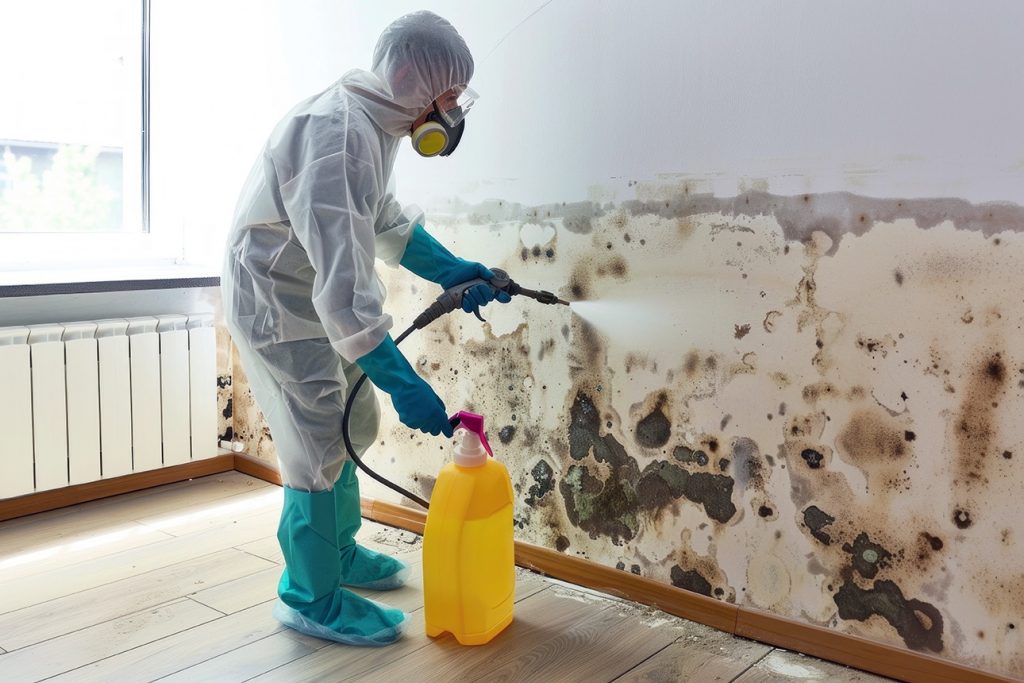
Mold Cleanup in New York: What Proper Cleanup Should Include
A lot of people search for “how to remove mold” and end up with surface-level advice that only treats the symptom, not the source.
Real mold cleanup in New York should focus on two things:
- Removing the mold safely
- Eliminating the moisture that caused it
If either step is skipped, the mold often returns.
A proper cleanup process usually includes:
Inspection and Moisture Detection
The first step is identifying where the moisture is coming from and how far the issue has spread.
Containment
Affected areas should be isolated when necessary so spores do not spread into clean parts of the property.
Removal of Contaminated Materials
In some cases, porous materials such as drywall, insulation, carpet padding, or ceiling tiles may need to be removed if they are heavily affected.
Cleaning and Surface Treatment
Hard, salvageable surfaces are cleaned using appropriate remediation methods.
Drying and Dehumidification
Moisture must be fully addressed or the problem can return.
Repairs and Prevention
Leaks, ventilation problems, or structural moisture entry points should be corrected.
According to the United States Environmental Protection Agency, the key to mold control is moisture control, and water damaged areas should be dried within 24 to 48 hours whenever possible and this is important for mold cleanup in New York.
Can You Clean Mold Yourself or Should You Call a Professional?
This is one of the most common voice-search questions homeowners ask in 2026:
“Can I clean mold myself in my New York home?”
The honest answer is: sometimes, but not always.
Very small, isolated surface mold on non-porous materials may be manageable if the moisture source is minor and already resolved.
But professional help is strongly recommended when:
- The affected area is larger than a small isolated patch
- The mold keeps returning
- The mold followed water damage or flooding
- The source is hidden behind walls or under floors
- HVAC contamination is possible
- The area includes insulation, drywall, or carpet
- There is a sewage or contaminated water component
- The property is occupied by children, seniors, or anyone with respiratory sensitivity
In dense New York housing, especially apartments, attached homes, brownstones, and multi-unit buildings, mold problems often travel beyond the room where they are first seen.
That is one reason mold cleanup in New York often requires a more strategic approach than a simple wipe-down.
The Most Common Places Mold Hides in New York Properties
Many New York homeowners only look where the mold is visible. The smarter move is to think like moisture.
Here are the most common local trouble spots:
Basements
Particularly common in older New York homes and Long Island properties after heavy rain or poor drainage.
Bathrooms
Steam, poor ventilation, cracked grout, and hidden pipe leaks make bathrooms a year-round hotspot.
Kitchens
Leaks under sinks, behind dishwashers, and around refrigerators are frequent causes.
Windows and Exterior Walls
Winter condensation and insulation gaps can create mold around trim and corners.
Attics
Roof leaks, poor airflow, and trapped heat often lead to hidden mold overhead.
Laundry Areas
Washer hoses, dryer vent issues, and humidity buildup can create ideal conditions.
Closets and Utility Rooms
Poor airflow and proximity to exterior walls often make these areas vulnerable.
If your home or building has experienced any recurring dampness in these areas, it is worth taking seriously before the issue spreads.
What Causes Mold to Come Back After Cleanup?
A lot of property owners think the mold was “removed,” only to see it return weeks or months later.
That usually happens because the cleanup was incomplete or the source of moisture was never solved.
The most common reasons mold returns include:
- The leak was never fully repaired
- Wet building materials were left in place
- Humidity stayed too high
- The HVAC system continued circulating spores
- A hidden cavity remained damp
- The cleanup focused on appearance instead of remediation
This is why mold cleanup in New York should never be approached as a cosmetic cleaning job alone. If the moisture remains, the mold often does too.
How New York Weather and Building Styles Make Mold Worse
Local relevance matters a lot in search now, especially for AI results. So here is the practical New York reality many generic blogs miss.
Humid Summers
New York summers can trap moisture indoors, especially in apartments with weak ventilation or window units.
Winter Condensation
When warm indoor air meets cold window glass or poorly insulated walls, moisture forms and mold follows.
Storm Related Water Intrusion
Heavy rain, roof failures, and overflowing gutters often lead to hidden saturation.
Old Building Stock
Many New York homes and mixed-use buildings have aging infrastructure that creates chronic moisture risks.
Tight Living Spaces
In apartments and attached homes, moisture buildup can spread quickly and ventilation can be limited.
This is why local property conditions matter just as much as cleanup methods.
How Much Does Mold Cleanup Usually Cost in New York?
Cost is one of the first things people ask, and it is a fair question.
The truth is, mold cleanup pricing in New York depends on several factors:
- Size of the affected area
- Type of materials impacted
- Whether demolition is needed
- Whether the moisture source is active
- Whether the issue involves a basement, attic, or HVAC area
- Whether water damage restoration is also needed
- Accessibility of the affected space
Small, isolated jobs are very different from multi-room or hidden contamination situations. The earlier you address mold, the more likely you are to avoid larger reconstruction costs.
For homeowners, the most expensive mistake is not necessarily hiring help. It is waiting too long.
How to Prevent Mold in New York Homes Going Forward
Prevention matters just as much as mold cleanup in New York. In many cases, a property does not have a mold problem as much as it has a moisture management problem.
Here are the smartest ways to reduce risk:
Fix Leaks Immediately
Do not wait on pipe drips, roof leaks, or appliance issues.
Dry Water Damage Fast
Wet materials should be addressed as quickly as possible after any incident.
Use Bathroom and Kitchen Ventilation
Run fans consistently and make sure they are venting correctly.
Control Indoor Humidity
Dehumidifiers can make a major difference in basements and damp rooms.
Check Around Windows and Exterior Walls
Condensation and drafts can signal trouble spots.
Inspect Hidden Areas Periodically
Under sinks, behind appliances, and around utility spaces are all worth checking.
Watch for Repeated Odors
A recurring musty smell is often one of the earliest clues that something is wrong.
Preventive awareness is one of the best long-term investments a New York homeowner can make.
When to Act Fast Instead of Waiting
If you are unsure whether your issue is urgent, here is the simplest rule:
If moisture is active, treat it as urgent.
You should move quickly if:
- You had recent water damage
- You smell mold but cannot find the source
- The affected area is spreading
- Drywall or ceilings feel soft
- The issue is in a child’s room, basement, or HVAC zone
- You are preparing to sell or rent the property
In a market like New York, delaying a property issue rarely makes it cheaper or easier.
That is especially true when it comes to mold cleanup in New York, where building density, hidden moisture, and older construction can allow problems to grow out of sight.
Final Thoughts on Mold Cleanup in New York in 2026
The smartest way to think about mold is this: it is rarely just about what you see. It is about what allowed it to grow in the first place.
The homeowners and property managers who handle mold best are the ones who act early, fix moisture aggressively, and treat the issue as both a health and property protection concern.
If you are dealing with visible growth, musty odors, water damage, or recurring dampness, mold cleanup in New York should never be delayed or treated as a simple cosmetic issue.
When the job is handled correctly, the goal is not just to remove mold. It is to restore confidence in the safety, cleanliness, and condition of the space.
For property owners who want experienced help, PuroClean Emergency Property Recovery understands how New York moisture issues, structural conditions, and restoration needs intersect. And when fast action matters, PuroClean Emergency Property Recovery can help guide the process from cleanup to recovery.
Call Now for Help
If you need trusted help with mold, moisture, or property damage restoration in New York, call (718) 301-8055 today to schedule service and protect your home before the damage spreads further.