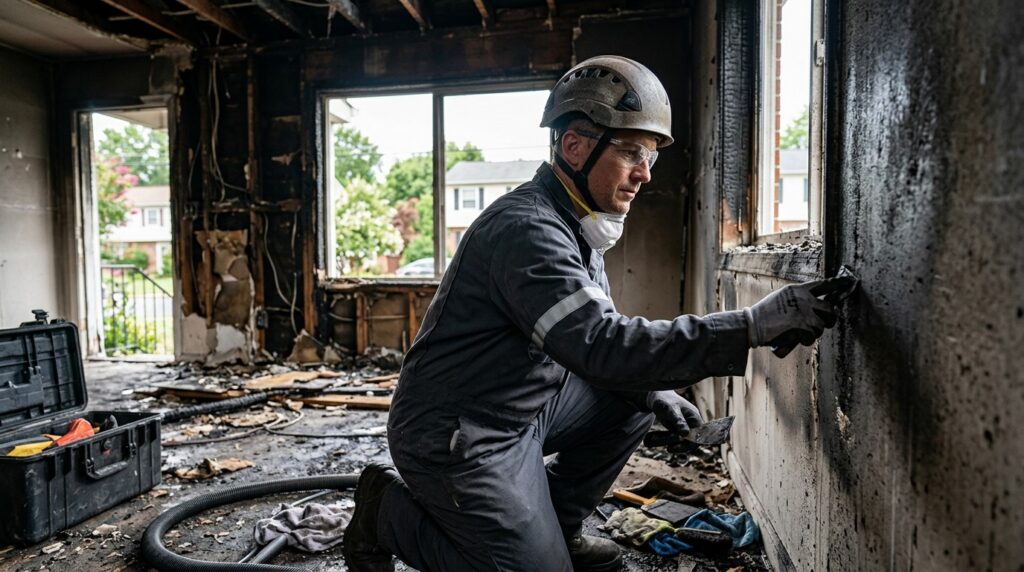
After a house fire, the damage may extend beyond burned walls and belongings. Smoke residue can affect neighboring rooms, and firefighting water can reach beneath flooring or into wall cavities.
Recovery starts with safe access and an assessment of the property. From there, the work may include temporary protection, drying, contents cleaning, and reconstruction. This guide explains what to expect and which questions to ask before work begins.
TL;DR
- Stay outside until responding authorities permit entry, and follow any restrictions.
- Contact your insurer and arrange a professional assessment.
- Leave soot-covered surfaces and affected belongings undisturbed.
- Keep photographs, loss records, receipts, and work agreements together.
- Ask for separate expectations for cleanup, reconstruction, and returning home.
Why Prompt Assessment Matters After a Fire
Damage can continue after the flames are extinguished. Depending on its composition, soot may stain surfaces or contribute to corrosion. Smoke odors can remain in fabrics and other absorbent materials, while prolonged moisture can damage building components.
An early assessment helps identify these concerns and establish priorities. It also provides a basis for deciding what may be cleaned, dried, repaired, or replaced.
Prompt action can help limit further damage, but recovery depends on the condition of the materials. An assessment should explain those limits without promising that every item can be saved.
Make the Property Safe Before Starting Cleanup
Do not enter until the fire department or relevant authorities permit access. Follow restrictions on damaged rooms, floors, and other areas. Permission to enter does not automatically mean the home is suitable to occupy.
Once access is allowed:
- Document from safe locations. Photograph visible damage without moving unstable materials or entering restricted areas.
- Arrange temporary protection. Ask qualified professionals about boarding damaged openings or installing roof coverings.
- Leave utilities alone. Do not reconnect disconnected services or operate affected systems before the appropriate assessment.
- Keep children and pets away. Damaged materials and work areas may remain hazardous.
Avoid climbing onto the roof or attempting structural repairs. Tell our team about any concerns so the necessary specialists can be involved.
Limit Additional Smoke and Soot Damage
Leave soot-covered surfaces for assessment before wiping, scrubbing, or vacuuming them. Cleaning methods need to suit both the residue and the material beneath it. An unsuitable approach can spread residue or damage the surface.
Avoid carrying affected belongings through clean rooms. Ask our team about ventilation and HVAC use before changing airflow through the property.
Smoke odor also requires investigation. Air fresheners may disguise a smell without addressing the material holding it. Depending on the findings, treatment may involve cleaning contents, addressing affected building materials, or removing items that cannot be restored.
Remove Firefighting Water and Dry Affected Materials
Firefighting water may collect beneath flooring, soak insulation, or reach framing that is difficult to inspect. Wet materials need prompt assessment and drying to reduce the risk of further deterioration and mold growth.
Our team identifies affected areas, removes water where needed, and selects drying equipment according to the conditions. Moisture measurements help track progress beyond what can be seen or felt at the surface.
Ask which materials remain wet and how drying completion will be assessed. Repairs should not conceal unresolved moisture.
What Does Professional Fire Damage Restoration Include?
The proposed work should reflect the damage found at your home. Some activities may overlap, and new findings can change the scope.
| Restoration stage | What the proposed work should explain |
| Assessment | Affected areas, immediate concerns, and further inspections needed |
| Emergency protection | Openings or damaged areas requiring temporary protection |
| Water removal and drying | Wet materials, equipment needs, and progress checks |
| Soot and smoke cleanup | Suitable methods for affected surfaces and contents |
| Odor treatment | Suspected sources and the treatment proposed |
| Reconstruction | Materials requiring replacement and the repairs involved |
Confirm which services are included in your agreement and how additional work will be discussed before it proceeds.
Document the Damage and Coordinate With Your Insurance Company
Contact your insurer promptly. Ask about reporting requirements, documentation, emergency work, and any applicable temporary-living provisions. Your insurer determines coverage under your policy; a restoration estimate does not establish what will be reimbursed.
Keep photographs, a loss inventory, receipts, estimates, invoices, and important correspondence together. Identify belongings you hope to recover before contents handling begins.
Where safe and practical, document damaged items and confirm disposal arrangements before they are removed. If urgent removal is needed to address a hazard, coordinate with the professionals managing the loss and ask how the removal will be recorded. Do not postpone necessary safety measures to complete an inventory.
When Does Reconstruction Begin?
Reconstruction follows the relevant cleanup, drying, inspections, and preparation for the area being repaired. It may involve replacing drywall, flooring, insulation, cabinets, or damaged structural components.
Confirm who will carry out the repairs and whether they are included in your agreement. Ask about material selections, availability, and any inspections or permits that affect scheduling.
Before new finishes are installed, ask what evidence supports moving ahead. The repair plan should account for the condition of the underlying materials.
How Long Does Fire Damage Restoration Take?
The schedule depends on the extent of damage and the work required. A limited incident presents different demands from a fire involving structural repairs, widespread smoke residue, and substantial water exposure.
Ask for an estimated schedule for:
- Emergency protection and assessment.
- Cleanup, contents treatment, and drying.
- Reconstruction and remaining inspections.
Cleanup and drying may finish before reconstruction is complete or the home is ready to occupy. Confirm any occupancy restrictions with the relevant authorities and professionals.
An estimate should also explain what could change it, such as concealed damage, material availability, or additional repair requirements. Ask when you will receive updates.

Final Verdict
A house fire is not something you have to face with a bucket and a sponge. The sooner the right crew is on site, the more of your home and your belongings come back from it, and the less you lose to soot, water, and delay. Working in order, with people who handle each stage every week, turns a frightening loss into a plan you can actually follow.
If your home has been hit, professional fire damage restoration in Fredericksburg, VA gives you that plan instead of guesswork, plus a single team held accountable for the result. Reach out to PuroClean of Stafford to start your recovery and get your home back to the way it felt before.
FAQs
Q: How soon should restoration start after a fire?
A: Arrange an assessment as soon as the fire department and relevant authorities have cleared the property for entry. Prompt attention can help limit additional soot, smoke, and water damage.
Q: Can I clean the smoke damage myself?
A: Avoid cleaning soot-covered surfaces before they are assessed. The wrong method can spread residue or cause further staining.
Q: Will my homeowners insurance cover the work?
A: Many policies cover sudden fire damage, but coverage depends on your policy and circumstances. Contact your insurer and document the damage before cleanup begins.
Q: What happens if the water is not dried properly?
A: Some items may be recoverable through specialized cleaning, while others may need replacement. Have affected belongings assessed before discarding them.
Q: How long does full recovery usually take?
A: It depends on the extent of the damage, the drying required, and the amount of reconstruction involved. A property assessment can help establish a more realistic timeline.