After basement flooding, first check whether the area is safe to access and the source of the water. After the area is confirmed safe, removing standing water and drying wet materials quickly can help reduce additional damage.
Begin cleanup promptly and try to dry affected areas within one to two days. This is a response target, not a guarantee that mold will not develop. The steps below explain practical tips on documenting, how cleanup decisions change with the source of the water, and when to get professional help.
TL;DR
– Stay out of standing water near electrical equipment, and call emergency services if the structure appears unsafe.
– Stop the source of the water before moving belongings, pumping water, or trying to clean the basement.
– Photograph the water line, damaged items, and affected rooms before anything is discarded or moved.
– Treat water from drains, toilets, or outdoor flooding differently from a clean appliance or supply-line leak.
– Remove wet items only after separating what can be cleaned from materials that should not stay in the space.
Identify the Source of the Water and Affected Materials
The source of the water helps determine the cleanup approach. A recent supply-line leak may allow a different response from sewage backup or outdoor flooding, which can introduce contaminants.
From a safe position, identify the entry point and trace the water’s path and what it reached. Include flooring, wall edges, insulation, furniture, and stored belongings. Water can travel beneath flooring and behind finished walls, so the visible puddle may not show the full affected area.
If the source is unknown or water has entered concealed spaces, arrange an assessment before deciding what can stay.
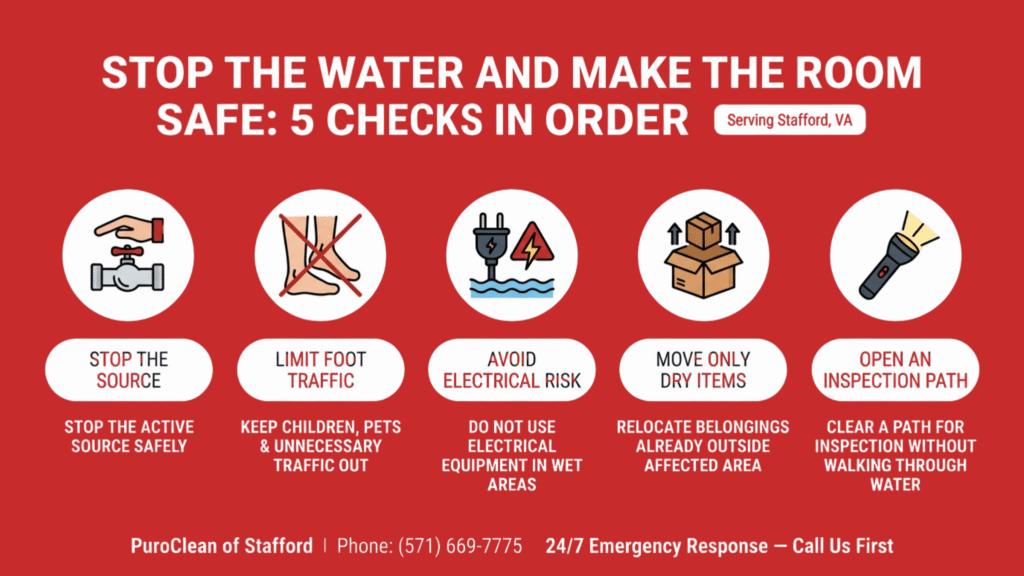
Stop the Water and Make the Room Safe
Stay out of areas with standing water near outlets, appliances, extension cords, or a breaker panel. Never reach a shutoff or operate electrical equipment while standing in water. Have an electrician or utility provider address electrical hazards.
If you smell gas or see signs of structural instability, leave the area and contact 911 from a safe location.
If conditions allow:
- Stop a plumbing leak using a safely accessible shutoff.
- Keep children and pets away.
- Keep access routes clear without crossing the flooded area.
Outdoor flooding needs a different approach. Pumping a basement while surrounding soil remains saturated can put pressure on the walls. Get professional guidance before removing substantial amounts of water.
Water from outside or a drain changes the cleanup decision
Water that came through a floor drain, toilet, sewer connection, or exterior flood route should not be handled like a broken supply line. In those situations, avoid direct contact, keep personal items out of the area, and avoid using household fans to blow air across the room. The goal is to avoid spreading material from the affected area into the rest of the home.
If you are unsure about the source of the water, treat that uncertainty as a reason to pause. A cleanup plan built on the wrong assumption can create more work later.
Capture the Condition of Your Basement
From a safe location, photograph or document the levels of the water, affected rooms, damaged belongings, and apparent source. Take wide shots for context and close-ups of individual items.
Make a brief inventory and keep receipts for emergency work or equipment. Check with your insurance provider promptly about documentation and disposal requirements.
For flood cleanup Fredericksburg VA residents often face after heavy rain or a plumbing failure,
documenting efficiently can help safe mitigation proceed. You do not need to leave wet materials in place simply to preserve the scene.
Separate belongings without spreading contamination
Some possessions can be cleaned or evaluated later, while others may not be worth keeping once they have absorbed water. Paper items, upholstered furniture, carpet padding, and boxed belongings can become difficult to assess if they remain packed together. Move items only once the conditions are safe, place them in a dry area, and keep a note of where they came from.
Avoid sealing wet belongings in plastic bags or stacking them in another closed room. The priority is to separate materials and give yourself room to inspect them.
Decide What Can Be Dried and What Must Come Out
Once entry and equipment use are confirmed safe, remove standing water using methods appropriate to its depth and source. Substantial flooding, contamination, or uncertain structural conditions require professional guidance.
After water removal, drying may involve dehumidifiers and controlled air movement. Equipment should suit the affected space and materials; running a fan alone does not confirm that the basement is dry.
Separate contents from building materials when assessing damage. Hard surfaces may be easier to clean, while carpet padding, insulation, upholstery, and drywall can retain water or contamination. Removal decisions depend on the source of the water, material condition, and whether effective cleaning and drying are possible.
Check moisture before repairs
A common mistake is to clean the middle of the basement while leaving wet edges, baseboards, and stored contents untouched. Another is to run fans without first removing water-damaged materials that cannot dry in place. Both approaches can make the room appear better while leaving the real cleanup decision unresolved.
If you cannot tell whether moisture reached behind a wall, under a floor, or into insulation, do not guess. That is the point where a restoration assessment is more useful than more household cleaning.
DIY Cleanup, Restoration, and Repairs Compared
| Option | Appropriate role | Main limitation |
| Household cleanup | A small, recent clean-water spill in a safely accessible area | Hidden moisture and contamination may be difficult to assess |
| Restoration company | Water extraction, drying, and assessment of affected materials within its service capabilities | Electrical or structural hazards may require other specialists first |
| Repair contractor | Repairing or replacing materials after mitigation | Repairs should follow confirmation that the area is ready |
Where DIY Cleanup Stops Making Sense
Do-it-yourself cleanup is reasonable only when the situation stays small, safe, and easy to inspect. If you can identify a clean water source, stop it promptly, remove the water without electrical risk, and confirm that it did not spread into finished materials, a careful household response may be enough.
The line changes when the source is uncertain, the water came from a drain or outdoors, or the basement has carpet, padding, drywall, insulation, or stored belongings that stayed wet. It also changes when you cannot safely enter the room or cannot tell the source of the water traveled.
Do not treat a larger cleanup as a test of whether you are willing to work hard enough. The issue is access. You may be able to clean the floor yourself and still have no way to inspect what is under it or behind it.
A restoration company is not a substitute for emergency services, an electrician, or a structural professional when those are the immediate needs. Call the right person for the condition in front of you, rather than forcing every problem into one type of repair.
Final Verdict
If the water was clean, stayed in one open area, and never reached finished materials, you may be able to handle the first stages yourself. If the source is unknown, the water came from a drain or outside, or it reached carpet, drywall, insulation, or stored contents, flooded basement cleanup Fredericksburg VA homeowners need should begin with a fuller assessment rather than a quick surface cleanup.
For flood cleanup Fredericksburg VA property owners should focus on safety, documentation, and knowing what cannot be inspected from the floor. If you need help deciding whether the basement is ready for drying, removal, or reconstruction, contact PuroClean of Stafford to discuss the damage and the next practical step.
FAQs
Q: Can I clean up a flooded basement myself?
A: Yes, if it is a small, clean-water spill and the area is safe to access. If the source of the water is unknown, contamination is possible, or finished materials are affected, seek professional help.
Q: Should I remove wet carpet after a basement flood?
A: Not necessarily. The decision depends on the source of the water and whether the carpet, padding, and subfloor can be properly cleaned and dried. Have them assessed before deciding what to keep or remove.
Q: What should I photograph after basement flooding?
A: Photograph the water line, affected rooms, damaged belongings, flooring, walls, and the apparent water source. Take wide and close-up shots before cleanup begins.
Q: Can I use fans to dry a flooded basement?
A: Fans may help after a small, clean-water spill once standing water is removed and the area is safe. Avoid using them when the water may be contaminated, as they can spread contaminants.
Q: When should I call a restoration company for a wet basement?
A: Call when the source of the water is uncertain, contamination is possible, water has reached building materials, or hidden moisture is difficult to assess. A restoration specialist can assess which materials can be dried and cleaned and which need removal.