Introduction
A burst supply line, failed water heater, roof leak, or heavy rain can put water inside a home within minutes. Moisture can move into carpet, drywall, insulation, trim, and subflooring before the full extent is visible.
Homeowners should focus first on safety, stopping the source, and protecting belongings that can be moved without risk. After standing water is removed, the priority is confirming that affected materials are fully dry. Professional water removal in Spotsylvania VA, can help locate moisture that is not visible at the surface and reduce the risk of larger repairs.
Why Fast Extraction Changes The Outcome
Water follows gravity, moves through seams, and absorbs into porous materials. A leak from an upstairs bathroom, for example, may affect flooring, ceilings, and rooms below.
Fast extraction limits how much water materials absorb. Carpet padding, particleboard cabinets, laminate flooring, and drywall are especially vulnerable. Removing standing water is only the first step; air movement and dehumidification are needed to complete the drying process.
What To Do Immediately After Discovering Water
Start by identifying where the water is coming from. Shut off the local supply valve for an appliance leak, or turn off the main water valve if the source is unclear. If water is near outlets, appliances, or electrical panels, avoid entering the area until power safety has been assessed.
Move furniture, electronics, documents, and soft belongings away from the wet area if it is safe to do so. Place aluminum foil or plastic blocks under furniture legs to reduce staining and transfer from wet carpet. Take photos and short videos before removing damaged materials, especially if an insurance claim may be necessary.
Avoid using a household vacuum on standing water. Do not lift wet carpet without knowing whether the water came from a clean plumbing source, an overflowing appliance, or outside floodwater. Water from outdoors, toilets, septic backups, and drains may carry contaminants that require controlled cleanup.
How A Professional Cleanup Visit Works
A restoration crew begins by inspecting the affected area and checking nearby materials with moisture meters, thermal imaging, and humidity readings.
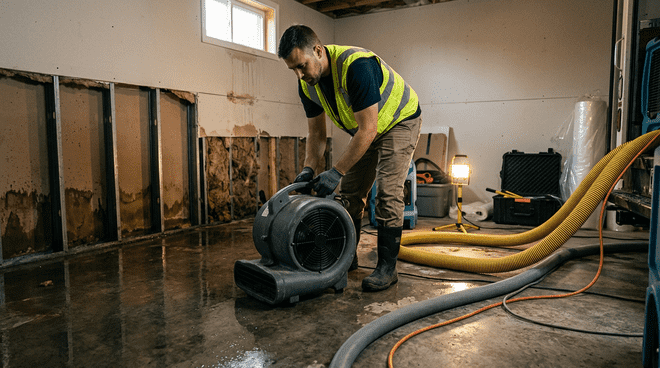
Standing water is extracted first. Air movers and dehumidifiers are then placed and adjusted as drying progresses. Materials that cannot dry properly, such as saturated padding, insulation, or damaged drywall, may need to be removed.
Technicians also track drying conditions so the property owner has a record of the work completed.
Damage That Can Remain Behind Walls
Some moisture stays hidden under flooring, inside wall cavities, behind cabinets, or around framing even after surfaces appear dry.
Warning signs include bubbling paint, swollen baseboards, musty odors, loose flooring, staining, or doors that begin to stick. Finished basements deserve extra attention after storms or sump pump failures because moisture can remain trapped behind walls and beneath flooring.
When hidden moisture is suspected, testing is more reliable than touch alone.
Insurance Documentation And Repair Planning
Document the source of water, affected rooms, damaged belongings, and mitigation work. Keep receipts for emergency plumbing repairs, temporary lodging, cleanup services, and replacement purchases. Save emails and claim numbers in one folder so information is easy to locate.
Contact the insurance carrier promptly and describe the cause accurately. A sudden pipe break may be handled differently from long-term seepage or groundwater entering through a foundation. Do not discard damaged materials until the insurer or restoration team has documented them, unless removing them is necessary to prevent further damage.
After drying is confirmed, repairs can begin. The work may include replacing drywall, insulation, flooring, trim, cabinets, or paint. Matching materials and checking nearby rooms can prevent a patchwork result after the repair is complete.

Conclusion
Prompt action can protect more of the home and reduce the scope of repairs. For thorough flood cleanup Spotsylvania VA homeowners can rely on, arrange professional extraction and moisture testing before hidden water becomes a larger problem. Contact a local restoration team quickly if water has entered walls, flooring, cabinets, or a finished basement.
FAQs
Q: How long does water damage drying usually take?
A: Many affected areas need three to five days of controlled drying, but the timeline depends on the water source, material type, humidity, and how far moisture traveled.
Q: Can I clean up a small water leak myself?
A: You may be able to handle a small clean-water spill if it is caught immediately and all materials can be dried. Call a restoration professional if water reached carpet padding, drywall, cabinets, insulation, or multiple rooms.
Q: Should I file an insurance claim for water damage?
A: Filing may make sense when repair and drying costs exceed your deductible. Document the cause and damage first, then ask your insurer how the specific type of water event is handled.