 PuroClean of Strafford County
 Kitchen Fires and Turkey Triumphs- And Why Soot Is the Real Threat
The holiday season brings family, food, and celebration—and yes, a few kitchen fires along the way! Let’s be honest: Thanksgiving is when we’re all juggling three timers, a temperamental oven, and Aunt Linda’s “helpful” suggestions. It’s no wonder this beloved day holds the crown as the #1 day for home cooking fires in the United States. According to the National Fire Protection Association (NFPA), U.S. fire departments respond to about 1,600–2,000 kitchen fires on Thanksgiving Day alone—that’s 3–4× the daily average! But here’s the thing: these kitchen fires are part of our collective story of ambition, love, and maybe just a little too much confidence with the deep fryer. We’re all in this together, spatulas raised and smoke alarms singing, creating memories (and meals) worth celebrating.
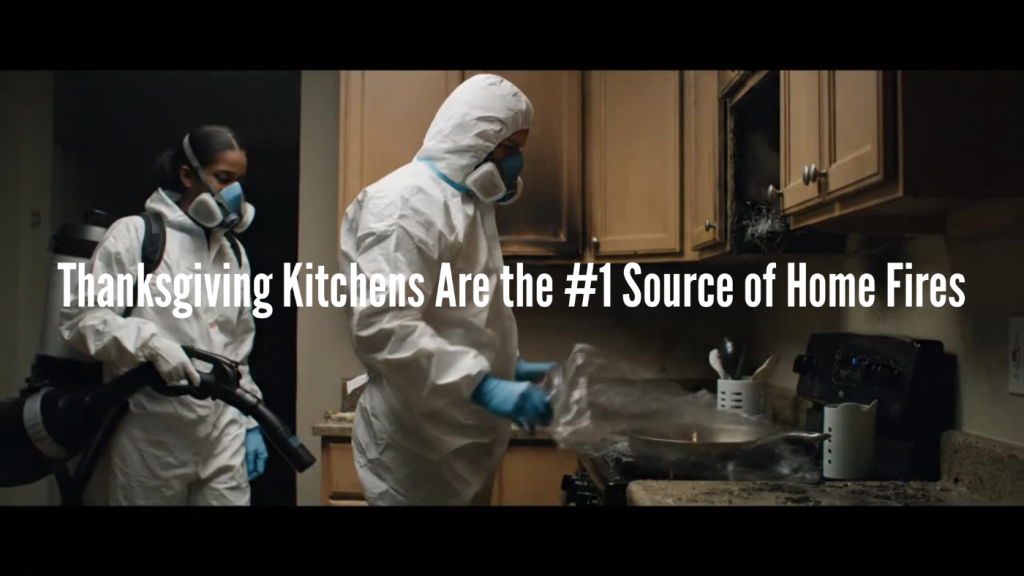
This year, our PuroClean team has already seen a noticeable uptick in residential and commercial fire damage claimsacross New Hampshire and southern Maine—not from flames, but from soot.
Soot is microscopic, corrosive, and capable of destroying more property than the initial fire. A small stovetop flare-up can lead to thousands of dollars in damage as soot spreads into cabinets, walls, insulation, upholstery, clothing, and HVAC systems. It’s the real culprit most homeowners don’t know about until it’s too late.
Below is your new, fully updated 2025 Thanksgiving fire-prevention guide, combining new data, local insight, and practical swaps that reduce fire risk during the busiest cooking week of the year.
A Real Example: A Wooden Cutting Board Mistake That Caused Major Soot Damage
Thanksgiving Fire Hazards Blog
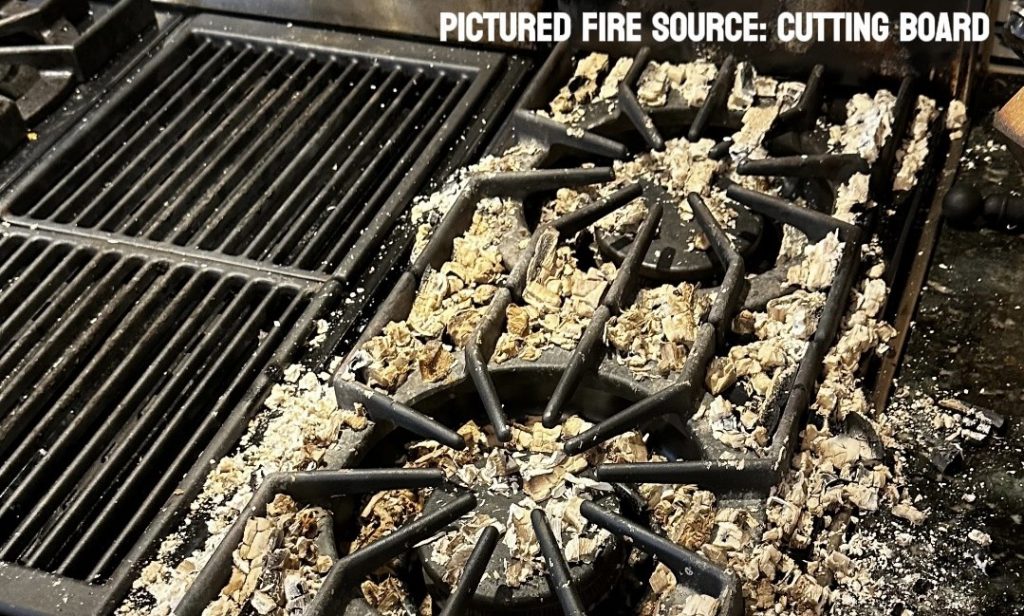
Last year, our team responded to a Rockingham County kitchen fire caused by a wooden cutting board placed on an active stovetop burner. The flames were contained quickly, but the toll came afterward:
- Thick, oily soot coated white walls, cabinetry, and furniture
- Microscopic soot infiltrated fabrics, drawers, and HVAC returns
- The homeowners required full-scale smoke remediation
This type of loss has been even more common in 2024–2025, especially as people cook more at home, host larger gatherings, and multitask in busy kitchens.
A small oversight can cause a full-home soot event—even when the fire itself lasts only minutes.
Why Kitchen Fires Are More Destructive Now (Spoiler: It’s Not Just the Gravy)
Soot Is More Damaging Than Flames
Modern homes burn differently today—and not in the cozy, fireplace kind of way. Synthetic materials in cabinets, flooring, and cookware produce thick black soot that crashes the party like an uninvited guest who refuses to leave:
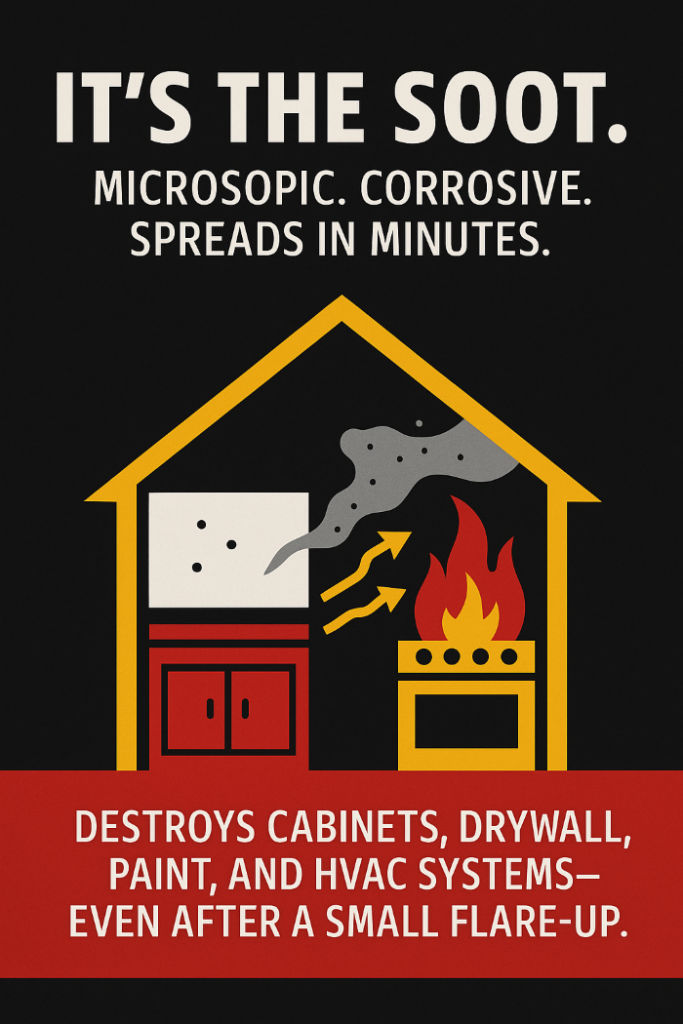
- Travels instantly through open spaces (faster than your cousin grabbing the last dinner roll)
- Etches glass, paint, and appliances (leaving behind a “souvenir” no one asked for)
- Causes permanent staining within hours (because apparently soot doesn’t believe in second chances)
- Corrodes electronics (yes, even the smart fridge that judges your leftovers)
- Embeds into insulation, fabrics, and HVAC systems (hiding like glitter after a craft project—forever)
More Open-Concept Homes = Faster Soot Spread
Remember when kitchens had doors? Without walls to slow it down, soot now moves through the entire first floor in minutes—turning your beautiful open floor plan into an open disaster plan.
Thanksgiving Multitasking: The Ultimate Fire Accelerator
Here’s where our holiday heroics catch up with us. The NFPA and USFA consistently list unattended cooking as the #1 cause of holiday fires. And honestly? We get it. You’re basting the turkey, stirring the gravy, deflecting political debates, hiding the store-bought pie, and explaining to your toddler why they can’t “help” with the carving knife. We’re all magnificent multitaskers—until we’re not. Those few seconds when you dash to answer the door or referee the football game? That’s when kitchen fires strike, turning your feast into a fire department visit. Click here for more from the NFPA on Thanksgiving Fire Safety Information.
2025 Thanksgiving Fire Statistics
Newly released national data shows:
- Thanksgiving Day continues to have 3–4× more cooking fires than any other day of the year.
- Oil frying–related fires remain a leading source of severe holiday claims.
- Kitchen items igniting on or near the stovetop—cutting boards, oven mitts, towels—are among the most common causes.
- Soot-heavy fires in homes with synthetic materials cause significantly higher cleanup and restoration costs than fires from past decades.
These national trends mirror what we’ve seen across New Hampshire and southern Maine, PuroClean of Strafford County service areas. Fire damage remediation needs rapid response. Learn what steps you should take in What to Do (and Not do) After A House Fire in New Hampshire.
Need fire damage remediation? We provide 24/7 emergency response.
Safer Swaps for a Fire-Smart Thanksgiving Kitchen (Without Killing the Vibe)
1. Upgrade Your Kitchen Tools (Your Grandmother Will Understand)
Some holiday staples are fire hazards in disguise. Make these simple swaps:
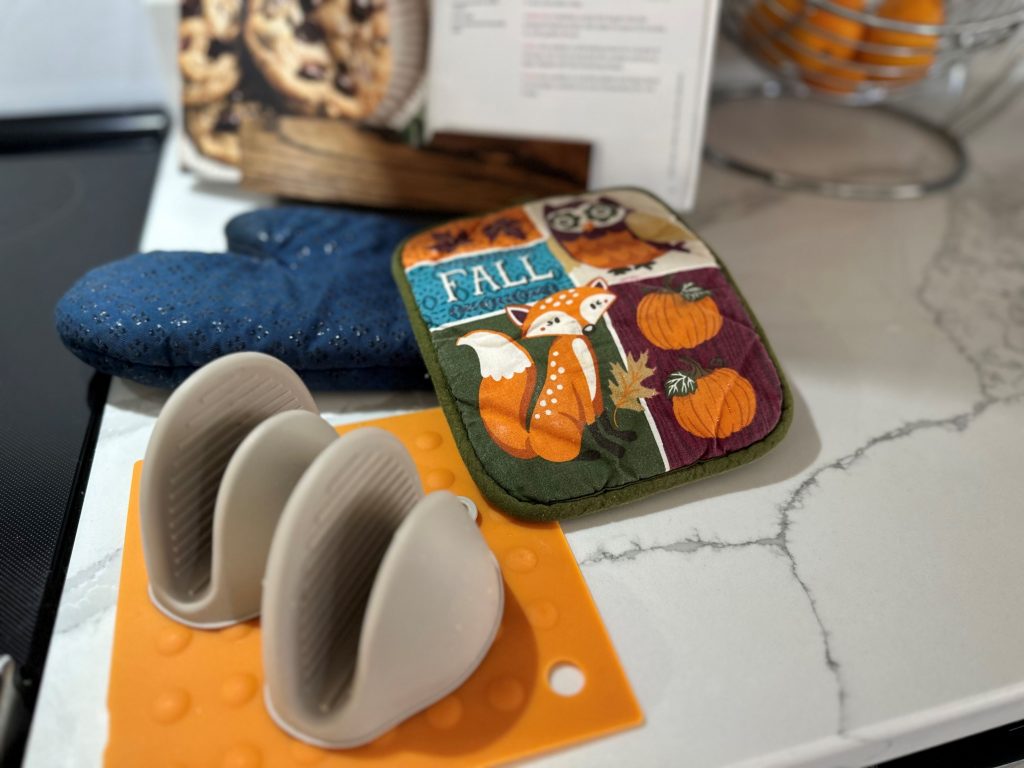
- Wooden cutting boards → Heat-resistant, non-slip boards (wood is beautiful, but it’s also basically kindling)
- Cloth oven mitts → Silicone mitts (they won’t catch fire when you accidentally brush the burner—ask us how we know)
- Fabric trivets → Stone or silicone trivets (because your grandmother’s needlepoint trivet deserves retirement, not incineration)
2. Fake the Flame: Choose LED Candles Over Real Ones
LED candles give you the same cozy, Instagram-worthy glow without the “surprise fire” plot twist—especially important when Uncle Bob starts gesturing wildly during dinner stories.
3. Create a 3-Foot “Safety Bubble” Around Your Stove
Think of it as your stove’s personal space. Keep paper towels, shopping bags, mail, recipe cards, and that pile of “I’ll deal with it later” stuff at least 3 feet away from all heat sources. If it’s flammable, it doesn’t belong in the splash zone.
4. Never Leave Cooking Unattended (Yes, Really. Never.)
Assign a “kitchen watch” rotation—especially when frying, boiling, or broiling. Tag in a family member if you need to step away. Think of it like lifeguard duty, but for your turkey.
5. Treat Your Stovetop Like a Stage, Not a Storage Unit
Even when burners are “off,” don’t store cutting boards, pans, food containers, mail, or decorative gourds on top of them. Burners get bumped on. Kids turn dials. Chaos happens. Keep the stage clear.
New for 2025: Safer Cooking Incentives Through Electric Upgrades
Many local families still cook Thanksgiving meals on gas stovetops. With updated Inflation Reduction Act (IRA)incentives expected through 2025, homeowners can receive:
- Up to $840 for electric or induction cooktops
- Up to $500 in electrical panel upgrades if needed
Electric and induction stoves eliminate open flames, reduce fire hazards, and lower exposure to nitrogen dioxide and methane. New Hampshire rebate updates are available through the NH Department of Energy: Home Electrification and Appliance Rebates.
Why DIY Smoke Cleanup Doesn’t Work
Soot damage requires professional remediation, especially when:
- Walls show discoloration
- Soft goods smell like smoke
- HVAC systems pulled soot through the house
- Cabinets, drawers, or vents have residue
Household cleaners can smear soot, lock in stains, or worsen corrosion.
Our team uses:
- HEPA filtration
- Alkaline & enzyme-based cleaners
- Thermal fogging
- Ozone treatment
- Professional smoke-odor neutralizers
- Content pack-out & cleaning when necessary
These are essential for restoring property and preventing long-term odors or damage.
5 FAQs for Your Thanksgiving Kitchen Fire Safety Blog
1. Why is Thanksgiving the most dangerous day for kitchen fires?
Thanksgiving sees 3-4 times more cooking fires than an average day, with an estimated 1,600-2,000 fires reported to U.S. fire departments. The combination of multiple dishes cooking simultaneously, distracted hosts entertaining guests, and unfamiliar cooking methods (like deep-frying turkeys) creates the perfect storm for kitchen accidents. Unattended cooking remains the leading cause of these fires.
2. What makes soot from modern kitchen fires more dangerous than in the past?
Modern homes contain more synthetic materials in cabinets, flooring, and cookware that produce thick black soot when burned. This soot is highly corrosive and can travel through open-concept floor plans in minutes, etching glass and paint, corroding electronics, and embedding into insulation and HVAC systems. Unlike older fires, soot damage can cause permanent staining within hours if not professionally treated.
3. What kitchen items should I replace to reduce fire risk during the holidays?
Replace flammable traditional items with fire-resistant alternatives:
- Wooden cutting boards → Heat-resistant, non-slip boards
- Cloth oven mitts → Silicone mitts
- Fabric trivets → Stone or silicone trivets
- Real candles → Battery-operated LED candles
These simple swaps significantly reduce ignition risks, especially in busy holiday kitchens.
4. Can I really never leave cooking unattended, even for a minute?
Yes—even a brief distraction can lead to disaster. The NFPA and USFA consistently list unattended cooking as the #1 cause of Thanksgiving fires. Assign a “kitchen watch” rotation among family members, use timers religiously, and if you must leave the kitchen, turn off burners. Think of it as lifeguard duty for your meal.
5. What should I do immediately if a kitchen fire starts?
- For small grease fires: Turn off the heat, cover the pan with a metal lid, and never use water (it will spread the fire).
- For oven fires: Keep the door closed and turn off the heat—oxygen feeds flames.
- If fire spreads: Evacuate immediately and call 911. Never attempt to fight a fire that’s growing or producing heavy smoke.
Even small fires can cause extensive soot damage throughout your home. Contact our professional fire restoration response response team immediately after any kitchen fire to prevent lasting damage. We cover residential and commercial losses. Our fire restoration technicians to remediate fire and smoke damage, restoring your home and giving you peace of mind. Contact (603) 664-3727 today!
Fire & Smoke Damage in New Hampshire and Maine: Call PuroClean
Holidays should be memorable for the right reasons. A few preventative steps go a long way—but if a kitchen fire does occur, fast, professional remediation is critical to stop soot from spreading and causing irreversible damage.
PuroClean of Strafford County provides 24/7 fire, smoke, and soot restoration across:
- Southern New Hampshire
- Southern Maine
- Lakes Region
- Seacoast
- Proudly serving Rockingham, Merrimack & Strafford Counties
Call (603) 664-3727 for emergency service or to schedule an inspection.
Protect your home, your holidays, and your peace of mind with a team trained to handle today’s modern fire and soot challenges.

 PuroClean of Strafford County