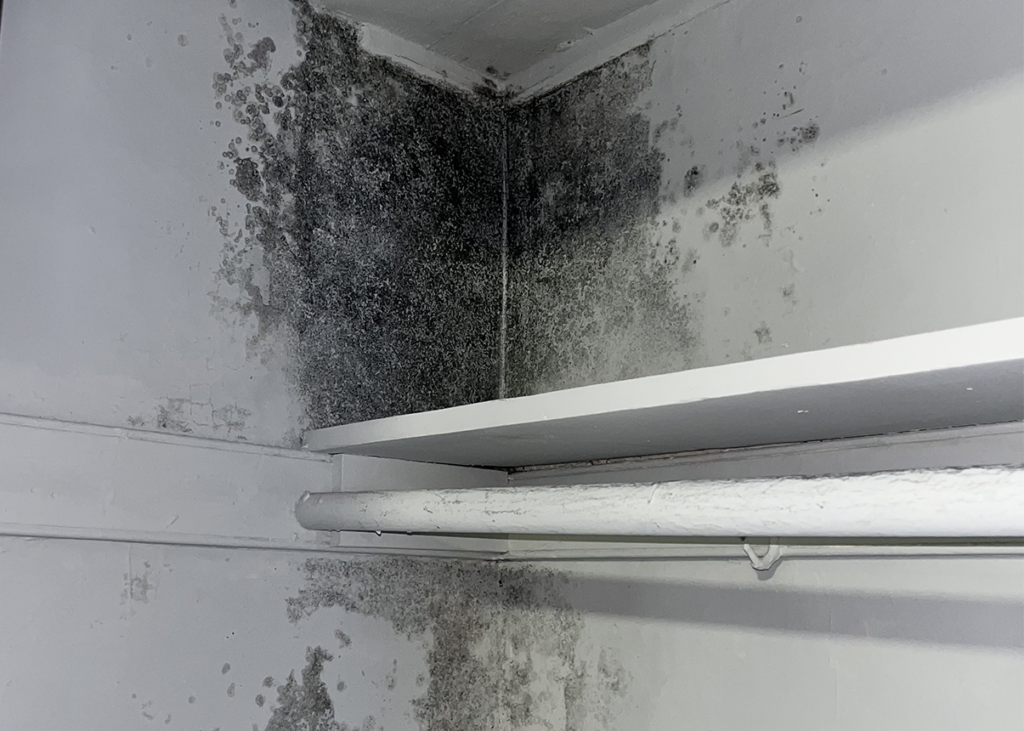
Have you noticed a musty smell when opening your closet, or discovered unusual spots on clothing, shoes, or walls?
These could be signs of excess moisture or mold growth.
For homeowners, renters, and property managers in Union Township, NJ, and surrounding Union County communities, mold prevention is an important part of maintaining a home. Humid summers, heavy rainfall, plumbing leaks, and poorly ventilated storage spaces can create conditions that allow mold to develop.
Whether you live in Elizabeth, Hillside, Cranford, Westfield, Springfield, Rahway, Plainfield, or another Union County municipality, understanding how to control indoor moisture can help protect your belongings and prevent costly property damage.
At PuroClean of Union, our restoration professionals help property owners address mold and moisture problems. Below, we explain why closets develop mold, how to prevent it, and when professional remediation may be necessary.
Why Does Mold Grow in Closets?
Closets can provide favorable conditions for mold because they often have limited airflow and contain materials
that absorb moisture, including clothing, cardboard, wood, and drywall.
Mold requires moisture to grow. When humidity remains elevated or water enters a closet through a leak,
condensation, or flooding, mold may begin developing on damp materials.
Common causes of closet mold include:
- Excessive indoor humidity.
- Limited airflow behind stored belongings.
- Damp clothing, shoes, or towels.
- Plumbing leaks inside adjoining walls.
- Condensation along cold exterior walls.
- Previous roof leaks or basement flooding.
- Water-damaged drywall, carpeting, or insulation.
According to the U.S. Environmental Protection Agency (EPA), indoor relative humidity should generally remain below 60%, ideally between 30% and 50%.
The most effective way to prevent closet mold is to identify and control the moisture source.
7 Ways to Prevent Mold in Closets
1. Control Indoor Humidity
High humidity is one of the most common contributors to mold growth in enclosed spaces. This can be especially relevant during humid New Jersey summers and periods of heavy rainfall.
To help reduce moisture:
- Use a dehumidifier in rooms with consistently elevated humidity.
- Monitor humidity with a digital hygrometer.
- Keep indoor humidity below 60%, ideally between 30% and 50%.
- Investigate condensation on walls, windows, and exposed plumbing.
- Repair plumbing leaks and other water intrusion problems promptly.
Moisture-absorbing products may help with minor dampness in small spaces, but they are not substitutes for repairing leaks or controlling persistent humidity.
2. Never Store Damp Clothing or Shoes
Putting wet or damp belongings into a closed closet can introduce moisture that becomes trapped between fabrics and surrounding surfaces.
- Dry clothing completely before putting it away. Allow wet shoes, coats, and umbrellas to dry in a ventilated area.
- Avoid leaving damp towels or laundry in enclosed storage spaces.
- Remove clothing from plastic dry-cleaning bags when appropriate for the garment.
This is particularly useful during rainy spring weather and snowy New Jersey winters, when outerwear frequently becomes damp.
3. Improve Closet Airflow
Poor airflow can allow moisture to accumulate, particularly in closets located along exterior walls or near bathrooms.
Improve ventilation by:
- Opening closet doors periodically when surrounding room conditions are dry.
- Leaving space between clothing and stored items.
- Avoiding tightly packed shelves and storage bins.
- Keeping items slightly away from walls where practical.
- Considering ventilated shelving or doors when appropriate.
Increasing airflow can help reduce stagnant, damp conditions, but ventilation alone will not resolve an active water leak.
4. Inspect Closets Along Exterior Walls
Closets built against exterior walls may be more vulnerable to condensation when warm, humid indoor air contacts cooler surfaces. This can occur in homes with inadequate insulation, air leaks, or persistent indoor humidity.
Check for:
- Cold or damp wall surfaces.
- Discoloration behind clothing or furniture.
- Peeling paint or damaged drywall.
- Musty odors that return after cleaning.
If moisture repeatedly appears on an exterior closet wall, consider having the insulation, ventilation, and potential water intrusion sources evaluated.
5. Keep Closet Floors and Shelves Clean
Dust, dirt, and organic debris can accumulate in closets and contribute to poor storage conditions.
Establish a regular cleaning routine:
- Remove belongings periodically to inspect hidden surfaces.
- Dust shelves, closet rods, and door frames.
- Vacuum floors and corners.
- Check beneath storage bins and furniture.
- Allow cleaned surfaces to dry completely before replacing belongings.
Avoid returning items to a closet while carpeting, shelves, or walls remain damp.
6. Choose Storage Containers Carefully
Storage containers can help organize belongings, but they should be selected based on the conditions of the storage area.
In dry closets, breathable storage options can support airflow around clothing.
In basements or other areas vulnerable to occasional water intrusion, elevated shelves and water-resistant containers may offer better protection for belongings.
Regardless of container type, never place damp items into sealed storage.
7. Address Water Leaks Immediately
Even a small plumbing or roof leak can introduce enough moisture to damage drywall, carpeting, and stored belongings.
If water enters a closet:
- Identify and stop the water source when safe to do so.
- Remove unaffected belongings from the wet area.
- Document visible damage.
- Arrange for appropriate drying and moisture assessment.
- Investigate moisture trapped behind walls or beneath flooring.
The EPA recommends drying water-damaged areas and materials within 24 to 48 hours whenever possible to help prevent mold growth.
Learn more about PuroClean of Union’s Water Damage Restoration Services.
Mold Prevention in Basement and Bathroom Closets
Some storage areas require additional attention because of their proximity to water sources or moisture-prone building materials.
Basement Closets
Union County homes may experience basement moisture from heavy rainfall, foundation seepage, plumbing failures, or poor drainage.
For basement closets:
- Monitor humidity throughout the year.
- Inspect foundation walls for dampness.
- Keep valuable items elevated off the floor.
- Check for water after heavy rainfall.
- Address sump pump or drainage problems promptly.
Bathroom and Laundry Closets
Closets near showers, washing machines, or plumbing fixtures may experience additional moisture exposure.
- Run bathroom exhaust fans during and after showers.
- Check accessible plumbing connections for leaks.
- Keep towels and linens completely dry before storage.
- Investigate recurring condensation or musty odors.
Signs You May Have Mold in Your Closet
Mold is not always immediately visible. Some problems develop behind clothing, inside wall cavities, or beneath flooring.
Common warning signs include:
- Persistent musty odors:
An earthy smell that remains even after cleaning. - Visible discoloration:
Unusual patches on drywall, wood, clothing, or other materials. - Damp belongings:
Clothing or stored items that repeatedly feel moist. - Water stains:
Discoloration on ceilings, baseboards, or walls. - Peeling paint or warped materials:
Possible indicators of recurring moisture.
If a closet smells musty but no mold is visible, the source may be concealed behind walls, flooring, or stored items.
What Should You Do If You Find Mold in a Closet?
If you discover mold, avoid disturbing affected materials unnecessarily. Cleaning visible growth without fixing the underlying moisture problem may allow mold to return. The appropriate response depends on the size of the affected area, the materials involved, and whether contaminated water or hidden damage is present.
For small areas on suitable hard surfaces, EPA guidance describes cleaning with detergent and water followed by thorough drying. However, porous materials such as drywall, carpeting, and insulation may require removal or replacement when significantly contaminated.
Professional assistance is recommended when mold covers more than approximately 10 square feet, follows significant water damage, involves contaminated water, or may be hidden inside building materials.
If you have health concerns, consult a healthcare professional before attempting cleanup. For additional guidance, review the EPA’s Guide to Mold, Moisture, and Your Home.
What About Black Mold in Closets?
Finding dark or black-colored mold in a closet can be concerning. However, mold color alone cannot reliably identify the species or determine its potential health effects. Different types of mold may appear black, green, gray, white, or other colors.
Regardless of appearance, visible indoor mold should be addressed by correcting the moisture problem and following appropriate cleanup or remediation procedures. If you suspect extensive or hidden mold contamination, seek guidance from an experienced remediation professional.
Frequently Asked Questions About Closet Mold
Can mold grow in a closet without a water leak?
Yes. Persistent high humidity and condensation can provide enough moisture for mold to grow, even without an obvious plumbing leak.
What humidity level helps prevent closet mold?
The EPA recommends keeping indoor relative humidity below 60%, ideally between 30% and 50%.
Why does my closet smell musty?
A persistent musty smell may indicate excess moisture, damp belongings, or hidden mold growth. Inspect the closet and investigate possible moisture sources.
Can mold grow on clothes and shoes?
Yes. Mold can grow on damp fabrics, leather, and other organic materials. Proper drying and moisture control are important for prevention.
Should I paint over mold in my closet?
No. Painting over mold does not resolve the underlying problem. The affected area must be properly cleaned or remediated and thoroughly dried before refinishing.
When should I call a mold remediation professional?
Consider professional assistance when mold is extensive, repeatedly returns, affects porous materials, follows significant water damage, or may be hidden behind walls or flooring.
Professional Mold Removal and Remediation in Union, NJ
Preventing mold starts with controlling moisture, but some situations require professional restoration.
At PuroClean of Union, our locally owned restoration team brings more than 16 years of industry experience to helping residential and commercial property owners address mold and water damage.
Our IICRC-certified technicians use professional restoration techniques to assess affected materials, address contamination, and support property recovery.
We serve Union Township, Elizabeth, Hillside, Springfield, Cranford, Westfield, Rahway, Plainfield,
Roselle, Linden, Kenilworth, and surrounding Union County communities.
Learn more about our Mold Removal and Remediation Services.
Need Mold Removal in Union, NJ?
PuroClean of Union Offers 24/7/365 Emergency Property Restoration
If you’ve discovered mold in a closet, basement, or other area of your property, our restoration
professionals are available to discuss your concerns and next steps.
Call (973) 577-6033
Paramedics of Property Damage.