


How Much does Slab Leak Repair Cost?
Slab leak repair commonly costs anywhere from several hundred dollars for a relatively simple repair to several thousand dollars when the leak is difficult to access, plumbing must be rerouted, or water damage has spread into the home. Current national cost data places many slab leak repairs around $630 to $4,400, with averages near $2,300, although California projects can run higher depending on access, flooring, plumbing configuration, and the extent of resulting damage.[1][2]
Restoration project values can vary substantially by service category and geography. Broader U.S. market benchmarks for water, fire, and mold restoration are available in this damage restoration cost-by-market analysis.[4]
For Palmdale homeowners, there are really two separate costs to understand: repairing the failed plumbing line and restoring the water damage caused by the leak. A plumber may stop or reroute the leaking pipe, while a restoration company such as PuroClean of West Antelope Valley addresses moisture left beneath flooring, behind baseboards, inside walls, around cabinetry, or in other affected materials.
If you already know or suspect that a slab leak has caused water damage, PuroClean of West Antelope Valley can evaluate the affected areas and help determine what needs to be dried, removed, cleaned, or restored.
How Much Does Slab Leak Repair Cost?
There is no single price for repairing a slab leak because the term describes the location of the problem rather than one specific repair.
HomeAdvisor’s 2026 cost data places typical slab leak repair between approximately $630 and $4,400, with an average near $2,280.[1] Angi reports a similar typical range and notes that difficult access, flooring removal, slab work, and build-back can substantially increase the final cost.[2]
Fixr reports a broader typical range of roughly $1,000 to $4,000, with more complicated projects such as extensive plumbing reroutes potentially reaching much higher totals.[3]
These figures should be treated as planning ranges rather than quotes for a Palmdale property. Local labor rates, the construction of the home, the exact location of the leak, plumbing material, flooring, and resulting water damage can all materially affect the final bill.
What Determines the Cost of Slab Leak Repair?
The biggest cost variable is often access.
A leak beneath an unfinished utility area may be much easier to reach than a leak beneath tile flooring, cabinetry, finished living space, or another difficult section of the house.
Common factors that influence price include:
- Where the leaking pipe is located
- How accurately the leak can be located before opening the structure
- Whether the pipe can be repaired at one location
- Whether plumbing needs to be rerouted
- Pipe material and condition
- Depth of the pipe beneath the slab
- Concrete thickness
- Flooring that must be removed or replaced
- Cabinets or fixtures obstructing access
- Number of plumbing failures
- Extent of water damage surrounding the leak
- Whether mold or prolonged moisture is discovered
In many cases, the plumbing repair itself is only one component of the overall loss.
Common Slab Leak Repair Methods
A licensed plumbing professional determines how the failed line should be repaired. The appropriate method depends on the location of the leak, overall pipe condition, accessibility, and whether the problem appears isolated or part of a larger plumbing-system issue.
Direct or Spot Repair
A plumber may open the slab near the identified leak and repair the damaged section of pipe. This can make sense when there is one accessible, isolated failure and the remainder of the plumbing system is in acceptable condition.
Pipe Rerouting
Instead of opening the slab, a plumber may abandon the damaged underground section and route a replacement line through walls, ceilings, attic areas, or another accessible path.
Current national cost estimates commonly place rerouting in the low thousands of dollars, although longer or more complicated routes can cost considerably more.[1]
Pipe Lining
Certain plumbing systems may qualify for trenchless or cured-in-place repair methods in which a new lining is created inside the existing pipe. Not every pipe, leak, or plumbing configuration is suitable for this approach.
More Extensive Repiping
If multiple leaks have occurred or the existing plumbing system is deteriorating, a plumber may recommend replacing or rerouting a larger portion of the system rather than continuing to repair individual failures.
PuroClean does not determine which plumbing-repair method should be used. Homeowners should work with an appropriately licensed plumbing professional for the actual pipe repair.
For information about the plumbing side of the loss, visit our slab leak water cleanup in Palmdale repair resource.
Slab Leak Detection Costs
Before repairing a concealed leak, the source needs to be located as accurately as possible.
HomeAdvisor currently estimates professional slab leak detection at roughly $150 to $400 in many situations.[1] Actual pricing depends on the property and diagnostic work required.
Professional leak detection may use acoustic equipment, pressure testing, thermal imaging, moisture measurements, or other diagnostic methods to narrow down the location before opening flooring or concrete.
If you suspect a hidden plumbing leak but have not yet identified the source, learn more about water leak detection in Palmdale.
Slab Leak Repair vs. Water Damage Restoration
This is one of the most important distinctions for homeowners budgeting for a slab leak.
The plumbing repair stops the leak. Water damage restoration addresses what the leak already damaged.
Imagine a pipe beneath the slab leaks slowly for several weeks. A plumber finds the pipe and repairs it in a few hours. The plumbing system may now be fixed, but moisture could still remain in:
- Carpet padding
- Laminate or engineered flooring
- Flooring adhesives
- Baseboards
- Drywall
- Wall insulation
- Cabinetry
- Wall cavities
- Adjacent rooms
Those materials do not automatically become dry when the plumbing repair is completed.
PuroClean of West Antelope Valley provides slab leak water damage cleanup in Palmdale for homeowners dealing with the restoration side of the loss.
For larger losses, our broader water damage restoration services can address extraction, structural drying, moisture monitoring, damaged materials, and related restoration needs.
Why Hidden Water Damage Can Increase the Total Cost
Hidden moisture is often what turns a relatively straightforward plumbing problem into a larger restoration project.
Water released beneath a slab can follow cracks and material interfaces rather than staying directly above the failed pipe. As a result, moisture may appear several feet away from the actual leak.
Some of the most common hidden areas include beneath floating floors, underneath carpet padding, behind baseboards, inside lower sections of drywall, and around cabinetry.
When standing water or significant saturation is present, professional water extraction and dehumidification in Palmdale may be required to remove excess water and dry affected building materials.
This is why catching a slab leak early can have such a large impact on total cost. The price difference is not only about the plumbing repair. It is also about how much of the home becomes affected before the leak is stopped.
Can a Slab Leak Cause Mold?
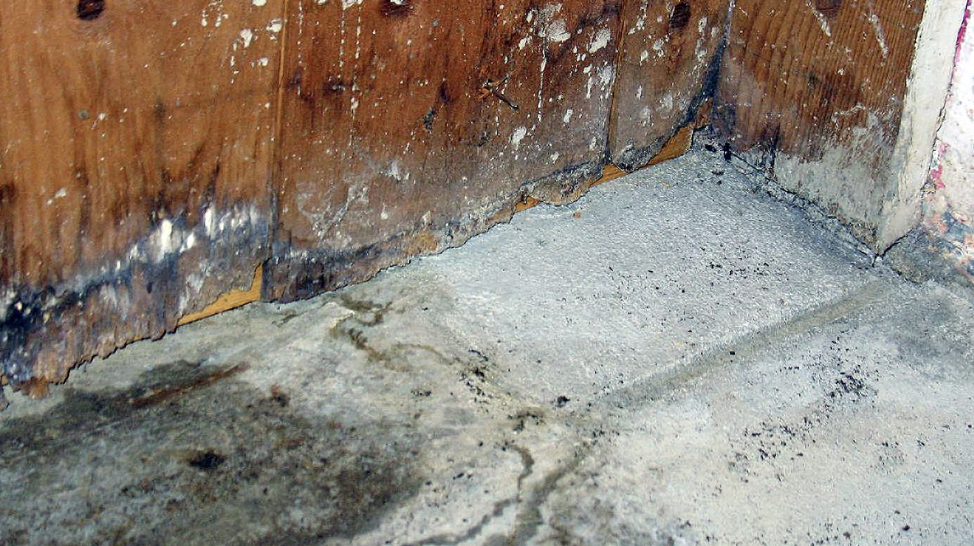
Yes. A slab leak can create conditions favorable to mold when moisture reaches organic or porous building materials and remains there.
Concrete itself is not the only concern. Water may reach drywall paper, wood framing, carpet backing, cabinetry, insulation, dust, and other materials that can support microbial growth.
This risk is greater when the leak is slow and remains unnoticed for an extended period.
Warning signs may include:
- Persistent musty odor
- Discoloration near baseboards
- Swollen drywall
- Recurring dampness
- Warped flooring
- Visible microbial growth
If mold has developed after a plumbing or water-loss event, PuroClean also provides professional mold removal and remediation.
Moisture problems can occur in other concealed areas of the home as well. For homeowners dealing with roof or upper-level moisture, our attic mold cleanup in Palmdale resource explains how hidden moisture can create similar issues in attic materials.
Does Homeowners Insurance Cover Slab Leak Damage?
Insurance coverage depends on the policy and cause of the loss.
A policy may treat the failed plumbing component differently from the resulting water damage. For example, coverage may potentially apply to portions of sudden water damage while excluding maintenance issues, deterioration, or the cost of replacing the failed pipe itself.
HomeAdvisor and other cost guides similarly note that homeowners need to account separately for plumbing repair, foundation access, and resulting water-damage repairs when budgeting for the project.[1]
Because policies vary, homeowners should contact their carrier or insurance professional and ask specifically about:
- Resulting water damage
- Access required to reach the failed pipe
- Flooring and drywall
- Structural drying
- Mold limitations or exclusions
- Plumbing repair
- Build-back and reconstruction
Photographs, moisture documentation, plumbing reports, invoices, and restoration records may also be useful during the claims process.
How to Reduce the Cost of a Slab Leak
The easiest way to reduce the total financial impact of a slab leak is to reduce how long water is allowed to escape into the structure.
Homeowners should act quickly when they notice:
- A sudden increase in water bills
- Warm flooring
- Wet carpet without an obvious source
- The sound of water when fixtures are off
- Low water pressure
- Recurring damp spots
- Warping flooring
- Musty odors
- Moisture around baseboards
If a significant active leak is suspected, shutting off the appropriate water supply can help reduce additional damage until a plumber arrives.
Once the plumbing repair is completed, do not assume hidden materials are dry simply because visible water is gone. Early moisture evaluation can sometimes prevent a small restoration project from becoming a larger one.
How PuroClean Helps After a Slab Leak
PuroClean of West Antelope Valley focuses on the property-damage side of a slab leak.
After the plumbing source has been identified and stopped, our restoration process may include:
- Evaluating affected rooms and materials
- Identifying visible and hidden moisture
- Removing standing water when necessary
- Removing materials that cannot be restored
- Structural drying
- Dehumidification
- Moisture monitoring
- Cleaning affected materials
- Evaluating potential secondary mold conditions
- Preparing the property for repairs or reconstruction
The important point is that a slab leak is often a two-trade problem: the plumber fixes the plumbing; the restoration company addresses the water loss.
If your Palmdale home has recently had a slab leak repaired, or you suspect water may still be trapped beneath flooring or inside walls, PuroClean of West Antelope Valley can help evaluate the affected area.
Slab Leak Repair Cost FAQs
What is the average cost to fix a slab leak?
Current national estimates commonly place slab leak repair around $630 to $4,400, with averages near $2,300.[1][2] However, difficult access, pipe rerouting, multiple leaks, flooring removal, concrete work, and water damage can push the total significantly higher.
Why are slab leaks expensive?
The plumbing is concealed beneath or within the concrete slab, which makes locating and accessing the failed pipe more complicated than repairing an exposed plumbing line. Flooring, concrete, cabinetry, and other finished materials may also need to be considered.
Is it cheaper to repair or reroute a slab leak?
It depends on the plumbing system and location of the failure. A localized repair may cost less when one accessible pipe section has failed. Rerouting can make more sense when accessing the existing line would be highly destructive or when the condition of the plumbing makes another future failure more likely. A licensed plumber should make that determination.
Does PuroClean repair the leaking pipe?
PuroClean’s role is primarily water damage restoration. A licensed plumbing professional should locate and repair or reroute the failed plumbing line. PuroClean can then address moisture, damaged materials, drying, cleanup, and restoration resulting from the leak.
Will flooring need to be removed?
Not necessarily. The decision depends on flooring type, moisture level, duration of exposure, contamination, and whether the materials underneath can be dried effectively. Some flooring can be restored while other materials may need removal.
How quickly can mold become a concern?
Mold risk increases when moisture remains in porous materials. Rather than relying on a single fixed timeline, homeowners should treat prolonged hidden moisture as a reason for prompt inspection and drying.
Will insurance pay for slab leak water damage?
Possibly, depending on the policy and cause of loss. Resulting water damage may be treated differently from the failed plumbing component itself. Contact your insurer for a determination based on your specific policy.
Need Help With Slab Leak Water Damage in Palmdale?
If the pipe has already been repaired but your floors, walls, cabinets, or other materials remain wet, the job may not be finished yet.
PuroClean of West Antelope Valley provides professional slab leak water damage cleanup and structural drying for Palmdale homeowners. We can evaluate where the water traveled, determine which materials remain affected, and help develop an appropriate restoration plan.
References
- Angi. “Biohazard Remediation.” Current consumer pricing guidance reports that many residential biohazard cleanup projects average approximately $3,000 to $5,000. Angi Biohazard Remediation Cost Guide.
- Occupational Safety and Health Administration. “Bloodborne Pathogens — 29 CFR 1910.1030.” OSHA Bloodborne Pathogens Standard.
- Centers for Disease Control and Prevention. “Environmental Cleaning Procedures.” CDC Environmental Cleaning Procedures.
- Damage Restoration Hero. “Damage Restoration SEO: 2026 Guide.” See the restoration cost-by-market section for broader restoration project pricing benchmarks. Damage Restoration Cost by Market.