


Attic Mold Cleanup Palmdale: Can Attic Mold Spread Into the Rest of the House?
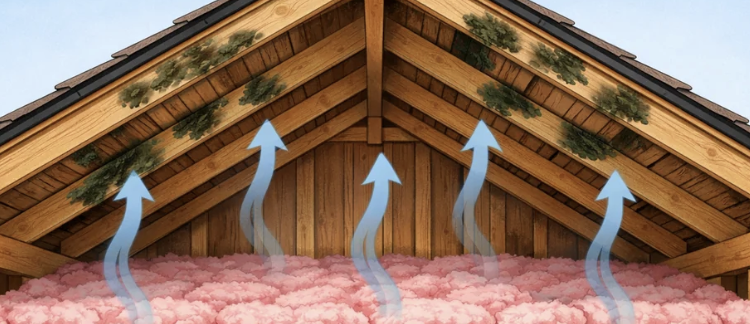
Yes. Attic mold can affect other parts of a home when spores, contaminated dust, or moisture-related air movement reach occupied areas through openings, ductwork, attic access points, wall cavities, or other pathways. That does not mean every attic mold problem automatically spreads throughout the house, but the risk increases when contamination is extensive, disturbed, connected to HVAC pathways, or tied to an unresolved moisture problem.
In Palmdale homes, attic mold may begin around a roof leak, condensation area, wet insulation, or another localized moisture source. If the problem is ignored, mold can continue growing across roof decking, rafters, insulation, and other attic materials. Depending on the home’s construction and airflow, particles and odors may then migrate beyond the attic.
If mold is already visible in your attic, PuroClean of West Antelope Valley provides professional attic mold cleanup in Palmdale to help evaluate affected materials, identify moisture conditions, and develop an appropriate remediation plan.
How Attic Mold Can Spread
Mold reproduces by releasing microscopic spores into the surrounding environment. The U.S. Environmental Protection Agency notes that mold spores are naturally present in indoor and outdoor air, but indoor mold growth becomes a problem when excessive moisture allows colonies to develop on building materials.[1]
When mold is growing in an attic, spores and contaminated dust may be released from:
- Roof decking
- Rafters and trusses
- Insulation
- Drywall
- Stored cardboard or belongings
- Dust accumulated on attic surfaces
Those particles can move when air flows through the attic or when contaminated materials are disturbed.
The important distinction is that mold growth does not physically crawl from the attic into every room below. Instead, spores and particles can be transported to other areas, and new growth can develop if those areas also contain sufficient moisture.
Air Movement Between the Attic and Living Space
Attics are not always completely isolated from the conditioned living area below.
Air can move through small openings such as:
- Recessed lights
- Electrical penetrations
- Plumbing openings
- Ceiling fixtures
- Attic access hatches
- Wall top plates
- Gaps around ducts
- Other penetrations in the ceiling plane
The U.S. Department of Energy has documented that air leakage pathways can connect attics and living spaces, allowing air movement through ceiling assemblies and other penetrations.[2]
If contaminated attic dust or spores are present near those pathways, some material may move into adjacent spaces.
This is one reason attic mold remediation focuses not only on cleaning visible growth but also on reducing unnecessary disturbance and controlling the work area.
Can HVAC Ducts Spread Mold From the Attic?
Potentially, yes, depending on the HVAC system and whether ducts, returns, or equipment in the attic are damaged, leaking, or contaminated.
Many homes have ductwork running through attic spaces. If a duct system has gaps or damaged connections, attic air may be pulled into or pushed through those openings.
Possible concerns include:
- Disconnected duct joints
- Damaged flexible ducts
- Leaking return-air ducts
- Contaminated HVAC equipment
- Condensation around ducts
- Mold growing directly on or near HVAC components
The EPA notes that visible mold growth inside hard-surface ducts or HVAC components can require professional evaluation and that moisture problems should be corrected before cleaning.[3]
Not every attic mold problem means the HVAC system is contaminated. The system should be evaluated based on actual conditions rather than assumed to be affected.
Attic Access Doors and Ceiling Openings
Attic access points are another obvious connection between the attic and living space.
When an attic hatch or pull-down ladder is opened, air and dust from the attic can enter the room below. If mold growth is nearby or contaminated insulation has been disturbed, particles may fall or become airborne.
This risk can be greater when:
- The attic opening is located near visible mold
- Insulation is contaminated
- Materials are moved without containment
- Homeowners attempt aggressive brushing or scraping
- Attic debris is carried through occupied rooms
Professional remediation procedures are designed to reduce unnecessary movement of contaminated material during cleanup.
Wall Cavities and Hidden Pathways
Some attic areas connect with wall cavities or chases that continue downward through the home.
Potential pathways may include:
- Plumbing chases
- Electrical runs
- Open wall cavities
- Mechanical chases
- Framing gaps
- Utility penetrations
These connections can allow air movement between portions of the building.
If the attic mold resulted from a roof leak, moisture may also have traveled down into walls or ceilings before anyone discovered the source. In that situation, mold in lower areas may not be caused solely by airborne spread—it may have developed because the same water intrusion affected multiple building materials.
Our guide on whether a roof leak can cause mold in the attic explains how roof water can travel beyond the obvious point of entry.
Can Attic Mold Cause Odors in the House?
Yes. A persistent musty odor can sometimes move from an attic into occupied portions of the home through air leakage pathways.
However, odor alone does not prove that mold spores have spread throughout the property.
A musty smell may also indicate:
- Wet insulation
- Hidden water damage
- Mold inside a wall or ceiling
- HVAC moisture problems
- Another damp area unrelated to the attic
If an odor appears strongest near an attic hatch, upper hallway, ceiling vent, or top-floor room, the attic is one possible source worth evaluating.
Signs Mold May Be Affecting Other Areas
Attic mold should not automatically be assumed to have spread throughout the house, but certain conditions may justify a broader inspection.
Possible signs include:
- Visible mold around attic access points
- Musty odor in upper-floor rooms
- Water staining on ceilings or walls
- Visible growth around ceiling penetrations
- Mold or staining near HVAC registers
- Recurring moisture below an attic leak
- Contaminated insulation falling through openings
- Evidence of roof water traveling into wall cavities
The CDC recommends addressing visible indoor mold and correcting the moisture condition that supports it rather than relying on mold color or species to determine whether action is needed.[4]
If mold is visible somewhere outside the attic, that area should be evaluated on its own rather than assuming it came from the attic.
Why Containment Matters During Cleanup
One of the most important parts of professional mold remediation is controlling the work area.
Disturbing moldy materials can release additional spores and particles into the air. Scraping roof decking, removing contaminated insulation, cutting drywall, or carrying debris through occupied portions of the home can increase particle movement if the work is not controlled.
The EPA’s mold-remediation guidance describes containment as an important method for limiting the spread of mold during larger cleanup projects.[5]
Depending on the extent of contamination, professional remediation may involve:
- Isolating the affected work area
- Controlling access
- Removing contaminated materials carefully
- Bagging debris before transport
- Cleaning affected surfaces
- Using appropriate air-control methods
- Cleaning the work area after remediation
The exact approach depends on the size, location, and complexity of the attic condition.
Why the Moisture Source Still Matters
Even if mold spores move from the attic into another part of the home, they generally need moisture to establish new growth.
This is why correcting the original moisture source remains essential.
Common causes of attic mold include:
- Roof leaks
- Condensation
- Bathroom exhaust vented into the attic
- HVAC condensate leaks
- Plumbing leaks
- Wet insulation
- Air leakage from occupied rooms
Our guide What Causes Mold to Grow in an Attic? explains these moisture sources in more detail.
The EPA consistently emphasizes that mold control depends on moisture control. If water intrusion or condensation continues, cleaning mold without correcting the cause can allow the problem to return.[1]
When Professional Remediation Makes Sense
Professional evaluation becomes more useful when attic mold is extensive, difficult to access, or potentially connected to other parts of the home.
Consider professional remediation when:
- Mold covers multiple sections of roof decking
- Insulation is contaminated
- Mold is near HVAC equipment or ducts
- The attic has repeatedly leaked
- A strong odor is entering occupied areas
- Ceilings or walls below the attic are water damaged
- Contamination is near the attic access opening
- The moisture source has not been identified
- Previous cleaning did not stop the problem from returning
PuroClean of West Antelope Valley provides professional attic mold cleanup in Palmdale along with broader mold removal and remediation services when contamination affects additional parts of the property.
If cost is part of your decision, our 2026 attic mold cleanup cost guideline explains the major factors that influence remediation pricing.
Attic Mold Spread FAQs
Can mold spores from the attic get downstairs?
Yes, spores and contaminated dust can potentially move through air leakage pathways, open attic access points, wall cavities, or other building connections. Whether they actually cause mold growth elsewhere depends largely on whether suitable moisture conditions are also present.
Can attic mold get into air ducts?
It can if ductwork or HVAC components are exposed to contamination or have leaks that allow attic air to enter the system. However, an attic mold problem does not automatically mean the duct system is contaminated.
Can attic mold make the house smell musty?
Yes. Musty odors can migrate from the attic into occupied rooms through attic access openings, ceiling penetrations, or air leakage pathways. Odor alone does not identify the exact source, so other hidden moisture conditions should also be considered.
Can attic mold spread through the ceiling?
Mold does not simply grow through a dry ceiling as though it were moving across a surface. However, spores may move through openings, and water from the same roof or plumbing leak can affect both attic materials and ceiling drywall, creating separate mold growth in each area.
Can disturbing attic mold make it spread?
Yes. Scraping, brushing, removing contaminated insulation, or otherwise disturbing moldy materials can release additional spores and particles. This is one reason larger remediation projects often use containment and controlled removal procedures.
Will cleaning the attic stop mold from spreading?
Cleanup is only part of the solution. The moisture source must also be corrected, contaminated materials must be handled appropriately, and surrounding areas should be evaluated when there is evidence that water or contamination extends beyond the attic.
Does attic mold mean the whole house has mold?
No. Mold discovered in an attic does not automatically mean mold is growing throughout the home. The attic and any other suspected areas should be evaluated based on actual moisture, visible growth, odors, water damage, and building pathways rather than assuming whole-house contamination.
Concerned Attic Mold May Be Affecting Your Palmdale Home?
If you have discovered attic mold along with musty odors, contaminated insulation, ceiling stains, HVAC concerns, or visible growth near the attic access, it may be worth evaluating more than the visible attic surface alone.
PuroClean of West Antelope Valley can inspect affected attic materials, identify moisture-related conditions, and develop an appropriate remediation plan for your Palmdale property.
References
- U.S. Environmental Protection Agency — A Brief Guide to Mold, Moisture and Your Home
- U.S. Department of Energy — Air Sealing Your Home
- U.S. Environmental Protection Agency — Should You Have the Air Ducts in Your Home Cleaned?
- Centers for Disease Control and Prevention — About Mold
- U.S. Environmental Protection Agency — Mold Remediation: Containment and Cleanup Methods