


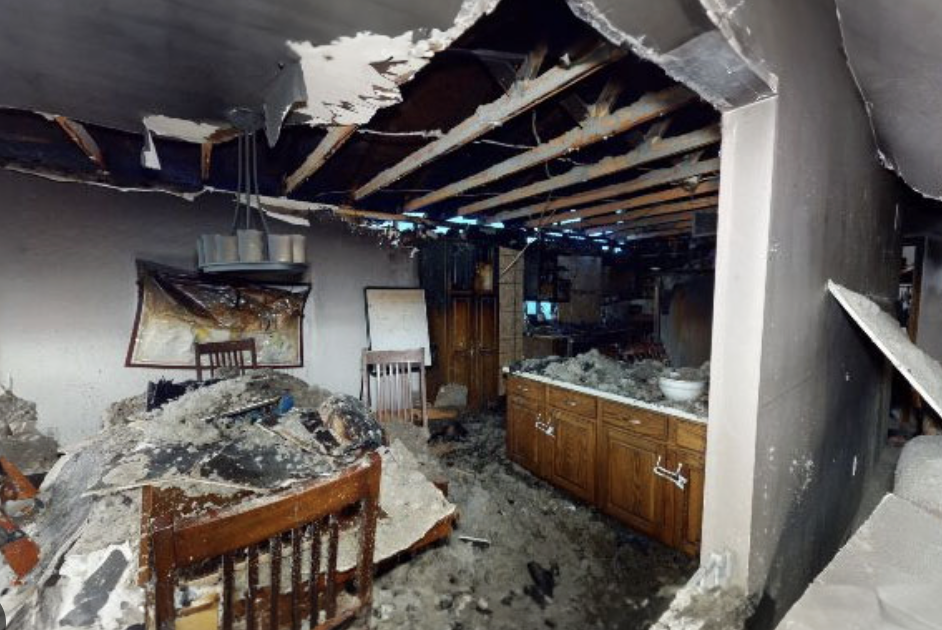
Smoke Damage Cleanup Palmdale: Can Soot Permanently Damage Walls and Ceilings?
Yes. Soot can permanently stain or damage walls and ceilings when residue remains on the surface, penetrates porous materials, reacts with finishes, or is cleaned using the wrong method. After a fire, soot particles can settle throughout a Palmdale home—even in rooms that were never touched by flames. The longer residue remains on paint, drywall, wood, ceilings, trim, and other materials, the more difficult restoration can become.
Some soot can be removed successfully when cleanup begins quickly and the underlying material is still in good condition. Other surfaces may require specialized cleaning, sealing, repainting, or replacement when residue has penetrated deeply or caused permanent discoloration.
PuroClean of West Antelope Valley provides professional smoke damage cleanup in Palmdale for homes affected by soot, smoke residue, persistent odors, and other fire-related contamination.
What Is Soot?
Soot is a fine particulate residue created when materials do not burn completely. After a structure fire, kitchen fire, garage fire, appliance fire, or other combustion event, microscopic particles can become suspended in smoke and travel throughout the building.
As the smoke cools, those particles settle onto surfaces such as:
- Walls
- Ceilings
- Cabinets
- Doors and trim
- Furniture
- Flooring
- Windows
- HVAC registers
- Light fixtures
- Personal belongings
Soot is not always a dry black powder. Its characteristics depend on what burned, how hot the fire became, how much oxygen was available, and how smoke traveled through the home.
That distinction matters because a cleaning method that works on one type of residue may smear or damage another.
How Soot Damages Walls and Ceilings
Soot can damage walls and ceilings in several ways.
Surface Staining
The most obvious effect is discoloration. Soot may leave gray, brown, or black staining across painted surfaces, especially near the fire area, doorways, vents, and ceilings.
Residue Penetration
Some residues can penetrate porous paint, unfinished drywall, wood, acoustic ceiling materials, and other absorbent surfaces. Once residue moves beneath the surface, ordinary wiping may no longer remove it completely.
Finish Damage
Smoke residues can contain compounds generated by burned plastics, fabrics, food, wood, oils, and synthetic materials. Depending on the fire, these residues may affect paint finishes, varnishes, metals, plastics, and other materials.
Odor Absorption
Walls and ceilings can also absorb smoke odor. A surface may look substantially cleaner after soot removal while continuing to release a burnt or smoky smell.
This is why soot cleanup is usually treated as part of a broader fire damage restoration process rather than simply a cosmetic cleaning job.
Why Different Types of Soot Require Different Cleaning Methods
Fire restoration professionals do not assume every soot deposit should be cleaned the same way.
The type of residue depends heavily on what burned.
Dry Smoke Residue
Fast-burning, high-temperature fires may produce finer, drier particles. These residues may sometimes respond well to dry-cleaning techniques, but they can smear if liquid cleaning is introduced too early.
Wet or Oily Smoke Residue
Slow-burning fires may create heavier, stickier contamination. Residue can adhere strongly to walls and ceilings and may require different cleaning agents or techniques.
Protein-Based Residue
Kitchen fires can leave a thin film that may be difficult to see but produces a strong odor. Because the surface does not always appear heavily blackened, homeowners may underestimate how much cleaning is required.
Synthetic Material Residue
Burned plastics, electronics, rubber, synthetic fabrics, and household products may produce dense smoke and difficult residues that can settle across a wide portion of the home.
Identifying how the soot behaves helps determine whether a wall or ceiling can be cleaned successfully or whether sealing, repainting, or replacement is ultimately necessary.
Soot Damage on Painted Walls
Painted drywall is one of the most common surfaces affected by smoke and soot after a residential fire.
Whether the wall can be restored depends on several factors:
- Type of paint
- Age and condition of the finish
- Amount of soot
- Type of smoke residue
- Heat exposure
- Length of time the soot remained
- Whether someone attempted to clean the surface already
Gloss and semi-gloss finishes may sometimes tolerate cleaning differently than flat or matte paint, which can be more porous and easier to stain.
A professional restoration technician may test a small area before selecting a larger cleaning approach. If the finish cannot be restored satisfactorily, the surface may eventually require sealing and repainting after soot and odor contamination have been addressed.
Soot Damage on Ceilings
Ceilings are particularly vulnerable because smoke and heated gases rise during a fire.
As smoke travels upward, soot can collect on ceiling surfaces before spreading into adjoining rooms and hallways.
Common patterns include:
- Dark deposits above the fire area
- Soot around ceiling vents
- Residue around recessed lighting
- Gray or black streaks near ceiling-wall intersections
- Discoloration in rooms away from the original fire
Ceiling texture can make cleanup more complicated. Popcorn-style ceilings, acoustic materials, and other textured finishes provide more surface area where fine particles can collect.
A heavily contaminated ceiling may also be difficult to scrub without damaging the finish, which is another reason restoration methods should be selected based on the material rather than simply using household cleaners.
Can Soot Permanently Damage Drywall?
Yes. Drywall can become permanently affected when soot penetrates the painted surface, smoke odor becomes embedded in porous materials, or the board itself is damaged by fire, heat, or firefighting water.
Minor surface contamination may sometimes be cleaned without removing the drywall.
Replacement becomes more likely when drywall is:
- Heavily charred
- Structurally deteriorated
- Saturated by firefighting water
- Deeply contaminated
- Holding persistent odor after appropriate cleaning
- Damaged beyond a reasonable restoration condition
The decision is usually based on the actual condition of the material rather than the color of the visible soot alone.
Why Improper Soot Cleaning Can Make Damage Worse
One of the biggest mistakes homeowners can make after a fire is immediately scrubbing soot with a wet rag and household cleaner.
Some dry soot particles can smear when water is introduced. Instead of lifting the residue, wiping can spread it across the paint or push particles farther into porous surfaces.
Other common mistakes include:
- Scrubbing aggressively
- Using abrasive cleaners
- Applying household degreasers without testing
- Painting directly over uncleaned soot
- Using fragrance products to mask smoke odor
- Running contaminated HVAC systems before evaluation
Another problem is cross-contamination. Cleaning one surface with a heavily contaminated rag or sponge can transfer soot to another area.
Professional soot and odor removal in Palmdale uses cleaning methods selected for the residue and material involved rather than relying on one product for every surface.
How Professional Soot Cleanup Works
The exact restoration process depends on the fire and the materials affected, but professional smoke and soot cleanup generally begins with understanding how far contamination traveled.
1. Inspect the Property
The restoration team evaluates the fire area and adjoining rooms for visible soot, smoke odor, residue, heat damage, and contamination pathways.
2. Determine the Type of Residue
Technicians may test surfaces and identify which cleaning methods are appropriate for different materials.
3. Remove Loose Particles
Loose dry residue may be removed before liquid cleaning is introduced. This can help reduce unnecessary smearing.
4. Clean Walls and Ceilings
Different areas may require dry cleaning, specialized cleaning agents, controlled washing, or other restoration methods depending on the finish and residue.
5. Evaluate Contents
Soot rarely settles only on the building itself. Furniture, décor, clothing, household goods, and other belongings may also require attention.
PuroClean provides contents cleaning after a fire in Palmdale when restorable belongings have been affected by smoke and soot.
6. Address Odor
Once contaminated debris and soot have been removed, remaining odor sources can be addressed using appropriate deodorization methods.
7. Determine What Requires Repair
If walls, ceilings, flooring, or other materials cannot be restored, removal or reconstruction may be incorporated into the recovery plan.
Why Smoke Odor May Remain After Soot Is Removed
Visible soot and smoke odor are related, but they are not exactly the same restoration problem.
Odor-causing compounds may penetrate porous materials including:
- Drywall
- Wood framing
- Insulation
- Carpet and padding
- Upholstery
- Cabinet materials
- Window coverings
- Clothing and textiles
This explains why a room can look visually clean but still smell like smoke.
Simply covering that odor with air fresheners does not remove the source. Effective deodorization generally follows source removal and physical cleaning.
For persistent smoke residue and odor conditions, PuroClean of West Antelope Valley provides professional soot and odor removal in Palmdale.
When Walls and Ceilings Can Be Restored vs. Replaced
Not every soot-covered wall or ceiling needs to be torn out.
Many surfaces can potentially be restored when:
- The underlying material remains structurally sound
- Soot is primarily surface-level
- Residue responds to professional cleaning
- Persistent odor can be addressed
- There is no significant heat or water damage
Replacement becomes more likely when:
- Materials are burned or charred
- Drywall has deteriorated
- Firefighting water caused substantial damage
- Residue penetrated deeply into porous materials
- Odor remains after appropriate restoration attempts
- Materials cannot be cleaned to an acceptable condition
The objective is not to automatically replace everything affected by smoke. Professional fire restoration attempts to determine which materials can reasonably be cleaned and restored and which cannot.
For broader losses involving structural fire damage, soot, smoke, water, and contents, visit our fire damage restoration page.
Soot Damage to Walls and Ceilings FAQs
Can soot permanently stain painted walls?
Yes. Soot can permanently discolor painted walls when residue penetrates porous finishes, remains on the surface for an extended period, reacts with the finish, or becomes smeared during improper cleaning. Some walls can be restored through professional cleaning, while others may require sealing and repainting.
Can you just paint over soot?
Painting directly over soot is generally not a good restoration strategy. Residue and odor should first be properly cleaned and addressed. Otherwise staining or odors may remain beneath the new coating or eventually become noticeable again.
Can I clean soot with soap and water?
Not always. Some soot responds poorly to immediate wet cleaning and may smear across the surface. The appropriate method depends on the type of residue and wall or ceiling finish. Testing the material before widespread cleaning is important.
Why does soot collect on ceilings?
Smoke and heated gases rise during a fire. As smoke reaches the ceiling and moves through the property, fine soot particles settle on ceiling surfaces, walls, vents, fixtures, and other materials.
Can soot damage rooms far away from the fire?
Yes. Smoke can move through hallways, doorways, HVAC pathways, stairways, and other openings. A fire contained to one room can therefore leave residue in areas that experienced no direct flame damage.
Does removing soot also remove smoke odor?
Removing soot is an important part of odor control, but it may not eliminate every smoke odor. Odor-causing compounds can penetrate porous materials and belongings, which may require additional cleaning and deodorization.
When should I call a professional for soot cleanup?
Professional cleanup is especially appropriate when soot affects multiple rooms, ceilings, porous materials, HVAC areas, furniture, or belongings; when residue smears during cleaning; or when strong smoke odor remains after basic surface cleaning.
Need Soot Cleanup for Walls or Ceilings in Palmdale?
Soot damage can become harder to restore when residue is allowed to remain or is spread through improper cleaning. If walls, ceilings, furniture, or other parts of your Palmdale home have been affected by fire and smoke, early evaluation can help determine which materials can be cleaned and which require additional restoration.
PuroClean of West Antelope Valley provides professional smoke damage cleanup in Palmdale, soot removal, deodorization, contents cleaning, and broader fire damage restoration services.