


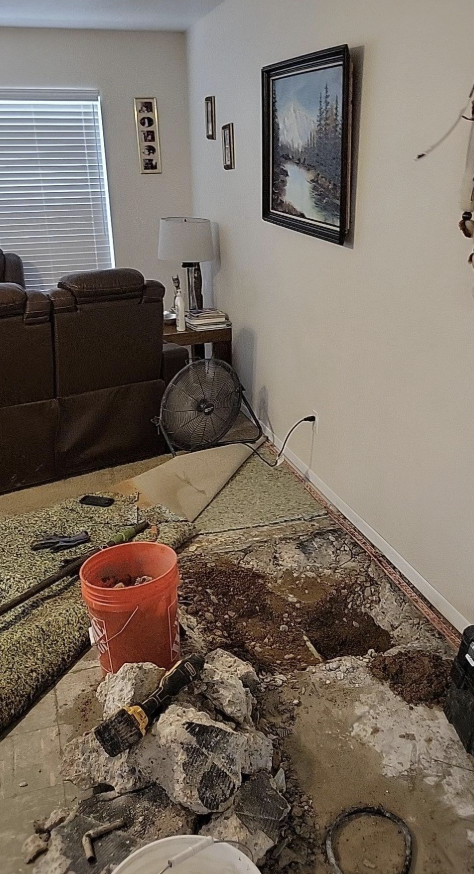
If you find or strongly suspect a slab leak in a Lancaster home, the first priorities are to stop additional water, contact a plumber or leak-detection professional, protect the property from further damage, and begin addressing any water that has already entered flooring, walls, cabinets, or other building materials.
Repairing the failed plumbing line is only one part of the response. If water has already spread beneath flooring or into surrounding materials, extraction, moisture detection, and structural drying may also be necessary.
PuroClean of West Antelope Valley provides professional slab leak water damage cleanup in Lancaster for properties affected by concealed moisture, wet flooring, damaged drywall, cabinets, and other water-related problems after the plumbing source has been controlled.
What Should You Do First After Finding a Slab Leak?
The immediate goal is to prevent additional water from entering the property and limit how far the existing moisture can spread.
A practical response usually follows this order:
- Control or shut off the water source.
- Contact a plumber or leak-detection professional.
- Address electrical or safety hazards.
- Move vulnerable belongings away from wet areas.
- Document visible damage.
- Remove standing water when it is safe to do so.
- Determine how far moisture traveled.
- Begin drying affected building materials.
The U.S. Environmental Protection Agency emphasizes acting quickly after indoor leaks because prolonged moisture increases the likelihood of material damage and mold growth.[1]
1. Stop or Control the Water Source
If an active plumbing line is still leaking, stopping additional water is the first priority.
Depending on the situation, this may involve:
- Turning off the main household water valve
- Closing a local shutoff valve when available
- Contacting a plumber immediately
- Avoiding unnecessary water use until the leak is diagnosed
If you cannot determine how to safely stop the water, contact a plumbing professional rather than allowing the loss to continue.
The less time water continues entering the structure, the easier it may be to limit saturation of flooring, drywall, cabinets, and nearby rooms.
2. Contact a Plumber or Leak-Detection Professional
A plumber or leak-detection professional is typically needed to identify and repair the failed plumbing line.
Because slab plumbing is concealed, diagnosis may require specialized equipment and testing.
Possible plumbing repairs may involve:
- Locating the leaking line
- Isolating the damaged section
- Repairing or replacing the failed pipe
- Rerouting plumbing when appropriate
- Confirming that the active leak has stopped
The plumbing repair should generally be completed or controlled before the drying process can be considered complete.
3. Watch for Electrical Hazards
Water and electrical systems can create serious hazards.
Use particular caution if water has reached:
- Electrical outlets
- Extension cords
- Powered appliances
- Electrical panels
- Wiring inside wet walls
Do not enter standing water when energized electrical equipment may be involved.
4. Protect Furniture and Belongings
If it can be done safely, move furniture, rugs, boxes, electronics, and other belongings away from the wet area.
This can help:
- Reduce additional property damage
- Expose wet flooring for inspection
- Improve access for extraction
- Prevent furniture legs or boxes from remaining in standing water
Avoid placing wet belongings directly against dry walls or unaffected flooring.
5. Document Visible Damage
Before discarding damaged materials or moving large amounts of property, it can be useful to document the condition of the area.
Take photographs or video of:
- Standing water
- Wet flooring
- Damaged baseboards
- Discolored drywall
- Swollen cabinets
- Damaged personal property
- The apparent plumbing source when visible
Insurance coverage varies by policy and by the cause of the plumbing loss, so homeowners should contact their insurer for guidance about documentation and claim requirements.
6. Remove Standing Water
Once the active leak is controlled and the area is safe, standing water should be removed as quickly as practical.
Water left on floors can continue moving into:
- Carpet and padding
- Flooring underlayment
- Floor seams
- Baseboards
- Drywall
- Cabinet bases
- Adjacent rooms
For larger losses, professional extraction equipment can remove bulk water more efficiently than household towels or small wet vacuums.
PuroClean of West Antelope Valley provides emergency water extraction in Lancaster when a slab leak or other plumbing failure has created standing water or widespread saturation.
7. Check for Hidden Moisture
One of the most important steps after a slab leak is determining whether water traveled beyond the area that looks wet.
Moisture may remain:
- Beneath flooring
- Behind baseboards
- Inside lower walls
- Under cabinets
- Inside closets
- In adjoining rooms
The EPA notes that after a leaking pipe or other indoor water event, surrounding carpet, drywall, paneling, and other materials should be checked for water damage or mold growth.[2]
Professional moisture meters and other inspection methods can help identify affected areas that are not obvious by sight or touch.
8. Inspect Flooring and Baseboards
Flooring is often one of the primary areas affected by a slab leak because the water originates beneath or immediately adjacent to the floor assembly.
Look for:
- Swollen laminate
- Buckled flooring
- Loose floor materials
- Wet carpet
- Darkened flooring edges
- Wood floor cupping or warping
- Wet or swollen baseboards
Water beneath flooring may remain concealed even after the exposed surface feels dry.
Our guide to what happens when water gets under flooring explains how moisture can become trapped beneath finished surfaces and affect materials underneath.
9. Begin Structural Drying
Removing standing water is not the same as completely drying the structure.
Once bulk water has been removed, drying may involve:
- Air movement
- Dehumidification
- Selective material removal when necessary
- Moisture monitoring
- Drying concealed areas beneath or behind finished materials
The EPA recommends drying water-damaged areas and materials within approximately 24 to 48 hours when possible to help prevent mold growth.[1]
This does not mean every wet material develops mold at an exact hour. It means prompt moisture removal is an important part of preventing secondary damage.
10. Watch for Mold Conditions
A slab leak does not automatically mean mold is present.
However, mold can become a concern when moisture remains in materials such as:
- Drywall paper
- Wood
- Carpet backing
- Carpet padding
- Cabinet materials
- Dust and debris beneath flooring
The EPA explains that mold spores may begin growing when they land on damp materials and that controlling moisture is the central strategy for preventing indoor mold growth.[3]
Possible warning signs include:
- Persistent musty odors
- Visible spotting or growth
- Recurring dampness
- Discoloration
- Moisture that remains after the plumbing repair
Our guide to slab leaks, mold, and structural damage in Lancaster explains how prolonged concealed moisture can affect surrounding building materials.
Plumber vs. Restoration Company: Who Does What?
After a slab leak, homeowners sometimes assume that repairing the pipe completes the entire project.
In reality, plumbing repair and water-damage restoration address two different problems.
Plumber or Leak-Detection Professional
The plumbing professional typically:
- Locates the failed pipe
- Stops the active leak
- Repairs or replaces plumbing
- Confirms the plumbing system is functioning correctly
Water-Damage Restoration Company
The restoration company may:
- Remove standing water
- Map the moisture footprint
- Evaluate flooring and drywall
- Dry structural materials
- Monitor moisture levels
- Address mold conditions when present
The simple distinction is: the plumber repairs the pipe; the restoration company addresses the water that escaped from it.
What Should You Avoid Doing After a Slab Leak?
Some responses can create additional problems or make it harder to determine whether the structure is actually dry.
Avoid:
- Assuming the problem is over because the plumber repaired the pipe
- Painting over water stains before the area is dry
- Replacing flooring over a wet slab or underlayment
- Ignoring damp baseboards or lower drywall
- Waiting for musty odors or visible mold before investigating moisture
- Entering standing water around possible electrical hazards
The EPA recommends fixing the source of the moisture and drying water-damaged materials promptly rather than allowing damp conditions to continue.[4]
When to Call a Water Damage Professional
Professional water-damage restoration is particularly useful when moisture has traveled beyond a small, easily accessible area.
Consider professional help when:
- Standing water is present
- Water has moved beneath flooring
- Multiple rooms are affected
- Baseboards or drywall are wet
- Cabinets are swollen or damp
- Flooring is buckling or warping
- Musty odors are developing
- The leak may have been active for an extended period
- You cannot determine how far the water traveled
EPA guidance also recommends professional assistance when water damage is extensive or when the affected water or materials present conditions that are difficult to safely clean and dry.[1]
Slab Leak Next Steps FAQs
Should I shut off the water after finding a slab leak?
If an active plumbing line is leaking and it is safe to do so, shutting off the appropriate valve or main household water supply can prevent additional water from entering the property until a plumber can evaluate the problem.
Should I call a plumber first?
A plumber or leak-detection professional should address the active plumbing failure. If water has already affected flooring, drywall, cabinets, or other building materials, a restoration company may also be needed.
Will the water under the floor dry on its own?
Some exposed moisture may evaporate, but water beneath flooring often has limited airflow. EPA guidance recommends actively drying water-damaged materials rather than assuming concealed moisture will resolve on its own.[1]
Does flooring need to be removed after a slab leak?
Not always. The decision depends on the flooring type, water source, amount of moisture, physical damage, duration of exposure, and whether the materials underneath can be effectively dried.
How quickly can mold become a concern?
There is no exact universal hour when mold begins growing after every leak. However, EPA guidance recommends drying damp and water-damaged materials within approximately 24 to 48 hours when possible to help prevent mold growth.[1]
Should I document the damage for insurance?
Photographs and video can help preserve a record of the conditions found after the leak. Insurance coverage and documentation requirements vary by policy and cause of loss, so homeowners should contact their insurer for claim-specific guidance.
Do I still need restoration after the pipe is fixed?
Possibly. Repairing the pipe stops additional water from escaping, but it does not remove moisture that already entered flooring, drywall, cabinets, or other building materials.
References
- U.S. Environmental Protection Agency — A Brief Guide to Mold, Moisture and Your Home. EPA guidance on acting quickly after leaks, correcting the water source, drying wet materials within approximately 24–48 hours, and seeking professional help for extensive water damage.
- U.S. Environmental Protection Agency — Mold Course Chapter 3: Finding Mold and Moisture. EPA guidance on checking carpet, drywall, paneling, and other surrounding materials after leaking pipes and on drying wet materials promptly.
- U.S. Environmental Protection Agency — What Is Mold?. EPA explanation of mold spores, damp building materials, and the role of moisture in indoor mold growth.
- U.S. Environmental Protection Agency — Ten Things You Should Know About Mold. Guidance emphasizing repair of water leaks, moisture control, and drying wet building materials within 24–48 hours.
Found a Slab Leak in Your Lancaster Home?
If a slab leak has already allowed water to reach flooring, baseboards, drywall, cabinets, or other areas of your Lancaster home, repairing the plumbing source may only be the first step.
PuroClean of West Antelope Valley can evaluate the affected area, identify hidden moisture, remove standing water when necessary, establish structural drying, and monitor affected materials as they dry.
Learn more about our professional slab leak water damage cleanup in Lancaster.