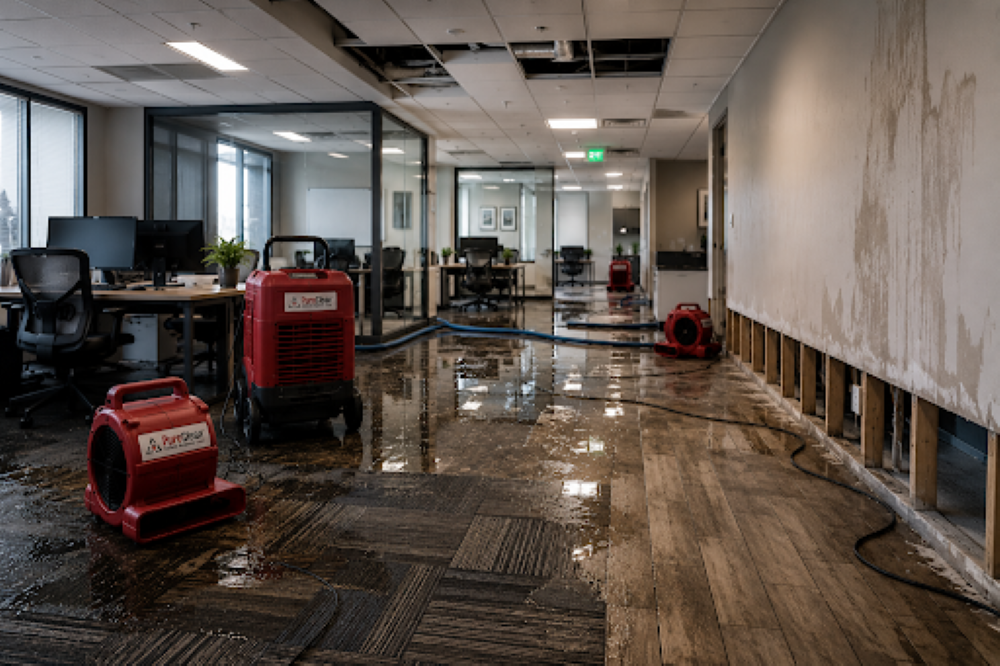
Protecting Your Office Interior After Water Damage
Water on office floors and walls can shut down work fast. If it is not handled quickly and the right way, carpet tiles, luxury vinyl plank (LVP), hardwood, and drywall can stain, warp, or grow mold. That leads to lost time, unhappy staff, and a space that is not safe to use.
Around late summer in the Toledo area, offices often deal with heavy rain, strong storms, HVAC leaks, sprinkler issues, or water coming in around roofs and windows. When that happens, fast, professional help makes the difference between a quick recovery and a long, messy repair. Commercial water damage restoration services are focused on stopping the damage, protecting finishes, and keeping people working whenever it is safe to do so.
First 24 Hours: Steps That Save Floors and Walls
The first day after a leak or flood is the most important. Water that sits in carpet backing, under LVP, in hardwood seams, or inside walls can start to break down materials and create the right conditions for mold growth. The faster the response, the better the chance of drying and saving what you already have.
Right away, building managers and tenants should:
- Shut off the source of water if it is safe to do so
- Move electronics, documents, and personal items away from wet areas
- Block off slippery areas so staff and visitors stay safe
- Call commercial water damage restoration services as soon as water is discovered
When a professional team arrives, you can expect a clear and organized process. The crew will usually start with:
- A safety check for electricity and trip hazards
- Moisture mapping with meters and thermal imaging
- A focus on high-traffic areas like lobbies, halls, and shared workspaces
- A plan that balances fast drying with the need to keep parts of the office open
The goal in those first hours is to stop water from spreading, protect finishes like baseboards and trim, and set up drying equipment so business can continue in clean, dry zones.
Saving Carpet Tile, LVP, and Hardwood in Active Offices
Not all floors respond to water the same way. Each common commercial flooring type has its own risks and needs.
For carpet tile, the concern is usually the backing and adhesive. Water can loosen glue, cause tiles to separate, or soak into the padding or subfloor below. A restoration team may:
- Extract standing water with high-powered equipment
- Lift select tiles to check and dry the subfloor
- Remove only the tiles that are too damaged to save
LVP is more resistant to light moisture, but seams and edges can let water reach the subfloor. If water gets trapped underneath, it can cause long-term damage. Pros often:
- Pull baseboards to let air reach hidden moisture
- Use low-profile air movers to dry under and around planks
- Remove a limited number of boards to access deep pockets of water
Hardwood is the most sensitive. Boards can cup or buckle when water soaks into the fibers. When addressed quickly careful drying can bring many floors back into shape. This may involve:
- Controlled drying to avoid cracking from drying too fast
- Targeted dehumidification to draw moisture out from below
- Sanding and refinishing later if the surface is affected
Throughout the process, clear communication with property managers and tenants is key. The team should explain what can be dried, what needs to be replaced, and how that will be documented for insurance. Safe walkways, posted signs, and quiet equipment where possible help staff keep working while repairs move forward.
Drying and Restoring Interior Walls Without Shutting Down
Water does not stay on the floor. It can wick up into drywall, travel sideways through insulation, and move around metal studs, trim, and paint. What looks like a small stain on the surface can hide saturated materials inside the wall, which is a serious concern in busy office spaces.
To handle this, commercial water damage restoration services rely on methods that are as gentle as possible on finished walls. These often include:
- Wall cavity drying using small drilled holes behind baseboards
- Air coming in through those openings to dry hidden areas
- Controlled demolition only in sections that cannot be saved
Moisture meters help confirm when drywall and framing are truly dry, not just dry to the touch. Continuous monitoring keeps the team from closing walls too early.
Indoor air quality also matters, especially in occupied offices. To support clean air and comfort, a restoration crew may:
- Set up containment plastic to separate work zones
- Run air filtration devices with HEPA filters
- Use odor control methods to handle musty smells
- Plan louder work like demolition or sanding during off-hours when possible
The goal is to make the space safe and comfortable while still moving the drying process along as quickly as possible.
Planning for Storm Season and Mechanical Failures
Late summer and early fall in the Toledo area can bring strong storms, heavy rain, and wind-driven water that tests every roof, window, and seal. Office buildings also face year-round risks from aging HVAC systems, plumbing lines above ceilings, and sprinkler malfunctions.
Some smart preventive steps include:
- Regular roof and window inspections to spot loose flashing or failing seals
- Checking HVAC drains and pans so they do not overflow
- Inspecting ceiling tiles for new stains that may signal small leaks
- Testing sprinkler systems on a schedule and fixing any issues right away
It also helps to have a simple, written water emergency plan. Many building owners choose to work on this with a restoration provider. A good plan usually covers:
- Which areas of the office are top priority to protect
- Who needs to be notified inside the company when a leak starts
- After-hours access and security rules
- Preferred communication methods during an emergency
When people know what to do and who to call, they can act fast and keep damage to a minimum.
Frequently Asked Questions About Office Water Damage
How Soon to Call Commercial Water Damage Restoration for Offices?
You should call as soon as you discover water. The first 24 hours are very important for protecting carpet tile, LVP, hardwood, and the walls and for lowering the chance of mold growth. A quick response from a professional team greatly improves the odds that materials can be dried and restored instead of removed and replaced.
Can My Office Stay Open During Water Damage Restoration?
In many situations, yes. Restoration professionals can isolate wet areas, create safe walkways, and plan the loudest or most disruptive work for evenings or weekends. The goal is to balance safety, drying speed, and business needs so that work can continue where it is safe.
Will Commercial Flooring Need Replacement After Water Damage?
Not always. Whether flooring can be saved depends on the type of floor, how long it stayed wet, and the cleanliness of the water. Carpet tiles, some LVP, and some hardwood floors can sometimes be dried and kept in place if the response is fast and the materials are in good shape.
How Long Does It Take to Dry Office Floors and Walls?
Many projects take around three to five days of active drying, though the time can be shorter or longer. The size of the wet area, the building materials, and how quickly the work begins all play a part. Moisture meters and thermal imaging help confirm when floors and walls are fully dry.
What Should My Business Do Now to Prepare for Future Water Damage?
Start by learning where water shutoff points are and making an internal contact list for emergencies. Post the phone number of a trusted commercial water damage restoration provider where staff can see it. A pre-loss walkthrough with that team can help map priority areas, review access and security, and build a simple, written response plan before a real emergency happens.
Protect Your Commercial Property From Costly Water Damage Today
When water interrupts your operations, every minute counts. At PuroClean of West Toledo, we respond quickly with proven commercial water damage restoration services that help minimize downtime and protect your investment. Our team will assess the damage, create a clear restoration plan, and keep you informed at each step. To schedule service or request an assessment, please contact us today.