When Water Strikes Upstairs, Time Is Everything
Water on an upper floor does not stay put for long. A burst pipe in an upstairs bathroom, an AC overflow in a finished attic, a washing machine hose that pops off, or rain blowing in through a storm-damaged roof can all send water racing into the floors and rooms below. What starts as a small puddle can quickly turn into stained ceilings, dripping light fixtures, and buckling floors on more than one level.
Upper-floor water damage in Toledo homes and businesses brings extra risk. You can have damage on multiple stories at once, hidden water in wall spaces, and possible trouble around wiring and ceiling lights. That is why fast, professional emergency water removal in Toledo is often the safest way to protect your belongings, ceilings, and the rooms where your family or employees spend their time.
How Water Travels Through Upper Floors
When water hits an upper floor, it starts looking for a path down. It seeps through:
- Floor coverings like carpet, vinyl, or hardwood
- Subfloors and the wood joists that hold them up
- Gaps around pipes, vents, and ductwork
- Wall cavities and around light fixtures and ceiling fans
You might see the leak in one room but the water may show up as a stain or drip several feet away on the ceiling below. Sheetrock and insulation can soak up and hold a lot of moisture. On upper floors, that soaked material can lead to sagging ceilings underneath and warped or cupped flooring above.
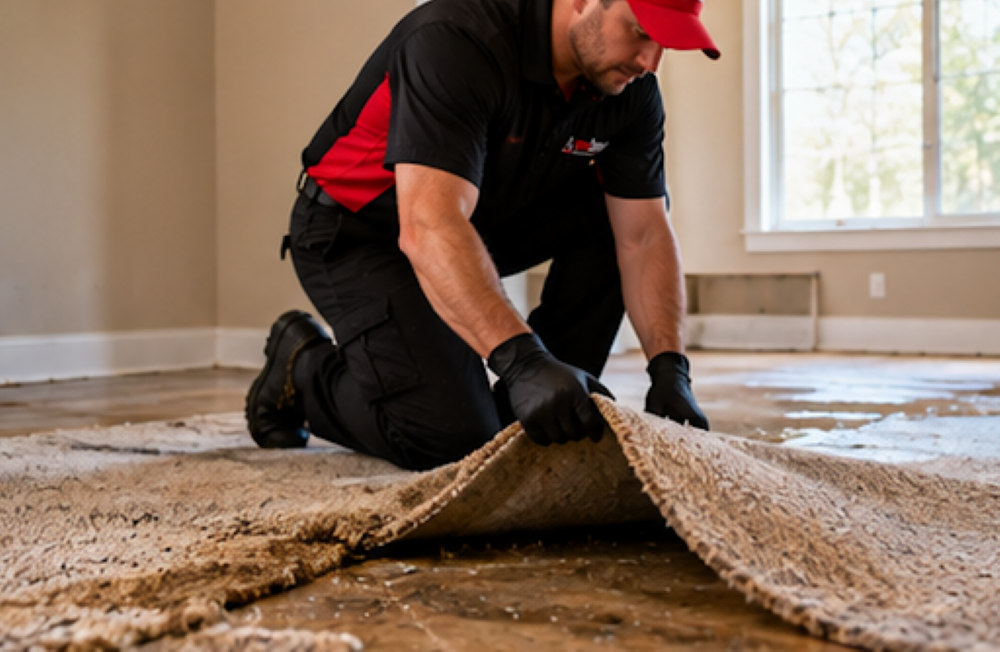
Hardwood and engineered wood flooring can swell and change shape if water sits too long. Carpet may feel only slightly damp on top, while the pad and subfloor under it are soaked. This is why visible puddles are only part of the problem. Professional crews rely on tools like moisture meters and infrared cameras to track water inside ceilings, wall cavities, and flooring so hidden moisture above and below can be found and dealt with.
The First Hour: What Homeowners Should Do
The first hour after you notice an upper-floor leak matters a lot. Safety comes first. If you can safely get to it, shut off the water supply to the fixture or the whole property. Stay away from any light switches or fixtures that are wet or dripping. Keep people and pets out of rooms with sagging or badly stained ceilings, since those spots may give way without warning.
There are a few simple steps that can help limit the spread upstairs while you wait for help:
- Move electronics and valuables away from wet areas
- Slide light furniture away from standing water if it is safe to do so
- Place aluminum foil or blocks under furniture legs to keep them out of water
- Set out towels or shallow pans to catch drips from safe, small ceiling leaks
Do not poke or press on a bulging ceiling. That can cause a sudden release of water and heavy debris. During windy fall storms around Toledo, small roof or window leaks on upper stories can grow fast as rain keeps coming. Calling for emergency water removal in Toledo right away helps stop that damage from traveling into the levels below.
What Professional Upper-Floor Water Removal involves
When a trained team arrives for an upper-floor water emergency, the first step is a detailed look at how far the water has spread. They check the source if it is still active, inspect the upper floor where the leak began, and then move level by level to see where moisture has collected. Any area that looks like it might be at risk for ceiling collapse or electrical danger is treated as a top priority.
Water removal on upper floors often calls for specialized equipment, including:
- Portable extractors that can reach upstairs quickly
- Weighted tools that press down on carpet to remove water from the pad
- Pumps and vacuums that can work in tight spaces
In some cases, controlled openings are made in ceilings or walls so trapped water can escape safely instead of pushing on finished surfaces until they fail. While this is happening, technicians work to protect the floors below. They may lay down plastic or other coverings, set up catch points for drips, and place equipment so hoses and cords do not get in the way of people moving through the space.
The goal is to stop the leak, remove as much water as possible from upper levels, and prevent more damage on lower levels while keeping everyone safe inside the property.
Drying, Mold Prevention, and Local Expertise
Once standing water is removed, the drying stage starts. This is where a focused plan really matters for upper-floor leaks. Technicians use a mix of air movers and dehumidifiers to pull moisture out of:
- Wet ceilings on the levels below
- Wall cavities that connect one floor to the next
- Upper-level subfloors and framing that feed moisture downward
In Toledo, humidity can stay high in the fall and during wet parts of the year. In that kind of air, damp ceilings, wallboard, and wood framing can start growing mold in a short time. Fast, steady drying helps cut that risk. The equipment usually runs without long breaks, while moisture readings are taken each day.
Moisture monitoring is how professionals confirm that the structure is ready for repairs. They check that upper-level flooring, joists, ceiling materials, and wall cavities have all reached safe drying levels, not just the surfaces you can see. Only then is it truly ready for rebuilding, painting, or new flooring.
Upper-floor leaks in the Toledo area also come with some local twists. Wind-driven rain off Lake Erie can push water under shingles or siding high up on a building. Many homes and commercial properties have older plumbing that can fail in upstairs bathrooms or kitchens. Temperature swings through the seasons can stress pipes and roofing on higher levels.
A local team that focuses on emergency water removal in Toledo understands common roof designs, how older homes are framed, and what many local insurers expect during a claim. That kind of local knowledge helps limit downtime for businesses and keeps repairs on track for multi-level homes, condos, apartments, and office spaces.
Frequently Asked Questions About Upper-Floor Water Emergencies
How Fast Can Water From an Upper-Floor Leak Damage a Ceiling Below?
Damage can start within minutes as water pools on the floor above and seeps into the ceiling below. In a few hours, you might see stains, bubbling paint, or sagging. With a heavier leak, pieces of the ceiling can weaken and fall, so fast professional help is very important.
Is It Safe to Stay Home If Water Is Dripping From the Ceiling?
It depends on how much damage there is and where it is located. Active dripping, bowing, or cracking in the ceiling can be a sign that it might collapse. There may also be hidden electrical hazards. It is safer to stay out of affected rooms until a professional checks the structure and wiring around the leak.
Will My Upstairs Flooring Always Need to Be Removed After a Leak?
Not always. Some flooring can be dried in place if the water is clean and cleanup starts quickly. Certain types, like laminate or carpet with very soaked padding, may need to be removed to dry the layers below and reduce mold risk. A professional inspection is the best way to decide.
How Long Does It Take to Dry Upper Floors and Ceilings After a Leak?
Most upper-floor and ceiling drying projects take several days. The time depends on how long the water was present, which building materials got wet, and how humid the indoor air is. Drying equipment is usually left running, with daily moisture checks to confirm steady progress.
Can I Handle Upper-Floor Water Cleanup If Damage Looks Minor?
You can stop the water source if it is safe and mop up small puddles, but upper-floor leaks often send water into hidden areas like ceiling spaces and wall cavities. Without professional tools, it is easy to miss that moisture. A quick visit from a restoration professional helps make sure everything is truly dry and reduces the chance of mold, odor, or later structural issues.
Protect Your Property With Fast, Professional Help
If water is spreading through your home or business, every minute counts, and our team is ready to act quickly to limit damage. Learn how our emergency water removal in Toledo services can help you recover safely and efficiently. At PuroClean of West Toledo, we will assess the situation, explain your options, and get to work right away. Call us now or contact us online so we can start protecting your property today.