When you discover mold in your home or business, your first instinct is usually to get rid of what you can see. But mold is rarely just a surface problem. It spreads through microscopic spores, travels through the air, and can contaminate areas far beyond where it started.
That’s why proper mold remediation is not just about cleaning—it’s about controlling the environment.
Our team has completed the Applied Microbial Remediation Technician (AMRT) certification through the Institute of Inspection Cleaning and Restoration Certification. This certification represents advanced training in mold remediation, containment, and air quality control—ensuring that we follow industry-recognized standards every step of the way.
Containment Isn’t Optional — It’s Critical
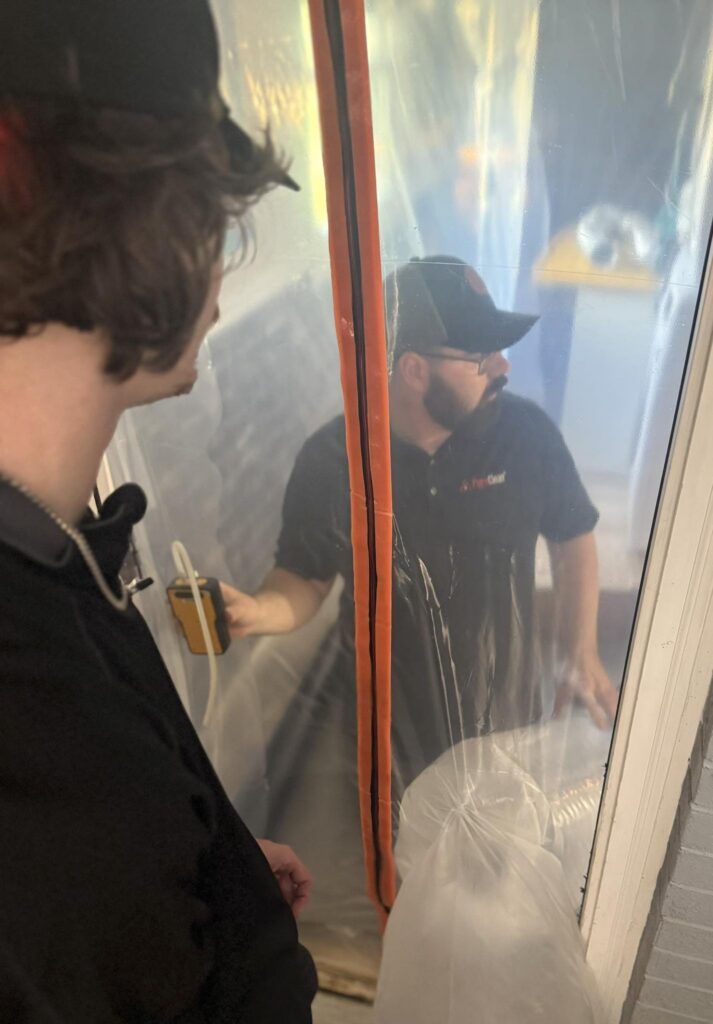
(Photo above: A real containment chamber set up on a job site, using negative air pressure and monitored conditions.)
One of the biggest risks during mold remediation is cross-contamination. When mold is disturbed, spores become airborne. Without proper containment, those spores can spread into unaffected areas of your home—turning a localized issue into a much larger and more expensive problem.
In the image above, you can see a sealed containment system built to isolate the affected area. This includes reinforced plastic barriers, sealed entry points, and controlled airflow.
This is not a shortcut solution. This is a controlled environment designed to keep your home safe while the work is being performed.
What Is Negative Air Pressure—and Why Does It Matter?
A key part of professional mold remediation is the use of negative air pressure.
Negative air pressure means that air is constantly being pulled into the contained work area and then filtered before being exhausted out. This ensures that contaminated air—and the mold spores it carries—cannot escape into clean areas.
Instead of spores drifting freely through your home, they are:
Captured
Contained
Filtered through specialized equipment
Without negative air pressure, even a well-built containment barrier can fail. Airflow is what makes containment actually work.
We Don’t Just Set Containment—We Monitor It
Here’s where many companies fall short.
Setting up plastic sheeting and calling it “containment” is not enough. The effectiveness of a containment system depends on maintaining proper pressure throughout the entire job.
In the photo above, our team is actively monitoring pressure conditions inside the containment area. This allows us to confirm that negative air pressure is being maintained at all times.
Why is this so important?
Because pressure can change.
A door opening can disrupt airflow
Small gaps or weak seals can reduce effectiveness
Equipment adjustments can impact performance
Without monitoring, there’s no way to know if containment is actually working—or if mold spores are escaping unnoticed.
We don’t rely on assumptions. We verify conditions continuously to ensure your home remains protected from start to finish.
Protecting Your Home and Your Health
Improper mold remediation doesn’t just fail to solve the problem—it can make it worse.
When containment and airflow are not properly controlled:
Mold spores can spread into HVAC systems
Previously unaffected rooms can become contaminated
Air quality can decline during and after the job
Our AMRT training focuses heavily on protecting both the structure and the people inside it. By combining proper containment, negative air pressure, and air filtration, we reduce the risk of exposure and prevent further spread.
This is especially important for households with children, elderly family members, or individuals with respiratory sensitivities.
We Find the Source—Not Just the Symptoms
Another critical part of professional mold remediation is identifying the moisture source that caused the growth in the first place.
Mold doesn’t grow without water.
While some companies focus only on removing visible mold, our training ensures we look deeper:
Is there a hidden leak?
Elevated humidity?
Poor ventilation?
By addressing the root cause, we help prevent the problem from returning—saving you time, money, and frustration down the road.
How This Sets Us Apart
Not all restoration companies follow the same standards. Some rely on general cleaning methods, while others skip critical steps like proper containment or pressure monitoring.
Our AMRT certification means we:
Build true containment systems, not temporary barriers
Maintain verified negative air pressure throughout the job
Actively monitor conditions to ensure effectiveness
Follow IICRC industry standards from start to finish
Prioritize long-term solutions over quick fixes
This level of attention to detail is what separates a professional remediation job from a basic cleanup.
Why It Matters in the Real World
When you hire a properly trained and certified team, you’re not just paying for mold removal—you’re investing in a safer, more controlled process.
That means:
Your unaffected areas stay protected
Contamination is contained and managed properly
The risk of mold spreading during the job is minimized
The chances of the problem returning are significantly reduced
You gain peace of mind knowing the job was done correctly
Bottom Line
Mold remediation is not just about removing what you can see—it’s about controlling air, containment, and conditions to prevent the problem from getting worse.
Without proper containment and negative air pressure, remediation can unintentionally spread contamination throughout your home.
With an AMRT-certified team, you’re choosing professionals who understand how to manage the entire environment—not just clean the surface.
That’s the difference between a temporary fix… and doing the job right.