


Key Takeaways
- A dishwasher leaking from the bottom of the door is a common issue and is often caused by a worn door seal, clogged filter, or improper loading.
- Leaks can happen even when the dishwasher is not running due to faulty valves, clogged drain hoses, or leftover standing water inside the unit.
- Many dishwasher leaks can be fixed at home by cleaning the door gasket and filter, checking the door latch, using the correct detergent, and loading dishes properly.
- Regular maintenance, like monthly filter cleaning and inspecting the door seal, can help prevent future leaks and costly water damage.
- If leaking water has damaged your floors, cabinets, or walls, calling a professional water damage restoration company can help prevent mold and hidden moisture issues.
Noticing your dishwasher leaking from the bottom of the door can be frustrating and confusing. It’s a common issue that many homeowners face, and it often catches people by surprise. You may step into the kitchen and find a small puddle of water near the base of the appliance, unsure of where it came from or why it keeps happening. Left untreated, even a small leak can lead to bigger problems like water damage, mold growth, or warped flooring.
If you notice your dishwasher leaking, it’s important to act quickly to avoid water damage in your kitchen. Leaks can happen during a wash cycle or even when the dishwasher is off, but most are easy to fix once you know the cause. In this blog, we’ll explain the common reasons dishwashers leak, how to check for problems, and simple tips to prevent future leaks. If water has already caused damage, damage restoration in Zephyrhills can make sure your home stays safe and dry.
Is It Common for a Dishwasher to Leak from the Door?
Yes, it’s quite common to find a dishwasher leaking from the door. You might notice water pooling on the floor in front of the appliance after a wash cycle. This usually happens in older dishwashers or ones that haven’t been cleaned or maintained regularly. In Zephyrhills, FL, where humidity and hard water are typical, we often see these types of leaks in local homes.
The rubber or vinyl gasket around the dishwasher door is meant to keep water inside during a cycle. But if that seal becomes cracked, loose, or worn out, water can easily escape. Other times, the door might not latch properly, or food debris could stop it from sealing fully. Spotting these signs early can help you fix the issue before it leads to water damage.
What Causes a Dishwasher to Leak?
If you’ve noticed your dishwasher leaking, don’t worry; it’s often something simple that can be fixed quickly. Most issues are easy to find if you take a few minutes to look inside and around the appliance. Catching the cause early can help you avoid bigger problems like mold or damage to your floors and cabinets. In some cases, a professional water damage inspection may be needed to check for hidden moisture you can’t see. Here are the most common reasons a dishwasher might be leaking:
- The door seal is old or damaged, letting water escape.
- The filter is clogged with food or grease, causing overflow.
- Too many dishes are loaded, blocking the spray arms.
- Too much soap or the wrong kind creates excess suds.
- A hose is loose or cracked, leaking water underneath.
- The water valve stays open too long and causes overflow.
- The door latch is broken or loose, so the door doesn’t seal properly.
These problems are common in many homes, especially with older dishwashers or ones that haven’t been cleaned regularly.
Why Your Dishwasher Leaks Even When It Is Not Running
It’s surprising to find a dishwasher leaking when it hasn’t been used, but this can happen for a few common reasons. These usually involve parts that still allow water to move in or out, even when the appliance is off. Here’s what to check:
- Faulty Water Inlet Valve – If it gets stuck open, water keeps flowing in and may cause leaks.
- Leaking or Clogged Drain Hose – A loose or blocked hose can slowly leak leftover water from the last cycle.
- Clogged Drain System – If water can’t drain out, it may collect and eventually leak onto the floor.
- Worn-Out Door Seal – Small gaps in the seal can let water escape, especially if the door isn’t shut fully.
- Standing Water Inside – Leftover water from a previous cycle can spill out over time, especially if the dishwasher is slightly tilted.
How to Fix a Dishwasher Leaking from the Bottom of the Door
Fixing a dishwasher leaking from the bottom of the door doesn’t always require a professional. Many of the causes are simple to troubleshoot and repair at home. Here are some easy steps you can follow to fix the issue:
- Inspect and Clean the Door Gasket
Open the dishwasher and look at the rubber seal around the door. If it’s dirty, clean it gently with warm, soapy water. If it’s cracked or damaged, replace it with a new one to restore a tight seal. - Check the Door Latch
Make sure the door clicks shut when you close it. If the latch feels loose or doesn’t catch, it might need to be adjusted or replaced to ensure the door closes tightly during each cycle. - Clean the Filter
Remove the bottom rack and take out the filter. Rinse it under warm water to wash away food and grease buildup. When the filter is clogged, water can back up and leak out through the door. - Adjust How You Load Dishes
Avoid overloading or placing large pans near the door. This can block spray arms and push water toward the door seal, causing a leak. - Use the Right Detergent
Only use dishwasher detergent, and follow the amount recommended by the manufacturer. Too much soap or using regular dish soap can cause excess suds and leaks. - Look Under the Dishwasher
If the leak continues, check underneath for a loose or damaged hose. If you find water pooling there, the leak may not be from the door but from a hose or valve that needs repair.
If you’ve tried these steps and the dishwasher is still leaking, or if you’ve already experienced water damage in your home, it’s important to call a professional. Experts can assess hidden damage, dry out affected areas, and prevent mold before it starts.
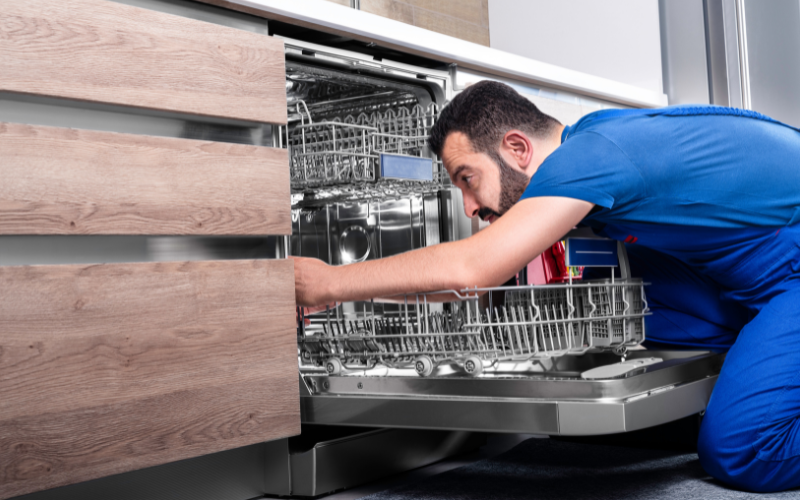
Maintenance Tips to Avoid Future Dishwasher Leaks
Preventing a dishwasher leaking situation starts with regular care and good habits. Taking a few minutes each month to check your appliance can help avoid water damage and extend the life of your dishwasher. Here are five easy maintenance tips to keep things running smoothly:
- Clean the Filter Regularly
Remove and rinse the filter at least once a month. This keeps food and grease from building up and blocking water flow, which can lead to leaks. - Inspect the Door Gasket
Wipe down the rubber seal around the door to keep it clean. Check for any cracks, wear, or mold. If it looks damaged, replace it before it causes a leak. - Use the Right Detergent
Only use dishwasher-specific detergent. Avoid regular dish soap or using too much, as it can cause extra suds that overflow during a cycle. - Load Dishes Properly
Don’t overload the dishwasher. Make sure dishes aren’t blocking the spray arms or pressing against the door, as this can force water toward the bottom seal. - Check for Leaks Underneath
Every few weeks, look under and around your dishwasher for signs of water. Catching a small leak early can prevent costly repairs and water damage to your cabinets or floors.
Staying on top of these simple tasks can go a long way in avoiding dishwasher leaks. But if water has already caused damage, professional restoration may be needed to dry the area completely and protect your home from mold and other hidden problems.
Frequently Asked Questions
Why is my dishwasher leaking only sometimes?
A dishwasher may leak only during certain cycles if the door gasket is slightly worn or if dishes are blocking the spray arms. Leaks that happen occasionally could also be caused by overloading or using too much detergent.
How can I tell if my kitchen cabinets or floor have water damage?
Look for soft spots, bubbling or warped wood, musty smells, or mold growth. These are common signs of hidden water damage caused by a leaking dishwasher. In such cases, it’s important to get professional help quickly to prevent further damage.
Should I replace my dishwasher if it keeps leaking?
If your dishwasher is older than 10 years and has frequent leaking issues, it may be more cost-effective to replace it. However, if the dishwasher leaking is caused by a simple problem like a worn gasket or a clogged filter, a repair should be enough.
Final Thoughts
Even a small dishwasher leaking issue can quickly turn into a serious problem, which leads to water damage, mold growth, and costly repairs. Taking action early is the key to protecting your kitchen and your home. With the right maintenance and quick attention to leaks, you can avoid long-term damage and keep your appliance working like new.
But if water has already spread to your floors, cabinets, or walls, don’t take any chances. Trust the local experts at PuroClean Zephyrhills to handle the mess and restore your home fast. With certified technicians, 24/7 emergency response, and years of experience in damage restoration in Zephyrhills, we are your go-to team when water damage strikes. Contact us today to get professional help you can count on!