 PuroClean Certified Restoration Specialists

Key Takeaways
- Cleaning bathroom ceiling areas helps prevent mold, mildew, stains, and long-term damage, especially in humid places like Zephyrhills.
- Moisture buildup from daily showers is the main reason ceilings get dirty, leading to spots, musty smells, and peeling paint.
- Using the right tools and gentle cleaning methods makes it easier to remove dirt, mold, and mildew without damaging the ceiling.
- Regular airflow, quick drying after showers, and routine cleaning help prevent moisture problems from coming back.
- If mold keeps returning or the ceiling shows serious signs of damage, professional mold removal help may be needed to fix hidden moisture issues.
Keeping your bathroom clean isn’t just about shiny floors and fresh towels. It also includes cleaning bathroom ceiling areas, which are often overlooked. In humid environments like bathrooms, especially in Zephyrhills, FL, ceilings are prone to collecting mold, mildew, dust, and even soap scum. If this is left unchecked, this buildup can affect air quality and damage your home over time.
Whether you’re trying to remove stains or prevent future problems, cleaning bathroom ceiling surfaces the right way can make a big difference. In this guide, you’ll learn why bathroom ceilings need special care and how to clean them properly.
Why Bathroom Ceilings Need Special Attention
Bathroom ceilings deal with a lot of moisture every day. When you take a hot shower, steam rises and sticks to the ceiling. Without good airflow or proper cleaning habits, that moisture lingers and makes it harder to prevent mold growth in bathrooms, especially on ceilings where steam collects.
Here, moisture problems can show up even faster. You might notice:
- Brown or black spots on the ceiling
- Peeling or bubbling paint
- A musty smell in the bathroom
These issues are more than just ugly. They can be signs of mold or even water damage hiding behind the ceiling. If ignored, this can affect your health and lead to expensive repairs.
Drywall and plaster ceilings can be easily damaged by moisture. When dirt, mold, or mildew start to build up, it can weaken the ceiling, leave behind tough stains, and lead to costly repairs that regular cleaning could have prevented. That’s why it’s important to check your bathroom ceiling often and keep it clean before small problems turn into bigger ones.
Steps for Cleaning Bathroom Ceiling and Removing Mold or Mildew
When it comes to cleaning bathroom ceiling surfaces, moisture is the biggest challenge. Over time, steam and humidity can lead to stubborn stains, mildew patches, and even mold. A careful and consistent cleaning approach helps restore the ceiling and prevent damage.
Step 1: Prepare the Necessary Materials
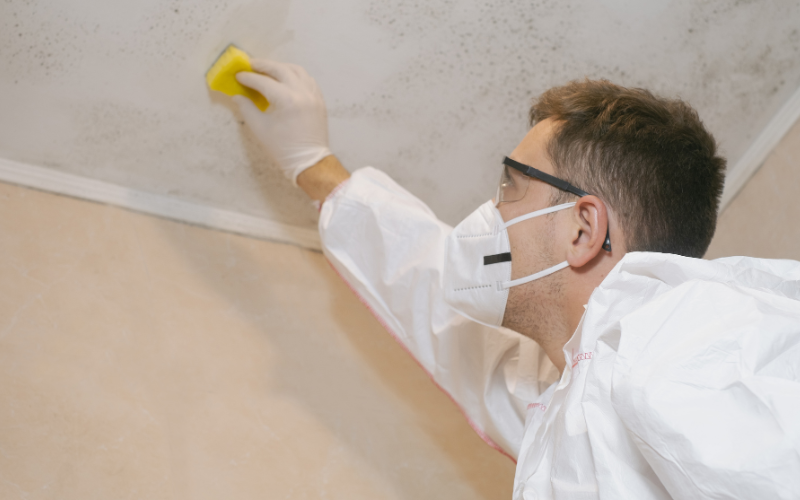
Begin by gathering tools for cleaning bathroom ceiling surfaces. Use a step stool or ladder for safe access, along with a spray bottle, sponge or microfiber cloth, gloves, goggles, and a protective mask. For most ceiling stains, a white vinegar and water solution works well. For visible mold, hydrogen peroxide or a mold-specific cleaner is recommended. Avoid using bleach, especially on painted ceilings, as it may cause discoloration.
Step 2: Safeguard the Bathroom Area
Cover bathroom floors and fixtures with towels or plastic sheeting to catch drips. Clearing the area of any loose items also helps reduce obstacles and keeps your workspace safe during bathroom ceiling cleaning efforts.
Step 3: Apply the Cleaning Solution
Spray your chosen cleaner directly onto the stained or moldy parts of the ceiling. Allow it to sit for 5 to 10 minutes. This resting time helps break down dirt and begin killing mold spores, making the next step more effective.
Step 4: Gently Clean the Ceiling
Wipe the treated areas gently using a damp sponge or cloth. During cleaning the bathroom ceiling, it’s important not to scrub too harshly, especially if your ceiling is textured or painted. Soft, circular motions offer the best results while protecting the surface.
Step 5: Rinse and Dry the Surface
Use a clean, damp cloth to remove any remaining cleaner from the ceiling. Then, dry the surface with a towel or let it air dry fully. This step is critical to avoid new moisture buildup after cleaning bathroom ceiling areas.
Step 6: Reassess the Area
After drying, inspect the ceiling for any remaining mold or stains. If issues continue to appear, it may signal a deeper moisture problem. In these cases, mold removal services in Zephyrhills might be needed to ensure lasting results.
Keeping up with regular cleaning of bathroom ceiling tasks helps maintain a healthy and fresh-smelling bathroom environment. When in doubt, always choose safety and reach out for expert assistance.
Tips to Prevent Future Dirt and Moisture Buildup
After cleaning bathroom ceiling surfaces, it’s important to keep them clean and dry. Moisture and steam can bring dirt and mold back quickly if not controlled. These tips are especially helpful for homes in humid areas like Zephyrhills, FL.
- Turn on the bathroom fan during and after showers to reduce moisture.
- If you don’t have a fan, open a window to let steam escape.
- Leave the bathroom door open after showers to help the air flow.
- Wipe the ceiling and walls with a towel or cloth after using hot water.
- Use mold-resistant paint when repainting your bathroom ceiling.
- Clean the ceiling with a vinegar and water mix every few weeks.
- Check the ceiling regularly for spots or stains so you can clean them early.
Frequently Asked Questions
Is mold on the ceiling dangerous?
Yes, mold on the ceiling can be harmful, especially if it grows over time. Breathing in mold spores may cause health problems like allergies, coughing, and breathing issues, particularly in children, the elderly, or people with asthma. Even small patches of mold should be taken seriously because they can spread and lead to more damage if not removed properly.
Can I paint over mold on the ceiling?
No, painting over mold is not a safe solution. While it might cover the stain for a short time, the mold will continue to grow underneath the paint. Eventually, it will return and possibly spread further. The mold must be cleaned and removed completely before applying any paint or sealant to the ceiling.
How can I tell if the bathroom ceiling damage is serious?
Some signs of serious damage include peeling paint, sagging areas, strong musty smells, or large dark stains. If the ceiling feels soft to the touch or you see mold returning often, it may mean there is a leak or moisture problem behind the surface. These issues may require professional inspection to prevent long-term damage and costly repairs.
The Bottom Line
Regularly cleaning bathroom ceiling areas is key to maintaining a healthy and fresh-smelling space. Mold, mildew, and dirt can build up quickly, especially in humid climates like Zephyrhills. With the right cleaning techniques and prevention habits, you can reduce moisture problems and avoid serious ceiling damage. Keeping an eye on early signs like stains or musty smells helps you act before small issues turn into larger repairs.
If you notice persistent mold, strong odors, or signs of water damage even after cleaning, it may be time to bring in a professional. PuroClean Zephyrhills is ready to help with expert mold remediation and damage restoration services. Our certified technicians understand the unique challenges of Florida homes and provide fast, reliable support when you need it most. Contact us now!


 PuroClean Certified Restoration Specialists