


Table of Contents
A grease fire can spread from the kitchen to surrounding rooms within moments, leaving behind much more than visible burn damage. Smoke, soot, persistent odors, and damaged structural materials may affect areas far beyond where the flames started. After a kitchen fire spread through an Atlanta home, PuroClean’s Wolf Creek team completed a detailed fire damage restoration process that included demolition, structural cleaning, deodorization, and air-quality treatment.
What Is a Grease Fire?
A grease fire occurs when cooking oil, grease, or fat becomes hot enough to ignite. Because burning grease can spread rapidly, kitchen fires can quickly extend to cabinets, walls, ceilings, and nearby rooms.
The National Fire Protection Association (NFPA) provides guidance on cooking fire prevention and kitchen fire safety, making it a useful authority to reference for homeowners who want to learn how to respond safely.
One particularly important safety rule is never to pour water onto burning cooking oil or grease. Water can cause the burning grease to splatter and spread the flames.
Restoring an Atlanta Home After a Grease Fire
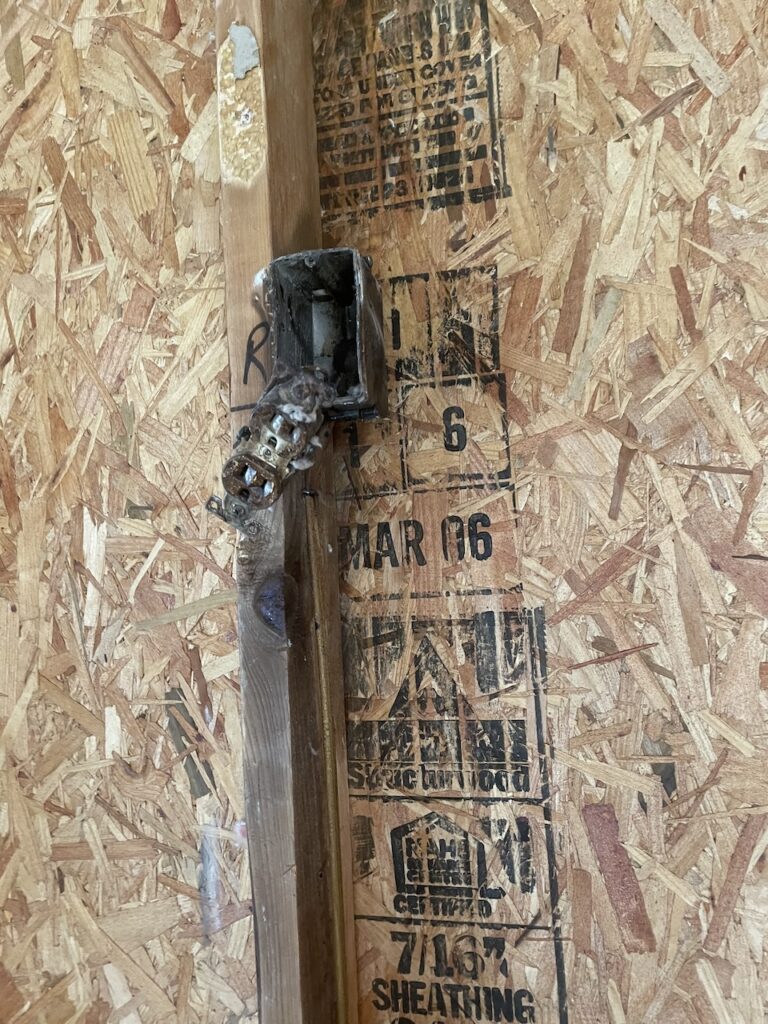
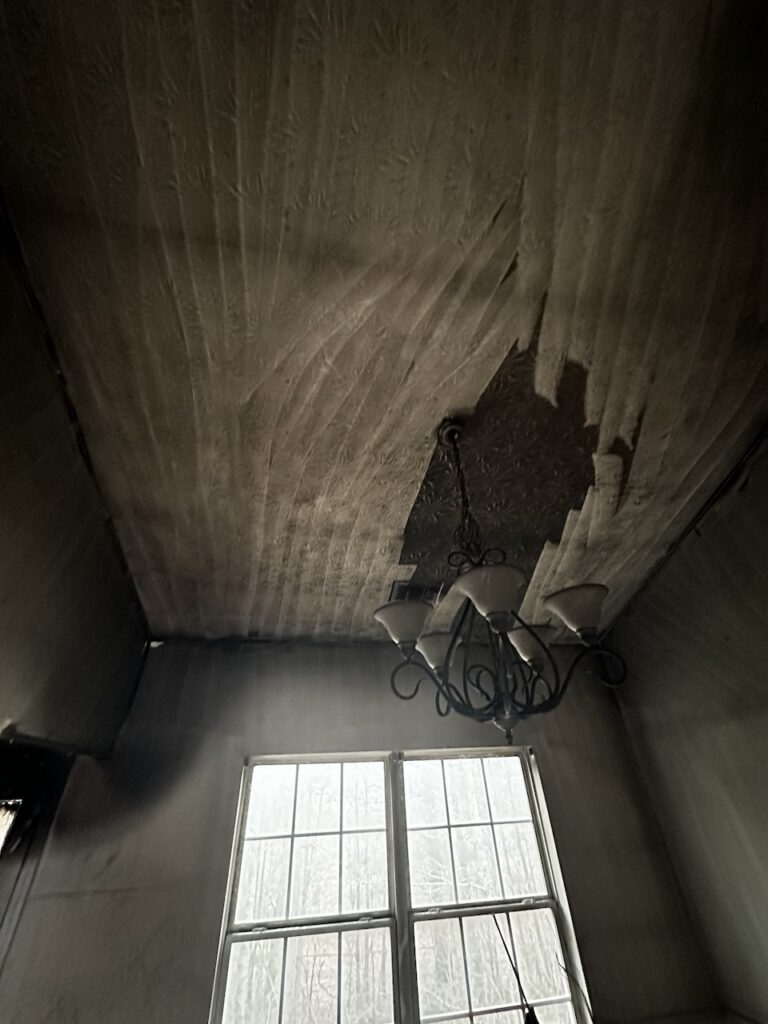
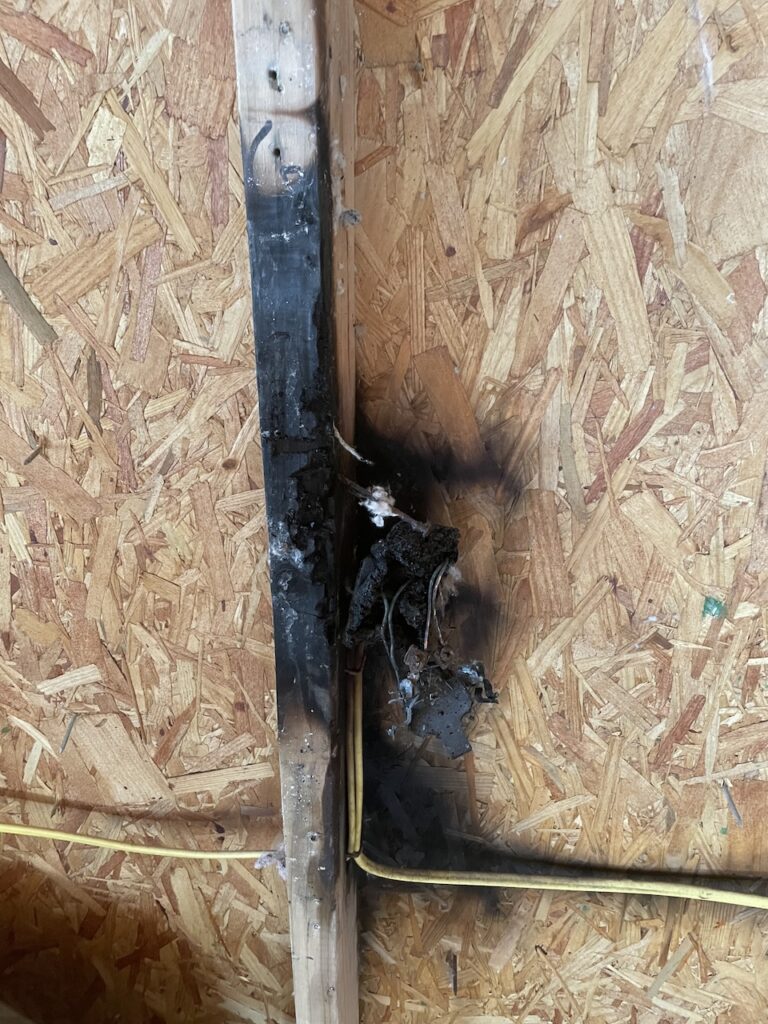
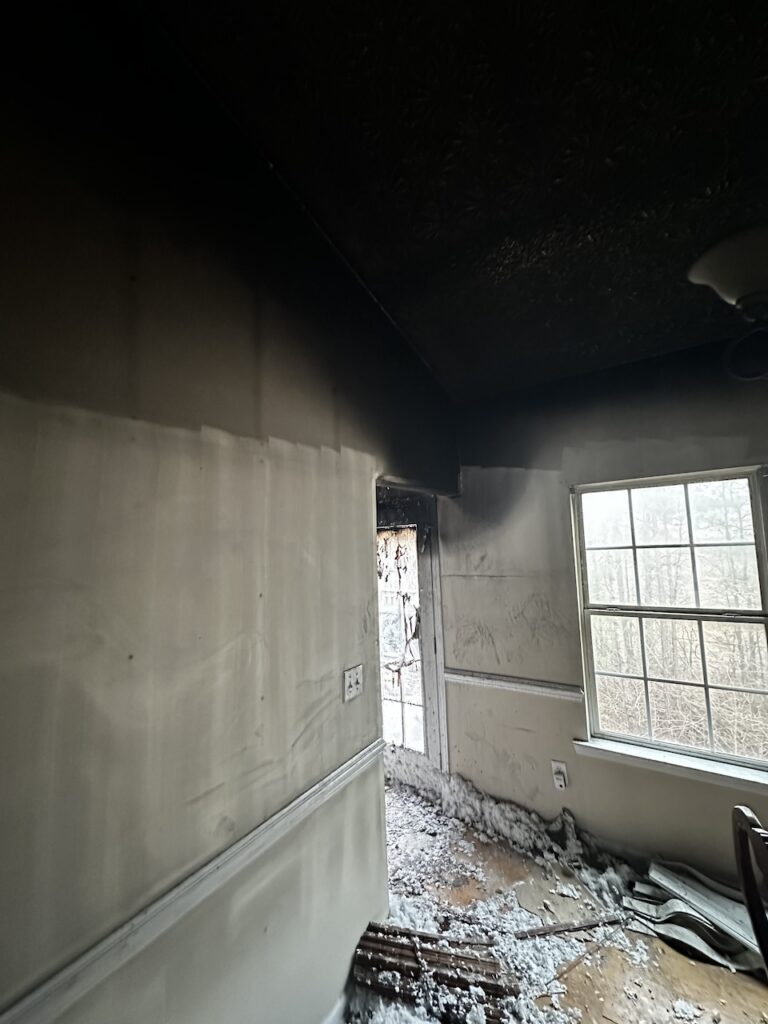
A closer look at the extensive fire damage in the Atlanta home.
In February, PuroClean received an urgent call regarding extensive structural cleaning at an Atlanta-area home.
When our IICRC-certified technicians arrived, they discovered that a grease fire had started in the kitchen before spreading through much of the first floor. The kitchen had significant charring, smoke contamination, and a strong lingering odor.
The damage required much more than surface cleaning. Before restoration could move forward, the property needed to be stabilized and damaged materials carefully removed.
Assessing the Fire and Smoke Damage
The first step in professional fire damage restoration is determining how far the damage has traveled.
In this home, our team evaluated:
- Burned and charred building materials
- Smoke and soot contamination
- Structural components affected by the fire
- Odors that had spread beyond the kitchen
- Personal belongings requiring separate restoration
- Areas requiring demolition before reconstruction
A professional pack-out company removed the homeowners’ belongings so they could be cleaned, deodorized, and restored at a separate facility.
This also gave the restoration team better access to the structure.

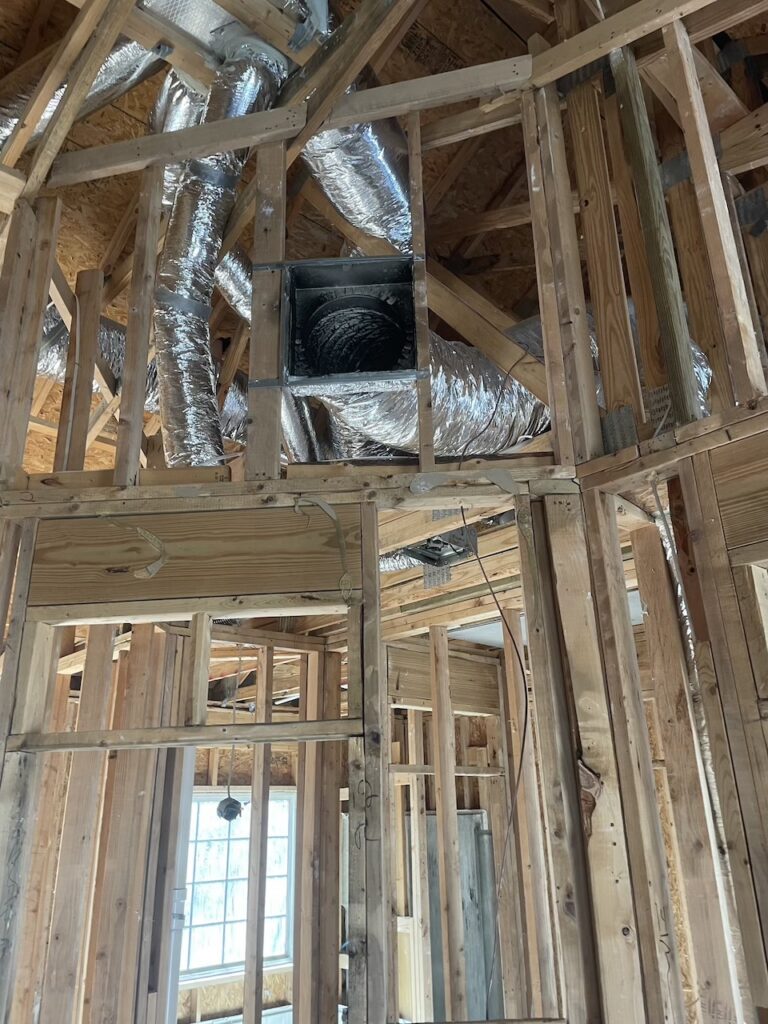
We removed the damaged material and sanitized the beams, studs, and air quality.
Our Fire Damage Restoration Process
Because the fire affected multiple areas of the home, restoration required several coordinated steps.
1. Removing Damaged Materials
A crew of eight technicians began removing materials that could not be safely restored.
Demolition was also performed on parts of the second floor as a precaution. Removing compromised materials allowed our technicians to expose the underlying framing and determine which structural components could remain.
2. Cleaning the Remaining Structure
Once damaged materials were removed, the exposed studs and supporting structures required detailed cleaning.
Smoke residue can settle on structural surfaces that appear unaffected at first glance. Thorough cleaning helps prepare salvageable materials for reconstruction while reducing residual contamination.
3. Addressing Smoke and Soot
Fire damage does not stop when the flames are extinguished.
Smoke and soot can travel into areas the fire itself never reached. Depending on the severity of the loss, residue may settle on walls, framing, ceilings, HVAC-adjacent areas, and personal belongings.
Our crew treated the remaining structure as part of the comprehensive fire damage restoration process rather than focusing only on visible burn damage.
4. Removing Persistent Odors
Smoke odor can remain long after damaged materials are removed.
Air scrubbers were positioned throughout the affected area to help remove airborne contaminants and residual smoke particles. The team also used thermal fogging as part of the deodorization process to address persistent odors.
These steps helped prepare the home for the rebuilding phase.
Grease Fire Damage vs. Smoke Damage
A single house fire may create several different types of damage that require different restoration methods.
| Type of Damage | Common Signs | Restoration Approach |
|---|---|---|
| Fire damage | Charring, burned materials, structural damage | Removal, structural cleaning, repair |
| Smoke damage | Discoloration, residue, widespread contamination | Specialized surface cleaning |
| Soot damage | Fine black or oily residue | Material-specific soot removal |
| Odor damage | Persistent smoke smell | Air filtration and deodorization |
| Contents damage | Smoke or soot on belongings | Pack-out, cleaning, deodorization |
This is why professional restoration often requires multiple techniques rather than simply replacing the areas visibly damaged by flames.
What Should You Do After a Grease Fire?
Once everyone is safely outside and emergency responders have handled the immediate danger, the recovery process can begin.
Homeowners should generally take these steps:
- Do not re-enter an unsafe structure. Wait until emergency officials confirm that entering the property is safe.
- Avoid disturbing soot-covered materials. Incorrect cleaning can spread residue or make some stains more difficult to remove.
- Document visible damage when safe. Photos can be useful when communicating with your insurance provider.
- Contact your insurance company. Begin the claims process and ask about documentation requirements.
- Contact a professional restoration company. Early assessment can help determine what can be cleaned, restored, or removed.
A Successful Recovery for the Homeowners
After demolition, structural cleaning, smoke treatment, and deodorization were completed, the property was ready to move forward toward reconstruction.
The homeowners were pleased with the team’s professionalism and attention to detail throughout the project. For our technicians, the project demonstrated how coordinated structural cleaning, contents management, and odor removal can help move a heavily damaged property from the aftermath of a fire toward recovery.
Frequently Asked Questions
Q: What should you do if a grease fire starts in your kitchen?
A: If the fire is small and it is safe to do so, turn off the heat source and cover the pan with a metal lid or baking sheet. Never pour water onto a grease fire. If the fire is spreading or cannot be safely controlled, leave the home immediately and call emergency services.
Q: Can smoke damage spread beyond the room where the fire started?
A: Yes. Smoke and soot can travel throughout a property and settle on walls, ceilings, furniture, structural materials, and belongings far from the original fire. This is why professional inspection typically includes areas beyond the visibly burned room.
Q: Can smoke odor be permanently removed?
A: In many cases, professional cleaning and deodorization can significantly reduce or eliminate smoke odors. The appropriate method depends on the materials affected and the severity of the contamination.
Q: What does fire damage restoration include?
A: Fire damage restoration may include emergency stabilization, debris removal, demolition, soot and smoke cleaning, structural cleaning, deodorization, contents restoration, and preparation for rebuilding. The exact process depends on the extent of the loss.
Q: How soon should fire restoration begin?
A: Restoration should begin as soon as the property is safe to enter and necessary inspections have been completed. Smoke, soot, moisture, and exposed structural materials can continue causing damage when left untreated.
Need Fire Damage Restoration in Wolf Creek, GA?
A grease fire can leave homeowners dealing with structural damage, smoke contamination, soot, odors, and damaged belongings all at once. Professional fire damage restoration helps address these problems systematically and prepares the property for recovery.
PuroClean provides fire and smoke damage restoration services for homeowners in Wolf Creek, Atlanta, and surrounding communities. Our trained technicians are available 24/7 to assess fire damage and help determine the appropriate next steps.
If your home has been affected by a kitchen fire or another property emergency, call (404) 682-5400 to speak with PuroClean.
Key Takeaways
- Grease fires can spread rapidly from kitchens into surrounding areas of a home.
- Fire damage often includes smoke, soot, structural contamination, and persistent odors.
- Never use water to extinguish burning cooking grease.
- Professional restoration may involve demolition, structural cleaning, air filtration, and deodorization.
- Smoke contamination can affect rooms and materials that were never directly exposed to flames.
- Air scrubbers and specialized deodorization techniques can help address residual smoke and odors.
- Homeowners in Wolf Creek and the Atlanta area can contact PuroClean for professional fire damage restoration assistance.