


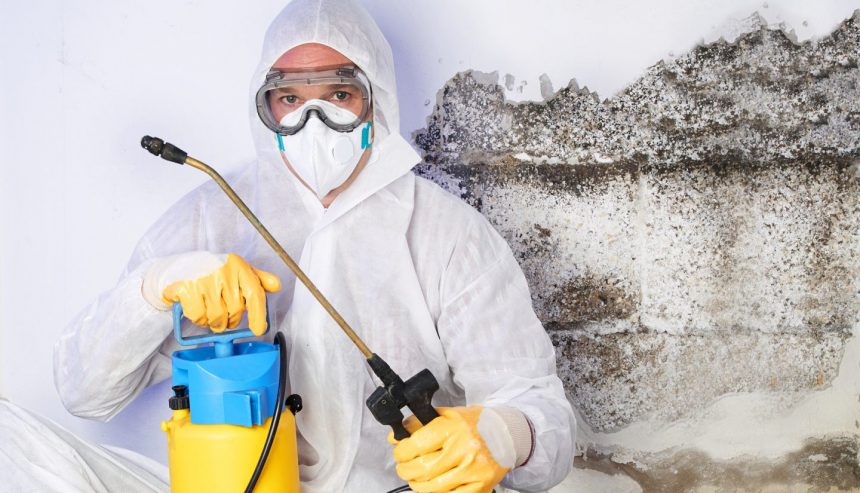
If you have discovered mold in your Nassau County home, the instinct to act fast is exactly right. Mold spreads quickly, it damages building materials, and it poses real health risks to everyone in the house. But the urgency of the situation should not push you into hiring the wrong company. Nassau County homeowners who search “mold removal company near me” are often surprised to find dozens of options, and not all of them are qualified to do the job safely and thoroughly.
Mold Removal and Remediation: Call (516) 200-1416
The truth is that mold remediation is a specialized field. It requires specific training, industry certifications, proper containment protocols, and professional-grade equipment. A company that cuts corners on any one of these things can leave you with a mold problem that returns within weeks, a home that has been improperly treated, and a bill that did nothing to actually solve the problem.
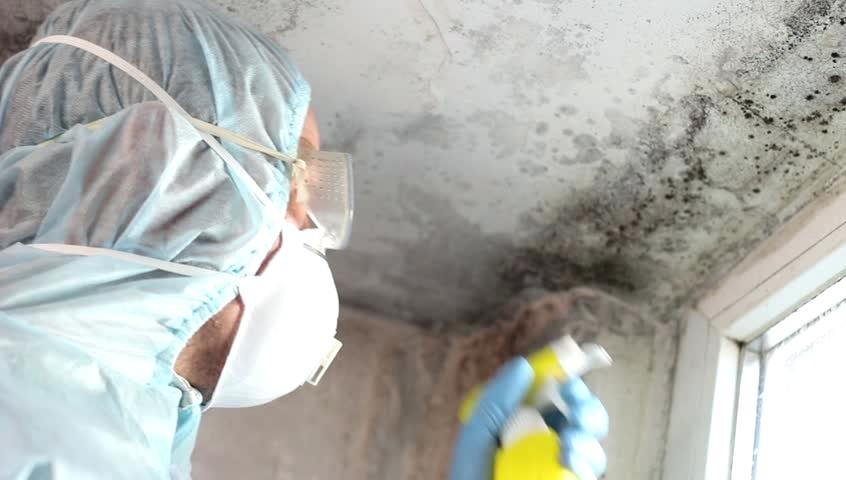
This guide gives Nassau County homeowners the five most important questions to ask any mold removal company before signing a contract. At the end, we will explain exactly how PuroClean of Baldwin answers each one, so you can feel confident calling us when mold shows up in your home.
📍 Found mold in your Nassau County home? Call PuroClean of Baldwin now for certified mold remediation. We answer 24/7 and can be at your door fast.
Why Mold Is a Bigger Deal Than Most Homeowners Realize
Before getting into the questions, it is worth taking a moment to understand why mold remediation requires such careful vetting of the company you hire.
Mold is not just a surface problem. When mold grows in a home, it produces microscopic spores that travel through the air and settle into other areas of the structure. Disturbing mold without proper containment protocols does not solve the problem. It spreads it. A company that simply sprays bleach on visible mold and calls it done has likely made your situation significantly worse by releasing millions of additional spores into your living environment.
Proper mold remediation involves establishing physical containment barriers, creating negative air pressure to prevent spore migration, removing affected materials safely, treating surfaces with professional antimicrobial agents, and verifying through post-remediation testing that the mold has been successfully addressed. This is a multi-step process that requires expertise, the right equipment, and a commitment to doing the job completely rather than just making visible mold disappear.
Nassau County homes face particular mold risk due to the region’s humidity levels, proximity to water, and the prevalence of older housing stock with less-than-perfect moisture control. Add in Long Island’s history of storm flooding and the frequency of basement water intrusion, and it is clear why mold is a recurring issue for homeowners throughout Baldwin, Merrick, Freeport, Rockville Centre, Valley Stream, Lynbrook, Oceanside, and the surrounding communities.
📍 Mold anywhere in your Nassau County home requires professional attention. Contact PuroClean of Baldwin today for a thorough mold inspection and honest assessment.
Question 1: Are Your Technicians IICRC Certified in Mold Remediation?
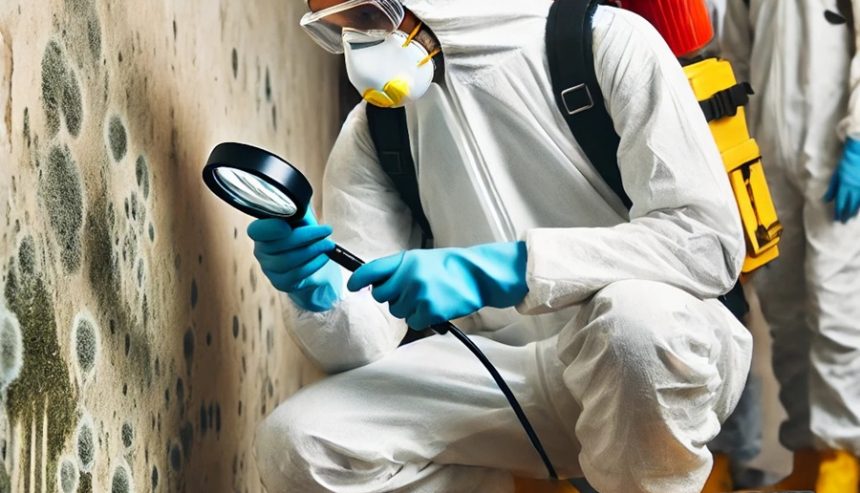
This is the single most important question you can ask any mold removal company, and the answer should be an immediate, unambiguous yes.
The Institute of Inspection Cleaning and Restoration Certification, known as the IICRC, is the gold standard credentialing body for the restoration industry. Their Applied Microbial Remediation Technician (AMRT) certification is the recognized benchmark for mold remediation professionals. Technicians who hold this certification have completed rigorous coursework in mold biology, remediation protocols, containment procedures, personal protective equipment requirements, and post-remediation verification.
Many companies that advertise mold removal services are general contractors or cleaning companies that have added mold to their list of services without investing in proper training. Their technicians may know how to make mold look like it has been removed, but they do not have the knowledge to conduct a remediation that meets industry standards or protects your household from ongoing exposure.
What to Watch Out For
Be cautious of companies that offer vague answers to this question, or that cite proprietary training programs or general contractor licenses as equivalent credentials. They are not. IICRC certification is specific, it is verifiable, and it is the standard you should insist on. You can verify any technician’s IICRC credentials directly on the IICRC website before committing to any company.
Also be alert to companies that conflate water damage restoration certifications with mold remediation certifications. While related, they are different disciplines. The company you hire for mold remediation should hold the AMRT specifically, not just a water damage credential.
How PuroClean of Baldwin Answers This Question
PuroClean of Baldwin employs IICRC-certified technicians with credentials in Applied Microbial Remediation, Water Damage Restoration, and Applied Structural Drying. Our team’s training is current, verifiable, and reflective of the industry’s highest standards. When you hire us, you are hiring technicians who have been trained specifically for the work they are performing in your home.
📍 Ask about certifications before you hire anyone. PuroClean of Baldwin’s technicians are IICRC certified in mold remediation. Call us today to get started with a team you can trust.
Question 2: Will You Perform Proper Containment Before Any Mold Is Disturbed?
Containment is not optional in professional mold remediation. It is a foundational requirement. Any company that does not establish containment before beginning work is not performing true remediation. They are performing mold disturbance, which is a very different and significantly more dangerous thing.
Read Also: Do I Need Professional Mold Remediation?
When mold colonies are disturbed without proper containment in place, millions of microscopic spores are released into the air. Those spores travel through the HVAC system, settle into other rooms, and establish new colonies throughout the home. What began as a localized mold problem can become a whole-house contamination event in a matter of hours if the remediation is conducted without proper controls.
Proper containment involves sealing off the affected area with heavy-duty plastic sheeting, establishing negative air pressure using HEPA-filtered air scrubbers so that any airborne spores are captured rather than allowed to migrate, and using physical barriers to prevent cross-contamination between the work area and the rest of the home. Technicians should also be in appropriate personal protective equipment during all work in the contained area.
What to Watch Out For
Be very wary of any mold removal company that downplays the importance of containment, describes it as unnecessary for “small” mold problems, or does not mention it unprompted when you ask about their process. There is no mold problem small enough to skip containment. Even a seemingly minor mold issue can release significant numbers of spores when disturbed, and those spores are invisible to the naked eye.
Ask specifically: “Do you set up physical containment barriers before you begin any remediation work?” A qualified company will say yes and will be able to describe exactly how that containment is established.
How PuroClean of Baldwin Answers This Question
Containment is a non-negotiable part of every mold remediation job we perform, regardless of the size of the affected area. Before any mold-bearing materials are disturbed, our technicians establish physical containment using reinforced poly sheeting, seal HVAC registers in the work area to prevent spore migration through the ductwork, and set up HEPA-filtered negative air machines to capture airborne particulates. Our team works in full personal protective equipment throughout the remediation process. There are no shortcuts in our protocol.
📍 Proper containment protects your entire home during mold removal. Call PuroClean of Baldwin for mold remediation that follows full IICRC containment protocols every time.
Question 3: Do You Address the Moisture Source, or Just the Mold Itself?
This question separates companies that understand mold science from companies that are simply in the business of removing visible mold. It is also one of the most important questions you can ask, because the answer determines whether your mold problem will be solved permanently or whether it will return within weeks of the remediation being completed.
Mold does not appear randomly. It grows wherever there is sufficient moisture and an organic material to colonize. If the source of that moisture is not identified and corrected as part of the remediation process, new mold will begin growing in the same location or nearby as soon as conditions allow. You will have paid for a remediation that accomplished nothing beyond a temporary cosmetic improvement.
The moisture source could be many things: a slow pipe leak inside a wall, a foundation crack allowing groundwater intrusion, a failed bathroom seal allowing shower water to reach the wall cavity, inadequate attic ventilation causing condensation, or a drainage problem around the home’s foundation. Identifying the source requires investigation beyond just looking at where the mold is growing. A qualified remediation company will either perform that investigation themselves or partner with appropriate specialists to ensure it is completed before or during the remediation process.
What to Watch Out For
If a company gives you a quote after only looking at the visible mold without spending meaningful time investigating where the moisture is coming from, that is a red flag. A legitimate remediation company will ask questions about the history of the area, look for signs of ongoing moisture, check building materials with moisture meters, and either recommend moisture source correction or make it part of their scope of work.
Also be cautious of companies that offer to treat mold with sealants or encapsulants as a primary remediation strategy rather than removing affected materials. Encapsulation has limited appropriate uses in mold remediation, but it is never an acceptable substitute for proper removal when materials are significantly colonized.
How PuroClean of Baldwin Answers This Question
PuroClean of Baldwin treats mold remediation as a two-part problem: removing the existing mold and eliminating the conditions that allowed it to grow. We use moisture meters and thermal imaging cameras during our assessment to identify moisture sources that may not be visually apparent. We do not consider a job complete until the moisture source has been addressed. Because we also provide full water damage restoration services, we are often able to handle both the moisture source correction and the mold remediation as part of a single, integrated scope of work, which is more efficient and more cost-effective for the homeowner.
📍 Mold always has a moisture source. PuroClean of Baldwin finds it and fixes it so your mold problem does not come back. Call us for a complete assessment today.
Question 4: Will You Provide Post-Remediation Verification?
Post-remediation verification is the step that tells you the job was actually done correctly. It involves testing the air and surfaces in the remediated area after work is complete to confirm that mold spore counts have returned to normal, acceptable levels. Without this step, you have no objective confirmation that the remediation was successful. You are simply taking the company’s word for it.
Industry best practice, as outlined in the IICRC S520 Standard for Professional Mold Remediation, calls for post-remediation verification before containment is removed and the area is returned to use. This verification typically involves air sampling, surface sampling, or both, conducted by a qualified professional and analyzed by an accredited laboratory.
Post-remediation verification protects you in multiple ways. It confirms that the remediation achieved its goals. It provides documentation that is valuable for insurance purposes and for future real estate transactions. And it gives you the peace of mind of knowing that your home’s air quality has been restored to a safe condition based on objective data rather than a visual inspection by the same company that performed the work.
What to Watch Out For
Some companies will offer to perform their own post-remediation testing rather than recommending independent third-party verification. While a company’s internal clearance inspection has value, it should not be the only verification performed. Independent testing conducted by a party with no financial interest in the outcome of the remediation provides a much higher level of confidence that the results are accurate.
Read Also: Mold Remediation Companies Vs. Mold Removal Companies: Which One Is Best
Be skeptical of any company that discourages post-remediation verification or frames it as an unnecessary added expense. A company that is confident in the quality of their work should welcome objective verification. Resistance to independent testing is a meaningful red flag about the quality of the remediation being proposed.
How PuroClean of Baldwin Answers This Question
PuroClean of Baldwin supports and recommends post-remediation verification for every mold remediation project we complete. We perform our own clearance inspection before removing containment, and we actively encourage our clients to have independent third-party air quality testing conducted after remediation is complete. We are confident in the quality of our work, and we believe that objective verification is in the homeowner’s best interest. We will never pressure you to skip this step.
📍 You deserve proof the job was done right. PuroClean of Baldwin supports post-remediation verification on every project. Call us today for mold remediation you can verify.
Question 5: Are You Licensed, Insured, and Experienced in Nassau County?
Licensing, insurance, and genuine local experience are the baseline requirements for any contractor you allow into your home, and mold remediation is no different. But for Nassau County homeowners specifically, local experience carries additional weight because of the unique conditions that affect homes in this area.
Licensing
In New York State, mold assessment and mold remediation are regulated activities. Under New York Labor Law Article 32, mold remediation contractors working on projects above a certain square footage threshold are required to be licensed by the New York State Department of Labor. Before hiring any mold removal company in Nassau County, ask for their New York State mold remediation contractor license number and verify it through the Department of Labor’s online license verification system. Any company that cannot provide this information immediately should not be hired.
Insurance
The mold removal company you hire should carry general liability insurance and workers’ compensation coverage at minimum. Ask for certificates of insurance before work begins. General liability insurance protects you if something goes wrong during the remediation and property is damaged. Workers’ compensation protects you from liability if a technician is injured on your property. A company that cannot or will not provide current certificates of insurance before work begins is a serious liability risk for the homeowner.
Local Experience in Nassau County
Local experience matters in mold remediation for several reasons specific to Nassau County. Companies that have worked extensively in this area understand the construction styles common to mid-century Long Island homes, the moisture patterns associated with South Shore proximity and the water table conditions here, the typical mold species found in this region, and the specific challenges of working in older homes with legacy construction materials. This knowledge informs better decision-making throughout the remediation process.
A company dispatched from a distant location by a national call center does not bring this local knowledge to your job. They bring a generic protocol applied without the contextual understanding that a truly local company develops over years of working in the same communities.
How PuroClean of Baldwin Answers This Question
PuroClean of Baldwin is fully licensed under New York State Labor Law Article 32 for mold remediation. We carry comprehensive general liability insurance and workers’ compensation coverage, and we will provide certificates of insurance before any work begins. We are based in Baldwin and have served Nassau County homeowners for years. We know these homes, these communities, and these conditions intimately. When you call us, you are talking to your neighbors, not a call center.
📍 Licensed. Insured. Local. PuroClean of Baldwin meets every standard Nassau County homeowners should demand. Call us now and get the credentials in writing before work begins.
Bonus: Red Flags That Should Send You Looking Elsewhere
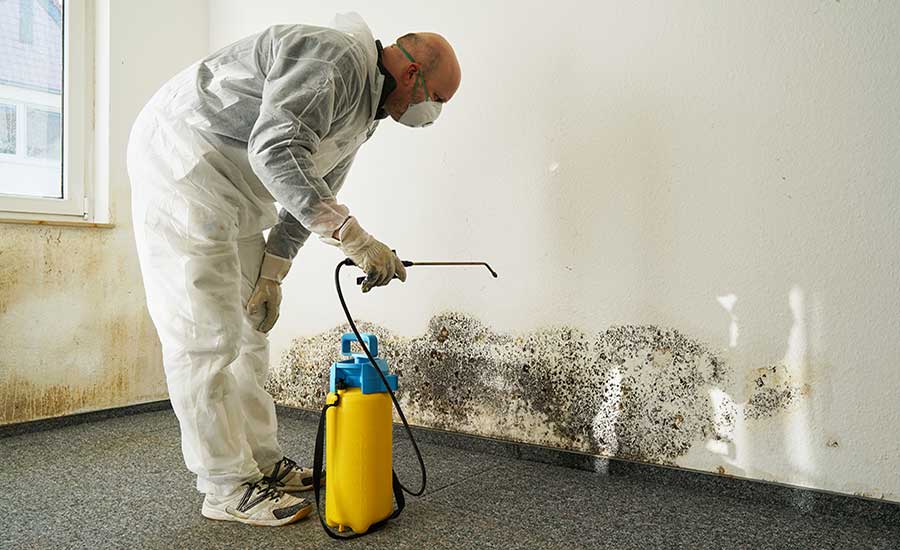
Beyond the five questions above, here are some additional warning signs that a mold removal company may not be right for your Nassau County home:
- They provide a firm quote over the phone without inspecting the property. Legitimate mold remediation requires a physical inspection to scope the work accurately. Any company willing to quote a price without seeing the affected area is either guessing or setting you up for significant change orders later.
- They guarantee to remove all mold from your home. Mold spores are naturally present in all indoor environments. Any company that claims they can make your home completely mold-free is making a promise that is scientifically impossible. The goal of mold remediation is to return mold levels to normal background concentrations, not to eliminate all spores.
- They use pressure tactics to rush your decision. Mold is a serious issue that warrants prompt attention, but a reputable company will give you time to ask questions, review their credentials, and make an informed decision. High-pressure sales tactics are a sign of a company that does not want you to look too closely at their qualifications.
- They cannot explain their process clearly. A qualified mold remediation company should be able to walk you through their process step by step in plain language. If the person you are speaking with becomes vague or defensive when asked about containment, protocols, or post-remediation verification, that is a meaningful warning sign.
- They are not willing to work with your insurance company. Most standard homeowner policies provide some coverage for mold remediation when it results from a covered water damage event. A professional restoration company should be experienced in navigating insurance claims and willing to work directly with your adjuster.
- Online reviews are sparse, recent, or geographically scattered. A genuine local mold remediation company should have a body of reviews from homeowners in Nassau County and the surrounding area. If reviews are thin, recent only, or appear to come from locations far from Long Island, investigate further before committing.
Read Also: Cost of Mold Removal in Miami: What Homeowners Should Expect
📍 Trust your instincts. If something feels off during your search, keep looking. PuroClean of Baldwin welcomes every question you have and will always give you straight answers. Call us today.
What the Mold Remediation Process Should Look Like From Start to Finish
So that you know what to expect when you hire a qualified mold remediation company, here is what a properly conducted remediation looks like from the initial call to final clearance:
Step 1: Inspection and Assessment
A certified technician visits your home to assess the extent of the mold growth, identify the moisture source, and determine the appropriate scope of remediation. This typically involves visual inspection, moisture readings using calibrated meters, and in some cases air or surface sampling to determine the type and concentration of mold present.
Step 2: Moisture Source Correction
Before or concurrent with remediation, the moisture source must be identified and corrected. This could mean repairing a pipe leak, addressing a foundation crack, improving ventilation, or completing water damage restoration in areas that were not fully dried after a flooding event.
Step 3: Containment Setup
The work area is sealed with reinforced poly sheeting. HVAC vents in the area are sealed to prevent spore migration through ductwork. Negative air pressure is established using HEPA-filtered air scrubbers. A decontamination area may be established at the entrance to the work zone for technicians to remove personal protective equipment without cross-contaminating adjacent areas.
Step 4: Mold Removal
Mold-affected materials that cannot be effectively cleaned, such as drywall, insulation, carpet, and in severe cases structural wood, are removed and disposed of in sealed bags. Non-porous surfaces with mold growth are cleaned using professional antimicrobial solutions. HEPA vacuuming is performed on all surfaces in the work area to capture residual spores.
Step 5: Antimicrobial Treatment
Remaining structural surfaces in the remediated area are treated with professional-grade antimicrobial agents to inhibit future mold growth. Some companies also apply encapsulants to appropriate surfaces as a secondary protective measure where indicated by the scope of the job.
Step 6: Post-Remediation Verification
Air and surface sampling is conducted to verify that mold levels in the remediated area have returned to acceptable background concentrations. Samples are submitted to an accredited laboratory for analysis. Containment is not removed until clearance criteria are met.
Step 7: Reconstruction
Once clearance is achieved, the restoration phase begins. Removed drywall, insulation, flooring, and other materials are replaced, and the affected area is returned to its pre-mold condition. A full-service restoration company like PuroClean of Baldwin handles both the remediation and the reconstruction, so you work with one team and one point of contact throughout the entire process.
📍 PuroClean of Baldwin follows every step of this process on every job. Call us now to schedule your mold inspection and get a clear, honest scope of work with no surprises.
Does Homeowner’s Insurance Cover Mold Remediation in Nassau County?
This is one of the most common questions Nassau County homeowners have when they discover mold, and the answer depends on the circumstances that caused the mold to develop.
Standard homeowner’s insurance policies in New York typically provide coverage for mold remediation when the mold resulted directly from a covered water damage event, such as a burst pipe, an appliance failure, or a roof leak. In these cases, the mold is considered a consequence of the covered peril, and the remediation cost is often included in the claim.
Coverage is typically not provided for mold that developed as a result of gradual water intrusion, ongoing maintenance failures, or flooding from external sources. For mold related to storm flooding or groundwater intrusion, a separate flood insurance policy would be the relevant coverage.
Regardless of the cause, having a professional restoration company document the damage thoroughly from the outset is critical to maximizing your insurance coverage. PuroClean of Baldwin provides detailed documentation of all mold and moisture conditions we identify, and we work directly with insurance adjusters to support your claim throughout the process.
📍 Navigating a mold insurance claim? PuroClean of Baldwin works directly with your insurer and handles all documentation. Call us to get the process started the right way.
Why Nassau County Homeowners Choose PuroClean of Baldwin
When Nassau County homeowners search for a mold removal company near them, they deserve a company that can answer every question in this guide with confidence and specificity. Here is a summary of what PuroClean of Baldwin brings to every mold remediation project:
- IICRC Certified technicians in Applied Microbial Remediation, Water Damage Restoration, and Applied Structural Drying
- Full containment protocols on every job, regardless of the size of the affected area
- Moisture source identification and correction as a standard part of every remediation scope
- Post-remediation verification support and transparent documentation for insurance and personal records
- New York State mold remediation licensing and comprehensive insurance coverage
- Deep local knowledge of Nassau County housing stock, construction styles, and moisture conditions
- Full-service restoration capability so we handle remediation and reconstruction as one integrated process
- Direct insurance claim assistance with documentation support and adjuster communication
- 24/7 emergency availability because mold emergencies do not follow business hours
We serve homeowners throughout Baldwin, Merrick, Freeport, Rockville Centre, Valley Stream, Lynbrook, Oceanside, and all of Nassau County. No matter where you are in our service area, we can be at your door quickly, and we will give you honest, professional service from the first call to the final clearance.
Call PuroClean of Baldwin for Certified Mold Remediation in Nassau County
IICRC Certified | NY State Licensed | Fully Insured | Available 24/7 | Baldwin, NY & All of Nassau County
PuroClean of Baldwin
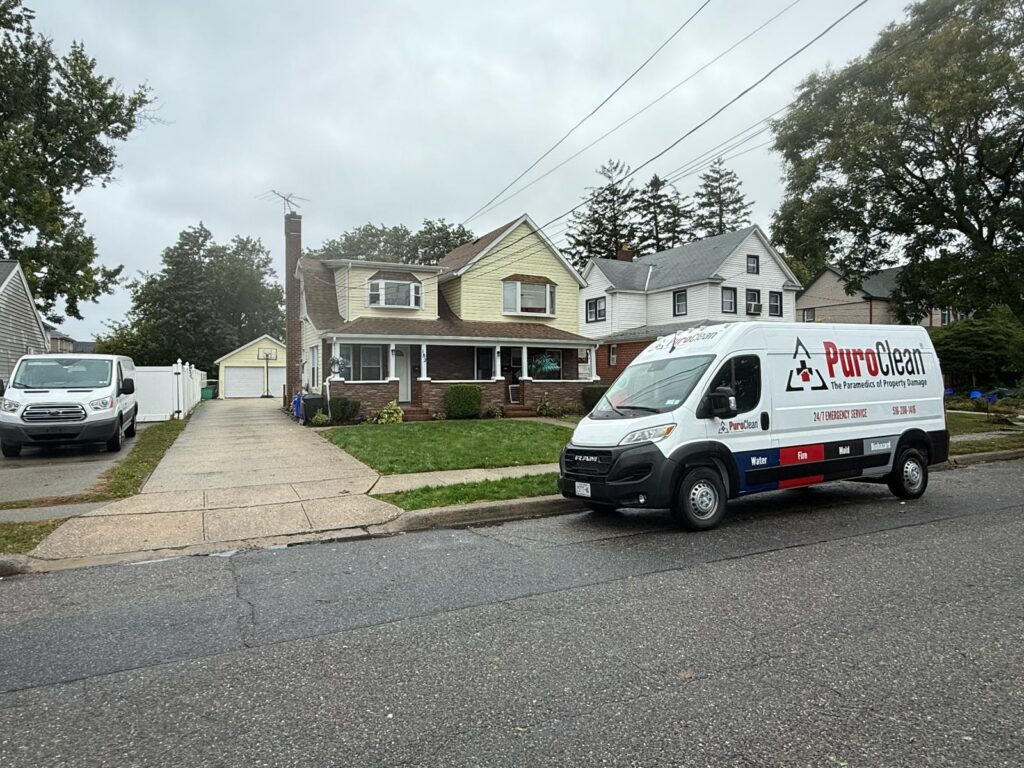
Serving Baldwin, NY and Nassau County | Available 24/7 | IICRC Certified
Mold Remediation | Water Damage Restoration | Fire & Smoke Damage | Biohazard Cleanup
Connect With Us on Social Media!
Facebook | Instagram | Twitter | NextDoor | Pinterest | Google Reviews | LinkedIn | Tiktok | YouTube


