


Table of Contents
If you live in Baldwin or Lynbrook, New York, you already know the weather here doesn’t pull any punches. Humid summers, wet springs, and the occasional nor’easter create the kind of moisture-rich environment that mold absolutely thrives in. Whether you’re a homeowner in a classic Cape Cod on Sunrise Highway’s south side or renting an apartment near Lynbrook’s train station, mold is a problem that touches virtually every neighborhood in this part of Nassau County.
Mold Removal in Baldwin, NY

This guide is designed to give you everything you need to understand mold, what it is, why it keeps showing up in Long Island homes, how to get rid of it properly, and how to stop it from coming back. We’ll walk through the entire remediation process from detection to prevention, with specific attention to the conditions that make Baldwin and Lynbrook particularly susceptible.
Why Baldwin and Lynbrook Are Mold Hot Spots
The geography of this area tells most of the story. Baldwin and Lynbrook sit just north of the South Shore, where proximity to the Atlantic Ocean and various tidal waterways keeps humidity consistently elevated. The average relative humidity in Nassau County during summer months regularly climbs above 70 percent, and that’s precisely the range where mold colonies take hold and expand rapidly.
But humidity alone doesn’t explain why so many homes here struggle with mold year after year. The housing stock matters enormously. A large portion of the residential buildings in Baldwin and Lynbrook were constructed between the 1920s and 1960s. These homes were built before modern moisture barriers, vapor retarders, and mechanical ventilation systems became standard. Many have crawl spaces that weren’t designed for Long Island’s water table, basements that wick groundwater through poured concrete or stone foundations, and attics with inadequate ventilation.
Read Also: 10 Signs of Mold Damage in Your House
Add to that the legacy of flooding from storms like Sandy in 2012, which left residual moisture deep in wall cavities and subfloor assemblies that many homeowners never fully addressed, and you have the conditions for chronic mold problems.
There’s also the simple reality of older plumbing. Homes built in this era frequently have supply lines and drain pipes that are decades past their reliable lifespan. Slow leaks behind walls or under sinks can go undetected for months, providing a constant moisture source that turns an ordinary wall cavity into a mold nursery.
Understanding Mold: The Basics Every Homeowner Needs
Mold is a fungus, and like all fungi, it reproduces by releasing microscopic spores into the air. These spores are everywhere, outdoors, indoors, floating in every breath you take. The spores themselves aren’t the problem. The problem begins when those spores land on a surface that offers them three things: moisture, a food source (which can be drywall, wood, insulation, carpet, or even dust), and temperatures between roughly 40 and 100 degrees Fahrenheit.
Once those conditions are met, mold can begin colonizing a surface within 24 to 48 hours. Within a week, it can spread aggressively and begin breaking down whatever material it’s growing on. Left unchecked for months, a small mold patch behind a bathroom wall can spread across entire structural members.
The most commonly encountered molds in residential settings include Cladosporium, Penicillium, Aspergillus, and the more notorious Stachybotrys chartarum, often called black mold. It’s worth noting that color alone doesn’t determine how dangerous a mold colony is; some black-colored molds are relatively benign, while certain green or white molds can be more problematic. Lab testing is the only reliable way to identify species and assess risk level.
Health Implications
For many people, mold exposure causes mild symptoms: nasal congestion, throat irritation, coughing, and eye irritation. For others, particularly children, the elderly, pregnant individuals, and those with asthma, allergies, or compromised immune systems, exposure can trigger serious respiratory issues, prolonged illness, and in severe cases, neurological symptoms.
Living in a home with active mold growth is never something to accept as “just the way it is.” If you or a family member has been experiencing unexplained respiratory symptoms, chronic fatigue, or recurring headaches that improve when you’re away from home, mold should be near the top of your list of things to investigate.
Identifying Mold in Your Home
Detection is the first step, and it’s not always as obvious as seeing a green patch on the bathroom ceiling. Mold frequently hides where you can’t see it: behind drywall, under flooring, inside HVAC ducts, and in wall cavities around windows or pipes.
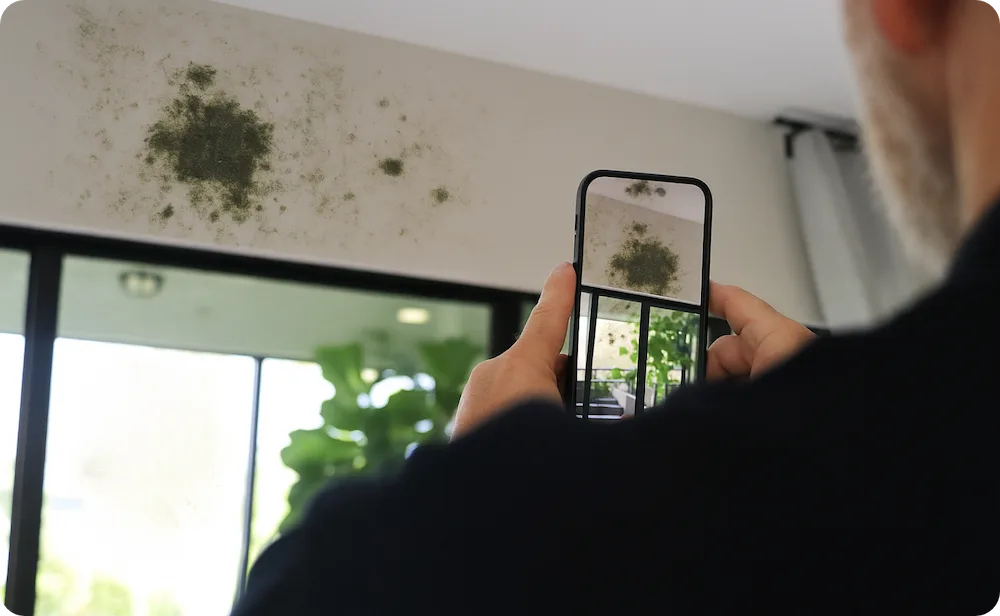
Visible mold is the most straightforward indicator. Look for discoloration, black, green, gray, white, or even orange spots, on walls, ceilings, grout lines, window sills, and around vents. In basements and crawl spaces, check structural wood beams, insulation, and the base of walls.
Musty odors are often the first sign of hidden mold. If a room consistently smells damp or earthy even after airing it out, there’s likely a mold colony somewhere behind the surfaces. Basements, bathrooms, and laundry rooms are the most common culprits in Baldwin and Lynbrook homes.
Water staining on ceilings or walls indicates past or ongoing moisture intrusion. Even if you don’t see active mold growth yet, water stains in an older home are an urgent warning sign that mold conditions exist.
Read Also: Premier Mold Removal and Inspection Services by PuroClean
Warping or bubbling of drywall, paint, or flooring often indicates moisture behind the surface, and where there’s sustained moisture, there’s almost certainly mold.
Professional mold testing is the gold standard for detection. A certified industrial hygienist can conduct air sampling, surface swab testing, and thermal imaging to identify mold colonies that aren’t visible to the naked eye. This is especially important before purchasing an older home in the area or after any significant water event.
The Mold Remediation Process, Step by Step
Mold remediation is not the same as mold removal. Removal is a casual term that implies simply wiping away what you can see. Remediation is a systematic process that addresses the source of moisture, eliminates the mold colony, and restores the affected area to a safe condition. Here’s what a professional remediation looks like in practice.
Step 1: Assessment and Moisture Source Identification
Before any physical work begins, the source of moisture must be identified and stopped. Remediating mold without fixing the underlying moisture problem is like bailing out a boat without plugging the hole. A thorough assessment involves inspecting plumbing, the building envelope (roof, windows, foundation), HVAC systems, and ventilation. In older Baldwin and Lynbrook homes, this step frequently uncovers slow pipe leaks, failed window flashing, or inadequate attic ventilation that has been quietly wicking moisture for years.
Step 2: Containment
To prevent mold spores from spreading to unaffected areas during remediation, the work zone must be properly contained. This typically involves sealing doorways and HVAC vents with heavy plastic sheeting and creating negative air pressure using air scrubbers equipped with HEPA filters. This step is critical, disturbing mold without containment can disperse millions of spores throughout a home, turning a localized problem into a whole-house issue.
Step 3: Personal Protective Equipment
Remediation workers wear full PPE: N-95 or P-100 respirators, disposable coveralls, gloves, and eye protection. Homeowners attempting DIY remediation often skip or underinvest in protective equipment, which poses serious health risks.
Step 4: Removal of Affected Materials
Porous materials that are heavily colonized by mold, drywall, insulation, carpet, wood trim, generally cannot be cleaned. They must be removed and disposed of properly. In New York State, mold-contaminated materials must be bagged and sealed before removal from the work zone and disposed of in accordance with applicable regulations.
Structural wood members with surface mold growth can often be cleaned if the mold hasn’t penetrated deeply. This is determined by visual inspection, probe testing, and sometimes moisture meter readings.
Step 5: Cleaning and Treatment
Non-porous surfaces (concrete, metal, tile, glass) can be cleaned using appropriate antimicrobial solutions. The EPA-registered biocides used by professional remediators are considerably more effective than household bleach, which many homeowners mistakenly rely on. Bleach is largely ineffective on porous surfaces and doesn’t prevent regrowth.
Following cleaning, surfaces are often treated with an encapsulant, a specialized sealant that prevents any residual mold spores from becoming active again.
Step 6: HEPA Vacuuming and Air Scrubbing
After cleaning, the entire work area is HEPA vacuumed to capture any residual spores from surfaces. Air scrubbers continue running throughout this process and are left operating for a period after work is complete to achieve air quality clearance.
Step 7: Post-Remediation Testing
Before the containment is removed and the area is cleared for reoccupancy, clearance testing should be conducted. This involves air and surface sampling to verify that mold levels have returned to normal background levels. A reputable remediation contractor will either conduct this testing themselves or recommend an independent industrial hygienist to do it. Independent verification is always the more trustworthy option.
Step 8: Reconstruction
Once clearance is achieved, the remediated area can be rebuilt, new drywall installed, insulation replaced, flooring relaid. This reconstruction work should incorporate any improvements identified during the assessment phase, such as better moisture barriers, improved ventilation, or updated flashing.
DIY vs. Professional Remediation: Knowing When to Call an Expert

Small surface mold patches, under ten square feet, on non-porous surfaces, with an obvious and correctable moisture source, can reasonably be addressed by a careful, well-equipped homeowner. A bathroom tile with surface mold around the grout can be cleaned with a proper biocide and the ventilation improved to prevent recurrence.
Read Also: Black Mold Remediation: A Lucrative Franchise Opportunity
But in most situations in Baldwin and Lynbrook homes, professional remediation is the right call. If the mold is in the basement, in wall cavities, under flooring, in the attic, or anywhere the full extent of the problem can’t be clearly seen, professional assessment is essential. If the mold follows a water damage event, a flooded basement, a burst pipe, roof leak, professional remediation is not optional, it’s necessary.
The New York State Department of Labor regulates mold remediation and requires that any remediation job over ten square feet be performed by a licensed mold remediator. This is not a formality; it exists because improper remediation can make a mold problem significantly worse and create lasting health hazards for building occupants.
Mold Prevention Strategies for Baldwin and Lynbrook Homeowners
The goal after successful remediation is ensuring you never need to do it again. Prevention is fundamentally about moisture control, and in this part of Long Island, that means being proactive on multiple fronts.
Control indoor humidity by keeping levels between 30 and 50 percent year-round. Dehumidifiers are essential in basements and crawl spaces, particularly during summer months. A whole-home dehumidifier integrated with your HVAC system is the most effective solution for older homes with persistent humidity issues.
Improve ventilation in bathrooms, kitchens, and laundry rooms. Exhaust fans should be vented to the exterior of the home, not into the attic or crawl space, which is a common error in older construction that creates a concentrated moisture problem in those spaces. Run exhaust fans during and for at least 20 minutes after showers or cooking.
Inspect and maintain your roof and gutters regularly. In this area, fall leaf accumulation clogs gutters, causing water to back up and seep into fascia boards and wall cavities. Roof flashings around chimneys, skylights, and valleys are common failure points that allow water intrusion.
Address any water intrusion immediately. The 48-hour window from moisture event to mold growth is not forgiving. If you have a leak, a flooded basement, or significant condensation, dry the affected area aggressively and immediately using fans, dehumidifiers, and if necessary, professional drying equipment.
Seal your basement and crawl space. Consider encapsulating your crawl space with a vapor barrier and sealing basement walls with appropriate waterproofing products. For homes with chronic water infiltration through foundations, an interior or exterior French drain system may be warranted.
Upgrade attic ventilation. Inadequate attic ventilation leads to moisture buildup from interior air that rises through the ceiling plane. A properly ventilated attic maintains a continuous airflow from soffit vents at the eaves to a ridge vent at the peak, preventing both summer heat buildup and winter moisture condensation.
Choosing a Mold Remediation Contractor in Nassau County
When selecting a contractor for mold remediation in Baldwin or Lynbrook, look for New York State licensure as a mold assessor or mold remediator, or ideally both, though note that state regulations require these roles to be separated by independent contractors for larger jobs. Ask for proof of insurance, including general liability and workers’ compensation.
Reputable contractors will conduct a thorough assessment before quoting work, will explain what they found and why their proposed scope is appropriate, and will conduct or facilitate clearance testing after the work is complete. Be cautious of contractors who offer to begin work immediately without assessment, who provide quotes without seeing the affected area, or who don’t mention post-remediation testing.
Get multiple quotes. Mold remediation pricing in Nassau County varies significantly, and while the lowest price is rarely the right choice for a health-sensitive project, understanding the market rate helps you identify contractors who are either cutting corners or significantly overcharging.
Final Thoughts
Mold in a Baldwin or Lynbrook home is a serious issue, but it’s a solvable one. The older housing stock, proximity to the water, and Nassau County’s humid climate make vigilance essential, but with the right knowledge, prompt action, and proper remediation when needed, you can maintain a healthy, mold-free home.
Don’t ignore the musty smell in the basement. Don’t assume the dark spot on the bathroom ceiling is just a stain. And don’t put off addressing moisture issues because they seem minor. In this climate, minor moisture problems have a way of becoming major mold problems faster than most homeowners expect.
Take mold seriously, address it systematically, and you’ll protect not just the structure of your home, but the health of everyone who lives in it.
Call us today at (516) 200-1416 or email: [email protected].
Connect With Us on Social Media!


