


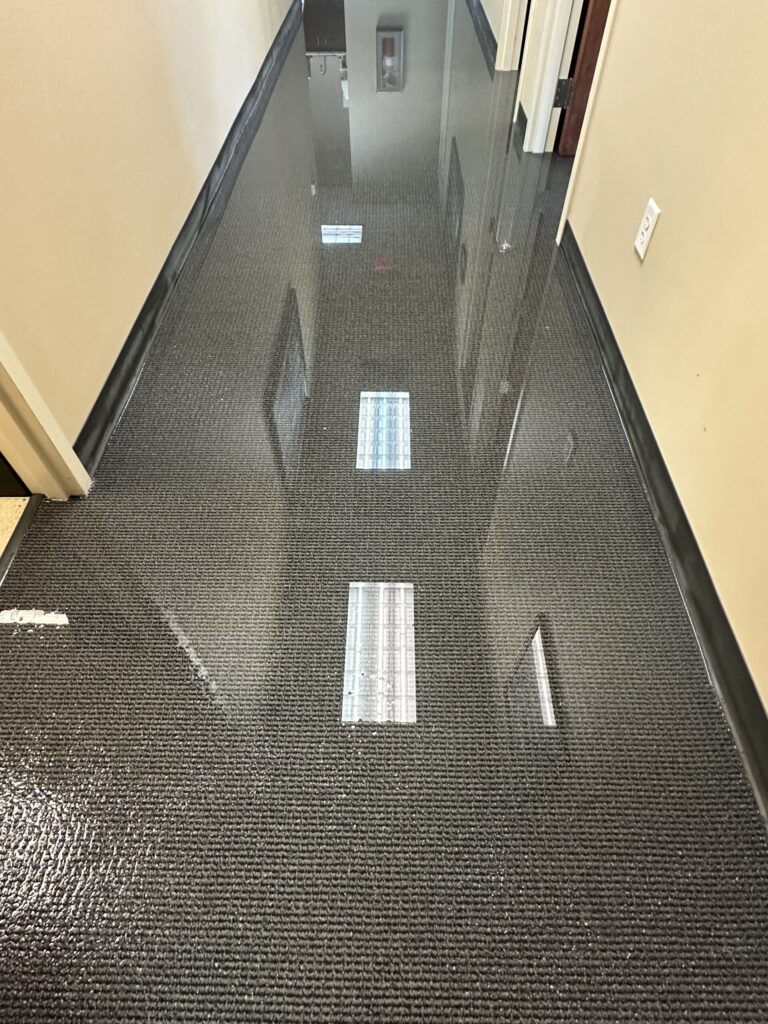
Water damage does not give you time to research your options. Whether it is a burst pipe flooding your basement at midnight, storm surge pushing water through your front door, or a slow roof leak that finally soaked through your ceiling, the decisions you make in the first hours after water damage occurs will determine how much of your home you save, how much your insurance will cover, and whether mold becomes your next crisis.
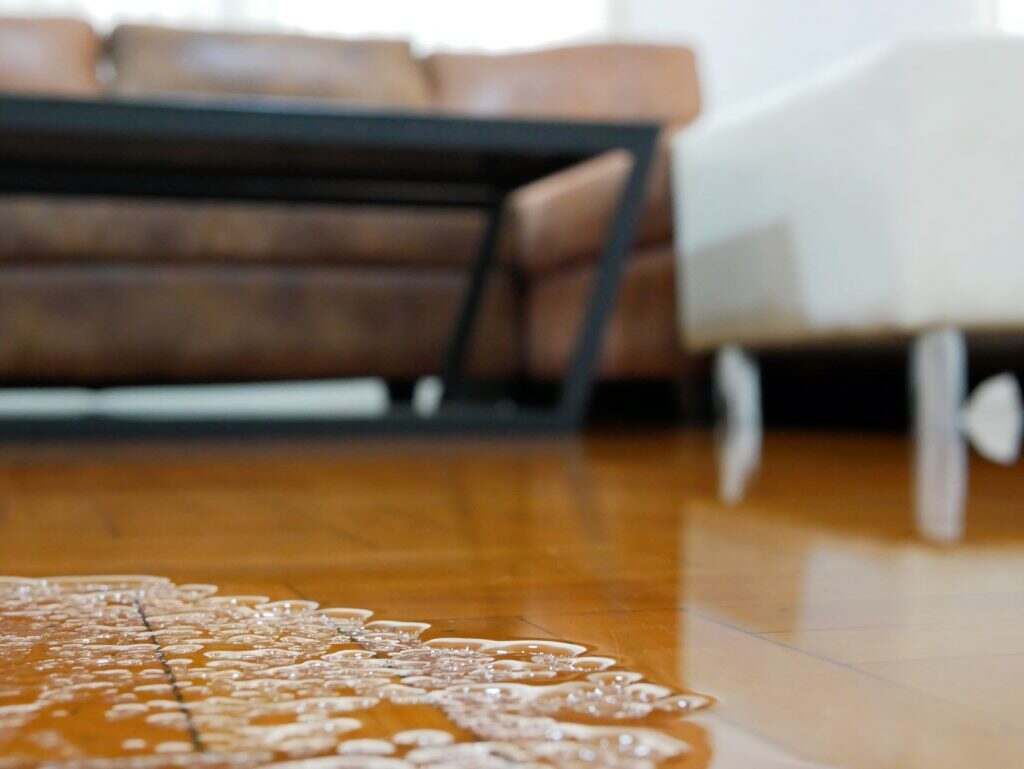
This guide is written for Baldwin, NY homeowners who are in the middle of a water emergency right now, or who want to be prepared before one happens. Baldwin’s unique combination of coastal proximity, aging housing stock, and seasonal storm exposure means that water damage is not a rare event here. It is something every homeowner should know how to handle. Follow these steps in order, and you will give yourself the best possible outcome.
Step 1: Prioritize Safety Before Anything Else
Before you touch a single wet surface, assess the safety of your home. Water and electricity are a deadly combination, and flooded homes present electrical hazards that are not always obvious. If there is any standing water near electrical outlets, appliances, or your electrical panel, do not enter the area until the power has been shut off.
Read Also: Does Insurance Cover Water Damage in Nassau and Long Island Baldwin?
Go to your main electrical panel and shut off power to affected areas, or turn off power to the entire home if you are unsure which circuits are involved. If your panel is in the flooded area and you cannot reach it safely, call your utility company to cut power from outside before you enter. This step is non-negotiable.
Additional safety checks before entering the property:
- Check for structural damage. If walls are bowing, ceilings are sagging, or the floor feels soft and unstable, the structure may be compromised. Leave and call a professional before re-entering.
- Check for gas leaks. If you smell gas or hear a hissing sound, do not switch any lights on or off. Leave immediately and call your gas company from outside.
- Wear protective gear. Before wading through floodwater, put on rubber boots, waterproof gloves, and if available, an N95 mask. Floodwater in Baldwin, particularly after major storms, often contains sewage, chemicals, and other contaminants that pose serious health risks.
- Keep children and pets out of the affected areas until a full assessment has been done.
Step 2: Stop the Water Source If You Can
If the water damage is coming from inside your home, such as a burst pipe, overflowing appliance, or failed water heater, locate and shut off the main water supply immediately. In most Baldwin homes, the main shutoff valve is located near the water meter, which is typically found in the basement, utility room, or near the front foundation wall.
Know where your main shutoff valve is before an emergency happens. If you are currently in a water emergency and cannot find it, shutoff tools are available at hardware stores, and your local plumber or utility company can direct you. Every adult in your household should know this location.
If the water is entering from outside due to storm flooding, a failed sump pump, or foundation seepage, shutting off the water supply will not stop the intrusion. In these situations, focus on removing water as quickly as possible and protecting your belongings rather than trying to stop what is coming in.
For appliance-related leaks such as a washing machine hose failure or dishwasher overflow, pull the appliance away from the wall and disconnect it from the water supply line behind it. For toilet overflow situations, turn the shutoff valve located at the base of the toilet clockwise to stop water flow.
Step 3: Call Your Insurance Company Right Away
One of the most common and costly mistakes Baldwin homeowners make after water damage is waiting to contact their insurance company. Many policies have specific timelines for reporting damage, and delays can result in denied or reduced claims. Call your insurer as soon as you have confirmed that your household is safe.
When you call, have the following information ready: your policy number, a description of how and when the damage occurred, and a general overview of which areas and materials appear affected. Your insurer will assign a claims adjuster and walk you through the next steps specific to your policy.
It is important to understand the difference between standard homeowners insurance and flood insurance. Most standard policies cover sudden and accidental water damage from internal sources like pipes and appliances, but they do not cover flooding from external sources such as storm surge, rising groundwater, or overflowing bodies of water. In Baldwin, which has experienced significant flooding events from coastal storms, many homeowners carry separate flood insurance through the National Flood Insurance Program (NFIP) or a private flood insurer.
If you do not have flood coverage and your damage came from an external flood source, you may still be eligible for disaster assistance through FEMA if a federal disaster declaration has been issued for Nassau County. Check the FEMA website or call their helpline to determine eligibility based on the current 2026 disaster declarations for your area.
Document everything before you move or remove anything. Use your phone to photograph and video every affected room, wall, floor, ceiling, and item from multiple angles. This documentation is your evidence for the insurance claim. Capture close-ups of waterlines on walls, damaged personal property, and any visible structural damage. Send copies to cloud storage immediately so they are not lost if your phone is damaged.
Step 4: Remove Standing Water as Quickly as Possible
Every hour that standing water remains in your home extends the damage and increases the risk of mold growth. Mold can begin developing within 24 to 48 hours of water exposure, so getting water out fast is critical.
For small amounts of water, wet/dry shop vacuums are effective and can be rented from most hardware stores. For larger volumes of standing water, a submersible pump is more efficient. Many homeowners in flood-prone areas of Baldwin keep a submersible pump on hand specifically for this reason. They are affordable, easy to store, and can remove several thousand gallons per hour.
If the water volume is beyond what you can manage with available equipment, call a water damage restoration company. Professional restoration teams have truck-mounted extraction equipment that can remove massive amounts of water in a fraction of the time it would take with consumer tools. In severe flooding situations, this is almost always the faster and more cost-effective path, even accounting for service fees.
As you remove water, work from the outermost rooms inward toward the source if dealing with internal flooding, or from the highest point of water depth toward the exit points if dealing with storm flooding. This approach prevents you from pushing contaminated water into areas that were previously dry.
Step 5: Begin Drying the Structure Immediately
Removing standing water is only the beginning. Moisture that has been absorbed into walls, floors, subfloors, and insulation will continue to cause damage long after the visible water is gone. Thorough drying of the structure is what separates a manageable repair from a complete gut renovation.
Open windows and doors to create airflow if outdoor conditions allow. The goal is to move humid air out and drier air in. However, on hot and humid summer days in Baldwin, outdoor air may actually be more humid than indoor air, which would worsen the drying process. Check the outdoor humidity before opening up.
Deploy fans throughout the affected areas. Industrial air movers are significantly more effective than household fans and can typically be rented from equipment rental companies. Position fans to direct airflow across wet surfaces, not just into the room generally. Angling fans toward wet walls and floors accelerates evaporation from the surface of materials.
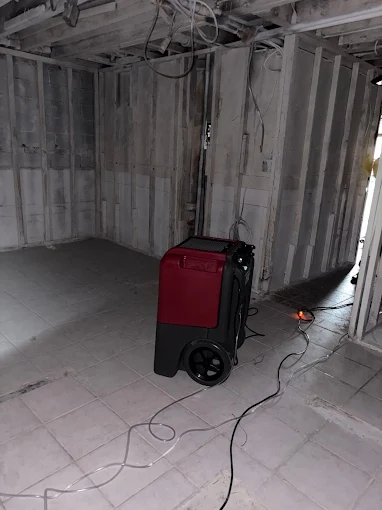
Use dehumidifiers aggressively. A standard residential dehumidifier will not cut it for serious water damage. Commercial dehumidifiers that can process 100 or more pints of water per day are available for rent and make a measurable difference in drying time. Run them continuously, emptying or draining them as needed, until moisture readings in walls and floors return to normal levels.
Professional restoration companies use moisture meters to measure moisture content inside walls and floors without tearing them open. If you are handling remediation yourself, consider purchasing or renting a moisture meter to guide your drying efforts. Materials should reach their normal moisture content before any repairs or reconstruction begins.
Step 6: Remove Damaged Materials That Cannot Be Saved
Not everything in a water-damaged home can or should be dried and saved. Knowing what to remove quickly and what can potentially be salvaged will help you work efficiently and reduce the risk of mold growth inside retained materials.
Remove immediately:
- Wet drywall that has been saturated. Drywall is highly porous and absorbs water rapidly. Once soaked, it typically cannot be adequately dried without removal, and it becomes a prime substrate for mold growth.
- Soaked insulation. Whether fiberglass batts or blown-in cellulose, wet insulation loses its thermal value and holds moisture for extended periods. It should be removed and replaced.
- Wet carpeting and carpet padding. Padding is nearly impossible to dry thoroughly and should always be discarded. Carpet may be salvageable if it was exposed only briefly to clean water, but carpeting soaked in floodwater, which is typically contaminated, should be removed entirely.
- Particleboard and MDF furniture or cabinetry that has swollen or warped. These materials do not recover once saturated.
- Any porous materials that came into contact with sewage-contaminated water. This includes drywall, insulation, carpet, wood furniture, mattresses, and upholstered items.
Potentially salvageable with proper drying:
- Solid wood flooring that has not been submerged for an extended period.
- Solid wood furniture, depending on the type of wood and duration of exposure.
- Hard surface flooring such as tile or vinyl plank, provided the subfloor beneath it has not been compromised.
- Clothing and soft goods that can be washed and disinfected.
Step 7: Address Mold Prevention From the First Hour
You do not have the luxury of waiting to see if mold develops. By the time mold is visible, it has already been growing for days. Mold prevention begins the moment you start addressing water damage, not after the drying is complete.
Once standing water has been removed and wet materials have been taken out, treat remaining surfaces with an antimicrobial solution appropriate for the material type. Products containing quaternary ammonium compounds or hydrogen peroxide are commonly used in restoration work. Follow manufacturer instructions carefully and ensure adequate ventilation during application.
Monitor for mold development in the days and weeks following the water event. Check behind wall cavities where drywall was removed, along floor joists in basements and crawl spaces, and in any area where drying was slow or incomplete. A musty odor that develops after the visible water is gone is often the first sign of mold growth inside structural materials.
If mold does appear despite your prevention efforts, do not attempt to paint over it or treat it with consumer-grade products and move on. Mold that appears on framing, subfloor, or other structural materials requires proper remediation, which typically means cleaning with appropriate biocides, sometimes sanding or wire-brushing affected wood surfaces, and in severe cases, removing and replacing the material entirely.
Step 8: Work With a Licensed Water Damage Restoration Company
For anything beyond a very minor water incident, working with a licensed restoration company is strongly advisable. In Baldwin, where storm flooding can affect multiple properties simultaneously, calling early is important. Restoration companies experience surge demand after major weather events, and response times increase significantly during those periods.
A qualified restoration company will conduct a thorough moisture assessment using professional-grade tools, develop a drying plan customized to your specific situation, and document the process in a way that supports your insurance claim. Their work is typically performed to IICRC S500 standards, which is the professional standard for water damage restoration, and their documentation can be critical if there are any disputes with your insurance adjuster.
Read Also: How Long Does It Take to Dry Out a Flooded House?
When selecting a restoration company in Baldwin, look for IICRC certification for water damage restoration. Ask whether they work directly with your insurance carrier and whether they can handle the full process from extraction through reconstruction. Some companies stop at drying and structural prep, requiring you to hire a separate contractor for repairs. Others offer complete restoration services from start to finish, which reduces coordination burden on you during an already stressful time.
Be wary of contractors who arrive unsolicited after a storm, sometimes called storm chasers, who pressure you to sign contracts immediately. Review any contract carefully before signing, particularly clauses related to assignment of insurance benefits, which can transfer control of your claim to the contractor in ways that may not serve your interests.
Understanding Baldwin-Specific Water Damage Risks in 2026
Baldwin’s geography puts it at meaningful risk from multiple water damage sources. Situated in Nassau County on Long Island’s South Shore, the community sits close to Milburn Creek and is near the bay, making it susceptible to both tidal flooding and stormwater backup during heavy rain events. As of 2026, several dynamics have made water damage risk more relevant than ever for Baldwin residents.
Storm intensity and frequency have increased in recent years. The 2024 and 2025 storm seasons brought significant flooding events to Nassau County, and water damage restoration companies in the area have reported steady increases in demand year over year. Homeowners who experienced minor flooding in past years are finding that similar storm events now produce more severe water intrusion.
Municipal infrastructure in parts of Baldwin is aging, and stormwater drainage systems in some areas were not designed to handle the volume of water that recent storms have produced. When drainage systems back up, water has nowhere to go except into basements and crawl spaces through floor drains, sump pits, and foundation cracks.
Many Baldwin homes were built in the mid-20th century and have not been retrofitted with modern flood mitigation measures. Homes without sump pumps, or with sump pumps that lack battery backups, are particularly vulnerable during power outages that coincide with storm events, which is exactly when sump pumps are needed most.
In 2026, FEMA’s updated flood maps for Nassau County have revised flood zone designations for many Baldwin properties. Homeowners should verify whether their property’s flood zone designation has changed, as this affects both flood insurance requirements and premiums. Contact your insurance agent or check FEMA’s Flood Map Service Center online to review your current designation.
How to Protect Your Baldwin Home Before the Next Water Event
The best water damage response is one you never have to use. Investing in prevention and preparedness now will reduce both the likelihood and severity of water damage during future storms and plumbing failures.
Install a sump pump with a battery backup
If you have a basement and do not have a sump pump, this is the single most impactful investment you can make. A battery backup ensures the pump continues working during power outages. Consider a water-powered backup as a secondary redundancy if you have sufficient water pressure.
Install a backwater valve
A backwater valve on your sewer line prevents sewage from backing up into your basement when municipal sewer systems are overwhelmed during storms. This is a relatively low-cost plumbing upgrade that can prevent one of the most damaging and hazardous types of water intrusion.
Seal foundation cracks
Have a foundation specialist inspect and seal any visible cracks in your foundation walls and floor. Hydraulic cement and epoxy injection are common methods depending on the type and severity of the crack. Interior waterproofing systems with drainage channels and sump collection can also be installed for more comprehensive protection.
Elevate critical systems
If your water heater, furnace, electrical panel, or other critical systems are located in the basement, consider elevating them above the base flood elevation for your property. This is particularly relevant for Baldwin homes in or near designated flood zones, where even a few inches of water can destroy mechanical systems and create costly and dangerous situations.
Review and update your insurance coverage
Meet with your insurance agent to review what your current policy covers and where the gaps are. If you do not have flood insurance and your property is in or near a flood zone, purchasing a policy before a storm is named will give you coverage, though most flood policies have a 30-day waiting period before they take effect.
Create a water emergency kit
Keep the following items accessible in your home: a submersible pump with a long discharge hose, a wet/dry shop vacuum, rubber boots and waterproof gloves, a moisture meter, your insurance policy documents and agent contact information, and the contact information for a local water damage restoration company you have researched in advance.
Navigating the Insurance Claim Process After Water Damage
The insurance claims process after water damage can be complicated, and how you handle it in the first few days will significantly influence the outcome. Here are the key principles to follow.
Read Also: More Than Just a Scrub: Why Professional Mold Remediation is Key for Baldwin Homeowners
Document before you restore. Your adjuster needs to see the full extent of the damage, and photographs taken before any cleanup or repair provide the clearest evidence. If you begin remediation before the adjuster visits, which is often necessary to prevent further damage and mold, make sure your documentation is thorough enough to capture everything that existed before work began.
Keep every receipt. Costs for emergency services, equipment rental, temporary accommodations if the home is uninhabitable, and any materials purchased for mitigation should all be tracked. Most policies have provisions for reimbursing reasonable emergency mitigation costs even if you do them yourself.
Understand your policy’s actual cash value versus replacement cost provisions. Older homes in Baldwin may have policies that pay out actual cash value for damaged items and materials, which accounts for depreciation. Replacement cost policies pay what it actually costs to replace the item or material today. Knowing which you have will help you set realistic expectations for your settlement.
You have the right to dispute an adjuster’s assessment if you believe it is inaccurate or incomplete. Public adjusters are licensed professionals who work on your behalf, rather than the insurance company’s behalf, and can help you negotiate a fair settlement. Their fees are typically a percentage of the claim payout, so their incentive is aligned with maximizing your recovery.
Conclusion: Speed and the Right Steps Make All the Difference
Water damage is one of the most stressful events a homeowner can face. In Baldwin, where the risk is real and recurring, being prepared and knowing exactly what to do in those first critical hours is what separates a controlled recovery from a prolonged, expensive ordeal.
Prioritize safety first. Stop the water source. Call your insurance company immediately. Remove water and begin drying as fast as possible. Remove unsalvageable materials without hesitation. Prevent mold from the very first hour. Work with qualified professionals for anything beyond the most minor incidents. And use this event as the motivation to put better protections in place before the next one arrives. Baldwin homeowners who act quickly, document thoroughly, and work with experienced local professionals consistently achieve better outcomes than those who wait and see. Water does not wait, and neither should you.
Connect With Us on Social Media!
Facebook | Instagram | Twitter | NextDoor | Pinterest | Google Reviews | LinkedIn | Tiktok | YouTube


