


A candid look at fire restoration from a team that’s seen it all
Let us tell you something most restoration companies won’t admit: we see people on their absolute worst days.
Not “bad hair day” worst. Not “missed a deadline” worst. We’re talking about the kind of worst where someone stands in their driveway at 2 AM, watching firefighters pour water into what used to be their kid’s bedroom, wondering if the stuffed bear from grandma made it out.
That’s the reality of fire damage restoration in Bloomington. The fire damage restoration truth. And after 10 years in this industry, we’ve learned that the technical stuff… that’s actually the easy part.
The hard part? That’s what nobody prepares you for.
Table of Contents
The Phone Call That Changed How We Think About This Work
Three years ago, we got a call at 11:47 PM. A homeowner in Normal, voice shaking, barely coherent. Small electrical fire in the basement. Fire department had just left. Could we come out?
Of course we could. We always can.
When our team arrived, the visible damage looked manageable. Some charred drywall, melted storage containers, that distinctive acrid smell that fire leaves behind. The homeowner kept apologizing for calling so late, for bothering us, for “overreacting to such a small fire.”
Here’s what that homeowner didn’t know: there’s no such thing as a small fire.
Our thermal imaging cameras told a completely different story than what eyes could see. Heat signatures behind walls. Moisture readings off the charts from firefighting water. Soot particles that had traveled through the HVAC system and settled in every single room of a 2,400 square foot home.
That “small fire” turned into a three-week restoration project.
But here’s the part that haunts us: this homeowner almost didn’t call. Almost decided to “handle it themselves” with some cleaning supplies and elbow grease. Almost made a decision that would have cost them exponentially more money, exposed their family to toxic air quality, and potentially made their home uninsurable.
Why? Because fire damage restoration in Bloomington isn’t something people think about until they desperately need it. And when they need it, they’re in crisis mode, not research mode.
That’s the gap we want to close with this article.
What Fire Actually Does to Your Home (The Science Nobody Explains)
Let us get nerdy for a minute, because understanding this changes everything.
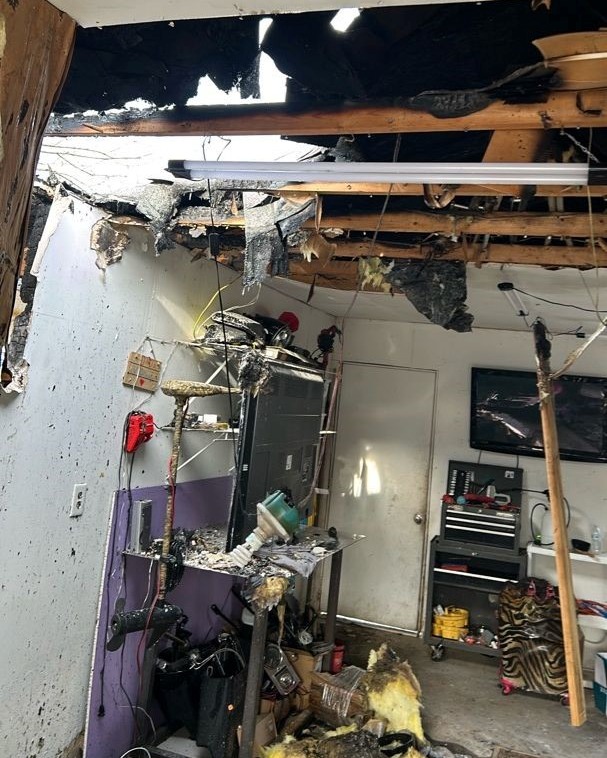
When materials burn, they don’t just disappear. They transform into dozens of different compounds, many of them acidic, many of them toxic, all of them problematic.
Soot isn’t just “black stuff.” It’s a complex mixture of carbon particles, tar, oils, and various chemical residues. And here’s the kicker: it’s acidic. That means every second soot sits on a surface, it’s actively corroding that surface.
Think about acid on metal. It doesn’t just sit there looking ugly. It eats through the material.
Within the first hour after a fire, plastic surfaces start discoloring. After 24 hours, metals begin tarnishing. Wood furniture finishes turn yellow. After a week, walls and appliances may require replacement instead of cleaning. After several weeks, damage becomes permanent.
This timeline is why fire damage restoration in Bloomington professionals obsess over response time. It’s not about being dramatic or creating urgency for sales. It’s pure chemistry and physics.
Every hour matters because damage is exponential, not linear.
The Three Types of Damage Everyone Misses
When people think “fire damage,” they picture flames and charred wood. That’s actually just one-third of the problem.
Thermal Damage is what you expect. Burned materials, melted plastics, structural compromise from extreme heat. This is the visible damage that makes you gasp when you first see it.
Smoke Damage is the sneaky villain. Smoke doesn’t respect boundaries. It travels through electrical conduits, plumbing chases, and HVAC ductwork, spreading contamination far beyond the fire’s origin. We’ve seen kitchen fires contaminate master bedroom closets on the opposite side of the house. Smoke particles penetrate porous materials deeply, creating persistent odors and health hazards.
Water Damage surprises everyone. Firefighters aren’t thinking about your hardwood floors when they’re saving your life. They use thousands of gallons of water, and that water has to go somewhere. It seeps into subfloors, soaks insulation, saturates drywall, and creates perfect conditions for mold growth within 24 to 48 hours.
Professional fire damage restoration in Bloomington addresses all three damage types simultaneously. Miss even one, and you haven’t actually restored anything. You’ve just created delayed problems.
The DIY Disaster We Wish We Could Forget
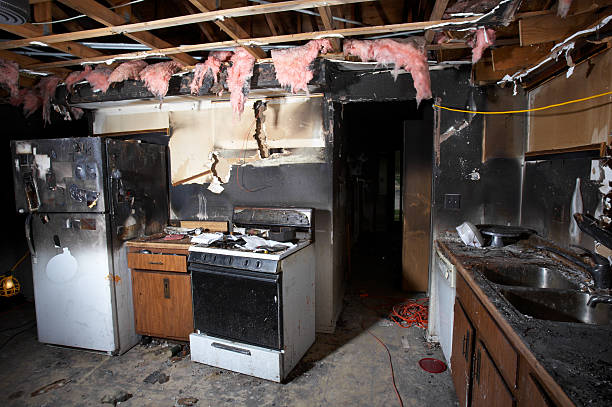
A couple in Bloomington called us six months after a “minor” kitchen grease fire. They’d spent an entire weekend cleaning. Rented a carpet cleaner. Bought special soot sponges from the hardware store. Repainted the walls themselves.
They felt proud of saving money and handling it independently. Until the smell wouldn’t go away. Until their kids started getting frequent headaches. Until their homeowner’s insurance inspector flagged air quality concerns during a routine visit.
When we tested their home, particulate levels were dangerous. Soot had infiltrated their HVAC system and had been circulating through the house for six months, depositing acidic particles with every heating cycle. The ductwork needed complete replacement. Walls they’d painted over required removal and replacement because soot had penetrated the drywall paper.
Their DIY cleanup cost them about $800 in materials and two weekends. The proper fire damage restoration in Bloomington service they eventually needed cost $23,000, largely because the six-month delay allowed minor damage to become major damage.
We’re not sharing this to shame anyone. We’re sharing it because this scenario happens more often than you’d imagine. People in crisis make understandable decisions with incomplete information.
What Professional Restoration Actually Looks Like

Let us walk you through what happens when you call a legitimate fire damage restoration in Bloomington company, because Hollywood has given people wildly inaccurate expectations.
Hour One: Emergency Response and Assessment
Our team arrives with more equipment than most people expect. Thermal imaging cameras. Moisture meters. Air quality monitors. Particle counters. We’re not just cleaning… we’re conducting forensic damage assessment.
We document everything with photos, measurements, and detailed notes. Why? Because your insurance company needs this documentation, and because restoration without assessment is just expensive guessing.
Hours Two Through Twenty-Four: Stabilization
We stop damage progression immediately. Board up broken windows. Tarp damaged roofs. Extract standing water. Set up containment barriers to prevent cross-contamination. Deploy air scrubbers with HEPA filtration.
This phase isn’t glamorous, but it’s critical. Every hour we delay stabilization, damage compounds.
Days Two Through Seven: Deep Restoration
This is where expertise really matters. Different materials require completely different cleaning approaches. We use dry sponges for walls, HEPA vacuums for fabrics, specialized cleaners for metals, abrasive techniques for heavily soiled surfaces.
We clean in specific sequences to prevent cross-contamination. We test air quality continuously. We monitor moisture levels to ensure thorough drying and prevent mold.
Week Two and Beyond: Reconstruction
Fire damage restoration in Bloomington often requires rebuilding. Maybe it’s just drywall and paint. Maybe it’s structural framing and electrical systems. Either way, having one team handle everything from emergency response through final reconstruction eliminates coordination nightmares.
The Insurance Conversation Nobody Wants to Have
Let’s address the elephant in the room: insurance companies.
We’ve worked with dozens of insurance carriers over the years. Most are fair. Some are exceptionally good. A few make the process unnecessarily difficult.
Here’s what we’ve learned about maximizing your fire insurance claim:
Documentation is everything. Insurance adjusters aren’t villains, but they need evidence. Photos, moisture readings, air quality measurements, itemized damage reports. The more documentation you provide, the smoother your claim processes.
Timing matters for claims, too. Most homeowner policies require “prompt” notification after a loss. What’s “prompt”? It varies by policy, but why risk it? Call your insurance company within hours of the fire, even before you know the full extent of damage.
Professional restoration companies speak insurance language. We know what documentation adjusters need. We understand coverage nuances. We can advocate for you when claims get complicated.
One client told us their previous restoration company provided such poor documentation that the insurance company initially denied half the claim. We stepped in, compiled proper evidence, and recovered the full claim amount plus additional coverage for hidden damage the first company missed.
The Bloomington and Normal Advantage
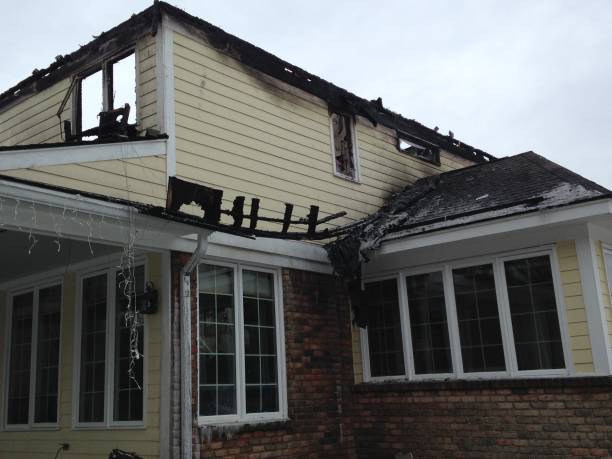
Local expertise makes a measurable difference in fire damage restoration in Bloomington outcomes, and we can prove it.
We understand local building codes intimately. We know which permits McLean County requires for different levels of reconstruction. We have existing relationships with local inspectors, which accelerates approval processes.
We know area insurance adjusters personally. When your adjuster has worked with us on fifty previous claims, trust exists. Claims process faster. Disputes resolve easier.
We understand Illinois weather patterns and how they affect restoration timelines. We know that spring storms in Bloomington can dump rain through fire-damaged roofs without warning. We prepare accordingly.
But the biggest advantage? We live here. Our kids go to school with your kids. We shop at the same Schnucks. We attend the same community events. That creates accountability no national franchise can replicate.
When our team restores your home, we’re restoring our neighbor’s home. That matters.
Prevention Wisdom From Seeing Too Many Fires
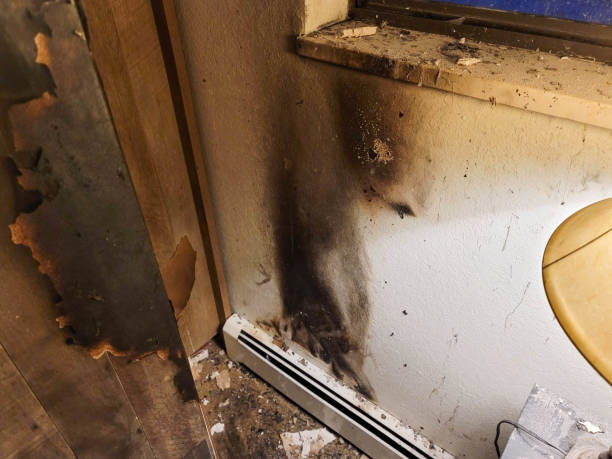
After 10 years providing fire damage restoration in Bloomington services, we’ve noticed patterns. Most residential fires fall into predictable categories, which means most are preventable.
Kitchen fires dominate our call volume. Unattended cooking causes more fires than any other single factor. The fix is stupidly simple: never leave cooking unattended. Not for “just a minute.” Not to grab the mail. Not to answer the phone. Either turn off the burner or stay in the kitchen.
Electrical fires rank second, especially in older Bloomington homes built before modern electrical codes. Have a licensed electrician inspect your system every few years. This is especially critical if you’re experiencing flickering lights, frequently tripping breakers, or outlets that feel warm.
Dryer fires surprise people because they seem so innocuous. Lint is incredibly flammable. Clean your dryer vent regularly. Not just the lint trap… the actual exhaust vent that runs to the outside of your house. This simple maintenance prevents hundreds of fires annually.
Space heater fires spike every winter in Central Illinois. Keep space heaters at least three feet from anything flammable. Never leave them running unattended or while sleeping. Better yet, upgrade your home heating system so you don’t need supplemental heat.
Install interconnected smoke alarms on every level of your home. Test them monthly. Replace batteries annually. Replace the entire unit every ten years. This technology saves lives and minimizes damage by providing early warning.
The Question Everyone Asks: How Much Does Fire Damage Restoration in Bloomington Cost?
We wish we could give you a simple answer. We really do.
Fire restoration costs vary wildly based on damage severity, property size, materials affected, and reconstruction requirements.
A small kitchen fire with minimal smoke spread might cost $3,000 to $8,000 for complete restoration. Moderate whole-home smoke damage typically runs $15,000 to $35,000. Extensive structural fires requiring major reconstruction can easily exceed $100,000.
Here’s the good news: most homeowner insurance policies cover fire damage restoration comprehensively. You’ll typically pay your deductible plus any upgrades you choose beyond standard restoration.
Here’s the better news: professional fire damage restoration in Bloomington companies provide detailed estimates after thorough inspection. You’ll know costs before work begins. No surprises. No hidden fees.
And here’s the best news: quality restoration actually costs less long-term than cheap restoration. Cutting corners creates recurring problems. Mold from incomplete drying. Persistent odors from inadequate deodorization. Structural issues from superficial repairs.
Pay once for quality restoration, or pay repeatedly for repeated failures. Your choice.
What Keeps Us Doing This Work
Last month, we completed a major fire restoration for a family in Normal. The fire started in their garage and spread to the kitchen and living room. Significant damage. Months of work. Extensive reconstruction.
When we finished, the homeowner walked through with us for the final inspection. She stopped in the rebuilt kitchen, touched the new countertops, and started crying.
“This is nicer than it was before,” she said. “You didn’t just fix our house. You gave us our home back.”
That’s why we do this work.
Not for the technical challenge, though fire damage restoration in Bloomington certainly provides that. Not for the business metrics, though we’re proud of our growth.
We do this work because families deserve advocates during crisis. They deserve experts who understand the science, respect the process, and genuinely care about outcomes.
They deserve someone who answers the phone at 2 AM without hesitation. Who explains complex restoration processes in plain English. Who fights with insurance companies on their behalf. Who treats their home like our own.
The Bottom Line on Fire Damage Restoration in Bloomington
If you take nothing else from this article, remember these three things:
First: Fire damage is always worse than it looks. Always. Hidden damage behind walls, inside ductwork, and within structural components multiplies visible damage exponentially. Professional assessment isn’t optional… it’s essential.
Second: Time is your enemy. Every hour delay allows acidic soot to cause permanent damage, water to create mold conditions, and restoration costs to increase. Emergency response isn’t about drama. It’s about chemistry and physics.
Third: Local expertise matters. Fire damage restoration in Bloomington requires intimate knowledge of local building codes, insurance adjusters, weather patterns, and community standards. National franchises can’t replicate hometown accountability.
If Disaster Strikes: Your Action Plan
Save this information now, before you need it:
Immediately after a fire:
- Ensure everyone is safe and accounted for
- Contact emergency services if you haven’t already
- Call your insurance company to report the loss
- Call a professional fire damage restoration in Bloomington company for emergency response
- Don’t attempt cleanup yourself before professional assessment
- Don’t discard damaged items without documentation and insurance approval
Within 24 hours:
- Begin working with restoration professionals on damage assessment
- Secure your property to prevent additional damage
- Document everything with photos and notes
- Keep receipts for any emergency purchases or temporary housing
- Notify your mortgage company if applicable
During restoration:
- Communicate regularly with your restoration team and insurance adjuster
- Ask questions when you don’t understand something
- Keep detailed records of all conversations and decisions
- Don’t make permanent decisions while in crisis mode
- Accept help from family, friends, and community
Real Stories from Real Bloomington Families
We think transparency matters, so let us share a few more experiences that shaped our approach to fire damage restoration in Bloomington.
The College Avenue Kitchen Fire
A homeowner on College Avenue in Normal was cooking bacon early one Saturday morning when grease splattered onto the gas burner. Flames erupted instantly, spreading to the cabinets above the stove.
The fire department responded within minutes and contained the fire to the kitchen. But smoke had traveled throughout the entire first floor and into the basement through return air vents.
What looked like a $5,000 kitchen remodel became a $28,000 whole-home restoration once we completed our assessment. The homeowner was stunned. But here’s the thing: without addressing the smoke contamination in every room, their family would have been breathing toxic particles for years.
Six weeks later, they moved back into a home that was cleaner and safer than before the fire. The homeowner told us, “We didn’t understand why you insisted on testing every room. Now we’re grateful you did.”
The Historic Home Challenge
Bloomington has beautiful historic homes, and we love working on them. But they present unique fire damage restoration in Bloomington challenges.
One Victorian-era home on East Grove Street experienced an electrical fire in the walls. The fire spread slowly through old balloon-frame construction, smoldering for hours before anyone noticed.
Modern homes have fire stops between floor levels. This 1890s home had open stud bays that acted like chimneys, drawing smoke and heat upward through all three floors.
We had to carefully remove sections of original plaster walls to access the damaged framing, all while preserving historic details the homeowners cherished. Our team worked with preservation specialists to ensure repairs maintained the home’s character.
That project took three months. But the result was a safer home with updated electrical systems hidden behind meticulously restored period-appropriate finishes.
The Apartment Building Scenario
Fire damage restoration in Bloomington gets complicated fast when multiple units are involved. We responded to a fire in a six-unit apartment building near Illinois State University.
The fire started in one unit but smoke damage affected all six. Water damage from sprinkler systems and firefighting efforts impacted four units. We coordinated with property management, six different insurance policies, and temporary housing for residents.
The logistical complexity was intense. But our team managed it seamlessly because we’ve developed systems specifically for multi-unit restoration. Every resident moved back within five weeks, and the property manager told us we made an impossible situation manageable.
The Technology Behind Modern Fire Damage Restoration in Bloomington
Let’s talk about the equipment that makes professional restoration possible, because this stuff is genuinely cool.
Thermal Imaging Cameras see temperature variations invisible to the naked eye. Hot spots behind walls indicate smoldering material or electrical issues. Cold spots reveal moisture intrusion. This technology finds problems before they become catastrophic.
Hydroxyl Generators clean air at the molecular level without requiring evacuation. Unlike ozone machines, which are toxic to humans and pets, hydroxyl generators work safely while you’re present. They break down smoke odor molecules, volatile organic compounds, and other contaminants.
Moisture Mapping Systems create detailed 3D maps showing exactly where water has penetrated building materials. We don’t guess about moisture. We measure it precisely, then track drying progress with scientific accuracy.
Air Scrubbers with HEPA Filtration remove 99.97% of airborne particles as small as 0.3 microns. That includes soot, ash, smoke particles, and mold spores. These machines cycle the entire air volume of a home multiple times per hour during restoration.
Thermal Fogging Equipment generates ultra-fine deodorizing particles that penetrate the same pathways smoke traveled. Traditional cleaning can’t reach inside walls and ductwork, but thermal fogging can.
This isn’t equipment you rent from the hardware store. This is specialized, professional-grade technology that requires training and certification to use effectively. When you hire fire damage restoration in Bloomington professionals, you’re hiring the expertise and equipment that actually solves problems.
The Emotional Journey of Fire Recovery
Here’s what nobody tells you about fire damage: the emotional toll often exceeds the physical damage.
We’ve sat with homeowners who feel guilty about the fire, even when it wasn’t their fault. We’ve comforted families grieving irreplaceable photo albums and heirlooms. We’ve helped children process trauma while trying to make the restoration process less scary.
Fire damage restoration in Bloomington isn’t just a construction project. It’s a recovery journey that requires empathy, patience, and understanding.
Our team receives training in trauma-informed customer service. We understand that the homeowner who seems angry probably isn’t angry at us. They’re angry at the situation, frustrated by disruption, and scared about the future.
We’ve learned to communicate clearly without overwhelming people with information. We provide realistic timelines, then meet or exceed them. We answer phones promptly and return calls quickly because uncertainty amplifies stress.
One client told us months after their restoration: “You treated us like family during the worst experience of our lives. We’ll never forget that.”
That’s the standard we hold ourselves to with every fire damage restoration in Bloomington project we undertake.
Industry Insights: What Makes Bloomington Unique
Every geographic region presents specific challenges for fire restoration work. Here’s what makes Bloomington and Normal, IL unique:
Weather Variability: Central Illinois experiences extreme temperature swings and severe weather. Summer thunderstorms can dump inches of rain in hours, threatening fire-damaged roofs. Winter freezing complicates water extraction and drying. We prepare for these variables with contingency plans and weather monitoring.
Building Stock Diversity: Bloomington has everything from historic Victorian homes to modern subdivisions, from vintage apartment buildings to new construction condos. Each building type requires different restoration approaches. Our team trains continuously on techniques for every construction era and style.
University Population: Illinois State University brings unique challenges. Student housing fires often involve multiple residents, complex lease situations, and tight timelines for academic calendar constraints. We’ve developed specialized processes for university-area fire damage restoration in Bloomington properties.
Agricultural Influence: Surrounding farmland means many Bloomington area homes have outbuildings, barns, and agricultural structures that require different restoration approaches than residential spaces. We handle these specialty structures with the same expertise we bring to home restoration.
Insurance Landscape: We work regularly with State Farm headquarters staff in Bloomington, creating unique opportunities for collaboration and streamlined claims processing. These relationships benefit our clients through faster claim resolution and better communication.
Training and Certification: Why It Matters
Professional fire damage restoration in Bloomington requires extensive training and ongoing education. Let us demystify the certifications you should look for:
IICRC Certification (Institute of Inspection, Cleaning and Restoration Certification) is the gold standard. Our technicians complete courses in Fire and Smoke Restoration, Water Damage Restoration, Applied Structural Drying, and Odor Control. These aren’t weekend seminars… they’re rigorous multi-day courses with comprehensive exams.
Continuing Education keeps our team current on emerging techniques, new equipment, and evolving industry standards. Fire science advances constantly. Cleaning chemistry improves. Building materials change. We invest in ongoing education because yesterday’s best practices might be obsolete tomorrow.
OSHA Safety Training protects our team and your family. Fire scenes contain hazards from structural instability to toxic residues. Our technicians complete safety training exceeding minimum requirements because we refuse to compromise on safety.
Specialty Certifications in areas like lead paint remediation, asbestos awareness, and mold remediation ensure we handle every situation appropriately. Many Bloomington homes built before 1978 contain lead paint. We manage these materials safely and legally.
When you hire fire damage restoration in Bloomington professionals, you’re hiring this accumulated expertise. You’re buying peace of mind knowing certified, trained technicians are protecting your home and family.
Connect With Our Team
At PuroClean of Bloomington, we’ve built our reputation on transparency, expertise, and genuine care for the families we serve throughout Bloomington and Normal, IL.
We operate 24/7 emergency response because fires don’t respect business hours. We invest in cutting-edge technology because our community deserves the best. We train continuously because fire restoration science evolves constantly.
Most importantly, we treat every home like our own because, in a very real sense, it is. This community is our home.
Need immediate help? Call us right now: (309) 433-0900
Want to learn more? Visit our blog for additional restoration resources and prevention tips.