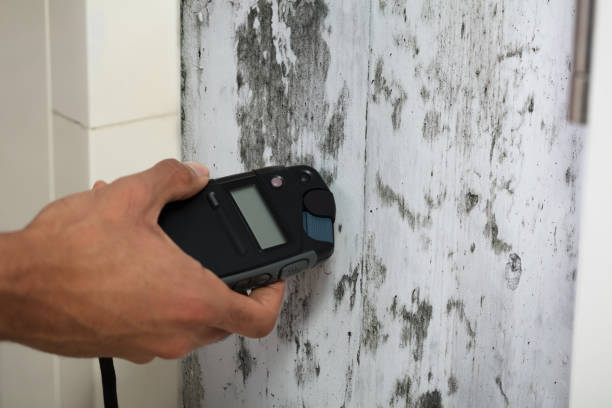
Some detectors are useful, but none of them can do everything their packaging suggests. Knowing their limits can save you money and help you catch real problems sooner. If you already see or smell mold, PuroClean of Bloomington offers professional mold removal across Bloomington-Normal.
This guide explains what a mold detector for home use can and cannot do. It also covers better ways to find hidden mold.
Quick answer: Most home mold detectors track humidity or general air quality. They cannot find mold behind walls, judge a safe level, or locate a leak. If you can see or smell mold, testing is usually unnecessary. Fix the moisture and remove the mold instead.
Why So Many People Are Shopping for Mold Detectors
Late fall brings closed windows, running furnaces, and more time indoors. Musty smells become easier to notice. Many homeowners then look for a mold detector for home peace of mind.
Health agencies take a cautious view of mold testing. The U.S. Environmental Protection Agency says sampling is usually unnecessary when mold is visible. It also notes that no EPA or federal limits have been set for mold or mold spores.
The Illinois Department of Public Health goes further. It says IDPH does not recommend testing for mold in most cases. It also notes that no standards exist to judge acceptable mold levels.
Types of Home Mold Detection Tools
Products sold as a mold detector for home use work in very different ways. Here is how common options compare:
| Tool | What it measures | Best use |
| Humidity monitor (hygrometer) | Indoor relative humidity | Spotting conditions where mold can grow |
| Air quality monitor | Particles, humidity, and sometimes gases | General air trends, not mold itself |
| Petri dish test kit | Spores that settle on a dish | Limited value, since spores are everywhere |
| Mail-in lab test kit | Spores in an air or surface sample | Basic data, but hard to interpret alone |
| Moisture meter | Moisture inside drywall or wood | Finding wet areas after a leak |
| Professional inspection | Moisture, visible growth, and hidden damage | Finding the source and the extent |
Most products marketed as a mold detector for home use are really humidity or air quality monitors. That is still useful, as long as you know what the numbers mean.
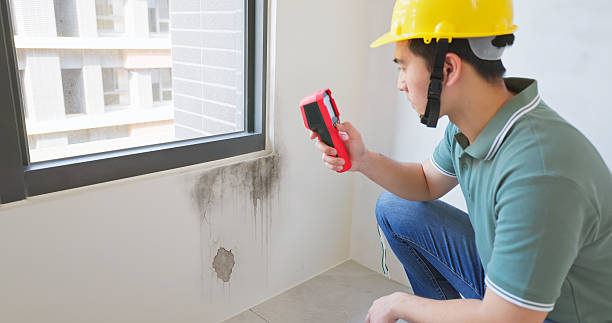
5 Things a Mold Detector for Home Use Can’t Tell You
1. Whether Mold Is Growing Behind Your Walls
Mold often grows inside walls, under floors, or above ceilings after a hidden leak. A plug-in device in the living room cannot see inside a wall cavity. A mold detector for home air may show normal readings while mold grows out of sight.
2. Whether Your Mold Level Is Safe
There is no federal limit for mold spores in homes, according to the EPA. So no device can tell you that a number is safe or unsafe. People also react differently to the same exposure. That is why health agencies focus on moisture, not numbers.
3. Where the Moisture Is Coming From
Mold needs moisture to grow. A detector might hint that humidity is high, but it cannot find a roof leak or a dripping pipe. Fixing the water source is the only lasting solution. A plumber or roofer may be needed first.
4. Whether a Positive Test Means a Problem
Mold spores are present almost everywhere, indoors and out. The EPA notes that it is impossible to remove every spore from a home. So a petri dish that grows mold does not prove you have a mold problem.
5. Whether Cleanup Worked
After mold removal, you want proof the job is done. A basic mold detector for home use cannot confirm that. The EPA says surface sampling by experienced professionals can help show whether an area was cleaned well.
What a Home Detector Can Do Well
A good humidity monitor is still worth having. It shows when your home is too damp, before mold has a chance to grow. The EPA recommends keeping indoor humidity below 60 percent, ideally between 30 and 50 percent.
Check readings at the same times each day. Use a mold detector for home monitoring in a few simple ways:
- Track humidity in basements, bathrooms, and bedrooms.
- Spot high readings after showers, cooking, or laundry.
- Decide when to run a dehumidifier or exhaust fan.
- Notice changes after a leak or heavy rain.
Think of a mold detector for home use as an early warning system for moisture. It is not a mold finder.
Where to Place a Mold Detector for Home Use
Placement changes what your readings mean. Put a mold detector for home use where moisture problems usually start:
- In the basement, away from the furnace and dryer vent
- In bathrooms, outside the direct path of shower steam
- In bedrooms on exterior walls
- Near the laundry room or water heater
- In closets that share an outside wall
Avoid placing monitors next to humidifiers, heat vents, or sunny windows. Those spots give misleading numbers.
How to Read Your Humidity Numbers
Humidity readings change throughout the day. Here is a simple guide based on EPA advice:
| Reading | What it means | What to do |
| Below 30 percent | Dry air | Low mold risk, but air may feel uncomfortable |
| 30 to 50 percent | Ideal range | Keep up your current habits |
| 50 to 60 percent | Getting damp | Run exhaust fans and check for leaks |
| Above 60 percent | Mold-friendly | Run a dehumidifier and find the moisture source |
A mold detector for home basements often shows the highest readings. Check that room first after a rainy week.
Better Ways to Find Hidden Mold
Your senses are often the best detectors. A musty smell is one of the most common signs of hidden mold. Watch for these clues too:
- Water stains on ceilings or walls
- Peeling, bubbling, or cracked paint
- Warped baseboards or soft drywall
- Condensation on windows or cold walls
- Allergy symptoms that improve when you leave home
Our guide to hidden mold in homes covers more warning signs to look for. Check those spots twice a year.
When to Call a Professional Instead
A mold detector for home use is no substitute for a trained inspection. Call a professional in these situations:
- You see mold covering more than about 10 square feet.
- You smell mold but cannot find it.
- Your home had a leak, flood, or sewer backup.
- Mold keeps returning after you clean it.
- Someone in your home has asthma or a weak immune system.
Professionals use moisture meters and thermal imaging to find wet areas behind walls. They also set up containment and HEPA air filtration during removal. They can confirm when the space is dry.
What to Do If You Find Mold
Finding mold calls for action, not more testing. Follow these steps:
- Find and fix the moisture source, such as a leak or high humidity.
- Dry wet materials within 24 to 48 hours when you can.
- Clean small areas on hard surfaces with detergent and water.
- Replace porous materials, like ceiling tiles, if they are moldy.
- Call a professional for large areas or hidden growth.
Never paint over mold. Clean it, dry the surface, and fix the cause first. The EPA warns that paint over mold is likely to peel.
PuroClean of Bloomington Can Help
PuroClean of Bloomington finds hidden moisture and removes mold safely across Bloomington-Normal. Our team uses containment, HEPA filtration, and moisture mapping. Call (309) 433-0900 to schedule an assessment.
Frequently Asked Questions
Does a mold detector for home use actually work?
It works as a humidity or air quality monitor. It cannot reliably find or measure mold itself.
Are home mold test kits accurate?
They can grow spores, but spores are everywhere. Results are hard to interpret without a professional.
What humidity level prevents mold?
The EPA recommends staying below 60 percent, and ideally between 30 and 50 percent. A simple hygrometer shows where you stand.
Is a mold detector for home air worth buying?
A simple humidity monitor is worth it for most homes. Skip devices that promise to find all mold.
Should I test for mold before cleaning it?
Usually not. If you can see it, remove it and fix the moisture.
Who can inspect my home for hidden mold?
A restoration professional can check for moisture and hidden growth with specialized tools. Ask about thermal imaging and moisture mapping.
Final Thoughts on a Mold Detector for Home Use
A mold detector for home use is best for tracking humidity, not for finding mold. Trust your nose and eyes, and keep moisture under control this winter. When you suspect hidden growth, get a professional assessment.
If you find mold in your home, call PuroClean of Bloomington at (309) 433-0900. We are ready to help.
A mold detector for home use sounds like an easy answer. Plug it in, read the screen, and know whether your house has a mold problem. Searches for these devices climb every fall as homes close up for winter.
Some detectors are useful, but none of them can do everything their packaging suggests. Knowing their limits can save you money and help you catch real problems sooner. If you already see or smell mold, PuroClean of Bloomington offers professional mold removal across Bloomington-Normal.
This guide explains what a mold detector for home use can and cannot do. It also covers better ways to find hidden mold.
Quick answer: Most home mold detectors track humidity or general air quality. They cannot find mold behind walls, judge a safe level, or locate a leak. If you can see or smell mold, testing is usually unnecessary. Fix the moisture and remove the mold instead.
Why So Many People Are Shopping for Mold Detectors
Late fall brings closed windows, running furnaces, and more time indoors. Musty smells become easier to notice. Many homeowners then look for a mold detector for home peace of mind.
Health agencies take a cautious view of mold testing. The U.S. Environmental Protection Agency says sampling is usually unnecessary when mold is visible. It also notes that no EPA or federal limits have been set for mold or mold spores.
The Illinois Department of Public Health goes further. It says IDPH does not recommend testing for mold in most cases. It also notes that no standards exist to judge acceptable mold levels.
Types of Home Mold Detection Tools
Products sold as a mold detector for home use work in very different ways. Here is how common options compare:
| Tool | What it measures | Best use |
| Humidity monitor (hygrometer) | Indoor relative humidity | Spotting conditions where mold can grow |
| Air quality monitor | Particles, humidity, and sometimes gases | General air trends, not mold itself |
| Petri dish test kit | Spores that settle on a dish | Limited value, since spores are everywhere |
| Mail-in lab test kit | Spores in an air or surface sample | Basic data, but hard to interpret alone |
| Moisture meter | Moisture inside drywall or wood | Finding wet areas after a leak |
| Professional inspection | Moisture, visible growth, and hidden damage | Finding the source and the extent |
Most products marketed as a mold detector for home use are really humidity or air quality monitors. That is still useful, as long as you know what the numbers mean.
5 Things a Mold Detector for Home Use Can’t Tell You
1. Whether Mold Is Growing Behind Your Walls
Mold often grows inside walls, under floors, or above ceilings after a hidden leak. A plug-in device in the living room cannot see inside a wall cavity. A mold detector for home air may show normal readings while mold grows out of sight.
2. Whether Your Mold Level Is Safe
There is no federal limit for mold spores in homes, according to the EPA. So no device can tell you that a number is safe or unsafe. People also react differently to the same exposure. That is why health agencies focus on moisture, not numbers.
3. Where the Moisture Is Coming From
Mold needs moisture to grow. A detector might hint that humidity is high, but it cannot find a roof leak or a dripping pipe. Fixing the water source is the only lasting solution. A plumber or roofer may be needed first.
4. Whether a Positive Test Means a Problem
Mold spores are present almost everywhere, indoors and out. The EPA notes that it is impossible to remove every spore from a home. So a petri dish that grows mold does not prove you have a mold problem.
5. Whether Cleanup Worked
After mold removal, you want proof the job is done. A basic mold detector for home use cannot confirm that. The EPA says surface sampling by experienced professionals can help show whether an area was cleaned well.
What a Home Detector Can Do Well
A good humidity monitor is still worth having. It shows when your home is too damp, before mold has a chance to grow. The EPA recommends keeping indoor humidity below 60 percent, ideally between 30 and 50 percent.
Check readings at the same times each day. Use a mold detector for home monitoring in a few simple ways:
- Track humidity in basements, bathrooms, and bedrooms.
- Spot high readings after showers, cooking, or laundry.
- Decide when to run a dehumidifier or exhaust fan.
- Notice changes after a leak or heavy rain.
Think of a mold detector for home use as an early warning system for moisture. It is not a mold finder.
Where to Place a Mold Detector for Home Use
Placement changes what your readings mean. Put a mold detector for home use where moisture problems usually start:
- In the basement, away from the furnace and dryer vent
- In bathrooms, outside the direct path of shower steam
- In bedrooms on exterior walls
- Near the laundry room or water heater
- In closets that share an outside wall
Avoid placing monitors next to humidifiers, heat vents, or sunny windows. Those spots give misleading numbers.
How to Read Your Humidity Numbers
Humidity readings change throughout the day. Here is a simple guide based on EPA advice:
| Reading | What it means | What to do |
| Below 30 percent | Dry air | Low mold risk, but air may feel uncomfortable |
| 30 to 50 percent | Ideal range | Keep up your current habits |
| 50 to 60 percent | Getting damp | Run exhaust fans and check for leaks |
| Above 60 percent | Mold-friendly | Run a dehumidifier and find the moisture source |
A mold detector for home basements often shows the highest readings. Check that room first after a rainy week.
Better Ways to Find Hidden Mold
Your senses are often the best detectors. A musty smell is one of the most common signs of hidden mold. Watch for these clues too:
- Water stains on ceilings or walls
- Peeling, bubbling, or cracked paint
- Warped baseboards or soft drywall
- Condensation on windows or cold walls
- Allergy symptoms that improve when you leave home
Our guide to hidden mold in homes covers more warning signs to look for. Check those spots twice a year.
When to Call a Professional Instead
A mold detector for home use is no substitute for a trained inspection. Call a professional in these situations:
- You see mold covering more than about 10 square feet.
- You smell mold but cannot find it.
- Your home had a leak, flood, or sewer backup.
- Mold keeps returning after you clean it.
- Someone in your home has asthma or a weak immune system.
Professionals use moisture meters and thermal imaging to find wet areas behind walls. They also set up containment and HEPA air filtration during removal. They can confirm when the space is dry.
What to Do If You Find Mold
Finding mold calls for action, not more testing. Follow these steps:
- Find and fix the moisture source, such as a leak or high humidity.
- Dry wet materials within 24 to 48 hours when you can.
- Clean small areas on hard surfaces with detergent and water.
- Replace porous materials, like ceiling tiles, if they are moldy.
- Call a professional for large areas or hidden growth.
Never paint over mold. Clean it, dry the surface, and fix the cause first. The EPA warns that paint over mold is likely to peel.
PuroClean of Bloomington Can Help
PuroClean of Bloomington finds hidden moisture and removes mold safely across Bloomington-Normal. Our team uses containment, HEPA filtration, and moisture mapping. Call (309) 433-0900 to schedule an assessment.
Frequently Asked Questions
Does a mold detector for home use actually work?
It works as a humidity or air quality monitor. It cannot reliably find or measure mold itself.
Are home mold test kits accurate?
They can grow spores, but spores are everywhere. Results are hard to interpret without a professional.
What humidity level prevents mold?
The EPA recommends staying below 60 percent, and ideally between 30 and 50 percent. A simple hygrometer shows where you stand.
Is a mold detector for home air worth buying?
A simple humidity monitor is worth it for most homes. Skip devices that promise to find all mold.
Should I test for mold before cleaning it?
Usually not. If you can see it, remove it and fix the moisture.
Who can inspect my home for hidden mold?
A restoration professional can check for moisture and hidden growth with specialized tools. Ask about thermal imaging and moisture mapping.
Final Thoughts on a Mold Detector for Home Use
A mold detector for home use is best for tracking humidity, not for finding mold. Trust your nose and eyes, and keep moisture under control this winter. When you suspect hidden growth, get a professional assessment.
If you find mold in your home, call PuroClean of Bloomington at (309) 433-0900. We are ready to help.