


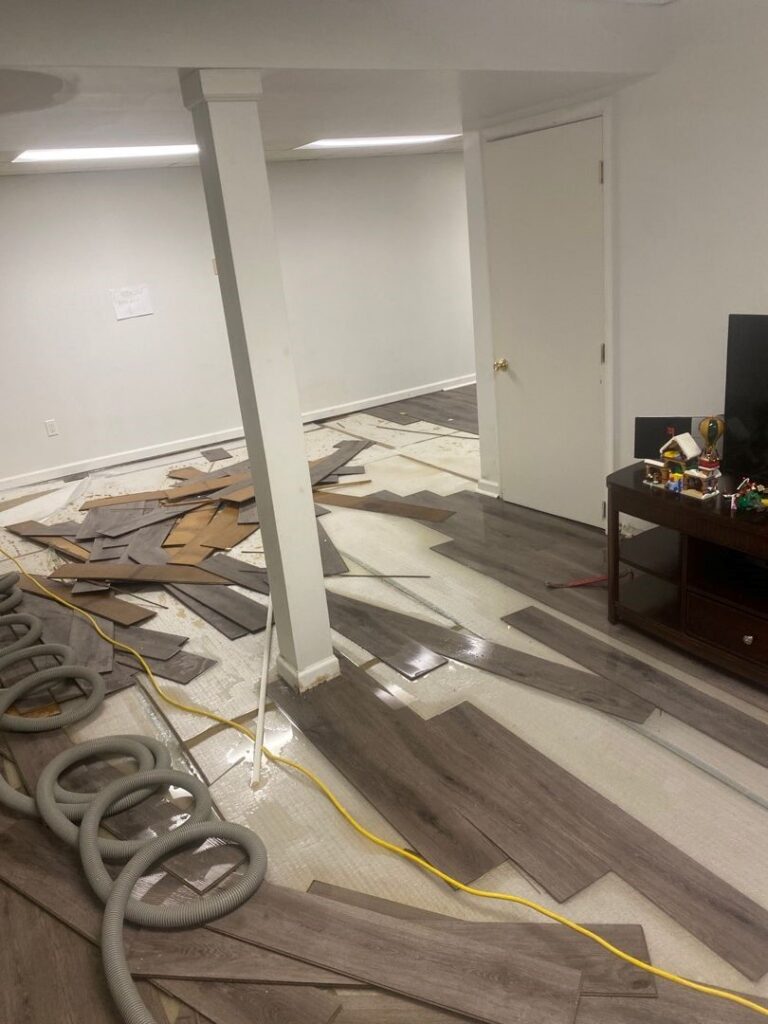

Water damaged hardwood floors can sometimes be saved, but the outcome depends on how much water reached the wood, how long the floor stayed wet, and whether moisture spread beneath the boards. Acting quickly, removing standing water, and drying the affected area properly can improve the chances of saving water damaged hardwood floors.
For homeowners in Bloomington and Normal, Illinois, water damaged hardwood floors often follow a burst pipe, appliance leak, sump pump failure, roof leak, or basement flood. Even a small amount of water can cause problems when it seeps between floorboards or reaches the subfloor underneath.
The good news is that not every wet hardwood floor needs to be replaced. Some water damaged hardwood floors recover with professional water damage restoration, including water extraction and controlled drying. Others develop warping, cupping, cracking, or mold growth that requires more extensive repairs.
Understanding the warning signs and knowing what to do first can help you protect your home and avoid unnecessary damage.
Can Water Damaged Hardwood Floors Be Saved?
Yes, water damaged hardwood floors can often be saved when the exposure is limited and the water is removed before serious damage develops. However, there is no single drying time or repair method that works for every floor.
The most important factors include the type of wood, the finish, the amount of water, the length of exposure, and the condition of the subfloor.
1. How Long Water Damaged Hardwood Floors Stayed Wet
Time matters because wood absorbs moisture. The longer water remains on or beneath hardwood flooring, the greater the chance of swelling, distortion, finish damage, and secondary moisture problems.
A spill wiped up quickly may leave no lasting damage. A slow leak that goes unnoticed for several days can be much more difficult to address, even if the surface initially looks normal.
2. How Much Water Reached the Flooring
A small spill is usually less concerning than a flooded room. Water from a broken pipe, overflowing appliance, or storm-related intrusion may spread across a large area and penetrate beneath the floorboards.
Water that becomes trapped between the hardwood and subfloor is particularly important to address because the surface may look dry while moisture remains underneath.
3. Solid vs. Engineered Water Damaged Hardwood Floors
Solid hardwood and engineered hardwood can respond differently to moisture.
Solid hardwood consists of a single piece of wood. It can swell, cup, or buckle when exposed to water, but some affected boards may recover as they dry.
Engineered hardwood has a wood surface layer attached to a layered core. Depending on its construction and quality, it may be more dimensionally stable than solid hardwood, but prolonged moisture can cause layers to separate, edges to swell, or the surface to deteriorate.
Neither type is automatically safe. The condition of the specific flooring determines whether drying, repairs, refinishing, or replacement is appropriate. The National Wood Flooring Association offers consumer guidance on how different wood floors behave around moisture.
4. The Condition of the Subfloor
The subfloor supports the hardwood and can absorb water that passes through seams, gaps, and damaged finishes.
If the subfloor remains wet, it can continue transferring moisture to the hardwood. It may also develop swelling, deterioration, or mold growth when moisture persists.
A proper assessment of water damaged hardwood floors should consider the flooring and the materials beneath it, not just the visible surface.
7 Signs of Water Damaged Hardwood Floors
Water damage does not always appear immediately. Some changes develop over hours or days, while moisture trapped underneath may remain hidden.
Watch for these common warning signs of water damaged hardwood floors.
1. Cupping Along the Edges of the Boards
Cupping occurs when the edges of a hardwood board rise higher than its center, creating a shallow, curved shape across the board.
This often happens when the underside of the wood contains more moisture than the top. Water may have entered from a leak, a wet subfloor, or moisture rising from below.
Cupping does not automatically mean the floor must be replaced. The boards may flatten as they dry, depending on the severity of the damage. However, sanding too soon can create additional problems if the wood has not reached a stable moisture level.
2. Buckling or Lifting Floorboards
Buckling is a more severe sign of water damage. Boards may lift away from the subfloor, form raised ridges, or separate from their original position.
As hardwood absorbs moisture, it expands. If the expansion creates enough pressure and the flooring cannot move freely, boards may lift or detach.
Buckled flooring should be assessed before anyone attempts to force it flat or fasten it back into place. Significant lifting may indicate extensive moisture beneath the floor and could require board removal or replacement.
3. Swelling and Raised Edges
Water damaged hardwood floors may become thicker or uneven, especially along board edges and seams.
Swelling can occur when moisture enters the wood fibers. It may also affect the finish, making the surface appear rough or raised.
Some swelling improves during drying, but severe or permanent deformation may remain. If the floor feels uneven or changes noticeably underfoot, a professional assessment can help determine whether the boards are recoverable.
4. Dark Spots or Discoloration
Dark stains may appear after water reaches the wood. The discoloration can range from faint marks to deep black or brown patches.
Possible causes include water staining, reactions between moisture and substances in the wood, metal-related staining, or microbial growth. Appearance alone cannot confirm the cause.
Do not assume every dark spot is mold, and do not assume that a stain is harmless just because the surface feels dry. The source of the moisture and the condition of the wood need to be considered.
5. Cracked, Peeling, or Blistered Finish
Hardwood finishes help protect the wood from everyday wear and limited surface moisture. However, they cannot make flooring waterproof under every condition.
After water exposure, the finish may blister, peel, turn cloudy, or separate from the wood. Water can also become trapped beneath a damaged finish, slowing the drying process.
If the wood underneath remains sound, refinishing may be possible after the flooring has dried and stabilized. If the boards are swollen, split, or delaminating, more extensive work may be needed.
6. Gaps Between Floorboards
Gaps can develop when boards change shape during wetting and drying. Water damaged hardwood floors may swell initially and then shrink as they lose moisture.
Some small gaps may become less noticeable once the floor reaches a stable moisture level. Larger gaps, cracked boards, or persistent separation may indicate lasting damage.
Avoid filling gaps or sanding the floor before moisture levels stabilize. Otherwise, repairs may not hold up as the wood continues to change.
7. Musty Odors or Signs of Mold
A musty smell near hardwood flooring may indicate that moisture remains in the floor assembly, especially if the water reached the subfloor, underlayment, or nearby walls.
Mold can grow on suitable materials when moisture persists. It may be hidden beneath flooring or inside adjacent building materials, so the absence of visible growth does not always mean the area is dry. The U.S. Environmental Protection Agency explains that controlling moisture is the key to preventing mold growth indoors.
If you notice a persistent musty odor after a leak or flood, investigate the moisture source rather than masking the smell with air fresheners. If mold is suspected, a professional mold remediation assessment can help.
What Causes Water Damaged Hardwood Floors?
Understanding where the water came from helps determine what needs to be dried and repaired.
Plumbing Leaks and Burst Pipes
A leaking supply line, failed connection, or burst pipe can release water into kitchens, bathrooms, hallways, and other rooms with hardwood flooring.
A small leak beneath a sink or behind an appliance may continue for days before anyone notices it. By that time, water may have traveled beneath cabinets and across the subfloor, creating water damaged hardwood floors far from the original leak.
If a plumbing leak is active, shut off the water supply when safe and arrange for the leak to be repaired. Water removal and drying should begin as soon as the source is controlled.
Appliance Leaks
Dishwashers, refrigerators with water lines, washing machines, and other appliances can leak onto hardwood floors.
Even a relatively small leak can cause damage if water repeatedly reaches the same area. Check around appliances for damp seams, discoloration, swollen edges, or changes in the flooring’s appearance.
Do not assume that a floor is dry simply because the appliance has stopped leaking. Moisture may remain underneath the boards.
Basement Flooding and Sump Pump Failure
Heavy rain, groundwater intrusion, and sump pump failure can introduce significant amounts of water into a basement.
Hardwood flooring in finished basements may absorb water from above or from moisture moving through the floor assembly. The affected area may extend beyond the spot where water first appeared.
After a basement flood, the flooring, subfloor, baseboards, and lower portions of nearby walls may all need to be evaluated. Our flood damage cleanup team can assess how far the water has traveled. For general flood safety guidance, see Ready.gov’s flood preparedness resources.
Roof Leaks and Storm Damage
Water entering through damaged shingles, flashing, windows, or exterior walls can travel into rooms below the original entry point.
A ceiling or wall leak may eventually affect hardwood flooring, particularly if water runs down a wall or collects beneath furniture. Storm-related damage can also affect several building materials at once.
The source of the intrusion should be repaired alongside the drying process to help prevent repeat damage.
Spills and Wet Cleaning
Not every case of water damaged hardwood floors involves a flood. Large spills, overflowing plant trays, wet shoes, and excessive water during mopping can also affect wood flooring.
Wipe up spills promptly and follow the flooring manufacturer’s cleaning recommendations. Avoid soaking hardwood with a mop or using steam cleaners unless the flooring manufacturer specifically permits the method.
What to Do Immediately When You Have Water Damaged Hardwood Floors
The steps you take after discovering water can help limit further damage. Your first priority should be safety, followed by stopping the water source and arranging proper drying.
Step 1: Address Safety Risks
If water is near outlets, electrical appliances, wiring, or a flooded utility area, do not walk through it or touch affected equipment. Leave the area and contact qualified professionals when an electrical hazard may be present.
If the water came from sewage or another potentially contaminated source, avoid direct contact. Contaminated water requires appropriate protective measures and professional cleanup.
Step 2: Stop the Water Source
If it is safe to do so, turn off the leaking appliance or shut off the relevant water supply. For roof or storm damage, arrange for the entry point to be secured safely.
Do not climb onto a damaged roof or enter an unsafe flooded area to stop the leak. Professional assistance may be necessary.
Step 3: Remove Surface Water
Use towels or other suitable materials to absorb small amounts of clean water. For larger amounts, water extraction equipment may be needed.
Avoid dragging heavy furniture across wet boards, and use caution when moving rugs or belongings that could transfer moisture to other areas.
If the water is contaminated, do not attempt ordinary household cleanup without appropriate guidance and protective equipment.
Step 4: Contact a Water Damage Professional
A restoration professional can assess the extent of the water intrusion, identify affected materials, and determine what drying equipment is appropriate. Look for a company that follows IICRC water damage restoration standards, the industry benchmark for professional drying and restoration.
This is particularly important when water has spread beneath hardwood flooring, affected a large area, or remained undetected for an extended period.
Professional moisture measurements can help identify wet areas that are not obvious from the surface.
Step 5: Begin Controlled Drying
Drying may involve air movement, dehumidification, moisture monitoring, and other methods selected for the flooring and building materials involved.
Avoid applying intense direct heat or trying to force the floor to dry as quickly as possible. Uneven or uncontrolled drying can contribute to additional movement and damage.
The goal is to remove moisture from the entire affected assembly, not simply to make the visible boards feel dry.
Step 6: Document the Damage
Take photographs of the affected flooring and the source of the water, if it is safe to do so. Keep records of cleanup efforts and any repairs.
If you plan to file an insurance claim, contact your insurer promptly and follow its documentation instructions. Coverage depends on the policy, the cause of the damage, and any applicable exclusions.
How Professionals Dry Water Damaged Hardwood Floors
Professional drying is more than placing a fan in the room. Hardwood, subfloors, and nearby materials can hold moisture at different rates, so a drying plan should account for the entire affected area.
Moisture Assessment
A restoration team may use moisture meters and other inspection tools to evaluate the hardwood, subfloor, and nearby materials.
Readings can help establish where moisture is concentrated and whether conditions change as drying progresses. Measurements should be interpreted in context because wood species, material composition, and the instrument used can affect results.
The team may also inspect adjacent walls, cabinets, baseboards, and other areas where water could have traveled.
Water Extraction
If standing water remains, extraction helps remove it before the drying process continues.
The equipment used depends on the amount of water and the accessibility of the affected area. In some situations, water may have collected beneath the hardwood, requiring a more detailed evaluation to determine how it can be removed.
Air Movement and Dehumidification
Air movers help circulate air across wet surfaces, while dehumidifiers remove moisture from the surrounding air.
Together, these tools support evaporation and help control indoor humidity during drying. Equipment placement and operation should be adjusted based on the materials involved and the moisture readings.
Opening windows is not always the best solution, particularly when outdoor air is humid. A controlled drying plan is generally more reliable than assuming ventilation alone will solve the problem.
Drying Beneath the Flooring
One of the biggest challenges with water damaged hardwood floors is moisture trapped underneath the boards.
Depending on the floor’s construction and the extent of the damage, professionals may be able to dry the assembly in place. In other situations, removing selected boards or sections may be necessary to access wet materials.
The decision depends on how much water entered the floor, how quickly drying can occur, and whether the flooring or subfloor has already deteriorated.
Monitoring Until the Materials Stabilize
A floor should not be considered fully dry just because the surface looks normal.
Restoration professionals can track moisture levels over time and compare readings with suitable reference conditions. The goal is to confirm that the materials have dried sufficiently before deciding on sanding, refinishing, or replacement.
Premature repairs can trap moisture or lead to additional problems if the wood continues to change shape.
When Should Water Damaged Hardwood Floors Be Replaced?
Although many floors can be restored, replacement may be the better option when damage is severe or the materials cannot be returned to a stable condition.
Consider a professional evaluation of your water damaged hardwood floors if you notice any of the following:
- Severe buckling: Boards have lifted significantly, detached from the subfloor, or become unsafe to walk on.
- Splitting or crumbling wood: The boards have lost their structural integrity.
- Delaminated engineered flooring: Layers have separated or the core has deteriorated.
- Extensive or persistent mold growth: Moisture has affected materials beneath the flooring or contamination cannot be addressed adequately without removal.
- Damaged subflooring: The supporting material has swollen, weakened, or deteriorated.
- Repeated water exposure: Previous leaks have caused cumulative damage that makes repair impractical.
- Permanent finish or color damage: The wood remains structurally sound but cannot be restored to an acceptable appearance through reasonable refinishing.
Replacement does not always mean removing every board in the room. In some cases, a professional may be able to replace only the damaged section. Matching the existing wood species, board dimensions, finish, and color can affect how seamless the repair looks.
The final decision should account for the condition of the hardwood, the subfloor, the source of the water, and the likely durability of the repair.
Can You Fix Water Damaged Hardwood Floors Yourself?
Minor surface spills can often be handled at home, but widespread water intrusion usually requires a more careful approach.
For a small spill involving clean water, blot the liquid promptly with absorbent towels and follow the manufacturer’s cleaning instructions. Keep the area free of additional moisture and monitor it for changes.
However, avoid relying on household fans alone when water has reached the seams, subfloor, or adjacent walls. Surface drying does not confirm that hidden materials are dry.
You should also avoid these common mistakes with water damaged hardwood floors:
Do not sand too early. Sanding a floor before it has reached a stable moisture level can result in uneven surfaces and future problems as the wood changes shape.
Do not seal in moisture. Applying paint, sealants, or new flooring over damp materials can interfere with drying and may contribute to further damage.
Do not use excessive heat. Hair dryers, space heaters placed close to the floor, and other intense heat sources can dry surfaces unevenly or create safety risks.
Do not ignore musty odors. Persistent odors after water exposure may indicate that moisture remains in the floor assembly or nearby materials.
Do not assume every floor needs replacement. Some hardwood floors recover after appropriate drying. A moisture assessment can help avoid unnecessary removal.
When water affects a large area, enters the subfloor, or comes from a potentially contaminated source, professional restoration is the safer choice.
How Long Do Water Damaged Hardwood Floors Take to Dry?
Drying time varies depending on the amount of water, the type of flooring, the subfloor construction, indoor conditions, and the equipment used.
A minor surface spill may dry quickly after it is wiped up. A room affected by a plumbing leak or flood may require several days or longer of controlled drying and monitoring. Water trapped beneath the flooring can extend the process.
There is no reliable universal timeline that guarantees hardwood will recover. Some boards may remain warped or discolored even after moisture levels return to normal.
Restoration professionals use moisture measurements and visual inspections to determine when drying has progressed sufficiently. The floor may also need additional time to stabilize before repairs or refinishing begin.
It is important not to rush this stage. Completing cosmetic work before the underlying materials are ready can lead to avoidable repair costs.
How to Prevent Water Damaged Hardwood Floors in the Future
Preventive maintenance can reduce the risk of another flooring emergency, especially in areas where plumbing leaks, storms, and basement moisture are common concerns.
Inspect Plumbing and Appliances
Check under sinks, around toilets, behind refrigerators, and near dishwashers and washing machines for leaks or dampness.
Replace worn hoses and damaged connections when needed. If you notice recurring moisture, identify and correct the source rather than repeatedly drying the same area.
Maintain Gutters and Downspouts
Clogged gutters and poorly directed downspouts can allow rainwater to collect near the foundation or enter the home through vulnerable areas.
Keep gutters clear and direct downspouts away from the foundation in accordance with local drainage conditions. Check for signs of water intrusion after heavy rain.
Monitor Basement Moisture
If your home has a basement, inspect it for damp walls, musty odors, standing water, and signs of sump pump problems.
Test your sump pump according to the manufacturer’s instructions and consider whether a backup system is appropriate for your property. Address recurring foundation seepage before it affects finished flooring.
Clean Hardwood Floors Carefully
Use products approved for your specific flooring and avoid excessive water during routine cleaning.
Wipe up spills promptly, use mats near exterior entrances where appropriate, and check for moisture beneath rugs or furniture after a leak.
Respond Quickly to Leaks
Do not wait for visible warping before investigating a leak. Water can spread beneath hardwood before obvious changes appear on the surface.
Prompt repairs and professional drying can reduce the risk of more extensive damage to your hardwood floors.
Professional Help for Water Damaged Hardwood Floors in Bloomington, IL
Water damaged hardwood floors can be stressful, especially when the flooring is a major feature of your home. The most effective next step is to determine how far the water has traveled and whether the hardwood and subfloor can be dried safely.
PuroClean of Bloomington helps homeowners address water damaged hardwood floors through professional assessment, water removal, drying, and restoration services. Our team serves Bloomington, Normal, and surrounding communities, helping property owners respond when leaks, flooding, and other water emergencies affect their homes.
If your hardwood floors are cupping, buckling, staining, or developing a musty odor after water exposure, do not assume replacement is your only option. An assessment can help identify the extent of the damage and determine the next steps.
For water damage restoration assistance, contact PuroClean of Bloomington or call (309) 433-0900. Emergency help is available 24/7.
Frequently Asked Questions About Water Damaged Hardwood Floors
1. Can water damaged hardwood floors go back to normal?
Sometimes. Water damaged hardwood floors with limited moisture exposure may recover when the water is removed and the flooring dries properly. Severe swelling, buckling, splitting, or finish damage may remain even after drying, so the condition of the boards and subfloor should be assessed before repairs begin.
2. How do I know if water is trapped under my hardwood floors?
Warning signs include cupping, buckling, persistent musty odors, discoloration, and moisture readings that remain elevated. However, hidden moisture may not produce obvious surface changes. A professional moisture assessment can help determine whether water has reached the subfloor or other concealed materials.
3. Should I replace water damaged hardwood floors after a flood?
Not necessarily. The decision depends on the water source, exposure time, extent of the damage, and condition of the hardwood and subfloor. Some floors can be dried and repaired, while severely warped, deteriorated, or contaminated materials may need to be removed.
4. Can mold grow under water damaged hardwood floors?
Yes. Mold can grow on suitable materials when moisture remains for long enough. It may develop on dust, wood, subflooring, or other materials beneath the flooring. Prompt drying helps reduce the risk, but persistent moisture or musty odors should be investigated.
5. Will homeowners insurance cover water damaged hardwood floors?
Coverage depends on your policy and the cause of the water damage. Some sudden and accidental water losses may be covered, while gradual leaks, flooding, or other causes may be subject to exclusions or separate coverage requirements. Contact your insurance company to understand your policy and document the damage promptly.
Conclusion: Act Quickly to Save Water Damaged Hardwood Floors
Water damaged hardwood floors do not always need to be replaced. The right outcome depends on how quickly the water is addressed, whether moisture has reached the subfloor, and how much damage the wood has sustained.
Look for early signs such as cupping, buckling, dark stains, peeling finish, and persistent musty odors. Remove small surface spills promptly, avoid unsafe cleanup methods, and seek professional help when water has spread beneath the flooring or affected a large area.
For homeowners in Bloomington and Normal, prompt water damage assessment and controlled drying can help determine whether your water damaged hardwood floors can be saved and prevent a manageable leak from becoming a larger restoration project.