


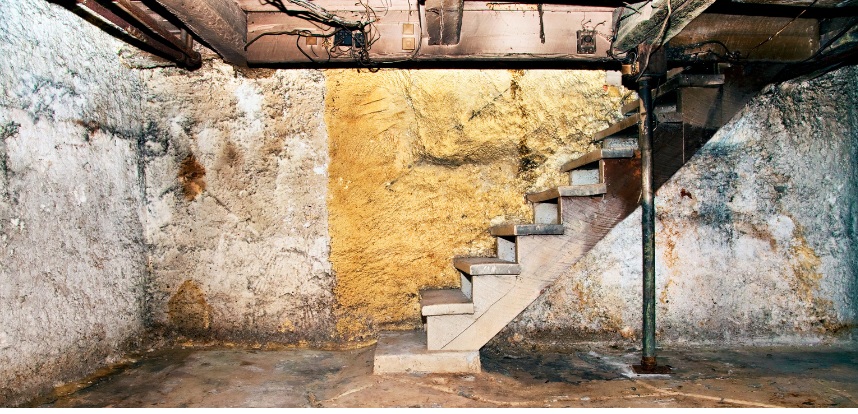
Basement mold odors are a common problem in Burlington each spring. As snowmelt and heavy rains saturate basements, Wisconsin’s humid conditions create the perfect environment for mold to begin growing within just 24 to 48 hours. That musty odor is mold releasing microbial volatile organic compounds as it digests wet drywall, wood, and insulation. Spring creates perfect mold conditions through saturated clay soil, preventing drainage.
40-60 degree temperatures are ideal for mold growth, and high humidity from snowmelt, keeping basements damp for weeks. If you smell mold after spring flooding, professional inspection within 48 hours prevents minor growth from becoming extensive remediation requiring thousands in repairs. The smell is not “normal spring dampness.” It is active mold growth requiring immediate attention.
You survived another Wisconsin winter. The snow is finally melting. Spring is here.
And your basement smells like… well, honestly? It smells like something died down there.
That earthy, musty, can’t-quite-place-it odor that makes you wrinkle your nose every time you head downstairs to grab something from storage. The smell that definitely was not there in February.
If you are a Burlington homeowner experiencing this right now, let me tell you something that might not make you feel better, but at least explains what is happening: that is probably mold. And spring flooding is almost certainly the reason why.
Here is the thing nobody tells you about spring in Burlington. We talk about the flowers blooming and the weather warming up. We do not talk about what is happening in thousands of basements across the city, as all that snow we have been staring at for months suddenly turns into water with nowhere to go.
Let me walk you through what is actually happening down there and, more importantly, what you need to do about it.
The Spring Flooding Reality Check Nobody Wants to Give You
I am going to be straight with you because somebody needs to be.
Spring in Burlington is when basements flood. Not every basement, and not every spring. But enough basements often enough that if you own a home here, you need to understand what you are dealing with.
Here is what happens:
February through early March: We get hit with snow. Lots of it. That snow piles up in your yard, against your foundation, on your roof. It sits there, frozen and harmless.
Mid-March through April: Temperatures rise above freezing during the day. All that snow starts melting. Fast. Faster than the ground can absorb it, and this is critical—the ground is still frozen below the surface.
The water has nowhere to go except into your basement.
Add in spring rains, which we get plenty of, and you have the perfect recipe for basement flooding. And when I say flooding, I do not always mean dramatic ankle-deep water. Sometimes it is just dampness. Moisture wicks up through your concrete floor. Water seeping through foundation cracks you did not even know existed.
That dampness? That is all mold needs.
Within 24 to 48 hours, if conditions are right, mold starts growing.
And that basement mold smell spring you are experiencing? That is not “spring dampness” or “that musty basement smell everyone has.”
That is mold. Real, actual, growing-right-now mold.
Why Spring Specifically Turns Burlington Basements Into Mold Factories
Okay, so why is spring such a problem? Why don’t we smell this in summer or fall?
Temperature Sweet Spot
Mold grows fastest between 40 and 80 degrees Fahrenheit. Summer is often too hot and dry. Winter is too cold. Fall is close, but the ground is not saturated like it is in spring.
Spring? Spring hits that perfect 45-65 degree range in basements. Not too hot. Not too cold. Just right for mold to throw a party on your floor joists.
Sustained Moisture
Here is what makes spring different from a summer storm: duration.
When you get heavy rain in July, your basement might get damp. But then it is sunny and warm for days, things dry out relatively fast, and mold does not get a chance to establish.
In spring? The moisture just keeps coming. Snowmelt during the day. The ground is still frozen, so no drainage. Cool nights. More snow melted the next day. Then rain. Then more snowmelt.
Your basement stays damp for weeks, not days.
Mold absolutely loves this sustained moisture. It is like someone left the buffet open 24/7.
Burlington’s Clay Soil Problem
I need you to understand something about the ground beneath your Burlington home.
We have clay soil. Thick, dense, moisture-retaining clay.
In drier regions with sandy or loamy soil, snowmelt and rain percolate down through the ground relatively quickly. In Burlington? That water hits the clay and sits there. And sits there. And sits there.
That saturated clay pressing against your foundation walls is constantly pushing moisture into your basement throughout the entire spring season. Your sump pump might be running constantly, but moisture is still getting in through foundation porosity, tiny cracks, and floor-wall joints.
High Humidity
Spring in Wisconsin means humidity. That combination of cool temperatures and moisture everywhere creates humid conditions both outside and inside your basement.
Even if you do not have standing water, humidity above 60 percent is enough for mold to grow on organic materials. And guess what your basement is full of? Wood framing. Drywall paper. Cardboard boxes. Fabric. Insulation.
All organic materials. All mold food.
That basement mold smell spring is mold literally eating your house.
What You Are Actually Smelling (The Science Part, But I Promise to Keep It Simple)
When people tell me their basement “smells like mold,” I always ask: What does it actually smell like to you?
“Musty.”
“Earthy.”
“Like dirt, but worse.”
“Kind of like rotting leaves?”
“Damp socks that sat in a gym bag for a week.” (That one was specific, but accurate.)
Here is what is creating that smell:
Mold does not just sit there looking ugly. Mold is actively consuming whatever it is growing on. As it digests wood, drywall, fabric, or whatever, it releases chemicals called microbial volatile organic compounds (MVOCs).
Two compounds create most of what you are smelling:
Geosmin: Makes that earthy, dirt-like smell. Fun fact—the human nose can detect geosmin at concentrations as low as 5 parts per trillion. You are basically a geosmin detection machine, which is why even small amounts of mold produce a noticeable odor.
2-Methylisoborneol: Creates that musty quality. This is the compound that makes mold smell different from actual dirt.
Together, these compounds create that distinctive basement mold smell spring that made you Google “why does my basement smell like mold” at 11 PM on a Tuesday.
But here is the important part:
If you can smell it, there is enough mold growth to be producing significant quantities of these compounds. This is not trace amounts. This is not “a little bit of mold everyone has.”
The smell means active, established mold colonies are present and growing.
The “Is This Actually Mold or Just Spring Dampness?” Test
Okay, so you smell something. But how do you know it is actually mold and not just normal spring basement dampness?
Fair question. Let me give you the reality check test:
Smell Persistence Test
Open all your basement windows and doors. Run fans. Let it air out for 4-6 hours.
If the smell goes away and does not come back, probably just dampness and humidity. Keep ventilating and monitoring.
If the smell comes back within 24 hours, that is mold. Mold keeps producing MVOCs continuously. Dampness does not.
Visual Inspection
Grab a bright flashlight and look at:
- The bottom 2 feet of drywall (especially exterior walls)
- Floor joists and rim joists
- Around floor drains
- Behind stored items against the walls
- Insulation between floor joists
- Any cardboard boxes on the floor
Looking for:
- Fuzzy growth (any color—black, green, white, orange)
- Discoloration or staining on wood
- Efflorescence (white chalky stuff on concrete—not mold, but indicates moisture)
- Soft or crumbling materials
The Touch Test
Touch your basement walls (bottom 2 feet especially).
- Cold and damp to the touch? Problem.
- Drywall that feels soft or spongy? Big problem.
- Water stains climbing up walls? Huge problem.
The “How Long Has This Smell Been Here?” Test
- Just noticed it in the last week or two as the snow melted? Classic spring flooding mold.
- Been there all winter? Different issue (probably chronic moisture).
- Comes and goes with the weather? Definitely moisture-related mold.
The Symptom Test
Has anyone in your house started experiencing:
- Sneezing or runny nose that started recently?
- Coughing for “no reason”?
- Itchy eyes or throat?
- Symptoms that improve when you leave the house?
Mold exposure often causes these symptoms. If multiple family members suddenly have “spring allergies” that started when the snow melted, I would bet money there is mold in your basement.
The 48-Hour Window Everyone Misses
Here is the thing about basement mold smell spring that most homeowners do not realize:
By the time you smell mold, it has already been growing for days, possibly weeks.
Mold does not produce enough MVOCs to be smelly until colonies are established and actively reproducing. That first whiff of basement mold smell spring means you are not catching mold early. You are catching it mid-growth.
But you still have a critical window.
From the moment you first notice a basement mold smell, you have about 48 hours to prevent minor mold from becoming major mold requiring expensive remediation.
Here is what happens if you wait:
Day 1-2 (what you smell now): Mold has established on some surfaces. Smell is noticeable but not overwhelming. Probably can probably still be cleaned with proper protocols.
Day 3-7 (if you do nothing): Mold spreads exponentially. Colonies double every 24-48 hours. The smell gets noticeably stronger. More surfaces become contaminated.
Week 2-4 (if you still do nothing): Extensive contamination. The smell is overwhelming. Mold has penetrated into materials that cannot be cleaned, only removed. You are now looking at demolition and reconstruction, not just cleaning.
Month 2+ (if you really do nothing): Major remediation required. Significant structural material removal. Health risks escalate.
I am not trying to scare you. I am trying to save you money and health problems.
That basement mold smell spring you noticed last week? Deal with it this week, and it is manageable. Wait a month, and it is a disaster.
What to Actually Do Right Now (The Action Plan You Came Here For)
Alright, enough explanation. You have a basement mold smell happening right now. What do you actually do?
Step 1: Stop the Moisture (Immediately)
Find where water is getting in and stop it if possible:
- Check if your sump pump is working and keeping up
- Make sure downspouts are extended at least 6 feet from the foundation
- Look for obvious leaks or water intrusion points
- Run dehumidifiers if you have them (target humidity below 50%)
You cannot fix mold without fixing moisture. Period.
Step 2: Do NOT Start Scrubbing (Seriously, Don’t)
I know your instinct is to grab bleach and start scrubbing everything.
Do not.
Here is why: When you scrub mold without proper containment, you release millions of spores into your basement air. Those spores settle everywhere, making the problem worse.
Also, bleach does not kill mold on porous materials like drywall and wood. It just lightens the color while the mold keeps growing underneath.
Step 3: Call for Professional Assessment (Within 48 Hours)
Look, I get it. Professional mold inspection and remediation costs money. But you know what costs more?
Waiting until mold spreads to the point where you need to remove half your drywall and all your insulation.
A professional can:
- Identify exactly what you are dealing with
- Use moisture meters and thermal imaging to find hidden moisture
- Determine if you can clean it or if removal is necessary
- Prevent it from spreading during remediation
- Actually kill the mold properly
For Burlington homeowners experiencing a basement mold smell right now:
Call PuroClean of Burlington: (262) 342-2226
We do free assessments and can give you an honest answer about what you are dealing with and what it will cost to fix properly.
Step 4: Remove Wet Materials That Cannot Be Saved
Some things cannot be dried and cleaned:
- Cardboard boxes (throw them out)
- Carpet and padding (almost never salvageable after flooding)
- Any fabric items with visible mold (clothing, towels, etc.)
- Water-damaged drywall that is crumbling or heavily stained
Getting these out quickly reduces mold food sources and improves air quality.
Step 5: Increase Air Circulation and Drying
- Open windows if the outdoor humidity is below 60%
- Run fans (pointed at walls and floors, not at each other)
- Run dehumidifiers continuously
- Remove furniture from against the walls so air can circulate
Step 6: Monitor for the Next 72 Hours
Check daily:
- Is the smell improving or getting worse?
- Are moisture levels dropping?
- Is mold growing in new areas?
If the smell is getting worse despite your efforts, you are losing the battle and need professional help immediately.
Why “Fixing It Later” After Spring Ends Is a Terrible Plan
I hear this a lot: “Can I just wait until things dry out in summer and then deal with it?”
Short answer: No.
Long answer: Big no.
Here is what happens if you try to “wait it out”:
Spring lasts 8-12 weeks in Burlington. During that entire time, your basement stays damp. Mold is not sleeping or waiting. It is growing. Exponentially.
By the time summer heat finally dries things out, you might have:
- Mold covering entire walls
- Structural wood damage
- Insulation completely contaminated
- Mold in HVAC ducts spreading spores through your whole house
- Health issues in family members
- Property value impact if you try to sell
And honestly? In Wisconsin, summer is humid too. Your basement might not actually dry out just because it is summer.
The best time to deal with basement mold smell spring is the moment you notice it. The second-best time is right now.
There is no third-best time. After that, you are just choosing how bad you want it to get before you finally deal with it.
The Prevention Talk (For Next Spring)
Okay, assuming you get through this spring’s mold situation, let’s talk about preventing this nightmare from repeating next March.
Sump Pump Upgrades
If your sump pump is struggling or you do not have one, invest in:
- A properly sized primary pump
- Battery backup for power outages
- Water-powered backup for extended outages
- Alarm system to alert you to failures
Exterior Drainage
- Extend downspouts at least 6 feet from the foundation (10 feet is better)
- Ensure ground slopes away from the foundation
- Consider French drains in problem areas
- Keep gutters clean year-round
Foundation Waterproofing
- Seal interior cracks and floor-wall joints
- Consider professional interior waterproofing systems
- For chronic problems, exterior waterproofing (expensive but effective)
Basement Humidity Control
- Run a continuous dehumidifier during spring
- Vent bathrooms and laundry to outside (not into the basement)
- Improve ventilation overall
- Monitor humidity with hygrometers (target below 50%)
Pre-Spring Inspection
Every February, before snowmelt:
- Test your sump pump
- Check for foundation cracks
- Ensure drainage systems are clear
- Have a professional inspection if you have had problems before
The Uncomfortable Truth About Burlington Basements
Look, I am going to level with you about something most home inspectors and realtors do not tell you clearly enough:
If you own a home with a basement in Burlington, spring flooding and moisture problems are not an “if”—they are a “when” and “how bad.”
Our clay soil, our weather patterns, our older housing stock, and our geography make basement moisture issues almost inevitable at some point.
That does not mean you are helpless. But it does mean you need to be realistic about the ongoing nature of basement moisture management.
This is not a one-time fix situation. This is a monitoring and maintenance situation.
Every spring, you should be checking your basement, running dehumidifiers, ensuring drainage is working, and being proactive about moisture.
Because that the basement mold smell you are dealing with right now? If you fix the mold but do not fix the moisture and drainage issues causing it, you will smell it again next spring. And the spring after that.
When to Call Emergency Services vs. Schedule Normal Appointment
Call emergency services (24/7 line) if:
- Basement mold smell spring appeared within 48 hours after flooding
- You see water actively coming in
- Smell is accompanied by respiratory symptoms in family members
- Visible mold growth is spreading rapidly
- Infants, elderly, or immunocompromised people in home
Call for regular appointment (within a week) if:
- The smell developed gradually over weeks
- No active water intrusion currently
- Small isolated areas are affected
- No immediate health concerns
Either way, call within a week of noticing basement mold smell spring. This is not something you put on next month’s to-do list.
The Bottom Line (What I Would Tell My Own Family)
If my sister called me from Burlington right now and said, “My basement smells like mold since the snow started melting,” here is exactly what I would tell her:
One: This is not normal, and it is not something you wait out.
That basement mold smell spring is real mold, growing right now, in your house. It is not “spring dampness everyone has.”
Two: You have about 48 hours to prevent this from becoming expensive.
Call for a professional assessment within 2 days. Literally put it on your calendar for tomorrow.
Three: Meanwhile, stop the moisture, increase ventilation, and do NOT scrub mold without proper containment.
Four: After you fix this, invest in prevention so you are not dealing with this every March.
Five: Burlington basements require active moisture management. Period. That is the reality of homeownership here.
Six: This is fixable. But only if you actually fix it.
Look, I get it. You are busy. You have got a million things going on. The last thing you want to deal with is basement mold smell, spring, and everything that comes with it.
But this is one of those things that does not get better by ignoring it. It only gets worse. More expensive. More extensive. More impactful on your family’s health and your home’s value.
The basement mold smell spring you are noticing right now is your house telling you something is wrong.
Listen to it.
FAQs: Basement Mold Smell Spring in Burlington
Is it normal for basements to smell musty in spring?
A slight earthy smell is somewhat common in unfinished basements due to dampness, but a strong musty or moldy odor is NOT normal and indicates active mold growth. If the smell is noticeable or bothering you, it is worth investigating. Burlington’s spring moisture makes mold very common, but common does not mean you should ignore it.
Can I just use a dehumidifier to fix basement mold smell spring?
A dehumidifier helps prevent NEW mold growth by controlling humidity, but it will not eliminate EXISTING mold. If mold is already established and producing odor, you need to remove or remediate the mold first, THEN use dehumidifiers to prevent recurrence. Think of it as treating the symptom (humidity) without treating the disease (existing mold).
How quickly does mold grow after spring flooding?
Mold can begin growing within 24-48 hours after materials become wet. In Burlington’s spring conditions with temperatures between 40-60°F and high humidity, this timeline can be even faster. If you experienced flooding or major dampness, assume mold begins within 24 hours and act accordingly.
Will the basement mold smell go away on its own in summer?
No. If mold has established to the point of producing a noticeable odor, it will not just “go away” when things dry out. The mold might become dormant in drier conditions, but it remains in place and will reactivate when moisture returns. Plus, Wisconsin summers are humid, so basements often stay damp enough to support continued mold growth year-round.
Does homeowners insurance cover mold from spring flooding?
It depends. If you can prove mold resulted from sudden, accidental water damage (like a burst pipe or specific flooding event), coverage is possible. If mold developed from gradual seepage, chronic dampness, or maintenance issues, most policies exclude coverage. Professional restoration companies can help document the cause to support insurance claims.
Can I remove basement mold myself, or do I need professionals?
For very small areas (under 10 square feet) of surface mold on non-porous materials, homeowners can potentially handle cleanup following EPA guidelines. However, a basement mold smell spring usually indicates more extensive growth. Once odor is detectable, colonies are typically established in porous materials requiring professional remediation. DIY attempts often spread spores and incomplete remediation allows regrowth.
Why does my finished basement smell worse than my unfinished basement after spring flooding?
Finished basements have more organic materials for mold to grow on drywall, paper, insulation, carpet padding, and wood framing covered by drywall. These materials trap moisture and provide abundant food sources. Unfinished basements with exposed concrete have less mold food available. The smell in finished basements indicates mold growing behind walls and under flooring where you cannot see it, often making it a more serious situation.
Get Help With Basement Mold Smell Spring in Burlington
If you are experiencing basement mold smell right now in Burlington, Kenosha, Racine, or surrounding southeastern Wisconsin areas, you do not have to figure this out alone.
PuroClean of Burlington specializes in spring flooding, water damage, and mold remediation. We understand Burlington’s unique challenges with clay soil, snowmelt, and spring moisture.
Our Services Include:
- Free mold assessments and moisture inspections
- Professional mold remediation following IICRC standards
- Water damage restoration after spring flooding
- Structural drying with industrial equipment
- Moisture source identification and prevention planning
- Insurance documentation and claim support
- 24/7 emergency response for active flooding
We have helped hundreds of Burlington homeowners deal with basement mold smell spring over the years. We know what works, what does not, and how to prevent it from happening again next year.
Basement Smells Like Mold After Spring Flooding?
PuroClean of Burlington: Mold Assessment & Remediation
(262) 342-2226
Free Assessments | IICRC-Certified | Veteran-Owned
Serving Burlington, Kenosha, Racine & All Southeastern Wisconsin and North Eastern Illinois.
Summary: Understanding Basement Mold Smell Spring
Basement mold smell spring in Burlington is not normal dampness; it is active mold growth triggered by spring flooding from snowmelt and rain. Wisconsin’s spring conditions create perfect mold environments through sustained moisture, temperatures between 40-80°F, high humidity, and Burlington’s clay soil, preventing drainage.
The musty odor comes from microbial volatile organic compounds released as mold digests organic materials. If you can smell it, mold colonies are established and actively growing. You have approximately 48 hours from first noticing the smell to prevent minor growth from becoming extensive remediation requiring thousands in repairs.
Immediate actions include stopping moisture sources, increasing ventilation, avoiding scrubbing without containment, and calling for professional assessment within days. DIY solutions rarely work once odor is detectable because the smell indicates established growth in porous materials requiring proper remediation.
Prevention for next spring includes sump pump systems, improved drainage, foundation waterproofing, humidity control, and pre-spring inspections. Burlington basements require ongoing moisture management—this is not a one-time fix, but continuous monitoring and maintenance.
If you are experiencing a basement mold smell right now, call PuroClean of Burlington at (262) 342-2226 for a free assessment. The smell in your basement is telling you something is wrong. Listen to it before it becomes a disaster.
PuroClean of Burlington 📞 Call Now: (262) 342-2226 🕒 Available 24/7 — Because disasters don’t wait.
🔗 Quick Links: Instagram | Google Reviews & Directions | Facebook | Pinterest