 PuroClean of Burlington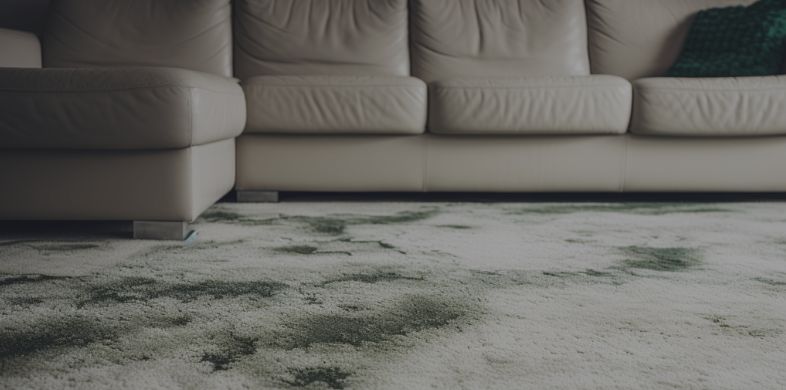
Carpet mold smell after cleaning happens because the cleaning process oversaturated carpet and padding with water that did not dry within 24 hours, creating perfect conditions for mold growth. Other causes include cleaning equipment contaminated with mold transferring spores to your carpet, existing hidden mold in padding being disturbed and releasing odors, cleaning solutions leaving residue that attracts moisture, or inadequate ventilation preventing proper drying.
If carpet smells like mold within 24-48 hours after cleaning, mold is actively growing in the carpet backing or padding. Professional extraction and drying within 48 hours can save the carpet, but waiting longer typically requires carpet and padding replacement. Prevention requires proper cleaning techniques using minimal water, industrial drying equipment, and professional services for water-damaged or basement carpets.
You just paid someone to clean your carpets. Or maybe you rented that carpet cleaner from the grocery store and spent your Saturday afternoon doing it yourself.
Either way, you did the responsible homeowner thing. You cleaned your carpets.
And now, 24 hours later, your carpet smells worse than before you cleaned it.
Not just a little damp. Not that “fresh cleaned carpet” smell the commercials promise. It smells musty. Moldy. Like a wet towel that sat in a gym bag for three days.
What went wrong?
I have had this conversation with homeowners probably a hundred times, and I can see the frustration on their faces. They did everything “right.” They followed the instructions. They tried to take care of their home. And somehow, they made it worse.
Let me walk you through exactly what happened, why carpet mold smell after cleaning is surprisingly common, and most importantly, how to fix it before it becomes a bigger problem.
The Most Common Culprit: You Used Way Too Much Water
Here is the thing about carpet cleaning that nobody really explains clearly:
Professional carpet cleaning is not about getting your carpet as wet as possible. It is about using the minimum amount of water necessary to lift dirt, then extracting as much of that water as possible, then drying what remains as quickly as possible.
Most DIY carpet cleaning—and honestly, a lot of cheap professional carpet cleaning—fails at all three of these things.
What Actually Happened to Your Carpet
When you use a rental carpet cleaner or a low-quality professional service, here is what typically happens:
Step 1: The machine sprays water and cleaning solution into your carpet. So far, so good.
Step 2: The machine is supposed to extract that water back out. But here is the problem—rental machines and cheap professional equipment have weak suction. They might remove 50-60% of the water they put in.
Professional-grade equipment? Removes 90-95% of the water.
That 30-40% difference is everything.
Step 3: What is left behind soaks deep into the carpet backing and padding. This is where the trouble starts.
Your carpet has multiple layers:
- Top fibers (what you see and walk on)
- Backing material (holds fibers in place)
- Padding underneath (cushioning)
- Subfloor (concrete or wood beneath everything)
When you oversaturate carpet, water does not just sit on top. It soaks through all these layers. The backing and padding act like sponges, absorbing and holding water.
The 24-Hour Window
Here is the critical fact: Carpet and padding need to dry completely within 24 hours to prevent mold growth.
Not “mostly dry.” Not “feels dry on the surface.” Completely dry, all the way through, including the backing and padding.
When an oversaturated carpet stays wet longer than 24 hours, mold spores (which are always present in indoor air) land on damp organic materials and start germinating.
Within 24-48 hours, you have active mold growth.
Within 48-72 hours, that mold is producing enough microbial volatile organic compounds (MVOCs) to create that distinctive carpet mold smell after cleaning.
You did not create the mold. You created the conditions for mold that was already there to grow.
And that is what you are smelling now.
The Hidden Padding Problem Nobody Talks About
Here is something that surprises most homeowners:
When you have carpet mold smell after cleaning, the odor is usually coming from the padding, not the carpet itself.
Let me explain why this matters.
Carpet fibers, especially synthetic ones like nylon and polyester, are relatively non-porous. They can get wet and dry out without much problem if dried quickly.
Carpet padding? That is a different story.
Most carpet padding is made from foam, rubber, or felt—all of which are highly absorbent and slow to dry. When cleaning water soaks through your carpet into the padding:
The padding absorbs significantly more water than the carpet fibers.
The padding has no direct air exposure (it is sandwiched between carpet and floor), so it dries incredibly slowly.
Even when the carpet surface feels dry, the padding underneath can remain sopping wet for days.
This is why you can have a carpet that feels dry to the touch on top but smells moldy—because underneath, the padding is still damp and growing mold.
The Worst-Case Scenario
If carpet mold smell after cleaning is coming from the padding, here is the unfortunate truth:
Padding that has developed mold usually cannot be saved.
Padding is too porous and absorbent. Once mold establishes in padding, it penetrates throughout the material. You cannot clean it effectively. You can only replace it.
The carpet itself might be salvageable with proper professional cleaning and antimicrobial treatment. But the padding? That almost always has to go.
This is why that “$99 whole house carpet cleaning” that oversaturated your carpet can turn into a $2,000-$5,000 carpet and padding replacement project.
The Dirty Equipment Problem (Yes, Really)
Okay, this next one is gross, but you need to hear it.
If the carpet cleaning equipment used on your home was not properly cleaned and maintained, it might have transferred mold from someone else’s house into yours.
I have seen this happen more times than I like to admit, especially with rental machines that hundreds of people use.
How Contamination Happens
Carpet cleaning machines have tanks, hoses, brushes, and internal components that come into contact with dirty water extracted from carpets.
If someone used that machine to clean a moldy carpet, mold spores and bacteria got into the machine’s system.
If the machine was not properly cleaned and disinfected afterward (and let me tell you, most rental machines are not), those mold spores are sitting in the tanks and hoses waiting for the next person to use the machine.
When you use that machine, you are not just cleaning your carpet. You are:
- Spraying mold spores into your carpet
- Providing moisture for those spores to grow
- Creating perfect conditions for carpet mold smell after cleaning
This is especially common with:
- Rental machines from grocery stores or hardware stores
- Budget carpet cleaning companies use old, poorly maintained equipment
- Equipment stored in damp conditions between uses
Professional carpet cleaning companies should be cleaning and disinfecting their equipment between every single job. Many do. Some do not.
If you developed carpet mold smell after cleaning within hours of cleaning (not days), contaminated equipment is a strong possibility.
You Accidentally Activated Existing Mold
Here is a scenario I see frequently in Burlington basements:
Homeowner has carpet in their basement. The basement has had moisture issues—maybe nothing dramatic, just occasional dampness. The carpet and padding have been absorbing this moisture for months or years.
Mold has been growing slowly in the padding, but conditions have not been quite right for it to really take off. The smell has been mild or nonexistent.
Then the homeowner decides to deep clean the carpet.
The cleaning process introduces moisture, disturbs the existing mold, and creates perfect growth conditions.
Suddenly, the mold that was dormant or minimal explodes into active growth. Within 48 hours, the house smells like mold.
The homeowner thinks, “The cleaning caused this!” when really, the cleaning just revealed and accelerated a problem that was already there.
How to Tell If This Is Your Situation
If you have basement carpet and developed carpet mold smell after cleaning, ask yourself:
- Has the basement ever flooded or had water issues?
- Does the basement sometimes feel damp?
- Has the carpet been there for 5+ years?
- Was there a faint musty smell before cleaning that you thought cleaning would eliminate?
If you answered yes to any of these, you probably had existing mold that the cleaning process activated and amplified.
This is not your fault, but it does mean you have a bigger problem than just the cleaning.
The carpet and padding likely need to be removed, the concrete floor treated for mold, moisture issues addressed, and then—if you really want carpet in the basement—proper moisture barriers and waterproofing installed before new carpet goes down.
Or, better yet, skip the carpet in basements entirely. But that is a different conversation.
The Cleaning Solution Residue Factor
Some carpet cleaning solutions, especially cheap ones or those used incorrectly, leave behind residue that actually makes mold problems worse.
How This Happens
Cleaning solutions containing soaps, detergents, or certain chemicals can leave a film on carpet fibers if not properly rinsed and extracted.
This residue is slightly sticky and attracts:
- Dirt and dust (making the carpet get dirty faster)
- Moisture from humidity in the air
- Mold spores
That combination creates perfect conditions for mold growth, especially in humid environments like Wisconsin summers or damp basements.
The residue basically acts like mold food, and any moisture in the air gets trapped in the residue film, maintaining damp conditions even when the environment is not particularly wet.
Signs this might be your problem:
- Carpet feels slightly sticky or crunchy after cleaning
- Carpet seems to get dirty again very quickly
- Carpet mold smell after cleaning developed gradually over days, not immediately
- Problem is worse in humid weather
The Solution
This requires re-cleaning the carpet, but with proper technique:
- Hot water extraction with minimal or no cleaning solution
- Thorough rinsing (multiple passes with clean water)
- Maximum extraction
- Complete drying within 24 hours
Sometimes it is better to just call professionals at this point rather than making the problem worse with more DIY attempts.
The Ventilation and Drying Failure
Even if you did everything else right, used the right amount of water, extracted well, used proper cleaning solutions, you can still end up with carpet mold smell after cleaning if you did not dry the carpet properly.
What Proper Drying Actually Requires
Air movement: Fans—lots of fans—creating airflow across the carpet surface to promote evaporation.
Dehumidification: Removing moisture from the air so evaporated water does not just hang around and reabsorb into the carpet.
Temperature: Warm temperatures speed drying. Cold, damp basement? Drying takes forever.
Time: Continuous drying for 12-24 hours minimum until carpet is completely dry.
Most homeowners do not do this. They clean the carpet, maybe open a window, maybe turn on a ceiling fan, and call it good.
That is not enough.
What You Actually Needed
Professional carpet cleaning includes:
- High-powered air movers positioned strategically
- Commercial dehumidifiers running continuously
- Moisture monitoring to verify complete drying
- 12-24 hours of supervised drying process
Without this level of drying, even properly cleaned carpet can develop carpet mold smell after cleaning because it stayed damp too long.
In Wisconsin’s humid climate, this is especially critical. Opening windows in summer when outdoor humidity is 70-80% does not dry anything. You are just letting humid air into your house.
How to Fix Carpet Mold Smell After Cleaning Right Now
Okay, enough about what went wrong. You are here because your carpet smells like mold and you need to fix it.
If it has been less than 48 hours since cleaning:
You still have a window to save this situation:
Step 1: Stop using the area immediately. Do not walk on wet carpet. Every step pushes water deeper into padding.
Step 2: Maximize air movement and drying:
- Set up multiple fans blowing directly across the carpet
- Run dehumidifiers (if you do not own one, buy or rent one—it is cheaper than replacing carpet)
- Open windows only if outdoor humidity is below 60%
- Turn up the heat if possible (warm air holds more moisture)
Step 3: Extract more water if possible:
- If you still have access to the carpet cleaning machine, make multiple extraction-only passes (no cleaning solution, just sucking up water)
- Use towels to blot up moisture (put towel down, stand on it, let it absorb, repeat with dry towels)
Step 4: Monitor for 24 hours:
- Smell should start improving within 12 hours if drying is working
- Carpet should feel completely dry (not just surface dry) within 24 hours
- If smell is getting worse or carpet is not drying, call professionals immediately
If it has been more than 48 hours, or if smell is getting worse:
You probably have active mold growth. At this point:
Call professional mold remediation services immediately. Learn more about when to call for emergency mold situations.
The carpet might be salvageable with professional antimicrobial treatment, but the padding almost certainly needs replacement. Trying to DIY fix this will likely make it worse.
How to Prevent Carpet Mold Smell After Cleaning
If you are reading this before cleaning your carpet, here is how to avoid this entire situation:
Use professional carpet cleaning services with proper equipment, not rental machines. The equipment difference alone is worth the cost difference.
Ask questions before hiring:
- What is your extraction rate? (Should be 90%+ water removal)
- How long does carpet typically take to dry? (Should say 6-12 hours)
- Do you use drying equipment? (Should include air movers and dehumidifiers)
- What if carpet does not dry properly? (Should have a plan and guarantee)
Never clean basement carpet without addressing moisture issues first. If your basement has any dampness, humidity, or history of water problems, carpet cleaning will likely cause problems.
For DIY cleaning:
- Use the absolute minimum water necessary
- Make multiple extraction passes
- Set up industrial fans and dehumidifiers immediately
- Monitor drying for full 24 hours
- If not completely dry by 24 hours, call professionals
Consider alternative cleaning methods like dry cleaning or very low-moisture (VLM) cleaning for carpets in moisture-prone areas.
When to Just Replace the Carpet Instead of Fighting It
Sometimes, the carpet mold smell after cleaning is telling you something important: this carpet is done.
Replace rather than remediate if:
- Carpet is in a basement with chronic moisture issues
- Padding definitely has mold (confirmed by professional assessment)
- Carpet is more than 10 years old
- This is not the first time the carpet has had moisture or mold issues
- Cost of remediation is approaching 50%+ of replacement cost
For Burlington homeowners with basement carpet: If you have developed carpet mold smell after cleaning basement carpet, I am going to be straight with you—that carpet probably needs to go.
Basement carpet in Wisconsin is challenging. Our humidity, our clay soil, our water tables, our spring flooding—it all adds up to basements being damp environments where carpet struggles.
Consider replacing with:
- Luxury vinyl plank (looks like wood, completely waterproof)
- Sealed concrete (modern decorative options available)
- Ceramic or porcelain tile
- If you must have carpet, use carpet tiles that can be individually replaced if they get wet
FAQs: Carpet Mold Smell After Cleaning
Can I use baking soda or vinegar to eliminate carpet mold smell after cleaning?
Baking soda and vinegar can help with surface odors, but they will not eliminate mold. If you have actual mold growth in carpet or padding, these DIY solutions just mask the smell temporarily while mold continues growing. They can be helpful for mild dampness odors, but not for established mold producing strong odors.
How long does it take for mold to grow in wet carpet after cleaning?
Mold can begin growing within 24-48 hours after carpet becomes wet. If carpet remains damp beyond 48 hours, mold growth is almost certain. This is why the 24-hour complete drying window is critical—it prevents mold from establishing.
Will shampooing carpet again help with the mold smell?
No. Shampooing again will add more water, making the mold problem worse. If you have carpet mold smell after cleaning, adding more moisture is the opposite of what you need. The carpet needs to be completely dried first, then professionally treated for mold if necessary.
Is carpet mold smell after cleaning dangerous to my health?
Yes, potentially. Mold exposure can cause allergic reactions, respiratory issues, asthma attacks, and other health problems, especially in children, elderly, or immunocompromised individuals. If you can smell mold, spore concentrations in your indoor air are elevated enough to potentially affect health.
Can professional cleaning fix carpet that smells like mold after I cleaned it?
Sometimes, if caught within 48-72 hours. Professional services can extract remaining moisture, use antimicrobial treatments, and ensure complete drying. However, if mold has established in the padding, the padding typically requires replacement even if the carpet can be saved.
Why does my carpet smell worse after professional cleaning?
This can happen if the professional company oversaturates the carpet, uses contaminated equipment, did not provide adequate drying, or disturbs existing hidden mold. Quality professional services should prevent carpet mold smell after cleaning, so this indicates either poor service quality or pre-existing mold issues that cleaning revealed.
Get Professional Help for Carpet Mold Smell After Cleaning
If you are dealing with carpet mold smell after cleaning in Burlington, Kenosha, Racine, or surrounding Wisconsin areas, a professional assessment can determine whether your carpet is salvageable or needs replacement.
PuroClean of Burlington provides carpet mold assessment, remediation, and water damage restoration services for homeowners dealing with carpet odor problems.
Our Services Include:
- Free carpet mold assessment and moisture testing
- Professional water extraction and structural drying
- Antimicrobial treatment for salvageable carpet
- Carpet and padding removal when necessary
- Subfloor mold treatment and moisture barrier installation
- Prevention planning to avoid recurrence
Carpet Smells Like Mold After Cleaning? Get Expert Assessment.
PuroClean of Burlington: Carpet Mold Solutions
(262) 342-2226
Free Assessment | IICRC-Certified | Veteran-Owned
Summary: Understanding Carpet Mold Smell After Cleaning
Carpet mold smell after cleaning results from oversaturation, inadequate extraction, improper drying, contaminated equipment, existing mold activation, cleaning solution residue, or ventilation failure. The common thread is moisture remaining in carpet and padding beyond 24 hours, allowing mold growth.
Prevention requires using professional services with proper equipment, ensuring complete drying within 24 hours, avoiding carpet cleaning in moisture-prone areas without addressing underlying issues, and using minimal water extraction methods.
If carpet smells like mold within 48 hours of cleaning, immediate action with professional drying equipment may save the carpet, but the padding typically requires replacement. Waiting longer increases damage and costs significantly.
For a persistent carpet mold smell after cleaning, call PuroClean of Burlington for a professional assessment and solutions.
PuroClean of Burlington 📞 Call Now: (262) 342-2226 🕒 Available 24/7 — Because disasters don’t wait.
🔗 Quick Links: Instagram | Google Reviews & Directions | Facebook | Pinterest


 PuroClean of Burlington