


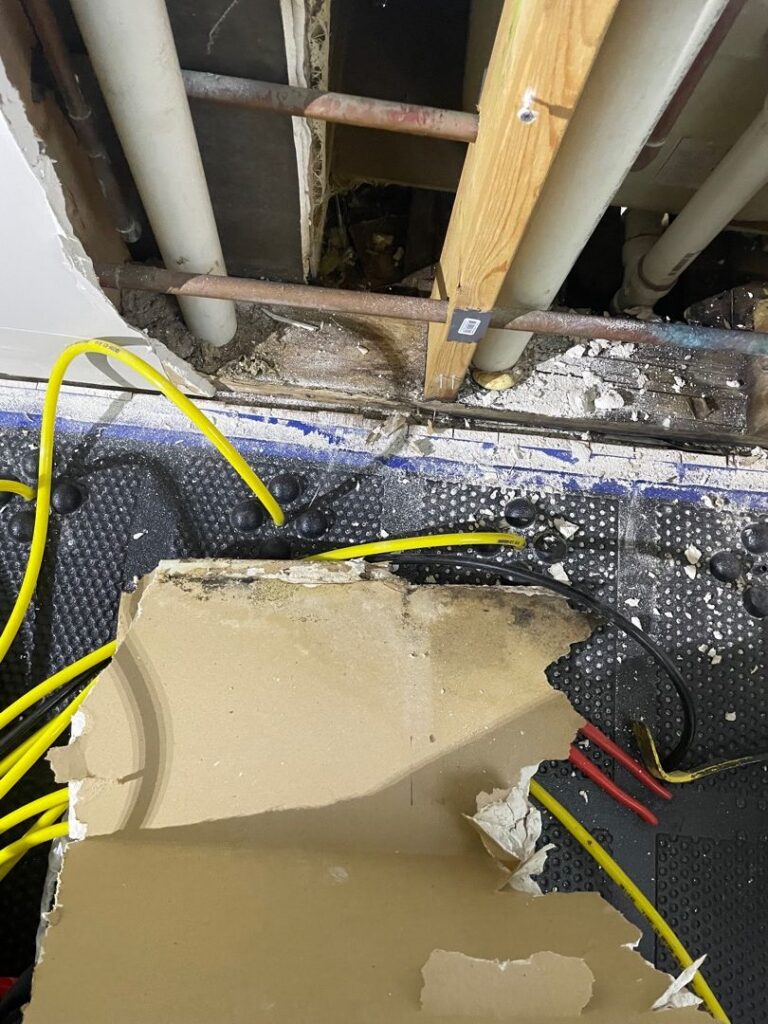
Severe water damage represents one of the most critical threats to residential and commercial structures. Whether caused by a sudden plumbing fixture failure, torrential weather patterns, an undetected appliance line leak, or severe roof intrusions, water damage penetrates porous building materials rapidly. Within just 24 to 48 hours, standing water and elevated relative humidity can compromise structural integrity and initiate widespread microbial contamination.
Understanding proper, science-based response protocols is the key to preventing long-term water damage and property degradation. Rather than relying on unverified techniques or superficial cleanup methods, effective water damage property restoration depends strictly on industry-recognized standards, rapid professional deployment, and precise psychrometric moisture control.
This guide details 10 essential water damage facts and response protocols that every property owner and manager must understand to protect valuable real estate assets, maintain structural safety, and streamline the complete restoration process.
________________________________________________________________________________________________________________
The Physics of Water Intrusion in Modern Buildings
Before examining individual response steps, it is vital to understand how moisture moves during a water damage incident within a building envelope. Water is an opportunistic fluid. When released indoors, it follows gravity downward while simultaneously migrating laterally across flat surfaces through surface tension.
More dangerously, water damage spreads upward and inward through a process known as capillary action. Highly porous construction materials—such as drywall, wood framing, concrete, oriented strand board (OSB), and carpet padding—act like sponges. They draw liquid water deep into hidden voids, wall cavities, and subfloors.
When liquid saturates these materials, it begins to evaporate into the surrounding air, raising the indoor Relative Humidity (RH). Once the RH exceeds 60%, secondary water damage occurs: wooden furniture swells and warps, paper-faced drywall loses structural strength, metal fixtures corrode, and dormant fungal spores germinate. Reversing secondary water damage requires more than simple air circulation; it demands controlled technical drying.
________________________________________________________________________________________________________________
1. Protocol #1: Master the Main Water Shut-Off Valve
The immediate priority during an internal water damage event is isolating the supply source. Every property owner, facility manager, and household occupant should know the precise physical location of the main water shut-off valve.
Main shut-off valves are typically located:
- In the basement near the front wall facing the street.
- In a ground-floor utility closet or mechanical room.
- Near the water meter in an exterior curb box.
Terminating the main water supply at the point of entry stops the volume of liquid from increasing, effectively capping the scope of physical water damage across subfloors, ceiling assemblies, and framing elements.
________________________________________________________________________________________________________________
2. Protocol #2: Execute Immediate Electrical Hazard Control
Standing liquid from severe water damage and active electricity create an immediate, lethal hazard. High-voltage current can travel through standing water, turning flooded basements or rooms into energized danger zones. Power must be isolated before any personnel enter saturated environments.
Electrical Isolation Checklist
- Locate the Panel: Identify the main circuit breaker panel.
- Assess Safety: If the panel is in a damp area, near standing water, or shows visible signs of water damage, do not touch it.
- Cut Circuit Power: Shut off individual breakers serving the impacted zones, followed by the main breaker switch if necessary.
- Call Professionals: If access to the breaker is compromised, contact your municipal electric utility or emergency personnel to disconnect power externally at the meter.
______________________________________________________________________________________________________________
3. Protocol #3: Conduct Comprehensive Hazard and Loss Documentation
Before any physical extraction or structural mitigation begins, thorough baseline documentation of the water damage must be recorded for insurance adjusters, property records, and legal accountability. Thorough documentation provides indisputable proof of the initial loss state.
- High-Resolution Photography: Capture wide shots of affected rooms and close-ups of water damage on structural assemblies, flooring, baseboards, and personal property.
- Continuous Video Footage: Record a continuous video walk-through documenting water depth, structural sagging, and ceiling intrusions.
- Inventory Cataloging: Create an itemized list of all contents impacted by water damage, noting brand names, serial numbers, and physical condition.
- Preserve Evidence: Retain the failed plumbing component (such as a burst flex line or ruptured valve) so insurance investigators can verify the cause of the water damage.
______________________________________________________________________________________________________________
4. Protocol #4: Utilize Commercial-Grade Heavy Water Extraction
A common mistake in property management is attempting to clear water damage using standard household shop vacuums or utility pumps. Consumer equipment lacks the suction lift, lift capacity, and airflow (measured in Cubic Feet per Minute or CFM) required to pull liquid from deep subfloor assemblies and carpet padding.
Professional restoration teams deploy truck-mounted or industrial portable extraction units equipped with weighted rover tools. These machines apply physical body weight to compress carpet and pad while applying intense vacuum lift, removing up to 90% of bound liquid before structural water damage drying equipment is activated.
________________________________________________________________________________________________________________
5. Protocol #5: Identify Bound vs. Unbound Hidden Moisture
Surface dryness is a dangerous illusion in water damage mitigation. Water that appears to have dried from a hardwood floor or tile surface often remains trapped in underlying wood joists, concrete slabs, and wall cavities.
Professional restoration technicians use advanced diagnostic instrumentation to detect hidden water damage migration:
Non-Invasive Pinless Moisture Meters
These devices send electromagnetic signals into materials up to 3/4 of an inch deep to read moisture content without puncturing surfaces. They establish baseline comparisons between affected and unaffected materials.
Direct Pin Moisture Meters
Equipped with insulated pins, these meters are driven directly into structural studs, subflooring, or sill plates to measure precise moisture content percentages ($MC\%$) within the core of the wood.
Thermal Imaging (Infrared) Cameras
Infrared cameras detect thermal differences across building surfaces. Because wet materials cool as water evaporates, saturated areas appear as cool blue or purple pockets on the camera screen, allowing technicians to map exact water damage migration paths behind intact drywall and tile without destructive teardowns.
________________________________________________________________________________________________________________
6. Protocol #6: Apply Psychrometric Principles for Structural Drying
Setting up ordinary household box fans or opening windows does not dry water damage effectively. In fact, if outdoor humidity is high, opening windows introduces millions of additional grains of moisture into the building. Professional water damage mitigation is governed by psychrometrics—the atmospheric science studying the thermodynamic properties of moist air.
To reverse water damage and dry a structure back to its pre-loss dry standard, technicians control three variable factors:
- Temperature: Elevating air temperature increases the vapor pressure of water trapped inside materials, causing it to evaporate into the air faster.
- Air Movement: High-velocity, commercial air movers are positioned at strategic angles to break up the stagnant boundary layer of air against wet walls and floors, accelerating evaporation.
- Dehumidification: Industrial Low Grain Refrigerant (LGR) or desiccant dehumidifiers continuously process wet air, removing moisture from the atmosphere, condensing it into liquid, and pumping it out of the building. This maintains a low vapor pressure differential, driving moisture out of structural elements.
______________________________________________________________________________________________________________
7. Protocol #7: Establish Microbial Control Within 24 to 48 Hours
Microscopic fungal spores are naturally present in all indoor environments, sitting dormant on surfaces. However, these spores require only two conditions following water damage to germinate and form visible mold colonies:
- A continuous moisture source ($MC\%$ over 16-19% in wood).
- An organic food source (such as the paper facing on drywall, wood studs, or dust).
The biological clock begins ticking immediately upon water contact. If structural drying is not initiated within 24 to 48 hours of initial water damage, mold colonization begins.
Certified restoration specialists apply EPA-registered botanical or synthetic antimicrobial agents to saturated building materials during the extraction phase. These treatments inhibit fungal growth while heavy structural water damage drying is underway.
________________________________________________________________________________________________________________
8. Protocol #8: Accurately Categorize Water Contamination Levels
Every water damage loss is classified under strict industry standard guidelines published by the Institute of Inspection, Cleaning and Restoration Certification (IICRC S500). The category of contamination dictates worker personal protective equipment (PPE), containment requirements, and whether materials can be dried or must be torn out and discarded.
| Water Category | Source Examples | Contamination Level | Required Action Protocol |
| Category 1 (Clean Water) | Broken supply lines, sink overflows without contaminants, rainwater. | Low / Sanitary at source. | Structural drying can proceed with minimal removal of non-delaminated materials. |
| Category 2 (Gray Water) | Washing machine discharge, dishwasher overflows, sump pump failures. | Moderate / Chemical or biological hazards. | Carpet padding must usually be replaced; porous materials require thorough sanitization. |
| Category 3 (Black Water) | Sewage backups, river flooding, standing Category 2 water (>48 hrs). | High / Highly toxic, pathogenic agents. | Porous materials (drywall, insulation, carpet) MUST be removed and discarded under negative pressure containment. |
9. Protocol #9: Utilize Standardized Structural Documentation for Insurance
Navigating property insurance claims following a water damage loss can be stressful. Insurance adjusters require clear, objective, and standardized data before approving coverage and releasing funds for repairs.
Professional restoration companies utilize Xactimate, the industry-standard estimating platform accepted by all major insurance carriers. This software uses localized pricing data to generate line-item estimates detailing exact labor rates, square footage of affected materials, hours of drying equipment operation, and psychrometric daily logs.
By maintaining daily moisture logs that track temperature, relative humidity, grains per pound (GPP), and material moisture content, professional contractors provide irrefutable scientific proof that water damage mitigation was executed properly and completely.
________________________________________________________________________________________________________________
10. Protocol #10: Maintain Continuous Contact with PuroClean of Carol Stream
When a water damage loss occurs, every passing hour increases total restoration costs and structural damage. Having a trusted, certified restoration partner on speed dial eliminates panic and guarantees rapid deployment.
PuroClean of Carol Stream acts as “The Paramedics of Property Damage®”—operating 24 hours a day, 7 days a week, 365 days a year. Our certified response teams arrive equipped with industrial-grade extraction gear, high-capacity LGR dehumidifiers, and thermal imaging technology to contain the water damage, safeguard your property, and execute rapid structural recovery.
The Technical Risks of Unprofessional Cleanup Attempts
Property owners are sometimes tempted to handle water damage cleanup independently using retail tools and improvisational methods. However, water damage mitigation is a precise technical field governed by strict physical laws and safety standards. Non-professional cleanup consistently fails due to several critical oversights:
Trapped Moisture in Wall Cavities
Unassisted surface drying leaves moisture trapped inside wall cavities behind baseboards. Over time, this trapped moisture rots the bottom sill plates, structural studs, and wall anchors, risking structural sagging or collapse.
Unintentional Contaminant Cross-Contamination
Using high-powered residential fans in a water damage environment without proper containment measures or HEPA air scrubbing spreads microscopic mold spores, bacteria, and dust throughout unimpacted sections of the property.
Denied Insurance Claims
Insurance policies typically require property owners to mitigate water damage promptly using reasonable, standard industry practices. Neglecting prompt professional drying or relying on improper methods can lead insurance adjusters to classify secondary damages as “unmitigated neglect,” potentially resulting in partial or total claim denials.
________________________________________________________________________________________________________________
Professional Restoration Workflow with PuroClean of Carol Stream
When you contact PuroClean of Carol Stream, your property is guided through a systematic, multi-phase water damage restoration workflow designed to minimize downtime and ensure complete recovery:
- Emergency Inspection & Thermal Mapping: Certified technicians conduct a thorough safety assessment, identify the water source, and map hidden water-damage boundaries using infrared cameras and moisture meters.
- Heavy Extraction & Containment: Industrial truck-mounted units extract standing water from floors, carpets, and subfloors. Critical containment barriers are erected when hazardous or Category 3 water is present.
- Antimicrobial Application & Controlled Drying: EPA-registered antimicrobial agents are applied to inhibit biological growth. High-velocity air movers and LGR dehumidification systems are positioned to initiate structural drying.
- Daily Monitoring & Adjustment: Technicians return every 24 hours to record psychrometric readings (temperature, RH, GPP) and adjust equipment placement as materials dry.
- Final Dry Certification: Once structural components return to established pre-loss baseline moisture levels, equipment is removed, documentation is finalized for the insurer, and the property is certified fully restored from water damage.
______________________________________________________________________________________________________________
Protect Your Asset with PuroClean of Carol Stream
Whether you are managing a single-family home affected by a plumbing break or overseeing a large commercial facility facing severe water damage from storm flooding, time is your most valuable resource. Partnering with trained, certified mitigation experts guarantees that your property is dried safely, thoroughly, and according to strict industry standards.
Do not let unaddressed water damage ruin your real estate investment.
- Local Profile & Location Info: Visit our official PuroClean of Carol Stream Google Business Profile to check our local office location, view customer reviews, get driving directions, and access direct emergency contact information.
- Service Details: Explore our technical capabilities and learn more about our step-by-step solutions by visiting the PuroClean of Carol Stream Water Damage Restoration Services Page.
Call PuroClean of Carol Stream right now—our emergency response team is standing by 24/7/365 to handle any water damage crisis!