 PuroClean Certified Restoration Specialists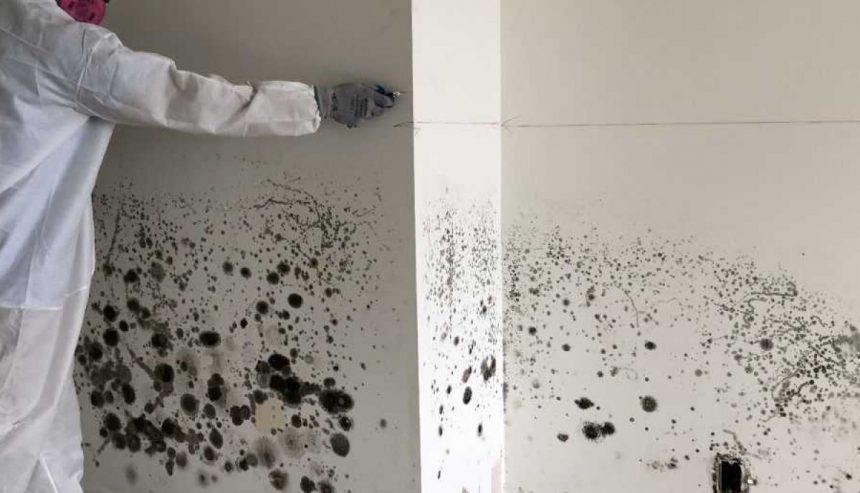
How Modern Construction, Colorado’s Climate, and Hidden Moisture Create the Conditions for Mold Growth
Most homeowners associate mold with older, poorly maintained properties. Leaky roofs, crumbling foundations, and neglected plumbing are the images that come to mind. In Centennial, CO, however, a significant portion of the mold removal calls our team responds to involve homes built within the last 20 to 30 years, many of them well-kept, visually immaculate properties in established subdivisions. The reason has less to do with neglect and more to do with how modern homes are built and how Colorado’s climate interacts with that construction.
Understanding why newer Centennial homes can be surprisingly vulnerable to mold helps property owners recognize the warning signs earlier, respond more effectively when a problem is confirmed, and make smarter decisions about prevention going forward.
The Tight Building Envelope Problem
From the 1990s onward, residential construction in Colorado shifted significantly toward energy efficiency. Improved insulation ratings, vapor barriers, house wrap products, and tightly sealed window and door assemblies became standard practice. These changes reduced heating and cooling costs substantially, and for most purposes they represent genuine improvements in building quality.
The tradeoff is ventilation. A tightly sealed home exchanges interior and exterior air at a much lower rate than older construction. In practical terms, this means that moisture generated inside the home, from cooking, bathing, breathing, and laundry, has fewer pathways to escape. When that moisture accumulates in wall assemblies, attic spaces, or crawl areas faster than the building’s ventilation systems can remove it, relative humidity in those zones rises to levels that support mold growth, often without any visible indication at the interior surface.
Many Centennial homes built between the mid-1990s and the late 2000s fall into this category. They were built to tighter standards than earlier construction but before mechanical ventilation requirements became as robust as current code demands. The result is a generation of homes that are well-insulated, comfortable, and genuinely efficient, but also predisposed to moisture accumulation in concealed spaces under certain conditions.
How Colorado’s Climate Contributes to the Problem
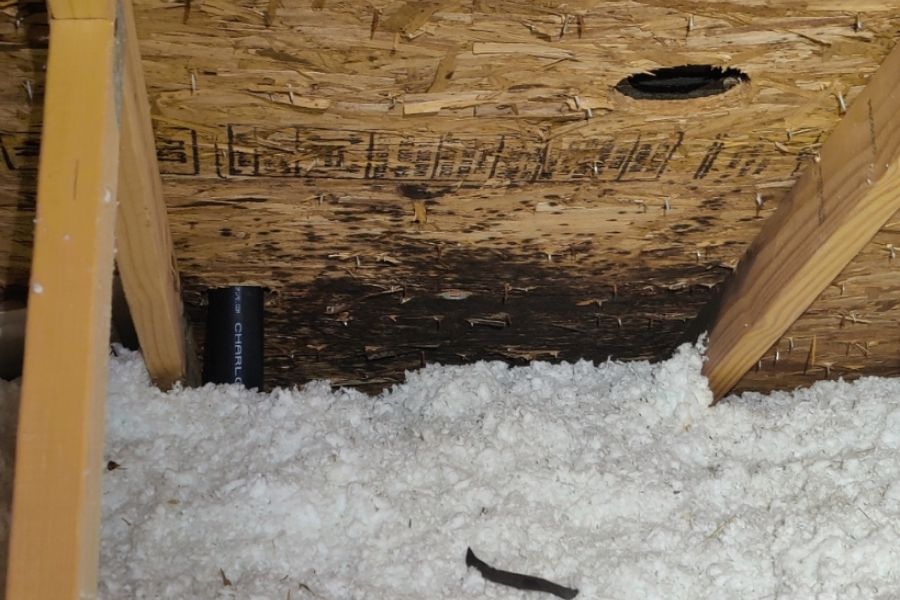
Colorado’s low average humidity is often cited as a reason mold should not be a significant concern here. That logic holds at the regional outdoor level, but inside a modern tight-envelope home, interior humidity levels are often considerably higher than outdoor conditions suggest. In winter, when outdoor temperatures drop sharply and heating systems run continuously, warm humid interior air migrates toward cooler surfaces inside wall cavities and attic spaces. When that air reaches the dew point against a cold sheathing surface, condensation forms. Over repeated cycles, that condensation accumulates and creates sustained moisture in areas with little air movement and no natural drying opportunity.
This is one of the primary mechanisms behind mold growth in Centennial attics, particularly on the north-facing roof sections that receive less direct sunlight and remain colder for longer periods. It also explains why mold is frequently found on the back side of exterior wall sheathing and inside exterior wall cavities, neither of which is visible without opening the wall or using specialized detection equipment.
Summer monsoon patterns in Colorado, which bring concentrated humidity and rainfall from July through September, add a seasonal layer of risk. A brief period of elevated outdoor humidity combined with a home that is sealed tightly and air-conditioned can create condensation on cool interior surfaces near the building envelope, particularly in below-grade spaces.
Recognizing Mold in a Centennial Home: What to Look and Smell For
Because the conditions that drive mold growth in modern Centennial homes are often hidden within the building assembly, visible mold on interior surfaces is frequently a late-stage indicator rather than an early warning. By the time mold appears on a wall surface or ceiling, the colony on the other side of that material has usually been developing for weeks or months.
Earlier warning signs that warrant professional moisture assessment include a persistent musty odor that intensifies in certain rooms or when the HVAC system runs, unexplained allergy-like symptoms among occupants that improve when they leave the home, soft or slightly discolored areas on walls or ceilings without a clear water source, and condensation forming regularly on interior window surfaces or cold water pipes during winter months.
Any of these signs in a Centennial home, particularly one built between 1990 and 2010, is a reasonable basis for calling a certified mold inspection and remediation professional rather than waiting for visible growth to confirm the problem.
The Professional Mold Removal Process: What It Actually Involves
Mold removal is a term that covers a wide range of work depending on the extent and location of contamination. Our IICRC-certified technicians follow the IICRC S520 Standard for Professional Mold Remediation, which defines the protocols for assessment, containment, removal, and verification.
Inspection and moisture investigation. We begin with a thorough assessment using thermal imaging cameras, calibrated moisture meters, and where appropriate, air sampling to identify the location and extent of mold growth and the moisture source driving it. Addressing the moisture source is not optional. Mold removal without correcting the underlying moisture condition will result in recurrence, typically within weeks.
Containment. Affected areas are isolated using physical barriers and negative air pressure to prevent mold spores from migrating to unaffected areas of the home during the remediation process. This step protects occupants and prevents cross-contamination.
Removal of contaminated materials. Porous materials with active mold growth, including drywall, insulation, and certain wood components, are removed and disposed of in sealed bags according to remediation protocol. Non-porous surfaces are cleaned using HEPA vacuuming followed by application of EPA-registered antimicrobial agents.
HEPA air filtration. Commercial air scrubbers equipped with HEPA filters run continuously during remediation to capture airborne spores released during the removal process. Air quality is monitored throughout.
Drying and moisture correction. If the moisture source involves a building assembly issue rather than an acute water event, we assess and where possible address the drying deficit before reconstruction begins. This may involve improving attic ventilation, correcting vapor barrier installation, or coordinating with other trades.
Clearance verification. Upon completion, we conduct post-remediation verification to confirm that mold levels in the treated area have returned to normal background levels. This documentation is provided to the homeowner and supports any related insurance claim.
Mold Removal and Your Homeowner’s Insurance
Coverage for mold remediation under standard homeowner’s insurance policies in Colorado varies significantly depending on the cause. Mold that results directly from a covered water damage event, such as a burst pipe or appliance failure, is often covered under the water damage portion of the claim. Mold attributed to long-term condensation or gradual moisture accumulation is more frequently excluded.
Regardless of coverage, thorough documentation of when the problem was discovered, what steps were taken immediately, and how the professional remediation was conducted is essential. Our team provides complete written reports, moisture data, and photographic records that support your position with the carrier and reduce the risk of claim disputes.
Serving Centennial and the South Denver Metro Area
PuroClean Certified Restoration Specialists provides mold removal and remediation services throughout Centennial, Highlands Ranch, Littleton, Parker, Castle Rock, Aurora, and Lone Tree. Our team is locally based, IICRC-certified, and familiar with the specific construction styles and environmental conditions that drive mold risk across the south Denver metro area.
Call PuroClean Certified Restoration Specialists Today
If you have noticed the signs of mold growth in your Centennial home, or if you simply want peace of mind after a water damage event, contact us at (303) 876-0006 or reach out through our online contact form. We are available 24 hours a day, 7 days a week, and we will assess your property thoroughly, address the problem at its source, and provide the documentation you need to protect your home and your investment.


 PuroClean Certified Restoration Specialists