 PuroClean Disaster Restoration of West Fort Wayne
 Executive Summary
Fort Wayne and surrounding Ohio county residents face unique water damage risks from seasonal weather extremes, aging infrastructure, and regional geography. This guide provides critical information about emergency water removal response, professional restoration processes, and the specific dangers threatening Northeast Indiana properties. Homeowners will learn proven protective actions, understand cost factors, work effectively with insurance carriers, and recognize when professional intervention becomes absolutely necessary to prevent catastrophic property damage.
What Specific Water Damage Risks Face Fort Wayne and Ohio County Properties?
Fort Wayne’s location at the confluence of three rivers creates unique flooding vulnerabilities. The St. Joseph, St. Marys, and Maumee rivers converge within the city, with historical flooding events occurring when spring rains combine with rapid snowmelt. Properties near these waterways and their tributaries face elevated risks, while the entire region’s high water table makes basement flooding common even in areas distant from major waterways.
Northeast Indiana’s freeze-thaw cycle severity exceeds many other regions. Winter temperatures regularly dropping below zero create extreme pipe freezing conditions, particularly in older homes with inadequate insulation or pipes in exterior walls. The repeated pattern of freezing nights and above-freezing days throughout late winter creates ongoing risks as pipes undergo multiple stress cycles.
Aging infrastructure throughout Fort Wayne and Ohio counties contributes significantly to water damage frequency. Many homes built in the 1960s-1980s now face original plumbing, water heaters, and appliance connections nearing or exceeding design life. Corroded pipes, deteriorated fittings, and aging appliance hoses fail with increasing frequency, causing sudden catastrophic water releases requiring immediate professional response.
Summer storm intensity has increased measurably in recent decades. The Fort Wayne region now experiences more frequent severe thunderstorms producing 2-4 inches of rainfall in under two hours. These events exceed ground absorption capacity and overwhelm storm sewers, driving water into basements through foundation cracks, window wells, and sewer backups. Homes without sump pumps or with undersized drainage systems face particular vulnerability.
Why Do Fort Wayne Homeowners Need 24/7 Emergency Water Removal Availability?
Water damage emergencies follow no schedule, occurring as frequently at 2 AM as 2 PM. Burst pipes resulting from frozen conditions typically manifest during overnight temperature drops or early morning hours when heating systems struggle against extreme cold. Discovering water damage at 6 AM on a Sunday morning requires immediate response, not Monday business hours contact.
The critical 24-48 hour window operates independently of business hours or calendar dates. Mold germination, structural material saturation, and progressive damage progression continue during nights, weekends, and holidays at the same accelerated pace as weekday incidents. Delaying response from Saturday night until Monday morning gives mold 36+ hours to establish and allows water to spread through building assemblies uninterrupted.
Insurance companies recognize emergency timing through policy language and claims handling. Most carriers expect prompt mitigation regardless of when damage occurs. Claims adjusters specifically document response timing, and delayed action provides grounds for partial claim denials based on failure to mitigate. Immediate 24/7 professional contact demonstrates reasonable policyholder actions protecting coverage.
Equipment deployment speed determines restoration success. Water spreading through materials for 12 additional hours while waiting for business hours response significantly expands affected areas and required equipment. Teams responding within 90 minutes contain damage to initially affected areas, while 12-24 hour delays see water traveling horizontally and vertically through interconnected building assemblies, multiplying restoration scope and cost.
What Immediate Actions Should You Take When Discovering Water Damage?
Safety assessment must precede all other actions. Water and electricity create lethal combinations requiring immediate power shutoff at the electrical panel if water has reached outlets, appliances, light fixtures, or the panel itself. Never enter rooms with standing water when electrical service remains active. Even small amounts of water across floors can conduct sufficient current for fatal electrocution when electrical sources remain energized.
Source control stops ongoing damage accumulation. Locate and close the main water shutoff valve for burst pipes or failed appliances connected to water supply lines. Most Fort Wayne homes have main valves near water meters in basements or crawlspaces. If you cannot locate your shutoff or it has failed, call the city water department for curb valve closure. Every additional minute of water flow adds gallons to extraction requirements.
Documentation creates essential insurance claim support. Before touching anything or beginning cleanup, photograph and video record all visible damage from multiple angles. Show water levels using measuring references, capture damaged materials and contents, and record video narration explaining what happened and when you discovered it. Modern smartphones provide excellent documentation tools always available for immediate use.
Professional contact should occur within the first 30 minutes of discovery regardless of day or time. Call 24/7 emergency water removal services immediately rather than attempting extensive DIY cleanup or waiting to assess full damage. While waiting for professionals, begin removing portable valuables and furniture to dry areas if this can be done safely. Place aluminum foil or plastic under furniture legs remaining in affected areas to prevent staining and moisture absorption.
How Does Professional Emergency Response Differ from Business Hours Service?
True 24/7 emergency services maintain dedicated on-call technicians and ready equipment regardless of time. Companies offering genuine round-the-clock response can dispatch teams within 60-90 minutes at 3 AM on Christmas morning with the same equipment and expertise as Tuesday afternoon calls. This requires significant investment in staffing, equipment staging, and operational protocols that business-hours-only companies do not maintain.
Emergency response rates may include premium pricing for overnight, weekend, and holiday calls reflecting the operational costs of 24/7 availability. However, the cost difference typically represents 10-20% of base pricing, far less than the 300-500% increased damage costs from delayed response. Insurance coverage typically includes emergency service premiums when damage timing necessitates after-hours response.
Equipment availability separates true emergency services from companies supplementing with rentals. Dedicated emergency restoration companies maintain equipment inventories sufficient for multiple simultaneous large projects without rental delays. Calling at 2 AM and hearing “we will bring equipment in the morning after renting” indicates inadequate emergency capabilities.
Immediate response prioritization shows in communication and arrival protocols. Emergency-focused companies provide direct technician contact, GPS tracking showing arrival times, and teams arriving in marked vehicles with complete equipment ready for immediate deployment. Business-hours operations often require callback delays, scheduling negotiations, and multiple trips for assessment then equipment delivery.
What Advanced Water Removal Technologies Make Professional Services Essential?
Truck-mounted water extractors represent the industry gold standard for rapid, thorough water removal. These vehicle-integrated systems generate 300-400 CFM of vacuum power through large diameter hoses, extracting 95%+ of water from carpets, padding, and porous materials in single passes. The heat injection capabilities of advanced units accelerate extraction while providing antimicrobial benefits. No portable or rental equipment approaches this performance level.
Moisture detection technology identifies hidden damage requiring treatment. Pin-type moisture meters measure exact moisture content in wood, drywall, and other materials with laboratory-grade accuracy. Non-invasive meters scan large areas quickly without leaving holes. Thermal imaging cameras visualize moisture patterns invisible to eyes, showing water migration through walls, under floors, and in ceiling assemblies. This technology prevents the “we thought we got it all” scenarios leading to mold surprises months later.
Specialty extraction tools address specific materials and situations. Hardwood floor extraction mats create vacuum beneath flooring while injecting warm, dry air to prevent cupping and crowning. Weighted extractors pull water from tile and hard surfaces more effectively than mopping. Sub-surface extraction tools address water trapped under floating floors, tile, and other impervious coverings. These specialized tools save materials that general equipment cannot adequately dry.
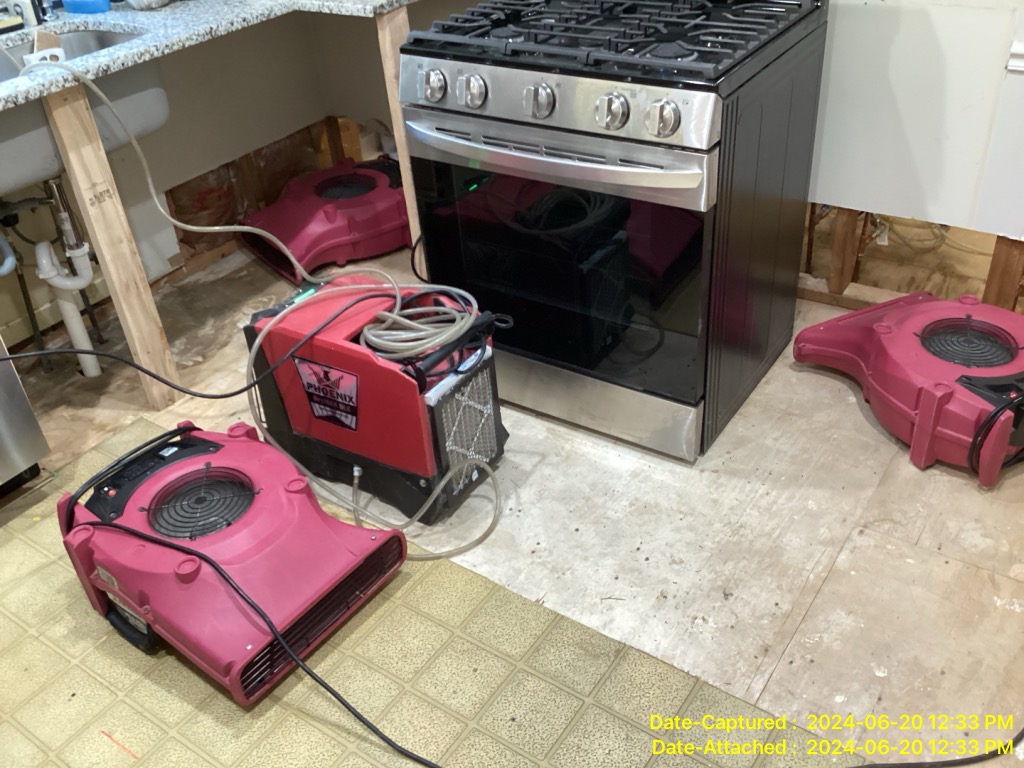
Drying equipment engineering separates professional from consumer approaches. Axial air movers generate high-volume, directed airflow across surfaces, while centrifugal models create focused, powerful streams into specific areas. Low-grain refrigerant dehumidifiers and desiccant systems remove moisture from air continuously, preventing reabsorption. Equipment placement following psychrometric principles creates optimized drying conditions unachievable through random fan positioning.
How Long Does Complete Water Damage Drying Actually Take in Fort Wayne Conditions?
Standard residential water damage restoration requires 3-5 days of continuous equipment operation for complete drying under typical conditions. This timeline assumes Category 1 clean water, immediate professional response, proper equipment deployment, and moderate damage extent. Fort Wayne’s variable humidity requires professional dehumidification regardless of outdoor conditions, as natural ventilation proves inadequate year-round.
Material types dramatically affect drying timelines. Drywall reaches dry standards within 2-4 days under proper conditions. Wood framing requires 3-5 days. Dense materials like hardwood flooring may need 5-7 days for complete moisture removal. Concrete and masonry often require 7-14 days even with professional drying equipment. Mixed-material situations require drying to the slowest material before project completion.
Seasonal factors influence Fort Wayne drying requirements. Winter drying battles both low outdoor temperatures reducing equipment efficiency and indoor heating system interference with airflow patterns. Summer humidity requires more aggressive dehumidification as outdoor air contains substantial moisture. Spring and fall moderate conditions generally support fastest drying, though individual weather patterns vary considerably.
Hidden moisture extends timelines unpredictably. Water trapped in wall cavities, beneath flooring materials, or in structural assemblies may require additional drying time after surface materials test dry. Professional monitoring catches these situations before equipment removal, while DIY attempts often miss hidden moisture leading to future mold growth.
Contamination level affects drying timelines through additional sanitization requirements. Category 2 and 3 water situations require extended antimicrobial treatment contact time, application drying periods, and verification testing before final moisture assessment begins. These contamination-related processes add 1-2 days to basic drying timelines.
A Real Fort Wayne Story: The Peterson Family’s Frozen Pipe Nightmare and Swift Recovery
The Peterson family’s experience illustrates both Northeast Indiana’s specific risks and the value of immediate professional response. Their Fort Wayne home, built in 1978, had pipes in the exterior north wall serving a second floor bathroom. During a February cold snap when overnight temperatures dropped to negative 8°F, these pipes froze solid despite the heating system running continuously.
The family’s first indication of problems came at 5:45 AM when Mrs. Peterson tried using the bathroom and found no water flow. Mr. Peterson immediately went to the basement to investigate, finding the frozen pipe section in the exterior wall. While he contemplated trying to thaw the pipe with a hairdryer, the temperature began rising toward a forecasted high of 28°F.
At 7:20 AM, they heard a loud crack followed by rushing water sounds. The frozen pipe had burst during thawing, and water was now spraying into the wall cavity at approximately 8-10 gallons per minute. Mr. Peterson rushed to shut the main valve while Mrs. Peterson called PuroClean Disaster Restoration of West Fort Wayne at (260) 263-9788.
The emergency response team arrived at 8:35 AM, just 75 minutes after the call and less than 90 minutes after the pipe burst. They immediately began extracting water from the second floor bathroom, bedroom, hallway, and first floor rooms below where water had traveled through the floor assembly. Initial extraction recovered over 400 gallons.
The team removed wet insulation from the affected wall, cut drywall 18 inches above water damage to access the wall cavity, and treated all affected areas with antimicrobial solutions. They positioned 10 air movers and 3 commercial dehumidifiers, creating a controlled drying environment. Complete drying verified by moisture readings occurred in 4.5 days, with reconstruction completing within 3 weeks.
The Peterson family’s lesson? Their immediate response prevented what could have been a $25,000+ disaster. The insurance adjuster specifically noted that their rapid professional contact, occurring within minutes rather than hours, saved extensive ceiling damage in rooms below, prevented mold growth in wall cavities, and protected their hardwood flooring in adjacent areas. The family now maintains a water leak detection system and has the specific emergency number programmed in their phones.
What Does Emergency Water Removal Service Cost in the Fort Wayne Region?
Emergency water removal pricing reflects damage scope, water category, affected materials, and required response timing. Basic Category 1 clean water extraction affecting 200-400 square feet typically ranges $2,000-$4,000 including extraction, antimicrobial treatment, drying equipment, and monitoring through completion. This represents emergency mitigation costs only, not final reconstruction.
After-hours, weekend, and holiday emergency response may include service premiums of 10-20% reflecting the operational costs of maintaining true 24/7 availability. However, these premiums typically total $200-$500 on projects where delayed response would add $3,000-$8,000 in additional damage costs, making immediate response cost-effective even with premiums.
Category 2 and 3 contaminated water situations increase costs 25-50% due to enhanced sanitization requirements, personal protective equipment use, contaminated material disposal, and extended treatment protocols. A basement sewage backup affecting 600 square feet may cost $5,000-$9,000 for emergency services before reconstruction begins.
Multi-level water damage multiplies costs through expanded affected areas and complex drying requirements. A second floor bathroom overflow traveling through ceiling assemblies to first floor rooms and basement areas below might require $6,000-$12,000 in emergency services treating all affected levels simultaneously.
Equipment-intensive projects requiring specialized tools increase costs proportionally. Hardwood floor drying systems, sub-surface extraction, extensive demolition, or hazmat protocols add to base pricing. However, these services often save materials worth far more than the incremental costs, making them economically beneficial despite higher initial pricing.
Insurance coverage typically handles emergency water removal for covered perils including sudden pipe failures, appliance malfunctions, and weather damage not classified as flooding. Understanding your deductible, coverage limits, and policy exclusions helps plan financially. Professional restoration companies work directly with insurers, often collecting only deductible amounts initially while billing carriers for covered services.
What Questions Should You Ask When Calling Emergency Water Removal Services?
Response time commitment represents the single most important question. Ask specifically when technicians can arrive on-site with equipment ready for immediate work. True emergency services commit to 60-90 minute arrival anywhere in Fort Wayne and immediate Ohio counties regardless of day or time. Vague answers or business-hours-only availability indicates inadequate emergency capabilities.
Technician certification and training credentials verify professional competence. Ask about IICRC certification specifically, as this represents the industry standard for water damage restoration training. Request information about continuing education, specialized certifications in areas like structural drying or microbial remediation, and company-level certifications showing commitment to professional standards.
Equipment inventory and immediate availability determines project capability. Ask what extraction equipment, air movers, dehumidifiers, and moisture detection tools they will bring initially. Inquire about supplemental equipment availability if assessment reveals more extensive damage than initially apparent. Companies maintaining substantial inventories handle discoveries of additional damage seamlessly, while those dependent on rentals introduce delays.
Insurance experience directly affects claim outcomes and your out-of-pocket costs. Ask if they work with insurance companies regularly, provide documentation using industry-standard Xactimate software, and communicate directly with adjusters. Request references from recent insurance projects. Companies experienced in insurance restoration know documentation requirements and communication protocols that maximize claim success.
Project management and communication protocols set service expectations. Ask who serves as your primary contact, how often you receive updates, and how after-hours questions get handled during multi-day projects. Clarify whether the same technicians monitor progress daily or if different crews rotate through. Consistent communication and technician assignment improve outcomes and satisfaction.
When Should Fort Wayne Residents Choose Professional Water Removal Over DIY Cleanup?
Professional response becomes essential when water damage involves more than 50 gallons, affects multiple rooms or levels, includes Category 2 or 3 contamination, or threatens structural materials like subflooring and framing. These situations exceed household equipment capabilities and create health hazards or structural risks requiring professional expertise and industrial equipment.
Any water containing sewage, toilet overflow, sump pump discharge, or water that has stood for more than 24 hours requires professional hazmat protocols. Attempting DIY cleanup exposes you to bacteria including E. coli, viruses, parasites, and chemical contaminants. Professional teams use personal protective equipment, EPA-registered antimicrobials meeting pathogen kill requirements, and proper disposal procedures protecting your family’s health.
Hidden moisture situations demand professional moisture detection and treatment. If water has entered wall cavities, traveled to other rooms, soaked subflooring, or affected ceiling assemblies between floors, professional thermal imaging and moisture mapping becomes necessary. DIY surface drying leaves hidden moisture creating progressive damage and mold growth appearing weeks or months later.
Hardwood flooring water exposure needs professional assessment and specialized drying regardless of water amount. Hardwood’s dimensional instability when wet means improper drying causes permanent cupping, crowning, or gapping. Professional wood floor drying systems inject controlled airflow beneath flooring while monitoring moisture reduction rates. DIY attempts typically result in floor replacement rather than restoration.
Truly minor incidents permit DIY cleanup only when water volume remains under 10 gallons, the source stopped immediately, affected surfaces are non-porous tile or sealed concrete, and no electrical hazards exist. Even qualifying situations require monitoring for 72 hours for signs of hidden moisture like musty odors, developing stains, or material changes indicating professional assessment should have occurred initially.
How Does Emergency Water Removal Prevent Catastrophic Mold Growth?
Mold prevention depends entirely on eliminating moisture before spores germinate and establish colonies. Mold requires moisture above 20% material content, organic material like drywall or wood, and time measured in hours rather than days. Professional water removal attacks all three factors, with moisture elimination providing complete prevention when achieved within the critical 24-48 hour window.
Rapid extraction removes free water before it saturates materials to levels supporting mold. Professional truck-mounted extractors pull 95%+ of water from carpets, padding, and porous materials, reducing moisture content below mold germination thresholds within hours of response. This speed prevents the deep saturation that makes materials mold-favorable even after surface drying.
Controlled drying maintains material moisture below mold support levels throughout the restoration process. Even after extraction reduces water content substantially, materials may retain 18-25% moisture during the drying phase. Professional dehumidification keeps relative humidity below 60% and creates conditions where material moisture decreases continuously rather than fluctuating or remaining static at mold-favorable levels.
Antimicrobial treatments provide additional protection during the vulnerable period between extraction and complete drying. EPA-registered products applied after extraction inhibit mold spore germination on surfaces even if small amounts of moisture persist during controlled drying. These treatments add protection but do not replace proper drying, as mold will eventually overcome antimicrobials if materials remain wet.
Hidden moisture detection prevents mold surprises in untreated areas. Thermal imaging and comprehensive moisture mapping identify all wet areas, including those with no visible water. Treating only obvious damage while missing wall cavity moisture or subflooring saturation creates perfect mold growth environments discovered months later through odors or visible growth requiring expensive remediation.
What Makes Fort Wayne’s Climate Particularly Challenging for Water Damage Restoration?
Northeast Indiana’s humidity extremes complicate professional drying throughout the year. Summer dew points frequently exceeding 65°F create outdoor air more humid than indoor moisture-laden air from water damage. Opening windows or relying on natural ventilation actually introduces moisture rather than removing it. Professional dehumidification becomes essential regardless of season.
Winter heating systems interfere with optimal drying airflow patterns. Forced air furnaces create competing air currents disrupting professional air mover placement strategies. Baseboard heating produces localized temperature variations affecting evaporation rates unpredictably. Professional teams account for these HVAC factors when engineering drying environments, adjusting equipment placement and capacities accordingly.
Freeze risks during winter restoration require specialized protocols. Drying equipment generating airflow can freeze wet materials if building heat fails or equipment operates in unheated areas. Professional monitoring prevents freeze damage during restoration, while DIY attempts in winter conditions often create additional damage as wet materials freeze, thaw, and refreeze through temperature cycling.
Spring and fall temperature swings create challenging daily condition variations. Morning temperatures in the 40s rising to afternoon 70s alter relative humidity, air density, and evaporation rates significantly within single days. Professional equipment adjustments respond to these changes maintaining consistent drying progress, while static DIY setups become inefficient as conditions shift.
Why Do Insurance Companies Prefer Immediate Professional Water Removal Response?
Insurance carriers recognize that immediate professional response dramatically reduces claim costs through damage containment. A $3,000 immediate extraction and drying project prevents an $18,000 mold remediation and reconstruction claim when response occurs within 24 hours versus 72 hours. This cost differential makes insurers strongly supportive of policyholder immediate action.
Professional documentation meets insurance requirements for coverage verification and prevents claim disputes. Certified restoration companies provide moisture maps, equipment logs, daily progress photos, and detailed Xactimate estimates matching carrier systems. This documentation smooth claims processing, while inadequate DIY documentation often triggers claim investigations, delays, or partial denials.
Policyholder duty to mitigate appears explicitly in homeowners policies requiring prompt action to minimize damages. Immediate professional contact demonstrates reasonable mitigation efforts protecting coverage. Waiting days or attempting inadequate DIY cleanup before calling professionals may provide carriers grounds for claim reductions based on policyholder negligence contributing to damage extent.
Certified restoration work carries accountability and guarantees insurance companies trust. IICRC-certified firms maintain liability insurance, guarantee their work, and follow industry standard protocols carriers understand. DIY cleanup or unlicensed contractor work offers no recourse if problems develop, potentially leaving homeowners financially responsible for additional damages.
Carrier relationships with preferred restoration vendors streamline claims processing. Many insurance companies maintain networks of certified restoration firms with pre-negotiated rates, approved protocols, and direct billing arrangements. Using preferred vendors often accelerates claim settlements, reduces homeowner out-of-pocket costs, and improves overall satisfaction.
Frequently Asked Questions
How quickly will mold grow after water damage in Fort Wayne’s climate?
Mold spores begin germinating within 24-48 hours on suitable organic surfaces after water exposure. Visible colonies typically establish within 72-96 hours given Fort Wayne’s typical humidity levels. Professional water removal within 24 hours prevents mold establishment almost entirely, while delays beyond 48 hours substantially increase mold likelihood requiring separate remediation.
What makes professional water extraction more effective than household wet-dry vacuums?
Professional truck-mounted extractors generate 300-400 CFM of vacuum power through large hoses, removing 95%+ of absorbed water in single passes. Standard wet-dry vacuums produce 80-120 CFM through small hoses, extracting only surface water and leaving 60-80% of moisture in padding, subflooring, and porous materials. This performance difference determines whether materials dry properly or develop mold and deterioration.
Will homeowners insurance cover emergency water removal and restoration costs?
Most homeowners policies cover sudden, accidental water damage from burst pipes, appliance failures, roof leaks, and similar covered perils. Gradual leaks, maintenance-related failures, groundwater seepage, and surface flooding typically face exclusions. Flood damage requires separate flood insurance. Contact your agent immediately after damage occurs to verify coverage for your specific situation.
Can carpets and padding be saved after water damage or does everything need replacement?
Category 1 clean water affecting carpet and padding within 24 hours can often be professionally extracted and dried successfully. Category 2 and 3 contaminated water typically requires padding disposal regardless of timing. Professional assessment determines salvageability based on water type, exposure duration, carpet age, fiber type, and contamination level. Attempting to save unsuitable materials creates health risks and usually fails.
How long does professional water damage restoration take in typical Fort Wayne homes?
Standard residential water damage requires 3-5 days of continuous equipment operation for complete drying under normal conditions. Factors affecting timeline include material types, water category, seasonal humidity, damage extent, and structural complexity. Severe damage affecting multiple materials or containing hidden moisture may require 7-10 days. Technicians use actual moisture readings rather than predetermined schedules to determine completion.
Should I stay in my home during emergency water removal and drying operations?
Occupancy during restoration depends on damage extent and contamination level. Minor Category 1 damage affecting one or two rooms usually permits staying home despite equipment noise. Extensive multi-room damage, Category 3 sewage contamination, or situations requiring significant demolition often necessitate temporary relocation for safety, air quality, and effective drying. Discuss specific recommendations with your restoration company.
What happens if I wait until morning or Monday to call professionals after discovering damage?
Delaying professional response allows water to spread through building assemblies, increasing affected area size by 200-300%. Mold germination begins within 24-48 hours, potentially requiring separate remediation adding $5,000-$15,000 to restoration costs. Structural materials absorb water continuously, increasing damage severity and replacement likelihood. Insurance carriers may reduce claims for failure to mitigate promptly. Immediate 24/7 response prevents these costly consequences.
How do restoration companies find hidden water damage behind walls and under floors?
Professional moisture detection uses thermal imaging cameras visualizing temperature differences indicating moisture presence through building materials. Pin-type moisture meters measure exact moisture content in wood and drywall samples. Non-invasive meters scan large areas quickly without surface damage. This technology combination identifies all moisture locations, including hidden areas invisible to homeowners, ensuring complete treatment preventing future problems.
Conclusion
Emergency water removal in Fort Wayne and Ohio counties demands immediate professional response utilizing advanced equipment and proven restoration science. The critical 24-48 hour window operates independently of business hours, weekends, or holidays, making true 24/7 emergency services essential for property protection.
Understanding Fort Wayne’s specific risks from freezing temperatures, flooding potential, aging infrastructure, and climate challenges empowers homeowners to recognize when professional intervention becomes absolutely necessary. The cost of immediate response represents a fraction of delayed action consequences.
When water damage threatens your Fort Wayne or Ohio county property, contact PuroClean Disaster Restoration of West Fort Wayne immediately at (260) 263-9788. Their certified technicians provide genuine 24/7 emergency response bringing professional expertise, industrial equipment, and insurance experience that protect your property and minimize restoration costs.

 PuroClean Disaster Restoration of West Fort Wayne