 PuroClean Disaster Restoration of West Fort Wayne
 Executive Summary
Fort Wayne and the surrounding Allen County area face significant water damage risk every year when winter snow begins to thaw. The combination of flat terrain, clay-heavy soils, and the convergence of three major rivers makes this region one of Indiana’s most flood-vulnerable areas during late winter and early spring. When temperatures spike after prolonged cold, the resulting snowmelt can overwhelm drainage systems and send water streaming into basements, crawl spaces, and ground-floor areas. This article explains how and why snowmelt flooding happens in Fort Wayne, shares a real account of what homeowners experience, and gives you actionable advice for protecting your property and responding effectively if water damage occurs.
Why Is Fort Wayne at Particular Risk for Snowmelt Water Damage?
Fort Wayne is uniquely positioned at the confluence of the St. Marys River, the St. Joseph River, and the Maumee River. This geography has historically made the city prone to flooding, and snowmelt events amplify this risk considerably. When large amounts of snow melt quickly across Allen County, that water has to travel somewhere. In Fort Wayne, it often travels toward these rivers and the low-lying areas surrounding them.
The soil composition in much of Allen County is clay-dominant. Clay soil has very low permeability, meaning it absorbs water slowly and becomes saturated quickly. During a snowmelt event, the ground reaches saturation within hours, and any additional meltwater simply has nowhere to go except toward structures, into storm drains that are already overwhelmed, and eventually into homes.
Fort Wayne also experiences significant snow accumulation from Lake Michigan-enhanced weather systems. This means the city regularly sees heavy snowfall totals, and when a warm front arrives in late winter, the volume of water released by that snowpack is substantial.
One West Fort Wayne Family and the Cost of Waiting
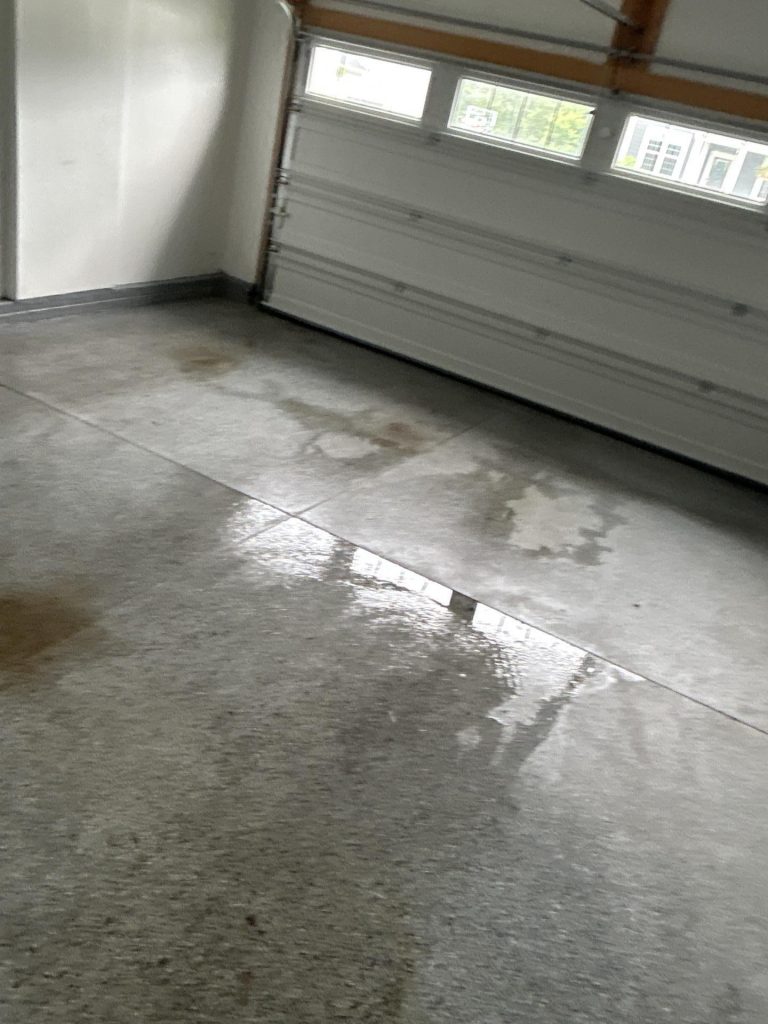
The Kellerman family had lived in their west Fort Wayne home for over twenty years without a basement flood. In late February of a recent year, that streak ended. After nearly three weeks of sub-freezing temperatures, a warm front pushed in overnight and temperatures rose from 24 degrees to 55 degrees in under 18 hours. The family woke up to a basement that was already taking on water through the base of a door that opened to a below-grade stairwell.
By the time they called for help, six inches of water covered their utility area, laundry room, and a storage space containing decades of family keepsakes. The damage included a ruined water softener, a flooded furnace that had to be replaced, destroyed drywall, and soaked insulation that had to be completely removed to prevent mold.
What made the situation worse was that Mr. Kellerman waited a full day before calling a restoration company, believing he could handle it himself with his shop vacuum. By the time professionals arrived, mold was already beginning to develop behind the drywall. The total restoration cost exceeded $14,000.
The painful lesson here is that in water damage scenarios, every hour matters. What a professional team can mitigate in the first 12 hours becomes dramatically more expensive and complicated after 48 hours.
How Does Winter Thaw Create Flooding Conditions in Fort Wayne Homes?
Understanding the mechanics of snowmelt flooding helps you recognize what to watch for. The process typically unfolds in stages when temperatures rise suddenly.
In the first few hours, snow on rooftops, decks, and driveways begins melting. This water flows into gutters and onto paved surfaces. If gutters are clogged or frozen, water overflows and drains directly alongside your foundation.
As temperatures continue rising, snowpack in yards, landscaping beds, and against fence lines begins releasing water. The frozen ground beneath the surface acts as an impermeable barrier, forcing all this water to run laterally across the surface.
The water accumulates against the lowest points of your yard and against your home’s foundation. In Fort Wayne, where lots are often relatively flat, there is limited natural slope to redirect this water away from structures.
Hydrostatic pressure builds as saturated soil presses against basement walls. Water finds every crack, joint, and gap in the foundation. Sump pits fill rapidly, and pumps that are running at full capacity may still not keep up.
Within hours, what began as a manageable situation can become a full basement flood.
Which Fort Wayne Neighborhoods Face the Highest Snowmelt Risk?
Homes near the floodplain areas of the St. Marys, St. Joseph, and Maumee Rivers are at elevated risk. Neighborhoods in the Ardmore and Foster Park areas, parts of southeast Fort Wayne near the Maumee, and portions of the southwest side where drainage has historically been slow all face heightened exposure during major thaw events.
West Fort Wayne, which includes many homes with full basements built in the 1950s through 1980s, is particularly vulnerable because of the age of the foundations and drainage infrastructure in that corridor. Homes in this area often have minimal downspout extensions, older clay tile drain systems, and sump pumps that may be original to the home.
Situational and Conditional Questions Fort Wayne Homeowners Are Asking
What if I notice water seeping through my foundation wall during a thaw?
If you see water actively seeping through your foundation wall during a snowmelt event, this is a sign of significant hydrostatic pressure. Move contents away from the area immediately, place towels or a wet-dry vac to capture water, and call a water damage restoration professional. Do not attempt to seal an actively leaking crack with hydraulic cement unless the water flow is very minor. In most cases, the best first step is professional assessment.
If my basement has never flooded, should I still worry about snowmelt?
Yes. Snowmelt flooding often catches homeowners off guard precisely because it has not happened before. Conditions change over time. Trees that once absorbed excess water have been removed. Landscaping has settled. Foundation walls develop micro-cracks. Infrastructure ages. A heavy snow year followed by a fast thaw is a different scenario than the lighter winters your home may have survived before.
What if my sump pump is running constantly but water is still rising?
If your sump pump is running at full capacity but cannot keep up with incoming water, you are dealing with a volume of groundwater that exceeds your pump’s capacity. This can happen during major thaw events. Call a water damage restoration professional who can bring in additional water extraction equipment to help manage the situation.
Can snowmelt damage my foundation permanently?
Repeated freeze-thaw cycling and water intrusion can cause long-term damage to your foundation. Concrete that absorbs water and then freezes expands, causing spalling, cracking, and eventual structural compromise. A single major flooding event can accelerate this damage significantly. If you notice new cracks after a flooding event, have them evaluated by a structural engineer or foundation specialist.
How do I know if my crawl space has been affected by snowmelt?
Crawl spaces are often the last place homeowners look after a snowmelt event. Signs of crawl space water intrusion include standing water visible from the access hatch, visible wet soil, moisture on pipes and ductwork, white mineral deposits on block walls, and musty odors entering the living space from below. A flashlight inspection after every significant thaw is recommended.
How to Prepare Your Fort Wayne Home Before Winter Thaw Begins
The best time to prepare for snowmelt flooding is before winter ends and temperatures start rising. Start by inspecting and clearing your gutters and downspouts. In Fort Wayne, gutters frequently develop ice damage over winter, so look for joints that have separated or downspout extensions that have cracked.
Test your sump pump before February ends. You can do this by slowly pouring water into the sump pit and watching for the float to trigger the pump. If the pump does not engage, have it serviced immediately. Installing a battery backup system is especially important for Fort Wayne homes, as power outages during weather events are common.
Check the grading around your foundation. Soil should slope away from your home at a rate of approximately one inch per foot for at least the first six feet. If your yard has settled flat or toward the house, consider adding soil or mulch to improve drainage direction.
Clear any snow away from your foundation during heavy snow years. Piling snow against your foundation is a common habit but it creates a concentrated melt zone right where you least want it.
What to Do If Snowmelt Flooding Happens in Your Fort Wayne Home
If water enters your home during a snowmelt event, your first priority is safety. Do not enter a flooded area where electrical appliances, outlets, or panels may be in contact with water. Shut off power to the affected area if you can do so safely from a dry location.
Remove water as quickly as possible. Use a wet-dry vacuum, portable submersible pump, or mop and bucket to get water out. The faster you remove standing water, the less damage occurs to flooring, drywall, and stored items.
Photograph and document all damage immediately. Take photos and videos before you begin cleanup, and keep a written list of damaged items. This documentation is essential for insurance claims.
Call a professional restoration company immediately. Do not wait to see if things dry on their own. Water that cannot be seen can be detected with professional moisture meters, and hidden moisture leads to mold, structural damage, and air quality problems.
Frequently Asked Questions About Fort Wayne Snowmelt Flooding
How quickly does mold grow after a basement flood?
In the warm and damp conditions created by a basement flood, mold can begin growing within 24 to 48 hours. Mold thrives in temperatures between 60 and 80 degrees Fahrenheit, which are common basement temperatures in Fort Wayne homes. Quick professional drying is the most effective mold prevention strategy.
Does Fort Wayne have flood zone designations I should be aware of?
Yes. Allen County and the City of Fort Wayne have FEMA flood zone maps that designate certain areas as Special Flood Hazard Areas. If your home is in a designated flood zone, you may be required to carry flood insurance as a condition of your mortgage. Even if you are not in a designated flood zone, snowmelt flooding can occur outside of mapped areas.
What equipment does a water damage restoration company use?
Professional restoration teams use industrial dehumidifiers, air movers, thermal imaging cameras, and calibrated moisture meters to detect and eliminate moisture from building materials. This equipment is far more powerful than consumer-grade fans and dehumidifiers, and it is the only way to ensure walls, floors, and structural components are fully dried.
How long does water damage restoration take after snowmelt flooding?
The drying phase of water damage restoration typically takes three to five days for moderate cases. If flooring, drywall, or insulation has been significantly affected, demolition and rebuild may extend the timeline. Your restoration professional will provide a detailed estimate after assessing the damage.
If snowmelt has flooded your Fort Wayne home or if you want to get ahead of the risk this winter, PuroClean Disaster Restoration of West Fort Wayne is ready to help. Call (260) 263-9788 now for 24/7 emergency water damage restoration services. The team serves West Fort Wayne, Allen County, and surrounding communities with fast, professional response and complete restoration services. Do not let water damage sit. Call (260) 263-9788 today.
Conclusion
Fort Wayne’s geography, soil conditions, and weather patterns make snowmelt flooding a real and recurring risk for homeowners across Allen County. Understanding why it happens and how to prepare gives you the best chance of protecting your home. But when water damage does occur, the most important step you can take is to act fast and call professionals who know how to restore your home completely. PuroClean Disaster Restoration of West Fort Wayne is that team. Call (260) 263-9788 for immediate assistance.

 PuroClean Disaster Restoration of West Fort Wayne