 PuroClean Disaster Restoration of West Fort Wayne
 Serving Fort Wayne, Indiana and Surrounding Areas
| Key Takeaways for Homeowners Fort Wayne’s spring rainfall patterns and clay-heavy soil create persistent moisture conditions that accelerate mold growth.Allen County’s older housing stock features construction vulnerabilities that allow post-rain water intrusion into crawl spaces and basements.IICRC S520-certified mold remediation uses negative air pressure, HEPA filtration, and antimicrobial biocide treatment to safely eliminate mold.Mycotoxin exposure from indoor mold is a measurable health threat, particularly for children and older adults.Acting within 24 to 48 hours of water intrusion dramatically reduces remediation scope and cost.PuroClean Disaster Restoration of West Fort Wayne is available 24/7. Call (260) 263-9788 for immediate mold response. |
Fort Wayne, Indiana is no stranger to spring rainfall. Positioned at the confluence of the St. Marys, St. Joseph, and Maumee Rivers, this city sees significant seasonal precipitation each spring that saturates the region’s clay-dense soil and creates hydrostatic pressure against home foundations. For property owners throughout Allen County, the weeks following spring rains are when mold risk reaches its annual peak.
Mold is classified and remediated under the IICRC S520 Standard for Professional Mold Remediation, the governing document that defines professional-grade assessment, containment, and removal protocols. When moisture mapping reveals elevated readings in a Fort Wayne crawl space, basement, or wall cavity following spring rains, the clock starts immediately. Mold colonization begins within 24 to 48 hours on wet organic materials like wood framing, drywall, and cellulose insulation.
Here are 10 costly mold problems that Fort Wayne property owners trigger when they ignore moisture intrusion after spring storms.
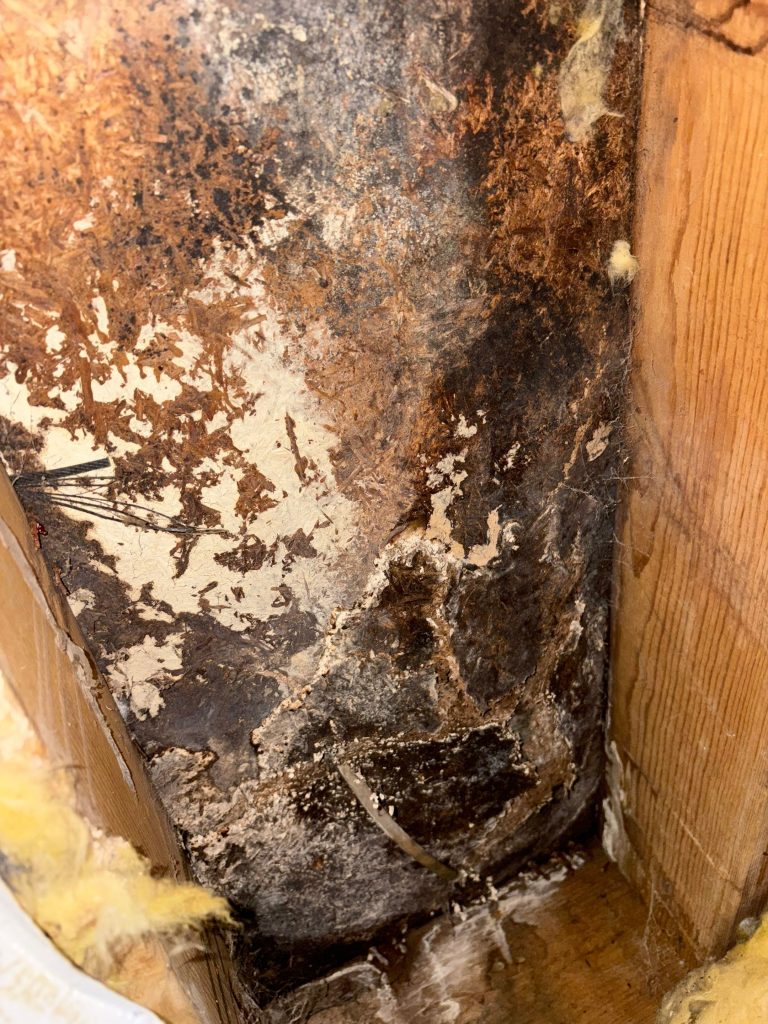
1. Foundation Moisture Intrusion and Mold Colonization
Fort Wayne’s high clay soil content causes significant water retention after rain events. Clay expands when saturated and contracts when dry, creating a pumping effect that drives ground moisture against basement walls and crawl space foundations. This hydrostatic pressure forces water through foundation cracks and porous block construction common in pre-1970 Allen County homes.
IICRC S500 protocols define this as Category 1 or Category 2 water intrusion depending on the contamination source, and they require systematic drying using psychrometrics-guided dehumidification equipment before any mold remediation work can begin. Ignoring foundation moisture guarantees mold.
2. Crawl Space Mold Destroying Floor Joists
Crawl spaces in Fort Wayne homes are among the most common sites of post-rain mold growth. Without proper encapsulation and vapor barriers, ground moisture evaporates upward into the crawl space atmosphere, raising relative humidity above 60%, which is the threshold at which mold growth accelerates dramatically on wood surfaces.
Floor joists and subfloor decking in affected crawl spaces develop surface mold within days and structural fungal decay within months. Antimicrobial biocide treatment following IICRC S520 protocols eliminates existing mold, but the underlying moisture problem must also be resolved to prevent recurrence.
3. Mycotoxin Accumulation in Living Spaces
As mold colonies grow in crawl spaces, basements, and wall cavities, they release mycotoxins that migrate into living areas through air pressure differentials. Fort Wayne homes with negative stack effect, where outdoor air is drawn upward through crawl spaces into living areas, are particularly vulnerable to this mycotoxin infiltration pathway.
Mycotoxin exposure is linked to chronic fatigue, cognitive impairment, immune dysregulation, and in severe cases, pulmonary damage. HEPA filtration during professional remediation captures airborne spores and mycotoxin-bearing particulates to protect both occupants and remediation technicians.
4. Attic Mold from Roof Leaks and Poor Ventilation
Spring storms in Fort Wayne frequently include high winds that damage roofing materials, create gaps in flashing, and dislodge vents. Water infiltration through these openings saturates attic insulation and roof decking, creating prime mold growth conditions in areas of the home that homeowners rarely inspect.
Attic mold is particularly insidious because it grows slowly and silently, often spreading across dozens of square feet of roof decking before any symptoms are noticed. By the time staining appears on ceiling drywall below, significant structural damage has already occurred. Regular post-storm attic inspection is a practice endorsed by IICRC-certified restoration professionals.
5. HVAC Contamination and Whole-Home Spore Distribution
Fort Wayne homes with central forced-air systems face a unique mold risk: HVAC return ducts draw air from the basement or crawl space and distribute it throughout the entire home. When mold colonizes in lower-level spaces, spores enter the duct system and are deposited in every room. This cross-contamination is addressed in IICRC S520 remediation plans through duct cleaning, HEPA air scrubbing, and negative air pressure containment.
Psychrometric analysis of HVAC airflow patterns is an essential diagnostic step in remediation planning for Fort Wayne’s older housing stock, where duct systems often lack proper sealing.
6. Irreversible Damage to Personal Property and Contents
Flooding or moisture intrusion after spring rains affects not only structures but also the contents stored within them. Furniture, clothing, documents, electronics, and family heirlooms stored in basements or on ground-level floors are frequently damaged by mold within days of a moisture event. IICRC S520 content remediation protocols address salvageable items through specialized cleaning, but highly porous materials like upholstered furniture and paper items are often determined to be total losses after mold colonization.
7. Declining Indoor Air Quality Triggering Chronic Health Problems
The World Health Organization’s 2009 guidelines on indoor air quality specifically identify mold as a significant determinant of respiratory health. Fort Wayne residents in mold-affected homes frequently report increased asthma exacerbations, chronic rhinosinusitis, persistent headaches, and upper respiratory infections. These symptoms are often misattributed to seasonal allergies during spring months, delaying identification of the true mold source.
Air quality testing with spore trap sampling, a process conducted by IICRC-certified industrial hygienists, identifies mold species present in indoor air and quantifies exposure levels relative to outdoor baseline counts.
8. Significant Reduction in Property Resale Value
Indiana’s residential real estate disclosure statutes require sellers to disclose known mold conditions. A mold history on a disclosure form creates buyer hesitation and often triggers lender-required remediation before financing is approved. Fort Wayne area real estate professionals report that undisclosed or inadequately remediated mold is among the most common reasons real estate transactions fall apart during inspection periods.
Professional IICRC S520-compliant remediation with independent post-remediation clearance testing creates the documentation that protects property value and satisfies lender requirements.
9. Legal Exposure for Landlords and Property Managers
Allen County rental property owners face statutory obligations under Indiana Code regarding habitability. Mold that poses a health risk to tenants constitutes a habitability violation, and landlords who fail to remediate within reasonable timeframes face rent escrow actions, lease termination rights for tenants, and civil damages lawsuits. The cost of a single mold-related tenant lawsuit typically exceeds the cost of immediate professional remediation by a significant margin.
10. Insurance Claim Complications from Delayed Action
Indiana homeowner insurance policies routinely include timely reporting requirements for water damage and mold. When mold growth is extensive at the time of an insurance inspection, adjusters frequently argue that the homeowner failed to mitigate promptly, providing grounds for partial or complete claim denial. Rapid professional response following spring rain events, including same-day moisture mapping documentation, establishes the timeline that protects insurance claims.
How PuroClean Disaster Restoration of West Fort Wayne Protects Your Property
Our IICRC S520-certified team responds rapidly throughout Fort Wayne and Allen County with a comprehensive mold response protocol:
- Step 1: Emergency inspection within 60 minutes using advanced moisture mapping tools including thermal imaging cameras and pin-type moisture meters
- Step 2: Containment using negative air pressure systems with HEPA-filtered air scrubbers to prevent spore migration
- Step 3: Source removal of mold-contaminated materials following IICRC S520 protocols
- Step 4: Antimicrobial biocide application across all affected surfaces
- Step 5: Psychrometrics-guided structural drying using commercial-grade dehumidifiers and air movers
- Step 6: Post-remediation clearance testing by an independent industrial hygienist
- Step 7: Full documentation package supporting insurance claims and future property transactions
| Fort Wayne and Allen County homeowners: do not let spring rain mold become a costly crisis. Call PuroClean Disaster Restoration of West Fort Wayne at (260) 263-9788 right now. Our certified team is available 24 hours a day, 7 days a week. |
Frequently Asked Questions About Mold in Fort Wayne, Indiana
Does home insurance cover mold caused by high humidity in Fort Wayne?
Generally, no. Indiana homeowner insurance policies distinguish between mold caused by a sudden, covered water event (such as a burst pipe or storm intrusion) and mold caused by ongoing high humidity or condensation, which is classified as a maintenance issue. Coverage for mold associated with storm water intrusion depends on whether the water damage itself was a covered loss, and whether the homeowner reported and mitigated the loss promptly. Consulting with your insurance adjuster immediately after any spring rain event is strongly recommended.
How does Fort Wayne’s clay soil affect mold risk compared to other Indiana cities?
Fort Wayne sits atop one of Indiana’s most clay-dense soil zones. Unlike sandy soils that drain water quickly, clay retains moisture for extended periods after rainfall, maintaining elevated ground moisture levels that create ongoing hydrostatic pressure against foundations. This means Fort Wayne homeowners face a longer window of post-rain mold risk than residents of sandier regions like Dune Country or the Kankakee lowlands.
What are the signs of mold in a Fort Wayne home after spring rains?
Common indicators include musty or earthy odors in basements, crawl spaces, or lower-level rooms; visible discoloration on drywall, wood surfaces, or insulation; increased allergy and respiratory symptoms in household members; condensation on windows and interior walls; and elevated humidity readings above 60% measured with a hygrometer. Any of these signs warrants immediate professional inspection.
How long does professional mold remediation take in a Fort Wayne home?
Remediation timelines depend on the scope of mold growth and structural damage. Small contained areas may be remediated in one to two days. Larger projects involving structural material removal, crawl space remediation, or HVAC decontamination may require three to seven days of active work, followed by drying time and independent clearance testing. PuroClean technicians provide detailed scope estimates during the initial assessment.
Are Fort Wayne building codes adequate to prevent mold after spring rains?
Indiana’s current residential building code, adopted from the International Residential Code, includes moisture barrier requirements for new construction that significantly reduce mold risk. However, a large portion of Fort Wayne’s housing stock predates these requirements, and older homes often lack modern crawl space encapsulation, drainage plane systems, and ventilation standards. Retrofitting these systems, combined with rapid post-rain professional response, is the most effective long-term mold prevention strategy.
| PuroClean Disaster Restoration of West Fort Wayne | Fort Wayne, Indiana | Call Now: (260) 263-9788 | Available 24/7 | IICRC Certified |



 PuroClean Disaster Restoration of West Fort Wayne