 PuroClean Disaster Restoration of West Fort Wayne
 Key Takeaways for Homeowners
- Fort Wayne’s location along the St. Joseph, St. Marys, and Maumee Rivers creates elevated spring flood risk, particularly in neighborhoods near the river confluence.
- Allen County’s freeze-thaw cycles and aging housing stock, much of it built before modern flood-resistant standards, accelerate foundation damage and moisture intrusion.
- Category 3 floodwater carries pathogens, chemicals, and agricultural runoff from upstream farmland.
- PuroClean Disaster Restoration of West Fort Wayne delivers 24/7 emergency response, moisture mapping, and certified structural drying. Call (260) 263-9788 immediately.
Why Is Fort Wayne Particularly Vulnerable to Spring Flood Damage?
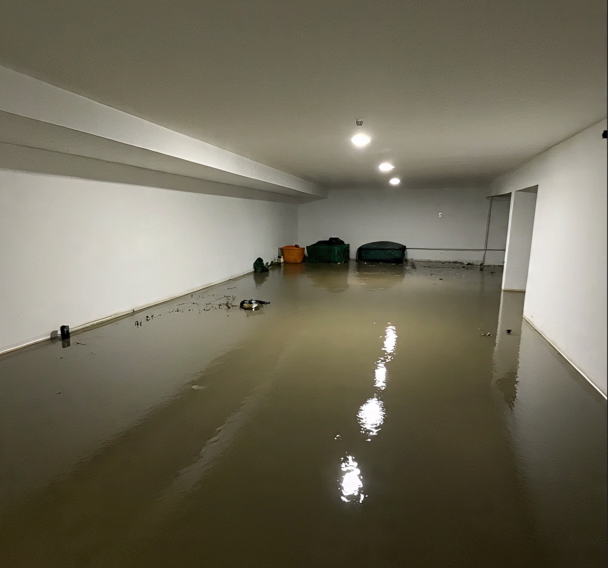
Fort Wayne sits at the confluence of the St. Joseph, St. Marys, and Maumee Rivers, making it one of Indiana’s most hydrologically active urban areas. When spring snowmelt combines with heavy rainfall across northern Indiana and northwest Ohio, river levels rise rapidly, overwhelming stormwater infrastructure and backing up into basements and crawl spaces across Allen County.
The local housing stock amplifies this vulnerability. Many Fort Wayne neighborhoods, including West Central, Southwood Park, and areas near the historic Fort Wayne riverfront, feature homes built between 1920 and 1970 with brick, limestone, or block foundations that lack modern waterproofing membranes. Indiana’s severe weathering classification and freeze-thaw cycles cause mortar deterioration and foundation cracking, creating entry points for hydrostatic pressure-driven water.
Spring 2026 flood outlooks indicate near-normal risk for the Maumee River basin, with isolated moderate flooding possible. Above-normal precipitation through May remains the primary driver. Fort Wayne residents must act fast when water enters their homes.
Action 1: Secure Safety and Stop the Water Source
What Immediate Hazards Exist in a Flooded Fort Wayne Home?
Before entering any flooded space:
- Disconnect electrical power at the main breaker if safely accessible; otherwise, call an electrician
- Shut off natural gas lines to prevent combustion risks
- Identify the water source: river overflow, sewer backup, sump pump failure, or foundation seepage
- Wear rubber boots, nitrile gloves, and respiratory protection
Fort Wayne’s combined sewer system, particularly in older neighborhoods, can back up during heavy rain events, delivering raw sewage into basements. This is definitive Category 3 water under IICRC S500 standards and requires professional handling.
Action 2: Call a Certified Restoration Company for Emergency Water Extraction
Why Is Professional Extraction Critical Within the First 24 Hours?
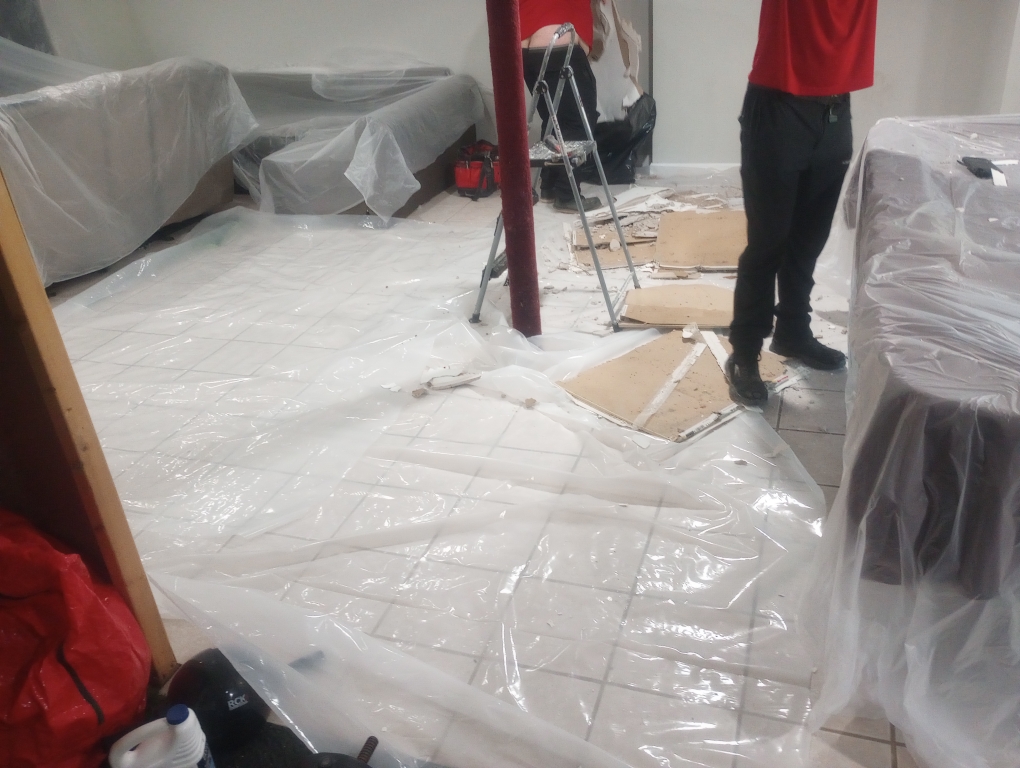
The IICRC S500 standard establishes that water damage restoration success depends on speed. Every hour of delay allows moisture to migrate deeper into structural materials. Professional extraction equipment includes:
- Truck-mounted pumps removing thousands of gallons per hour
- Weighted extraction tools for saturated carpet and pad
- Specialized wands for hardwood and tile surfaces
- HEPA-contained systems for Category 3 water
PuroClean Disaster Restoration of West Fort Wayne maintains 24/7 emergency response capability. Our IICRC-certified technicians arrive with commercial extraction equipment, moisture detection tools, and antimicrobial supplies to halt damage progression immediately.
If you are in Fort Wayne, New Haven, Leo-Cedarville, or surrounding Allen County neighborhoods, call PuroClean Disaster Restoration of West Fort Wayne at (260) 263-9788 now.
Action 3: Remove Contaminated Materials and Begin Structural Drying
What Materials Must Be Discarded After Category 3 Flooding?
IICRC S500 mandates removal of porous materials contacted by Category 3 water:
- Carpet and carpet pad (cannot be sanitized)
- Drywall and insulation below the flood line
- Upholstered furniture and mattresses
- Pressed wood cabinetry and subflooring
- Any porous item that cannot be thoroughly cleaned and disinfected
Non-porous materials such as tile, sealed concrete, and metal framing can often be salvaged with antimicrobial biocide treatment and HEPA cleaning.
What Drying Equipment Addresses Fort Wayne’s Humid Climate?
Fort Wayne’s spring humidity, driven by the Great Lakes influence and river valley moisture, creates challenging drying conditions. Professional restoration requires:
- LGR dehumidifiers capable of achieving low specific humidity
- Axial air movers creating high-velocity airflow
- Desiccant dehumidifiers for dense materials and cool environments
- Continuous moisture monitoring with thermal imaging and probing meters
Psychrometric calculations determine the exact equipment configuration needed to achieve drying goals without over-drying or under-drying materials.
Action 4: Test for Mold and Establish Containment Protocols
How Fast Can Mold Grow After a Fort Wayne Basement Flood?
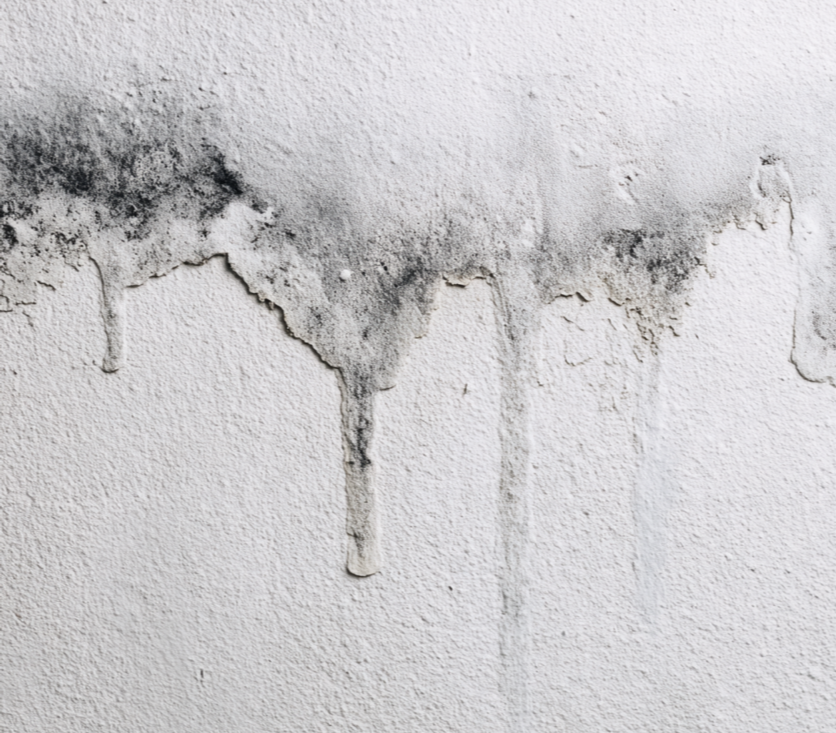
In Fort Wayne’s climate, mold colonization begins within 24 to 72 hours. Basements with minimal ventilation, common in mid-century homes throughout the 46804 and 46807 zip codes, provide ideal incubation environments. Mold species prevalent in northern Indiana include:
- Stachybotrys chartarum (black mold), associated with cellulose-rich wet materials
- Aspergillus and Penicillium species, common in damp HVAC systems
- Chaetomium, frequently found in water-damaged drywall
What Does Professional Mold Remediation Involve?
IICRC S520 protocols require:
- Containment barriers with 6-mil polyethylene sheeting
- Negative air pressure machines exhausting through HEPA filtration
- Personal protective equipment including respirators and full-body suits
- Physical removal of mold-contaminated materials
- HEPA vacuuming and damp wiping of all surfaces
- Post-remediation verification testing
Mycotoxins produced by certain mold species can cause neurological, respiratory, and immunological effects. DIY mold removal without containment and respiratory protection is hazardous and often spreads contamination.
Action 5: Restore, Rebuild, and Future-Proof Your Home
What Rebuilding Standards Apply to Flood-Damaged Fort Wayne Homes?
Under Indiana’s floodplain management regulations, substantial improvement of buildings in flood hazard areas must comply with ASCE 24 standards. Key requirements include:
- Elevation of the lowest floor above the base flood elevation
- Use of flood-resistant materials below the design flood elevation
- Anchoring of structures to resist flotation and lateral movement
- Protection of electrical, HVAC, and plumbing systems from flood damage
Fort Wayne’s Building Department enforces these standards through permit review and elevation certificate verification. If your home is in a designated floodway, reconstruction may require an Indiana Department of Natural Resources permit.
What Preventive Measures Protect Against Future Flooding?
- Install a battery-backed sump pump with water alarm
- Seal foundation cracks with epoxy injection
- Install backflow prevention valves on sewer lines
- Grade landscaping away from foundation walls
- Consider crawl space encapsulation with vapor barrier and dehumidification
FAQ:
Does Home Insurance Cover Mold Caused by High Humidity in Fort Wayne?
Most Indiana homeowners policies exclude mold damage resulting from humidity, condensation, or maintenance issues. However, mold that directly follows a covered water damage event, such as a burst pipe or wind-driven rain, may be covered up to your policy’s mold sublimit. The critical factor is documentation: prove you acted promptly to mitigate water damage by hiring certified professionals and maintaining drying logs. If mold develops weeks after a flood due to inadequate drying, insurers may deny the claim as secondary damage caused by negligence.
How Do Fort Wayne’s River Flood Plains Affect My Rebuilding Options?
If your property is in a FEMA-designated Special Flood Hazard Area (SFHA), rebuilding after substantial damage requires compliance with local floodplain ordinances. Fort Wayne participates in the National Flood Insurance Program, which mandates that substantially improved structures meet base flood elevation requirements. This may require lifting your home, relocating utilities, or using flood-resistant materials. Failure to comply can result in denial of future flood insurance and municipal penalties.
Is Basement Waterproofing Worth the Investment in Fort Wayne?
Absolutely. Given Fort Wayne’s river basin geography, high water table, and aging infrastructure, basement waterproofing is among the highest-ROI home improvements. Exterior waterproofing with membrane and drainage board, interior French drains with sump pump systems, and crawl space encapsulation collectively reduce flood risk and improve indoor air quality. Homes with documented waterproofing may also qualify for reduced flood insurance premiums.
What Is the Difference Between Water Damage and Flood Damage for Insurance in Indiana?
Insurance distinguishes between water damage (sudden and accidental internal water release, such as a burst pipe) and flood damage (external water entering from the ground up, such as river overflow or heavy rain saturation). Standard homeowners policies cover water damage but exclude flood damage. Fort Wayne residents in SFHAs should carry NFIP flood insurance or private flood coverage. Note that sewer backups, common in Fort Wayne’s older neighborhoods, require a separate sewer backup endorsement.
Why PuroClean Disaster Restoration of West Fort Wayne Is Your Local Authority
PuroClean Disaster Restoration of West Fort Wayne understands the unique flood risks facing Allen County homeowners. From riverfront properties in the 46805 zip code to mid-century ranch homes in Aboite Township, our IICRC-certified technicians bring local expertise, commercial-grade equipment, and rapid emergency response.
If spring flood water has entered your Fort Wayne, New Haven, or Allen County home, do not wait. Call PuroClean Disaster Restoration of West Fort Wayne at (260) 263-9788 for immediate 24/7 emergency water extraction, structural drying, and mold prevention.
 PuroClean Disaster Restoration of West Fort Wayne