


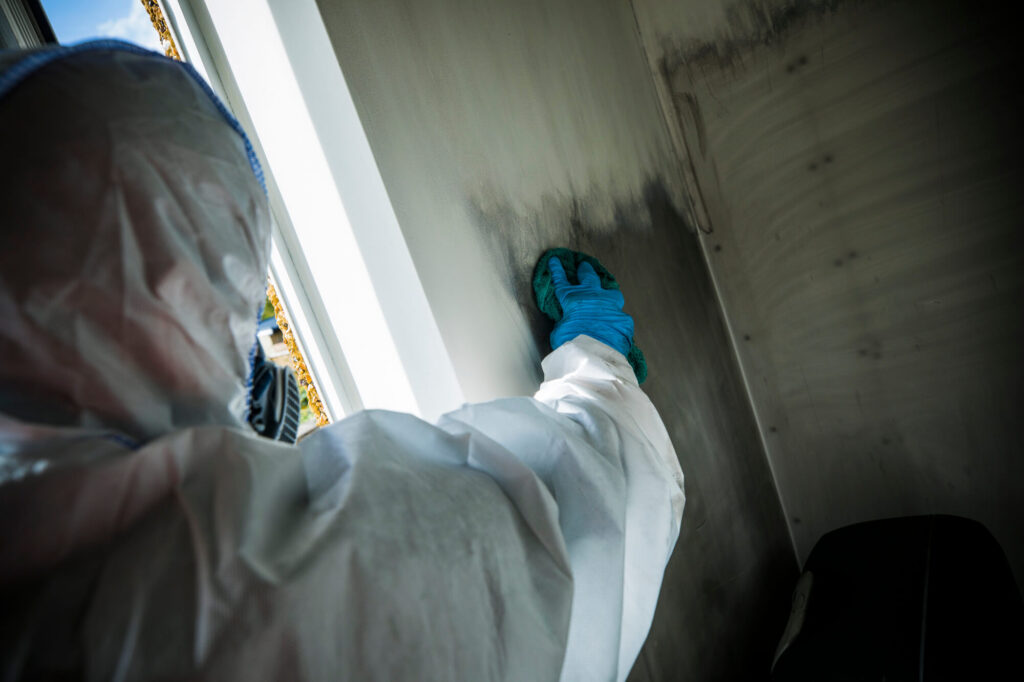
A kitchen stove fire or minor grease flare-up is one of the most sudden, frightening, and disruptive property emergencies a homeowner in Stonecrest, GA can experience. Even when the initial flames are extinguished within minutes using a fire extinguisher, baking soda, or a damp towel, and physical structural damage appears localized strictly to the stovetop or range hood, the true extent of property destruction is usually far more complex.
Cooking fires produce specialized, highly aggressive combustion byproducts specifically protein soot and aerosolized grease residue, that quietly blanket interior surfaces, seep deep into porous building materials, and saturate the entire home environment with an intense, long-lasting, and pungent odor.
Unlike heavy wood, paper, or structural fires that leave thick black ash, heavy carbon webs, and obvious charring, kitchen grease fires create nearly invisible, sticky residues. For property owners across DeKalb County, attempting to clean up after a stove fire without specialized restoration knowledge and professional-grade chemical agents frequently turns a manageable, minor insurance claim into a severe, expensive, and long-term property nightmare.
Understanding the precise physical behavior and chemical structure of protein fire soot is essential for protecting your property’s structural integrity, indoor health environment, and overall market value. This comprehensive guide details why protein smoke presents such a unique restoration challenge, why traditional household cleaning methods fail so dramatically, and how certified professional restoration restores your kitchen safely and permanently.
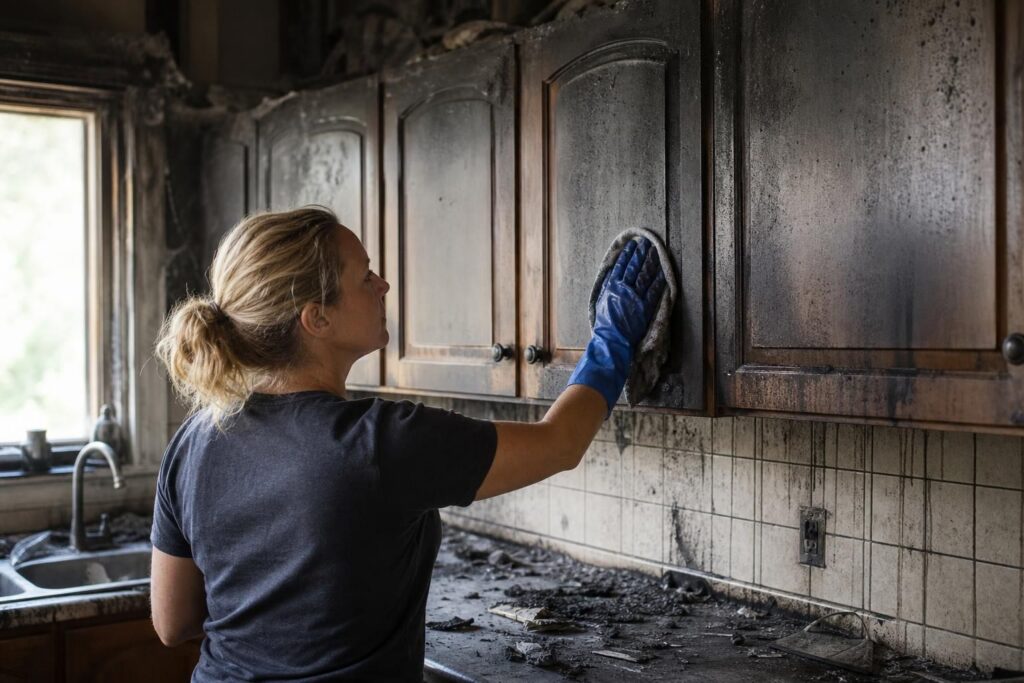
2. The Invisible Threat: Why Protein Fire Soot is Uniquely Dangerous
In the professional fire damage restoration industry, soot residues are strictly classified by their original fuel source and combustion temperature. Protein fires occur specifically when animal fats, cooking oils, poultry, meat, fish, or butter burn at high temperatures. As these organic proteins and lipids evaporate under intense thermal pressure, they condense into ultra-fine, yellowish-to-amber oily films that settle across every accessible surface throughout the property.
Chemical & Physical Characteristics of Protein Soot Residue
Recognizing the unique physical properties of protein smoke explains why conventional janitorial cleaning techniques fail to remediate the damage:
- Nearly Invisible Appearance: Protein residue forms a clear-to-amber varnish rather than heavy carbon black soot. Homeowners often misjudge the total boundary of contamination until severe wall staining, yellowing, or foul odors develop several days later.
- Extreme Odor Pungency: As burned organic proteins decay at a microscopic level, they release volatile organic compounds (VOCs) that produce a highly concentrated, sickening odor that permeates drywall, insulation, subflooring, and soft textiles.
- Pervasive Particle Penetration: Because protein smoke particles are microscopic (ranging from 0.1 to 4 microns in size), warm thermal air currents carry them into closed cabinetry, behind baseboards, into electrical outlets, inside light fixtures, and through central HVAC ductwork.
- Corrosive Varnish Effect: Over time, protein soot hardens into a dense film that chemically etches into wall paint, enamel finishes, stainless steel, granite, quartz countertops, and cabinet lacquers, causing permanent discoloration and corrosion.
Read Also: Beyond the Flames: The Medical Risks of Soot and How to Clean It – PuroClean of Melbourne
Because protein soot is grease-based and nearly transparent, it behaves unlike any other type of fire byproduct. It forms a tenacious chemical bond with synthetic wood finishes, painted plaster, drywalls, and metal hardware. Removing it requires specialized chemical emulsification agents designed to break the lipid bonds without damaging the underlying surface.
3. Why DIY Cleaning and Regular Household Cleaners Backfire
When faced with the sticky, unpleasant film left behind by a kitchen grease fire, the immediate reaction of most homeowners is to grab household degreasers, bleach, dish soap, or all-purpose surface sprays. Unfortunately, DIY scrubbing almost universally exacerbates the physical destruction and significantly increases final restoration costs.
The Mechanics of Smearing Protein Residue
Water-based household cleaners and standard sponges dissolve surface grease just enough to liquefy the oily soot, smearing it deeper into the microscopic pores of painted drywall, wooden cabinetry, and tile grout. Once forced deep into porous building materials, the contaminated grease becomes permanently locked inside, making extraction far more difficult and permanently trapping foul odors within the structural wallboard.
| ⚠️ Major Risks of DIY Kitchen Fire Cleanup Attempts: • Dry Rubbing & Scouring: Abrades protective cabinet coats and drives fine particulate matter directly into natural wood grains. • Wet Sponge Cleaning: Dissolves and drives liquid oils deep into wall paint, wallpaper, and porous cabinet veneers, creating permanent brown halos. • Standard Vacuuming: Using household or shop vacuums without HEPA filtration blows micro-particles of toxic soot directly back into the indoor air, contaminating HVAC ductwork and unattached rooms. |
4. Advanced Odor Neutralization: Thermal Fogging & Hydroxyl Generators
Simply masking grease smoke odors with conventional air fresheners, ozone sprays, or scented candles is completely ineffective because odor-causing molecules are deeply embedded within structural wall cavities, framing, and subfloors. PuroClean employs advanced, science-based odor neutralization technologies specifically designed to dismantle smoke molecules at the molecular level.
| Technology | Mechanism of Action | Key Benefit for Kitchen Fires |
| Thermal Fogging | Heats solvent-based deodorizers into micro-droplets that match the exact physical particle size of smoke. | Penetrates deep into wall cavities, wood grains, and subflooring just as the original smoke did. |
| Hydroxyl Generators | Uses UV optics to convert atmospheric moisture into hydroxyl radicals (·OH) that break down organic odor molecules. | Safe for occupied spaces, electronics, and delicate materials while continuously purifying indoor air. |
Thermal foggers recreate the exact thermal pressure conditions present during the original fire. By atomizing specialized neutralizing agents into micron-sized fog, the treatment follows the identical pathway that the smoke took during the blaze, neutralizing embedded odor compounds trapped inside walls, ceiling joints, and subfloors.
5. Content Restoration vs. Structural Rebuilding: Saving Cabinets and Appliances
Following a kitchen fire in Stonecrest, GA, homeowners often assume they must completely gut their kitchen, replace expensive custom cabinetry, and throw away high-end appliances. Certified fire damage restoration prioritizes ‘Restore First’ principles whenever structurally viable, saving homeowners and insurance companies thousands of dollars in unnecessary reconstruction.
Restoring Cabinets, Countertops, and Appliances
Using specialized dry-chemical sponges, ultrasonic cleaning tanks, and proprietary alkaline degreasing agents, professional restoration technicians remove protein film without breaking down delicate wood lacquers or cabinet stains. Stainless steel appliances, marble, tile, and quartz countertops contaminated by smoke film can be successfully restored to pre-loss condition if mitigated promptly before acidic chemical etching takes place.
When Structural Replacement is Necessary
If heat levels were high enough to cause charring, wood delamination, or severe drywall degradation, structural replacement becomes unavoidable. PuroClean provides clear, line-item assessments so your insurance carrier understands exactly which items can be safely restored and which require replacement.
6. Comprehensive Step-by-Step Restoration Protocol
To ensure complete structural decontamination, certified restoration experts adhere to a strict, multi-stage protocol designed specifically for protein soot and grease smoke emergencies:
- Phase 1: Immediate Safety & Property Inspection: Technicians evaluate structural stability, electrical wiring safety, and the total geographic spread of protein soot throughout the property.
- Phase 2: Containment & Environmental Controls: Heavy-duty plastic containment zones and negative air pressure machines with HEPA filtration are installed to isolate the kitchen, preventing cross-contamination to clean bedrooms or living areas.
- Phase 3: Specialized Dry & Wet Surface Decontamination: Technicians utilize dry chemical sponges to lift loose particulates without liquid smearing, followed by targeted enzymatic degreasers formulated specifically for cooked lipids.
- Phase 4: HVAC & Ductwork Purification: Heating and air conditioning systems are thoroughly cleaned and sanitized to prevent re-circulating trapped smoke particulates upon restart.
- Phase 5: Molecular Odor Elimination & Sealing: Thermal fogging or hydroxyl treatment eliminates residual odors, followed by the application of specialized odor-sealing primers on exposed framing or drywall prior to repainting.
7. PuroClean’s 24/7 Immediate Fire Mitigation Team in Action
When you contact PuroClean after a kitchen grease fire in DeKalb County, our certified technicians execute a rapid, systematic mitigation response:
- 1. Emergency Assessment & Containment: We inspect the loss site, seal off contaminated kitchen zones using plastic containment barriers, and establish negative air pressure to prevent smoke odor migration.
- 2. Dry Chemical Sponge & Enzymatic Cleaning: Using specialized dry chemical sponges and enzymatic solutions, we lift and trap protein films without water-based smearing.
- 3. HVAC System & Air Duct Sanitization: We clean and sanitize heating and air conditioning ductwork to eliminate trapped smoke particulates before turning systems back on.
- 4. Molecular Odor Elimination: We deploy thermal foggers and hydroxyl generators to eliminate remaining VOCs and embedded protein odors.
- 5. Direct Insurance Claims Coordination: We compile detailed Xactimate line-item estimates and submit photo documentation directly to your insurance adjuster.
8. Conclusion: Immediate Action Prevents Permanent Damage
A kitchen stove fire is a highly stressful event, but acting quickly with certified fire restoration professionals protects your home’s structural value, indoor air quality, and family health. Do not let invisible protein soot and grease smoke permanently stain your cabinets, destroy your walls, or ruin your home atmosphere.
Call PuroClean of Stonecrest 24/7 for Immediate Kitchen Fire & Smoke Restoration

If you have experienced a kitchen fire in Stonecrest, GA or surrounding DeKalb County areas, call our 24/7 emergency response team today for immediate, certified smoke odor and protein soot restoration.