


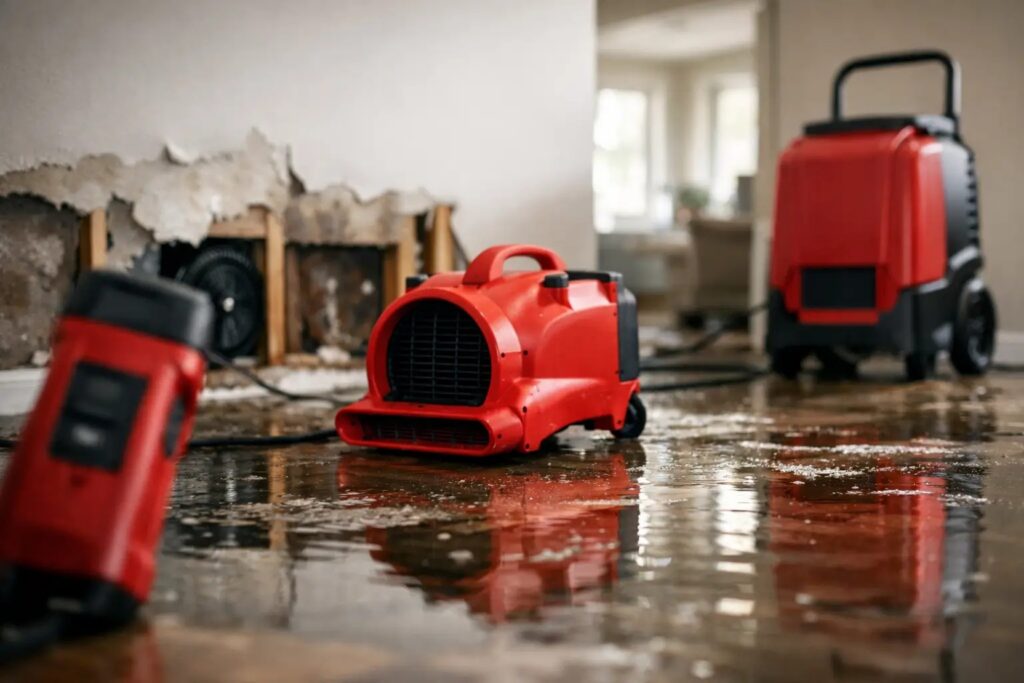
When water gets into your home or business, the clock starts immediately. One of the first questions people ask is, how long does water damage restoration take? The honest answer is that some jobs are resolved in a few days, while others take several weeks, depending on how much water is involved, how far it spread, and how quickly mitigation begins.
For most properties, the emergency mitigation and drying phase takes about 3 to 7 days. If materials need to be removed, contamination is involved, or structural repairs are required afterward, the full restoration timeline can stretch to 1 to 6 weeks or more. What matters most in the first few hours is not guessing the timeline – it is getting trained professionals on site to stop the damage from getting worse.
How long does water damage restoration take in a typical case?
A typical clean-water loss from a broken supply line, appliance leak, or overflow that is caught early often moves faster than people expect. Water extraction can usually begin right away. Once standing water is removed, professional drying equipment is set up, moisture readings are taken, and technicians monitor the affected areas daily.
In a straightforward case, extraction may be completed the same day, and drying may take 3 to 5 days. Minor repairs such as replacing baseboards, repainting, or installing a small section of drywall can add a few more days. In that kind of scenario, a property may be largely back to normal within a week or two.
But not every loss is straightforward. If water has been sitting unnoticed behind walls, under floors, or above ceilings, the timeline changes. The visible damage may look limited, while the hidden moisture is much more widespread.
The main factors that affect restoration time
The biggest variable is how much water entered the property and how long it stayed there. A small bathroom overflow discovered within minutes is very different from stormwater intrusion that soaked multiple rooms overnight. The more saturation there is, the longer the drying process tends to take.
The type of water also matters. Clean water from a supply line is generally simpler to address than gray water from appliances or black water from sewage backups or floodwater. Contaminated water losses require extra safety precautions, more extensive cleaning, and sometimes disposal of porous materials, which adds time.
The affected materials play a major role too. Hardwood flooring, insulation, drywall, carpet padding, cabinetry, and subfloors all respond to water differently. Some materials can be dried and saved. Others lose integrity quickly and have to be removed so the structure underneath can dry properly.
Weather and local conditions can also influence the schedule. In Chesapeake and the broader Hampton Roads area, high humidity, coastal storms, and tidal flooding can slow drying and increase the risk of microbial growth if mitigation is delayed. That is one reason fast response is so important in this region.
What the water damage restoration timeline usually looks like
The process often begins with emergency response and inspection. Technicians identify the source of the water, stop active intrusion if possible, assess the extent of damage, and classify the loss. Moisture meters, thermal imaging, and detailed documentation help determine what is wet, what can be saved, and what needs immediate attention.
The next step is water extraction. If there is standing water, this is usually handled first and as quickly as possible. Removing bulk water early can significantly reduce damage to floors, walls, contents, and structural components.
After extraction comes controlled drying and dehumidification. This phase is often the longest part of the mitigation process, even when the property no longer looks wet. Air movers and dehumidifiers are placed strategically, and technicians return to monitor moisture levels until the structure reaches acceptable drying goals.
Then comes cleaning, sanitation, and odor treatment if needed. This is especially important after gray water, sewage backups, or flood events. Finally, once the affected structure is dry and safe, repairs or reconstruction can begin.
Day 1: Emergency mitigation
On the first day, the priority is stabilization. That may include shutting off the water source, extracting standing water, moving affected contents, removing unsalvageable materials, and setting drying equipment. Documentation for insurance is also often started at this stage.
Days 2 to 5: Drying and monitoring
This period is focused on moisture control. Technicians check readings, adjust equipment, and watch for areas that are drying too slowly. If hidden moisture is discovered, parts of walls, flooring, or ceilings may need to be opened up, which can extend the timeline.
Days 5 to 14: Cleaning and minor repairs
If the drying goals are met quickly and damage is limited, cleaning and small repairs may begin soon after. Depending on the materials involved, this might include drywall replacement, flooring repairs, painting, or reinstalling trim.
Several weeks: Major reconstruction
If cabinets, flooring systems, insulation, multiple rooms, or structural elements were affected, the repair phase can take much longer. Ordering materials, coordinating trades, and completing rebuild work often adds weeks beyond the initial mitigation period.
Why some jobs take longer than expected
One common reason is hidden moisture. Water travels. It can move through wall cavities, soak under tile, wick into drywall, or spread beneath luxury vinyl planks and wood floors. A room that appears mostly dry can still have moisture trapped where it cannot be seen without proper tools.
Another reason is delayed response. When water is allowed to sit for 24 to 48 hours or longer, materials absorb more deeply, swelling worsens, odors increase, and mold growth becomes more likely. What could have been a shorter mitigation job can become a more complex remediation project.
Insurance and repair approvals can also influence the overall timeline. Mitigation should begin quickly to prevent further damage, but larger repairs may depend on scope reviews, adjuster coordination, or decisions about what to replace versus what to restore.
How long does water damage restoration take after a flood or sewage backup?
Flooding and sewage-related losses usually take longer than clean-water events. That is because the issue is no longer just drying – it is also decontamination. Porous materials such as carpet pad, drywall, insulation, and some contents may need to be removed and disposed of if they have been exposed to contaminated water.
These jobs typically involve more personal protective equipment, more controlled demolition, more extensive cleaning, and sometimes antimicrobial treatment. Depending on the size of the loss, the mitigation phase alone may run 5 to 10 days, with repairs taking several additional weeks.
This is especially relevant in coastal communities where storm surge, tidal flooding, and heavy rain can bring outside water into buildings quickly. In those cases, safety and sanitation shape the schedule as much as drying time does.
What you can do to help the process move faster
The best way to shorten the timeline is to act immediately. If it is safe, stop the water source, turn off electricity in affected areas if needed, and move valuable items out of harm’s way. After that, professional assessment should happen as soon as possible.
Avoid assuming the area will dry on its own. Household fans and open windows may help a little, but they are not a substitute for commercial extraction, dehumidification, and moisture mapping. Surface dryness can be misleading, and missed moisture can lead to bigger repairs later.
Clear communication also helps. If you know when the water started, where it came from, or which rooms were affected first, share that with the restoration team. Good information early can speed up decisions about containment, demolition, drying strategy, and documentation.
The real answer: fast action shortens the timeline
So, how long does water damage restoration take? In many cases, the immediate mitigation and drying work takes less than a week, while full repairs may take one to several weeks depending on the severity of the loss. The timeline is shaped by water category, material type, contamination, hidden moisture, weather, and how quickly help arrives.
The good news is that a prompt, professional response can make a meaningful difference. When the damage is addressed early, more materials can often be saved, drying is more controlled, and the path back to normal is usually shorter and less stressful. For property owners in Chesapeake and across Hampton Roads, that kind of urgency matters. PuroClean of South Chesapeake approaches water losses with both technical precision and the kind of clear, steady guidance people need when their property and routine have been suddenly disrupted.
If you are facing water damage right now, the timeline starts with the next step you take.