 PuroClean Emergency Restoration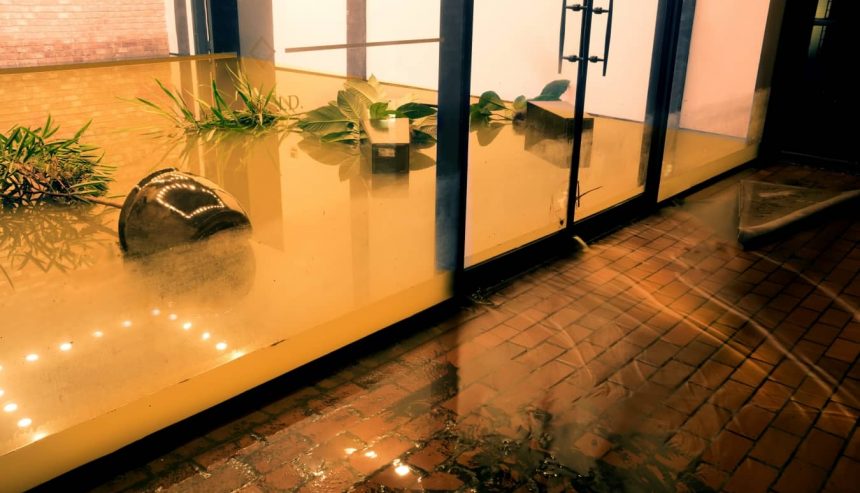
How Water Damage Affects More Than Your Building, and Why the Clock Runs Faster When a Business Is on the Line
A water emergency at a residential property is stressful and disruptive. The same event at a commercial property is all of that and more, because every hour the doors stay closed, every customer who cannot be served, and every employee who cannot work safely adds a financial dimension that residential water damage simply does not carry. In Covington and across St. Tammany Parish, where small and mid-sized businesses form the backbone of the local economy, a commercial water event can become an existential threat if the response is slow, incomplete, or handled by a team without the right equipment and experience.
At PuroClean Emergency Restoration, we work with commercial property owners, business operators, property managers, and their insurance carriers across the Northshore area on water damage events ranging from burst supply lines and appliance failures to full-scale flooding following major storm events. What we have learned from that work is that commercial clients have needs that residential restoration simply does not prepare a team to handle. This guide is written specifically for Covington business owners who want to understand what professional emergency water restoration involves, what it protects, and what to do from the moment water appears on the property.
The Business Costs That Start the Moment Water Enters a Commercial Space
Most commercial property owners instinctively understand that water damage means repair costs. What is less immediately obvious is how quickly the indirect costs of a water event begin to accumulate alongside the direct physical damage.
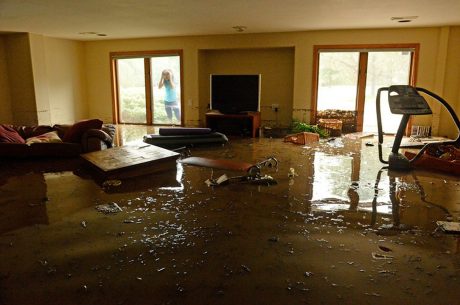
Consider a typical commercial water emergency in Covington: a supply line failure over the weekend saturates the ground floor of a retail or office building. By Monday morning, the property is not safe to occupy. The direct costs, extraction, drying, repairs, and contents restoration, are significant. But layered on top of those are:
- Lost revenue from every day the business cannot operate at full capacity
- Payroll obligations for employees who cannot perform their normal functions during closure or reduced operations
- Customer relationship damage from cancelled appointments, delayed orders, or temporary service interruptions
- Lease obligations that continue regardless of whether the space is operational
- Liability exposure if customers, vendors, or employees enter a water-damaged space before it has been assessed and secured
- Inventory and equipment losses that may not be fully covered under standard commercial property policies without specific endorsements
None of these costs stop accruing while the building dries on its own timeline. They stop when professional restoration begins and business operations can safely resume. This is the central argument for immediate, professional emergency water restoration in a commercial context: every hour of delay is not just a restoration cost, it is a business cost.
How Louisiana’s Climate Compresses the Emergency Timeline for Commercial Properties
South Louisiana does not offer the same margin for error that drier climates provide after a water event. The combination of high ambient humidity, warm temperatures year-round, and the biological activity that those conditions support means that the window between a commercial water event and the onset of secondary damage, particularly mold growth, is dramatically compressed compared to what a business owner in Phoenix or Denver would experience.
In practice, this means:
- Mold can begin developing on saturated commercial building materials within 24 to 48 hours of a water event in Covington’s climate, compared to 48 to 72 hours in drier regions
- HVAC systems that were running during or after the water event may have distributed moisture and spores throughout the entire building, creating contamination well beyond the directly affected zone
- Porous commercial flooring materials, including carpet tile, luxury vinyl plank, and concrete with penetrating sealers, absorb and retain moisture differently than residential materials and require commercial-grade extraction and drying equipment to address properly
- Saturated drop ceiling tiles and acoustic panels degrade rapidly in Louisiana’s humidity and often require replacement rather than drying, a scope decision that needs to be made and documented quickly for insurance purposes
The implication for Covington business owners is straightforward: calling for professional emergency water restoration within the first two to four hours of discovering a water event is not overcaution. In this climate, it is the decision that determines whether the restoration is measured in days or weeks.
What Professional Commercial Emergency Water Restoration Involves
Commercial water restoration is not residential restoration at a larger scale. It involves different equipment configurations, different drying standards for commercial building assemblies, different documentation requirements for insurance and liability purposes, and a different approach to sequencing work so that portions of the business can resume operations while other areas are still being treated.
Here is how our team approaches a commercial emergency water restoration in Covington from initial response through completion:
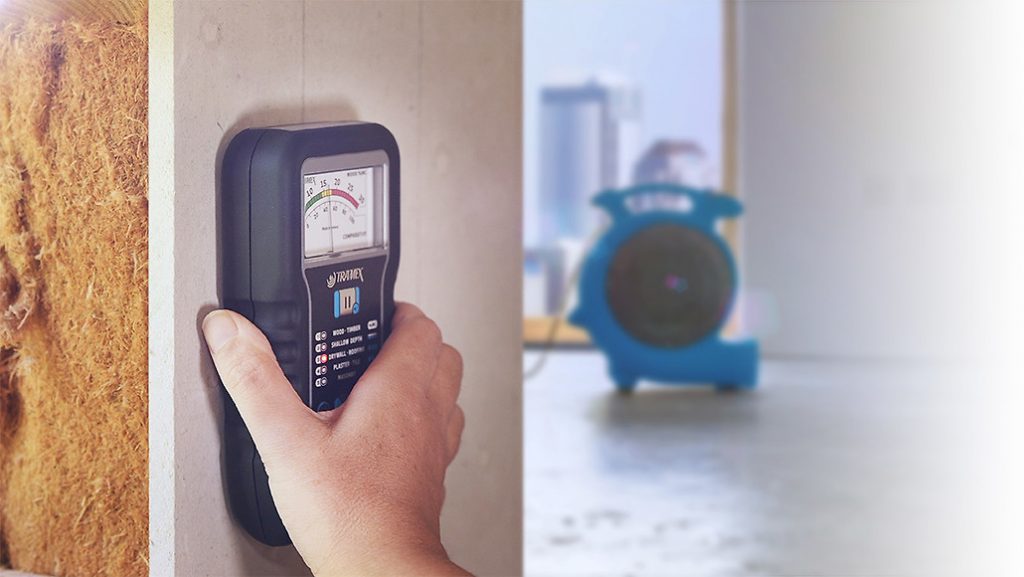
Rapid response and scene assessment. We arrive on site, assess the water source and category, and conduct a full moisture mapping survey of the affected areas using thermal imaging and professional detection instruments. Category 1 clean water events, category 2 gray water events, and category 3 black water events each require different safety protocols, different cleaning standards, and different documentation for the insurance carrier. Identifying the water category correctly at the outset shapes every subsequent decision.
Structural safety and access evaluation. In commercial properties, we assess load-bearing elements, ceiling assemblies, and electrical systems before crews begin working in affected areas. Saturated drop ceilings and compromised flooring present genuine safety risks that must be addressed before restoration work proceeds.
High-capacity water extraction. We deploy truck-mounted and portable extraction units scaled to the volume of the commercial space. Commercial-grade extraction removes significantly more water per hour than residential equipment, compressing the timeline from extraction to drying and reducing the total duration of business interruption.
Strategic drying equipment placement. Commercial air movers and dehumidifiers are positioned based on the moisture mapping data to drive evaporation from walls, flooring systems, and ceiling assemblies simultaneously. In Louisiana’s ambient conditions, this equipment must be calibrated for high-humidity operation rather than standard setpoints, and it must be monitored and adjusted daily as drying progresses.
Contents protection and inventory. Office equipment, inventory, furniture, and other business contents are assessed, documented, and where possible relocated within the property or packed out for professional cleaning. Complete photographic and written documentation of all affected contents is provided to support your insurance claim.
Daily monitoring and reporting. Moisture readings are taken and recorded at every measurement point daily. This data is provided to the property owner and insurance carrier in real time, supporting the claim and demonstrating that drying is progressing according to professional standards.
Clearance and reconstruction coordination. Once drying is complete and clearance moisture readings confirm the structure has returned to acceptable levels, we coordinate or perform the repairs needed to return the commercial space to full operational condition as efficiently as possible.
Working With Your Commercial Insurance Carrier After a Water Event
Commercial property insurance claims for water damage involve a level of documentation detail that residential claims rarely require. Carriers handling commercial losses expect evidence of the water source and category, the immediate steps taken to mitigate further damage, daily drying logs, a written scope of loss with line-item detail, and documentation of all affected contents and equipment.
Gaps in any of these areas can slow claim processing significantly, reduce settlement amounts, or in some cases provide grounds for partial denial. Our team builds comprehensive documentation into every commercial job from day one, providing the written reports, moisture data, photographic records, and scope documentation that your adjuster needs to process the claim efficiently.
We also work directly with commercial insurance carriers and their third-party adjusters throughout the restoration process, communicating proactively on scope changes, drying progress, and reconstruction timelines so that there are no surprises at the end of the job.
FEMA and SBA Resources for Covington Businesses After a Major Flood Event
When a commercial water event is caused by a federally declared disaster, which St. Tammany Parish has experienced multiple times in recent decades, Covington business owners may have access to recovery resources beyond their commercial insurance policy. The U.S. Small Business Administration’s disaster loan program provides low-interest loans to businesses of all sizes for physical damage to property, equipment, and inventory caused by declared disasters, and can supplement insurance coverage where gaps exist.
Navigating these programs effectively requires thorough documentation of pre-loss property conditions, damage scope, and restoration costs, exactly the kind of record our team’s documentation process produces. If your business is affected by a major flooding event in St. Tammany Parish, we encourage you to pursue both insurance and SBA avenues simultaneously rather than waiting for one process to conclude before beginning the other.
Serving Commercial Properties Across the Northshore 24 Hours a Day

PuroClean Emergency Restoration responds to commercial water emergencies throughout Covington, Mandeville, Madisonville, Abita Springs, Folsom, and surrounding St. Tammany Parish communities around the clock, every day of the year. Our IICRC-certified technicians understand the commercial building stock, insurance landscape, and climate conditions specific to the Northshore, and we bring the equipment and documentation capabilities that commercial losses require.
Call PuroClean Emergency Restoration the Moment Water Appears
Do not wait to assess the situation yourself or hope the damage is contained. In Louisiana’s climate and in a commercial context, the cost of waiting almost always exceeds the cost of calling immediately. Contact PuroClean Emergency Restoration at (985) 590-6600 or reach out through our online contact form at any hour. We will dispatch a certified commercial restoration team to your Covington property promptly, begin protecting your business from further damage, and guide you through every step of the restoration and claims process from start to finish.

 PuroClean Emergency Restoration