


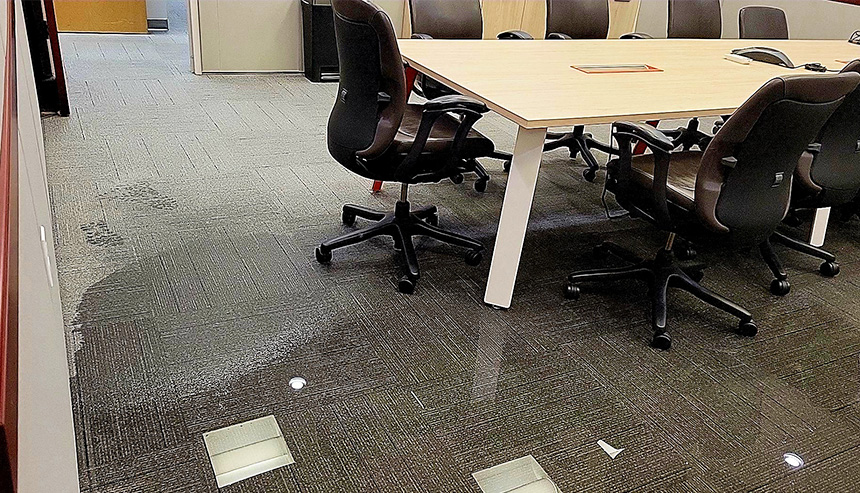
All the rain – and this just happened! A friend called me and said the roof in her office kitchen was collapsing and water was running down the walls; a roof leak gone wrong. Her landlord is in charge of the repair, but when she sent photos of the damage, I told her that the landlord needed to check the office floors!
Their old vinyl tiles were lifting. Sure, vinyl is tough, but when water gets under the tiles, it becomes a breeding ground for mold! I also said the same about checking behind the skirting board (baseboard), too, since it’s another hiding place for mold.
It’s not just spring rain, any severe flooding or other type of excessive moisture can damage your floors. Whether you’re a homeowner or a business owner in the Cranford area, it’s critical to act fast when dealing with water-damaged floors to prevent further harm.
In some cases, you can fix a water-damaged floor yourself. However, restoration flooring professionals can assess and repair issues that the average person may not see, making sure the restoration is done safely, thoroughly, and up to industry standards.
- Floor Types Most at Risk
- First Steps After a Floor Flood
- Drying Process & Repairing Water-Damaged Floors
- The Pro Process for Water Damage Restoration
- Tips to Prevent Future Damage
- Get Quick Help for Damaged Floors
- FAQs
Which Floor Types Are Most at Risk?
Most Prone to Water Damage:
- Hardwood Flooring
Hardwood flooring is highly absorbent. If excess moisture isn’t removed right away, the wooden boards may warp, cup, or stain. Dark spots can often form because of minerals in the water. Prolonged exposure leads to mold growth and a musty odor.
Severe cases may lead to structural damage and require partial or full floor replacement. Also, if the subfloor can not be dried from below and above the flooring, mold may form. - Laminate Flooring
Laminate planks swell quickly when water seeps in. Common signs of damage include buckling, cracking, and splitting between boards.
Complete replacement is often the only solution because the fiberboard core breaks down easily. Even small amounts of water can cause swelling that cannot be repaired. - Engineered Wood Floors
Less porous than solid hardwood flooring but still water-sensitive, engineered wood can peel, separate (delaminate), or warp when exposed to moisture.
If excess water reaches the subfloor, damage can escalate quickly. - Carpet
Carpet holds water deep in the fibers and padding. Damage often shows as rippling or staining along the baseboards.
Mold and mildew can start growing within 72 hours if the area isn’t dried quickly, especially beneath the surface.
Moderately Prone:
- Vinyl Flooring
Vinyl flooring resists water on the surface but can trap moisture underneath. Signs of damage include bubbling, gaps between planks or sheets, and yellow or dark stains. - Tile Floor
Tile resists water well, but damaged grout or cracks can allow seepage. Look for loose tiles, damp grout, and lingering foul odors. - Linoleum
Linoleum is durable but can soften if water, or even a minor spill, sits too long. Signs of damage include soft or spongy areas, curling at the edges, and bubbling. As with other flooring, mold can grow underneath if the subfloor stays wet.
Most Water-Resistant:
- Concrete with Epoxy Coating
Ideal for commercial properties, these epoxy-coated floors are among the most water-resistant options. When properly sealed, they resist water intrusion and are easy to clean and reseal. In most cases, this material only requires minimal repair, even after extensive flooding.
First Steps After a Floor Flood
A quick and organized response can reduce significant damage and prevent long-term problems. After a burst pipe, storm flood, or appliance leak, take these first steps:
- Ensure Safety First
Check for safety hazards before entering any flooded areas. Look for signs of broken pipes, such as water near your electrical system.
Do not enter flooded areas if water has reached electrical outlets or the electrical panel. Shut off the power if there’s a risk, and contact a professional.
Check for wet exterior walls, sagging ceilings, and gas smells or a musty odor, which could signal early mold and mildew.
2. Remove Standing Water
Use wet vacuums or sump pumps to remove the water. The longer water sits, the greater the risk of damage, separation, and mold. Start with high-traffic areas and locations where water can seep into lower levels, such as near staircases.
3. Start the Drying Process
Once the surface is clear of visible water, it’s time to begin the drying process. Open windows and doors to promote fresh air circulation if the weather permits, and set up air movers, fans, and commercial-grade dehumidifiers to dry completely.
This step prevents trapped water in subfloor materials and behind walls. Make sure the area is completely dry before proceeding with repairs.
Make sure to remove moisture from the entire floor and the surrounding materials, for example, baseboards and drywall. If you are uncertain if the area is dry, restoration experts may also use infrared cameras to detect hidden moisture and track progress.
4. Inspect and Document the Damage
Carefully check all the affected areas for buckling, discoloration, or sponginess. Focus on high-risk surfaces like wood flooring, laminate planks, vinyl seams, and tile grout.
Don’t overlook corners or low-traffic zones where water sits unnoticed. Check the subflooring too. It may appear intact at first, but it can weaken if moisture lingers beneath the surface.
Take photos and videos of all damaged materials and areas with visible moisture. These images will be essential for insurance claims.
5. Get Professional Help
Call a certified restoration professional to assess whether your floors can be saved or need to be replaced.
Drying Process & Repairing Water-Damaged Floors
When water enters your home or business, acting quickly can help minimize damage and reduce the need for a complete replacement. Surface moisture can often be managed without causing harm if addressed promptly.
The correct drying and restoration strategy depends on the type of floor and the extent of the flooding.
Hardwood Flooring
- Drying Process
Hardwood flooring absorbs moisture deep into the grain, making it highly vulnerable.
Restoration crews use moisture meters to moisture map the area.
Then, extract the water and use drying mats, air movers, and dehumidifiers to remove the moisture from the flooring and structure of the building. Drying may take several days, especially if the subfloor is wet. - Refinishing
Once dry, hardwood flooring can often be salvaged with sanding and resealing. Sealing restores the finish and helps protect against future mold and mildew. - Replacement
If the wood floors are badly cupped, warped, or show signs of mold growth, partial or full floor replacement may be needed. A restoration professional can assess if the subfloor needs to be replaced along with the damaged board.
See more on hardwood floor repair.
Commercial: Concrete, Tile, Vinyl and Laminate Flooring
- Concrete and Epoxy-Coated Floors
These surfaces are ideal for flood-prone areas because they’re highly durable. If sealed properly, these floors usually only need thorough cleaning and resealing after flooding. This makes them one of the most resilient floor options for commercial settings. - Tile Floor
Tile floors are durable and naturally water resistant, but damage to grout lines or lifted tiles can allow water to reach below. In these cases, professionals lift affected tiles, dry the area, and either regrout or replace them.
If caught early and if the weather permits, reinstallation may be possible without complete removal. - Vinyl Flooring
While vinyl is considered a water-resistant flooring, moisture can become trapped underneath if water enters through seams or edges. For water damage extending to the subfloor or underlayment, removing the vinyl is often the safest option. - Laminate Flooring
Laminate’s fiberboard core swells quickly when wet. Once water seeps into the seams, it loses strength and typically needs full replacement.
Carpet
After a flood or excess water intrusion, whether the carpet can be saved depends on how long the water has been present and the type of water involved. In many cases, both the carpet and padding must be removed, especially if the water is contaminated.
Most carpet pads are manufactured with a vapor barrier, a thin plastic layer that traps moisture and prevents the pad from drying thoroughly. When the water is clean and mitigation starts quickly, a restoration professional may be able to dry the carpet and replace the pad, which can reduce the overall replacement cost.
If the flooding involves sewage or other hazardous contaminants, both the carpet and pad should be removed immediately.
The Pro Process for Water Damage Restoration
Hiring professionals for water damage restoration gives you peace of mind and a faster path to recovery. With expert tools, proven techniques, and support navigating insurance claims, you protect your property and avoid costly mistakes that DIY solutions often miss.
- Expert Assessment – Certified technicians use moisture meters and infrared tools to determine the extent of water intrusion.
- Specialized Equipment – Industrial-grade drying and dehumidifying systems speed up the recovery process.
- Mold Remediation – Prevents harmful microbial growth behind flooring and walls.
- Structural Repair & Reconstruction – Reconstruction services can include subfloor replacement, baseboard and drywall repair, and restoring the area to pre-loss condition.
- Insurance Coordination – Professionals help document damage and work with insurance adjusters for faster claims processing.
Tips to Prevent Future Floor Damage
Taking proactive steps can help avoid extensive repair costs and protect your investment from future water-related incidents.
- Install Water-Resistant Materials
Choose waterproof flooring like vinyl composite tiles, ceramic tile, or epoxy-coated concrete in areas prone to moisture, like basements and bathrooms.
Water-resistant materials defend against spills, leaks, and flooding from storms or plumbing issues. - Check for Signs of Moisture
Look for moisture, warping, or musty smells around floors, baseboards, and sinks. Catching small issues early, like peeling paint or soft spots, can prevent mold and subfloor damage. - Perform Routine Maintenance & Inspections
Inspect plumbing, roofing, and appliances for leaks and condensation. Also, consider water alarms or leak detectors in vulnerable areas. - Plan for Emergencies
Keep a trusted restoration provider like PuroClean Restoration Services on call.
Having a plan in place ensures a fast, professional response when emergencies occur, reducing downtime and limiting damage to your floor covering and property.
Protect Your Property: Quick Flood Response for Damaged Floors
Flood damage doesn’t always mean total loss. Acting quickly and knowing your floor type can mean repair instead of replacement.
From wood floors and carpet to commercial-grade surfaces, a certified restoration professional can help you recover and protect your investment.
If your home or business has water-damaged floors, call PuroClean Restoration Services at (908) 577-9120.
We provide trusted residential and commercial restoration in Cranford, NJ, and surrounding areas, including Fanwood, Garwood, Kenilworth, and Mountainside. We’re ready to help you recover, quickly, safely, and with care.
Frequently Asked Questions About Flooded Floor Repair
How can I tell if my floors can be saved or need to be replaced?
Your floors may be beyond repair if you see warping, buckling, mold, or soft spots. A professional inspection using moisture meters and thermal imaging can confirm the damage.
How long does floor restoration take?
Drying and restoration can take anywhere from a few days to more than a week, depending on the extent of water exposure, floor type, and drying conditions. Businesses may need temporary closures if safety is compromised.
Will insurance cover water damage?
Many insurance policies cover water damage from things like burst pipes or storm flooding, but flooding caused by gradual leaks or sewer backups isn’t typically covered without additional coverage.
It’s best to contact your provider early and have professionals assist with damage and content documentation.
Is it safe to remain in the building during restoration?
That depends on the moisture level, mold risk, and repair activity. In some cases, like if you have extensive water damage, it’s safer to relocate temporarily, especially if drying equipment creates noise, heat, or trip hazards.
Can mold and mildew still develop even after drying?
Yes. Mold can grow behind baseboards or subflooring if moisture isn’t entirely removed. That’s why professional drying and mold prevention treatments are crucial.


