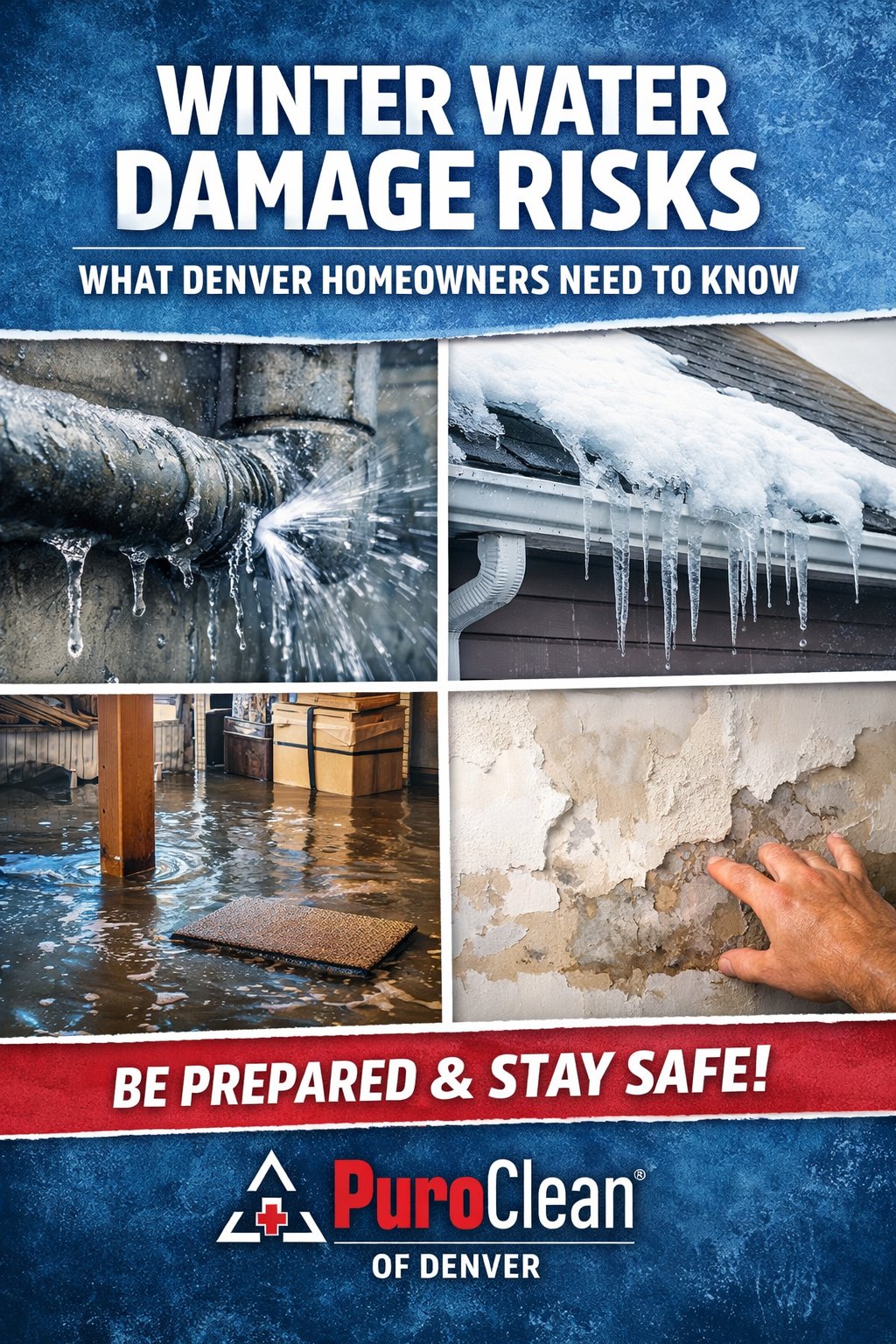
As Denver transitions from winter into early spring, property owners face one of the highest-risk periods of the year for water damage. Freeze–thaw cycles, melting snow, and fluctuating temperatures can put significant stress on plumbing systems, roofs, and foundations. Understanding these seasonal risks can help you prevent costly damage and respond quickly if a loss occurs.
Why Water Damage Increases This Time of Year
Denver’s climate is known for rapid temperature swings. Pipes can freeze overnight and thaw during the day, creating pressure that leads to cracks or full pipe bursts. At the same time, accumulated snow on roofs begins to melt, and if drainage is blocked, water can back up under shingles and into attics and ceilings.
These conditions often result in:
- Burst pipes inside walls and ceilings
- Ice dams causing roof leaks
- Hidden moisture discovered weeks later
- Basement seepage from snowmelt and saturated soil
Many homeowners do not notice the damage until it becomes visible, which increases mitigation time and the potential for mold growth.
Common Causes of Winter and Early Spring Water Losses
Frozen and Burst Pipes
Uninsulated pipes in garages, crawlspaces, and exterior walls are especially vulnerable. When water freezes, it expands and can rupture the pipe, leading to sudden flooding once temperatures rise.
Ice Dams
Ice dams form when warm air in the attic melts snow on the roof, which then refreezes at the edges. This traps water behind the ice and forces it under roofing materials.
Roof Leaks During Snowmelt
Heavy snow followed by warmer days can overwhelm drainage systems, allowing water to infiltrate the structure.
Basement and Foundation Moisture
As the ground thaws, water can accumulate around foundations and enter through cracks or porous materials.
Warning Signs of Hidden Water Damage
Early detection can significantly reduce repair costs. Watch for:
- Musty odors
- Bubbling or peeling paint
- Warped flooring
- Water stains on ceilings or walls
- Sudden drops in water pressure
If you notice any of these signs, immediate mitigation is critical to prevent structural damage and mold growth.
Prevention Tips for Denver Property Owners
Taking proactive steps now can reduce your risk:
- Keep indoor temperatures above 55°F, even when away
- Insulate exposed pipes
- Disconnect garden hoses and protect exterior faucets
- Clean and inspect gutters and downspouts
- Ensure proper attic insulation and ventilation
- Know the location of your main water shut-off valve
For commercial properties and multi-family buildings, regular maintenance inspections during this season are strongly recommended.
What to Do If Water Damage Occurs
Time is the most important factor in water mitigation. Water can spread quickly through building materials, and mold can begin developing within 24–48 hours.
If you experience a loss:
- Shut off the main water supply if possible
- Turn off electricity in affected areas (if safe to do so)
- Contact a professional mitigation company immediately
- Notify your insurance carrier
Professional drying, moisture mapping, and documentation are essential to reduce secondary damage and support the claims process.
PuroClean of Denver: 24/7 Emergency Response
At PuroClean of Denver, we specialize in:
- Emergency water extraction
- Structural drying and dehumidification
- Moisture detection and monitoring
- Mold prevention and remediation
- Full reconstruction services
Our team is available 24/7 to respond quickly and help minimize damage, downtime, and claim severity.
📞 (303) 993-1313
📍 1270 W. Cedar Ave., Denver, CO 80223
If your home or commercial property experiences water damage this season, don’t wait. Fast action can save thousands in repairs and prevent long-term issues.