


A burst supply line behind a kitchen wall can soak insulation, cabinets, and flooring long before water appears in the room. After a fire, corrosive smoke residue can continue damaging surfaces even after the flames are out. In either situation, a guide to emergency property stabilization starts with one priority: make the property safe, then stop the damage from spreading.
Emergency stabilization is not the same as completing restoration. It is the critical first phase that protects occupants, preserves as much of the structure and contents as possible, and creates the conditions for an accurate recovery plan. For homeowners, property managers, and business operators in East Bridgeport, Shelton, and Milford, the right actions in the first hours can affect health, repair scope, business interruption, and insurance documentation.
What Emergency Property Stabilization Means
Property stabilization is the controlled response to a sudden loss. It may involve stopping a water source, securing a compromised building, extracting standing water, removing hazardous materials, cleaning contamination, or setting specialized drying equipment. The exact work depends on the loss, but the purpose remains the same: prevent a manageable problem from becoming a larger and more expensive one.
A professional stabilization team first identifies immediate threats. Those can include unstable ceilings, energized electrical systems, contaminated water, lingering smoke, exposed openings, or hidden moisture inside wall cavities and under flooring. Certified technicians use tools such as moisture meters and thermal imaging to find conditions that are not visible during a quick walk-through.
This matters because surfaces can look dry while materials behind them remain wet. Likewise, a room may appear usable after a small fire even though smoke particles and odor have moved through HVAC pathways, insulation, and adjacent rooms.
Put People and Property Safety First
Before moving furniture, taking photos, or beginning cleanup, determine whether the area is safe to enter. If there is an active fire, gas odor, structural movement, downed power line, or a risk of electrical contact with water, leave the area and contact emergency services or the appropriate utility provider.
Do not enter a building with standing water if electricity may still be active. Avoid touching wet appliances, outlets, extension cords, or electrical panels. After a sewage backup or other contaminated water event, keep children, pets, tenants, and unprotected staff away from the affected area. Sewage and floodwater may contain bacteria, viruses, and other harmful contaminants that require proper containment, removal, and disinfection.
After a fire, do not assume the property is safe just because the visible flames are extinguished. Smoke residue can irritate the eyes and respiratory system, while structural components may have been weakened by heat or water used during firefighting. Follow instructions from first responders before re-entering.
Stop the Source When It Is Safe to Do So
The fastest way to reduce damage is to stop the source. For a clean-water plumbing failure, that may mean shutting off the fixture valve or the main water supply. If the source is a roof leak during a storm, move valuables away from the leak only if the ceiling is stable and the area is safe, then arrange for temporary protection and professional assessment.
Some sources should never be handled without trained help. Sewage backups, mold-contaminated materials, chemical spills, and water near electrical components require a more controlled response. Trying to mop up contaminated water with household equipment can spread contamination to unaffected rooms and expose the person cleaning it.
For commercial properties, assign one knowledgeable point of contact to coordinate access, safety information, building systems, and tenant or employee communication. Clear decisions early on help avoid duplicate efforts and confusion when emergency crews arrive.
Document Conditions Without Delaying Mitigation
Photographs and video are useful for insurance reporting, but documentation should not slow urgent action. Capture wide views of each affected room, then record close-ups of visible water lines, damaged materials, personal property, equipment, and the apparent source of loss. Save receipts for reasonable emergency expenses, such as temporary lodging or essential protective materials.
Keep a simple timeline that records when the damage was discovered, when the source was shut off, which areas were affected, and who was contacted. Property managers should also document tenant notifications, access limitations, and any operational changes made to protect occupants.
Then allow mitigation to begin. Waiting for an adjuster before extracting water, stabilizing a roof opening, or addressing a sewage backup can increase the severity of the loss. A qualified restoration provider can document moisture levels, materials affected, equipment placement, and the work performed throughout the process.
Remove Water and Control Moisture Quickly
Water damage changes rapidly. Porous materials absorb moisture, humidity rises, and water migrates through gravity, seams, and hidden voids. Hardwood flooring can cup or buckle, cabinet bases can swell, drywall can lose integrity, and microbial growth can begin when wet materials are left untreated.
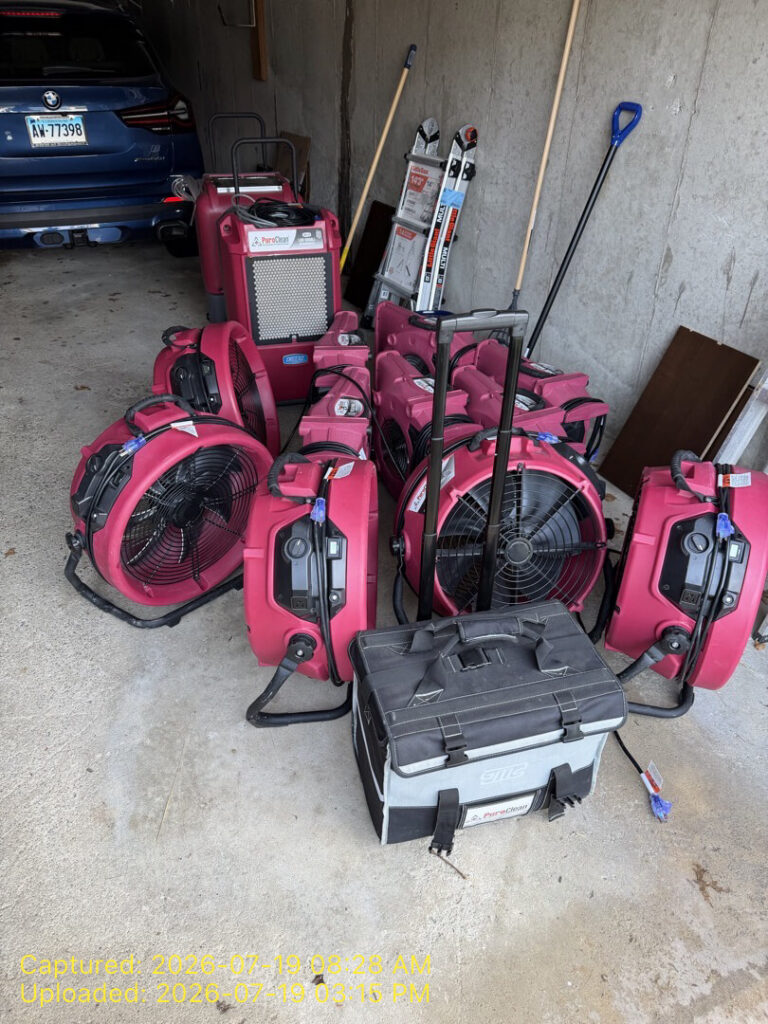
Effective drying is more involved than placing fans in a room. The process may require water extraction, controlled demolition of unsalvageable materials, air movement, dehumidification, and ongoing moisture monitoring. Thermal imaging can help locate wet areas behind walls or beneath flooring, while moisture meters verify whether structural materials are actually returning to appropriate drying goals.
There are trade-offs. Removing a section of wet drywall may feel disruptive, but it can provide access to saturated insulation and framing that would otherwise remain hidden. In other cases, specialty drying systems may preserve hardwood floors, cabinets, or other materials that could be unnecessarily removed without a careful assessment.
Secure the Structure After Fire, Storm, or Impact Damage
A damaged roof, broken window, breached door, or compromised wall leaves a property vulnerable to rain, wind, theft, pests, and further interior damage. Emergency board-up and temporary roof protection are stabilization measures, not cosmetic repairs. Their role is to create a safe, controlled environment until permanent reconstruction can be planned.
Fire losses often need more than securing openings. Smoke and soot should be assessed quickly because acidic residues can discolor metals, damage finishes, and create persistent odors. Technicians may isolate affected areas, remove debris, clean salvageable contents, and use appropriate odor-control methods based on the materials and extent of smoke migration.
For businesses, securing the site also protects continuity. A contained area may allow unaffected portions of a facility to remain accessible, depending on safety conditions and local requirements. That decision should be made carefully, with occupant health and building safety ahead of short-term operations.
Treat Contamination as a Specialized Problem
Not all water damage is equal. Water from a broken supply line is handled differently from sewage, toilet overflow with waste, stormwater intrusion, or water that has sat long enough to become contaminated. The more contaminated the source, the less appropriate do-it-yourself cleanup becomes.
Biohazard events, sewage backups, and significant mold conditions require trained personnel, proper protective equipment, containment practices, and disposal procedures. A professional team can remove contaminated materials, clean and disinfect affected surfaces with appropriate EPA-registered products, and help prevent cross-contamination during the work.
Mold deserves particular care because the visible growth may not show the full extent of moisture damage. The priority is not simply spraying or painting over a stain. The moisture source must be corrected, affected materials assessed, and the work area contained where needed so spores are not carried into clean areas.
Communicate Clearly With Your Restoration Team and Insurer
A strong emergency response is easier when the restoration team has accurate information. Share the suspected source, when the issue began, whether utilities have been shut off, what areas are affected, and whether anyone has experienced health symptoms or come into contact with contaminated water. Let technicians know about vulnerable occupants, valuable contents, building access restrictions, and previous leaks or repairs.
Ask practical questions: What is unsafe right now? Which materials can likely be saved? How will moisture or contamination be verified? What equipment will be used, and how often will conditions be monitored? A credible provider should explain what is being done and why, without promising a final repair outcome before the full damage is understood.
Insurance communication also benefits from precision. Report the loss promptly, provide documentation, and keep copies of claim information and emergency invoices. Restoration professionals can support the process with clear records of conditions and mitigation work, while the insurer remains responsible for coverage decisions.
When a loss disrupts your home or business, the next decision should not be whether to wait and see. Prompt, measured stabilization protects the parts of the property that can still be saved and gives recovery a clearer path forward. PuroClean of East Bridgeport is available 24/7 to help local property owners take that first steady step after an emergency.

