


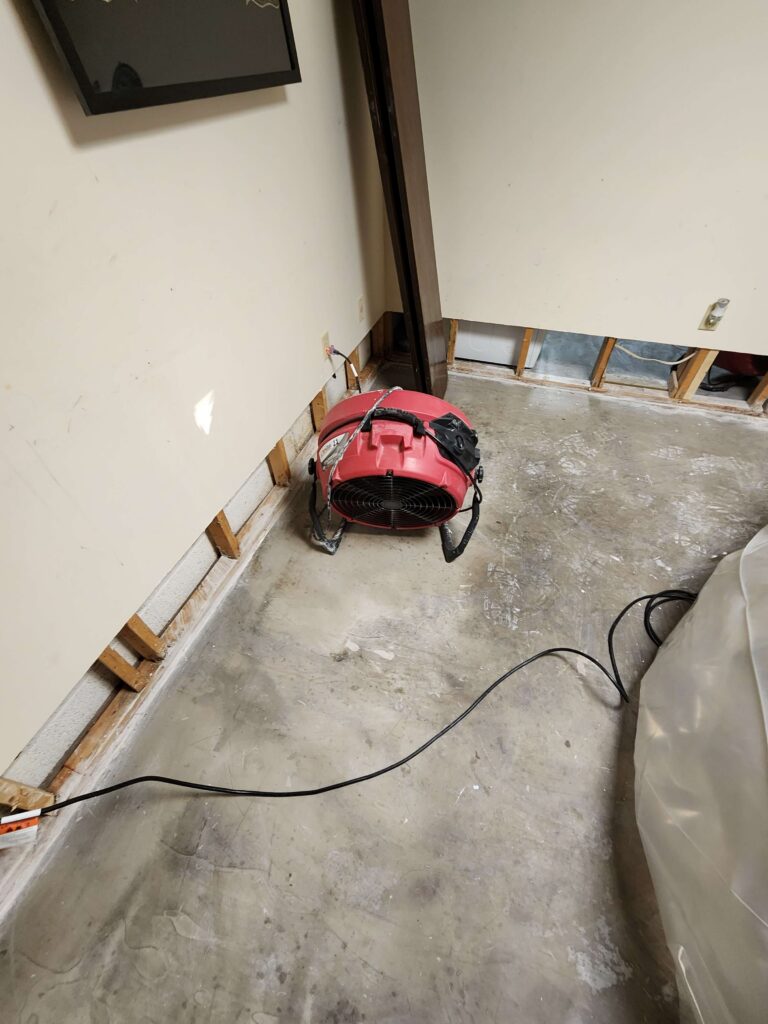
When water gets into drywall, flooring, insulation, or framing, one of the first questions people ask is how long does structural drying take. It is a fair question, because the answer affects everything else – repairs, insurance coordination, business interruption, and whether the damage stays limited or turns into a mold problem.
In most cases, structural drying takes about 3 to 5 days. That is the general range for a standard water loss when mitigation starts quickly and the affected materials can still be saved. But that number is a starting point, not a promise. Some losses dry faster. Others take a week or more, especially when water traveled into wall cavities, hardwood subfloors, cabinetry, or multiple levels of the property.
The difference comes down to how much water entered the structure, how long it sat, what materials were affected, and how quickly a professional team began extraction and controlled drying.
How long does structural drying take in real conditions?
A small, clean water loss from a supply line may dry in as little as 2 to 3 days after thorough extraction. A larger event involving saturated drywall, insulation, wood framing, and trapped moisture often takes 4 to 7 days. If sewage, stormwater, or long-standing moisture is involved, part of the structure may need removal instead of drying, which changes the timeline.
This is why experienced restoration teams avoid guessing based on surface appearance alone. A carpet may feel dry on top while the pad, tack strips, or subfloor still hold significant moisture. Walls can look normal while insulation stays wet behind them. Drying is complete only when moisture readings confirm affected materials have returned to an acceptable dry standard.
Why one property dries faster than another
Two buildings can have the same type of leak and very different drying times. Construction details matter more than most people realize.
Type of water and how long it sat
Clean water from a fresh pipe break is usually the most straightforward scenario if addressed quickly. Gray water from appliances or contaminated water from a backup can complicate the process because sanitation, removal of porous materials, and safety controls may be required before drying can move forward.
Time also works against the property. The longer water remains in contact with materials, the deeper it migrates. What starts as a visible floor issue can spread into baseboards, drywall, insulation, cabinets, and adjacent rooms.
Material type makes a major difference
Some materials release moisture relatively quickly. Others hold it tightly and dry much more slowly. Concrete can retain moisture for an extended period. Hardwood flooring can cup, swell, and trap moisture underneath. Plaster, dense wood trim, multiple flooring layers, and built-in cabinetry often require more targeted drying methods.
Drywall may be salvageable in one room and need selective removal in another. That is why a proper inspection matters. Drying time depends as much on what is wet as on how much is wet.
Hidden moisture extends the timeline
Water has a way of moving beyond the obvious damage. It can travel under vinyl plank flooring, wick up drywall, move behind cabinets, or settle inside wall cavities. Without moisture mapping, a property may seem nearly dry while hidden areas remain wet.
This is where thermal imaging, moisture meters, and daily monitoring become essential. Drying that is not measured is not controlled.
What happens during the structural drying process
Structural drying is not just placing a few fans in a room and waiting. It is a managed process designed to remove liquid water first, then pull moisture out of materials and the air in a controlled way.
Extraction comes first
The fastest way to shorten drying time is aggressive water extraction at the start. Removing gallons of standing or absorbed water before evaporation begins reduces the burden on the rest of the system. This is especially important for carpet, pad, hardwood, and low areas where water collects.
Air movement and dehumidification do different jobs
Air movers help wet surfaces release moisture into the air. Dehumidifiers remove that moisture from the air so the environment keeps pulling water out of the structure. One without the other is not enough.
In more complex losses, technicians may also use floor drying mats, wall cavity drying systems, injectidry setups, or specialty equipment for dense materials and confined spaces.
Monitoring guides the timeline
Professional drying is adjusted day by day. Technicians take moisture readings, compare affected materials to dry standards, and change equipment placement as conditions improve. If progress stalls, they look for the reason. It may be hidden moisture, insufficient demolition, poor airflow, or a material that needs specialty drying or removal.
That daily monitoring is what separates efficient drying from prolonged disruption.
The biggest factors that affect how long structural drying takes
If you are trying to estimate your own timeline, a few factors tend to matter most.
The first is response time. A loss addressed within hours is usually easier to stabilize than one left overnight or over a weekend.
The second is the extent of saturation. A single room with limited migration is very different from a multi-room loss or water that traveled between floors.
The third is the material assembly. Drying tile over concrete, hardwood over wood subfloor, or insulation inside exterior walls can each require different approaches and timeframes.
The fourth is weather and indoor conditions. In Connecticut, humidity levels and temperature can influence performance, especially if the property is partially open to the outdoors or the HVAC system is compromised.
The fifth is whether contents and finishes can remain in place. In some cases, moving furniture, removing toe kicks, drilling access points, or opening wall cavities can dramatically improve drying efficiency.
When drying takes longer than expected
Sometimes the timeline stretches even with professional equipment on site. That does not always mean something is wrong. It may simply mean the structure is more complex than it looked on day one.
Hardwood flooring is a common example. It often requires slow, controlled drying to reduce the risk of permanent damage. Drying too aggressively can create additional stress in the material. Cabinet systems can present the same challenge, especially when water has entered enclosed bases or traveled behind them.
Commercial properties may also take longer because there are more layers, more square footage, and more operational constraints. A business may need phased drying to protect inventory, maintain access, or coordinate after-hours work.
Can you stay in the property while it dries?
Often, yes, but it depends on the source of the water, the amount of demolition required, noise levels, and whether critical areas like kitchens, bathrooms, or main walkways are affected.
Drying equipment is loud. Rooms may be warmer than usual because creating the right drying environment is part of the process. If contamination is involved, occupancy may not be appropriate until cleanup and disinfection are complete. For commercial buildings, the question is less about comfort and more about safe operations, customer access, and indoor environmental conditions.
A good restoration team will explain what is realistic instead of giving false reassurance.
How to keep the drying timeline from getting worse
The best step is to act immediately. Shut off the source if possible, protect people from electrical hazards, and call for mitigation before moisture spreads. Waiting to see if it will dry on its own usually costs more time and more money.
It also helps to avoid disturbing wet materials without a plan. Pulling up flooring, opening walls, or running household fans in the wrong way can spread contamination or interfere with a controlled drying strategy. Professional mitigation is most effective when the drying chamber is created intentionally, with measured airflow, humidity control, and ongoing documentation.
For homeowners, that documentation also supports insurance communication. For property managers and business owners, it helps show that the response was prompt, professional, and based on objective readings.
A realistic timeline for most water losses
If you want the shortest practical answer to how long does structural drying take, the honest response is this: most jobs take 3 to 5 days, but some take longer because buildings are made of different materials and water rarely stays where it started.
That is why restoration should never be judged by whether the surface feels dry. It should be judged by whether the structure has been properly inspected, extracted, monitored, and brought back to a verified dry standard. In stressful situations, clear answers matter, but accurate answers matter more.
When water damage hits your home or business in East Bridgeport, Shelton, or Milford, the right response can save days in the drying process and prevent bigger problems from forming behind the walls. The goal is not just to dry the property fast. It is to dry it correctly, so recovery can move forward with confidence.

