


A small leak can turn into a mold problem faster than most property owners expect. If you are searching for how to reduce mold after leaks, the first thing to know is that the clock starts immediately. Wet drywall, insulation, flooring, cabinets, and wall cavities can begin supporting mold growth in as little as 24 to 48 hours, especially in humid indoor conditions.
That is why leak response is not just about stopping visible water. It is about finding hidden moisture, drying the structure thoroughly, and preventing contamination from spreading into materials that are harder and more expensive to restore later. For homeowners, property managers, and business owners in East Bridgeport, Shelton, and Milford, fast action can make the difference between a manageable drying job and a larger remediation project.
How to reduce mold after leaks starts with speed
The most effective way to reduce mold after a leak is to remove moisture before mold has time to grow. That sounds simple, but in practice, leaks often travel farther than they appear to. Water can move behind baseboards, under flooring, into insulation, through ceiling cavities, and inside cabinetry. By the time a stain appears, the affected area may already be much larger.
Start by stopping the water source. If the leak is coming from plumbing, shut off the local valve or main supply if needed. If the source is roof-related or tied to storm intrusion, temporary protection may be necessary until permanent repairs can be made. If the water came from an appliance, turn it off and disconnect power if it is safe to do so.
Once the source is controlled, remove standing water as quickly as possible. Mops and towels can help in minor incidents, but larger losses often require extraction equipment to pull water from carpet, pad, or hard-to-reach low areas. The longer water sits, the more likely it is to soak into porous materials and create conditions where mold can take hold.
Drying the area is more than running a fan
One of the most common mistakes after a leak is assuming air movement alone will solve the problem. Fans can help, but they do not measure moisture, and they do not confirm whether subfloors, wall cavities, or structural components are dry. Effective drying requires a combination of airflow, dehumidification, and verification.
Open the area as much as practical. Move furniture, lift rugs, and remove items that trap moisture. If wet contents are left in place, they can slow evaporation and create pockets of dampness. In some cases, baseboards may need to be detached or small access points created so trapped moisture can be addressed inside walls.
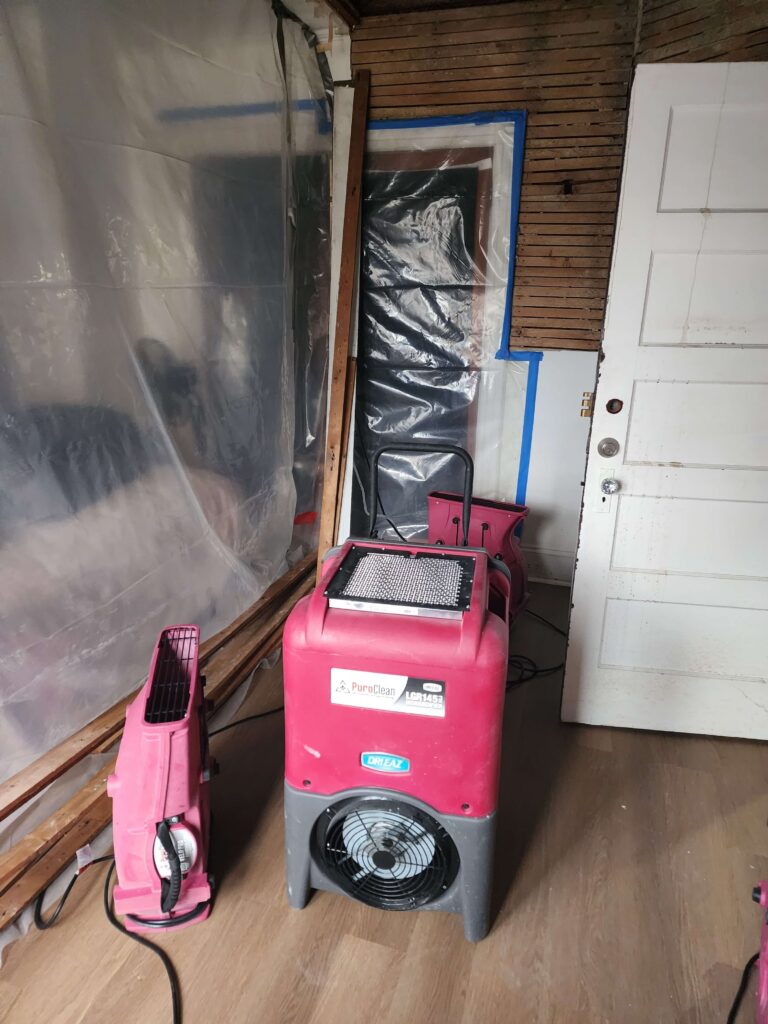
Dehumidification is especially important in Connecticut, where seasonal humidity can make natural drying slow and unreliable. Without reducing the moisture in the air, wet materials may continue to hold water even while a fan is running. That is one reason professional structural drying often includes commercial dehumidifiers, air movers, and moisture readings throughout the process.
This is also where trade-offs matter. If the leak is truly minor and limited to a small, non-porous area, basic cleanup and drying may be enough. But if water touched drywall, insulation, carpeting, wood trim, or laminate flooring, hidden moisture becomes much more likely. In those cases, relying on guesswork can allow mold to develop behind the scenes.
What should be removed and what can be saved
Not every wet material has to be discarded, but not every material can be safely dried in place either. The right approach depends on the water source, how long materials stayed wet, and what the material is made of.
Clean water from a supply line leak is different from water involving sewage backup or other contamination. With clean water, some structural materials and contents can often be dried and restored if response is fast enough. With contaminated water, removal and disinfection become much more critical because the concern is no longer mold alone.
Porous materials are usually the most vulnerable. Drywall can wick moisture upward. Insulation loses effectiveness and holds water. Ceiling tiles, upholstered contents, and some composite materials can deteriorate quickly. Hardwood may be restorable with specialty drying, while laminate often swells and traps moisture underneath. Cabinet bases, toe kicks, and wall cavities should be checked, because these areas often stay wet longer than the visible surface.
The goal is not to remove everything by default. It is to identify what can be dried to an acceptable moisture level and what is likely to remain a mold risk if left in place. That requires inspection, not assumptions.
How to reduce mold after leaks in hidden spaces
Mold problems often begin in places property owners do not see every day. Behind a bathroom vanity, under kitchen cabinets, beneath vinyl flooring, inside a closet wall, or above a drop ceiling are all common examples. If the leak occurred overnight, over a weekend, or during a vacant period, hidden damage becomes even more likely.
This is where moisture detection matters. Thermal imaging can help identify temperature differences consistent with moisture, and moisture meters can confirm whether materials are still wet. These tools do not replace experience, but they make the drying plan more precise. Instead of tearing into every surface, technicians can target the areas that actually need attention.
For commercial properties, hidden moisture can affect more than building materials. It can threaten inventory, interrupt operations, create odor issues, and raise indoor air quality concerns for staff or tenants. Offices, medical facilities, retail stores, and multi-unit buildings often need a response that balances speed with minimal disruption.
If you notice a musty odor after a leak, that is a warning sign worth taking seriously. Odor does not always mean active mold growth, but it often points to lingering moisture or organic material that stayed damp too long. Waiting for visible mold is usually the wrong benchmark.
Cleaning matters, but drying matters more
People often focus on disinfectants and surface sprays after a leak. Cleaning has value, especially when hard surfaces were exposed to water or when sanitation is part of the concern. But surface treatment alone will not prevent mold if moisture remains inside building materials.
That is why the sequence matters. Remove water, dry the structure, clean affected areas, and verify moisture levels. If visible mold is already present, disturbing it without proper containment can spread spores to other parts of the property. Small isolated spots may seem minor, but aggressive DIY scrubbing can make things worse if the source moisture was never addressed.
Professional remediation becomes the safer choice when there is significant water intrusion, obvious mold growth, recurring odors, or signs that the damage extends beyond the immediate leak location. A trained team can contain affected areas, remove unsalvageable material if needed, clean and disinfect appropriately, and document drying conditions more thoroughly.
When to call for professional help
Some leaks are manageable with quick action. Others need emergency restoration support right away. A good rule of thumb is to bring in professionals when the leak affected more than a small surface area, involved multiple rooms, touched porous materials, or sat unnoticed for more than a day.
You should also call for help if water reached wall cavities, ceilings, hardwood flooring, cabinets, or any area where moisture is difficult to monitor without equipment. The same applies if the leak happened in a commercial setting where downtime, liability, or occupant safety are concerns.
PuroClean of East Bridgeport responds to these situations with the urgency they require because reducing mold risk is often about the first several hours, not the next several days. With moisture detection, thermal imaging, structural drying equipment, and a guided restoration process, the goal is to stabilize the property quickly and help owners move toward recovery with less uncertainty.
Preventing the next mold issue after the leak is fixed
Once the immediate incident is under control, prevention should become part of the repair plan. Replace damaged plumbing components, inspect appliance lines, seal roof vulnerabilities, and check areas where past repairs may have failed. If the property has a history of moisture problems, indoor humidity control may need attention too.
It also helps to monitor the repaired area for several weeks. Watch for discoloration, soft drywall, peeling paint, flooring changes, or persistent odor. These can signal that drying was incomplete or that water is still entering the space from another source. In multifamily and commercial buildings, documentation and follow-up inspections can prevent a small issue from turning into a wider building problem.
The practical answer to how to reduce mold after leaks is not complicated, but it is time-sensitive. Stop the source, remove water, dry thoroughly, check hidden areas, and do not assume the property is fine just because the surface looks dry. When moisture is handled with speed and precision, you protect more than building materials. You protect indoor air quality, occupant safety, and your path back to normal.

