


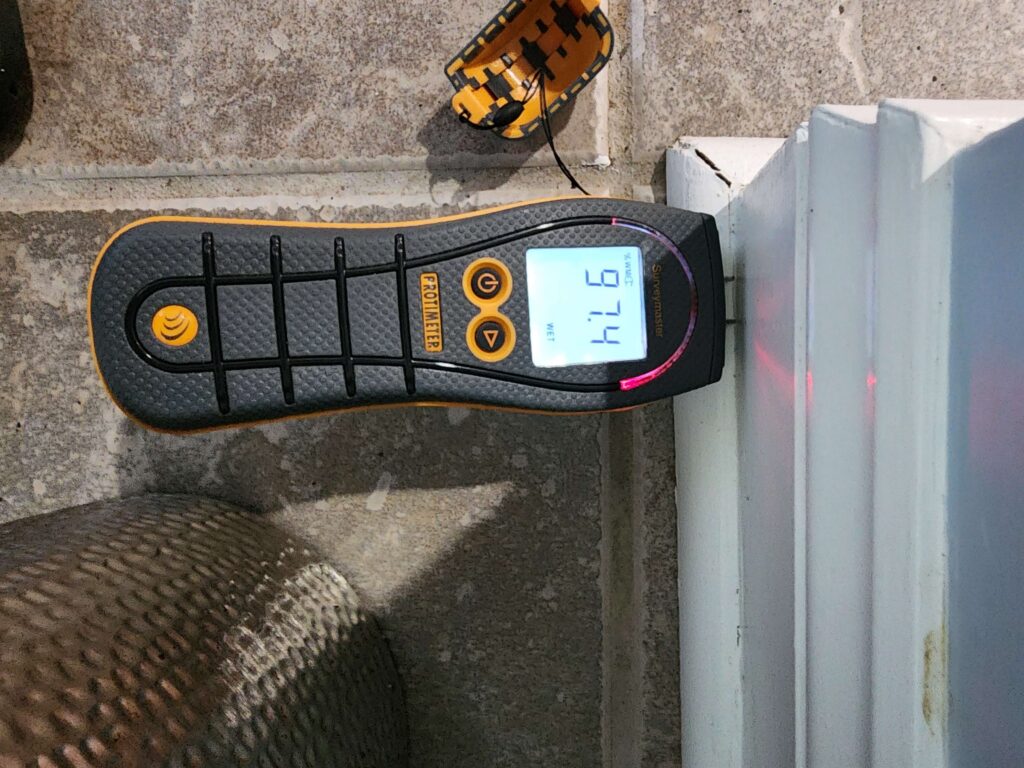
When a wall feels dry to the touch but still holds hidden moisture, bad decisions happen fast. Materials get closed up too early, mold risk increases, and insurance conversations become harder than they need to be. That is why a moisture meter accuracy review matters in real property damage situations – not as a gadget comparison, but as a question of whether drying decisions are being made on solid data.
In restoration, moisture readings influence nearly every next step. They help determine whether drywall can be saved, whether hardwood flooring needs specialty drying, whether cabinets are still wet behind finished surfaces, and whether a structure is actually ready for repairs. For homeowners, property managers, and business owners, the issue is simple: if the reading is off, the plan can be off too.
Why moisture meter accuracy matters more after water damage
In everyday maintenance, a rough moisture estimate may be enough. After a pipe break, roof leak, appliance overflow, or sewage backup, rough is not good enough. Water moves through layers, collects in cavities, and lingers in materials that may look normal from the outside.
An inaccurate meter can create two kinds of problems. The first is a false low reading, which suggests a material is dry when it is not. That can lead to premature rebuilding, trapped moisture, swelling, odor, or microbial growth. The second is a false high reading, which can make a salvageable material look unsalvageable and drive unnecessary demolition or longer drying times.
For a restoration company, meter accuracy is tied to technical precision, documentation, and customer trust. For a property owner, it affects cost, timeline, and peace of mind.
Moisture meter accuracy review: what actually affects the reading
A moisture meter is only as reliable as the conditions around it and the person using it. That is the first thing many reviews miss. Accuracy is not just about the device itself.
Material type matters immediately. Drywall, softwood, hardwood, plaster, concrete, and engineered products all respond differently. Some meters are calibrated for wood and only estimate non-wood materials through relative scales. That does not make them useless. It means the reading has to be interpreted correctly.
Depth also matters. Surface moisture and internal moisture are not always the same. A material may appear dry near the outside while still holding elevated moisture deeper inside. That is one reason restoration professionals often pair moisture meters with thermal imaging and physical inspection rather than relying on a single reading.
Temperature, density, salts, and coatings can also interfere. In a basement after a long-term seepage issue, dissolved minerals may affect readings. On painted surfaces, a meter may react differently than it would on unfinished material. In fire-damaged structures with suppression water involved, residue and contamination can complicate the picture further.
Then there is operator technique. Placement, contact pressure, meter settings, comparison points, and repeat testing all matter. A high-quality instrument in untrained hands can still produce poor decisions.
Pin vs pinless meters: accuracy depends on the job
A fair moisture meter accuracy review has to separate pin and pinless meters because they do different things well.
Pin meters use probes that penetrate the material. They are often valued for targeted readings and can help assess moisture at a specific point below the surface. In wood, they can be very useful when species settings and depth are handled correctly. The trade-off is that they leave tiny holes, measure only the contact path between pins, and can be slower when mapping large affected areas.
Pinless meters scan a broader area without damaging the surface. That makes them useful for quickly identifying patterns in walls, floors, and finished materials. They are especially practical during initial inspections and monitoring. The trade-off is that they can be influenced by material density, metal behind a surface, or uneven construction conditions.
Neither style wins every scenario. In many real losses, the best answer is to use both. A pinless meter can quickly identify suspicious zones, and a pin meter can help confirm localized conditions. That layered approach tends to produce better decisions than trying to force one tool to do every job.
What a reliable review should look for
If you are evaluating a contractor’s process or trying to understand the equipment being used in your building, focus less on marketing claims and more on field reliability.
Consistency is one of the strongest indicators. A meter should provide stable readings when used correctly in similar conditions. If repeated tests on comparable dry reference areas vary widely, that is a concern.
Calibration is another major factor. Good meters need regular verification, and professional teams should treat calibration as part of equipment readiness, not an afterthought. In emergency restoration, rushed decisions happen when tools are not maintained.
Context matters just as much as the number on the screen. A strong review asks whether the reading is being compared against unaffected materials in the same structure. Dry standards vary by building, season, and material type. In Connecticut, a wood floor’s normal moisture level can differ from what you would expect in a different climate. The goal is not a generic number pulled from nowhere. The goal is returning materials to an acceptable dry standard for that environment.
A reliable review also looks at whether readings are being documented over time. One reading tells you a condition. A series of readings tells you whether drying is working.
Why moisture meters should not work alone
This is where many property owners get misled. A moisture meter is essential, but it is not a standalone verdict.
Thermal imaging can help identify temperature differences that suggest evaporative cooling or hidden moisture pathways. Hygrometers and psychrometric readings help explain how the indoor environment is affecting evaporation and drying. Visual inspection, material condition, odor, staining, and construction type all add pieces to the picture.
A meter may show elevated moisture in a wall, but the restoration plan should also consider whether insulation is wet, whether there is vapor trapping, whether microbial growth is present, and whether the source of water has been fully corrected. Good restoration is part science, part experience, and part disciplined verification.
That is why certified technicians do not just wave a meter across a room and call it done. They build a drying strategy around multiple forms of evidence.
Common mistakes that make moisture readings less trustworthy
One common mistake is testing only the obviously damaged area. Water rarely stays put. It moves sideways, downward, and into hidden cavities. Limiting inspection to what is visibly stained can miss a much larger moisture footprint.
Another mistake is skipping baseline readings. Without checking unaffected areas, it is harder to know what normal looks like in that specific building. This is especially important in older homes, mixed-material structures, and commercial properties with varied assemblies.
A third mistake is overreacting to one high reading without asking why. Metal corner bead, fasteners, foil-backed insulation, and dense finishes can all affect results. A concerning reading should trigger more investigation, not instant assumptions.
There is also the issue of timing. Immediately after extraction, some surfaces may still read high while the drying system is beginning to work. On the other hand, a surface may read better before deeper trapped moisture has fully migrated. This is why follow-up monitoring is so important.
What this means for homeowners and property managers
If you are standing in a wet kitchen, flooded office suite, or musty lower level, you probably are not interested in meter theory for its own sake. You want to know whether the building is being evaluated correctly.
Ask whether the technician is using both inspection skill and instrumentation. Ask how dry goals are being established. Ask whether the readings are being compared with unaffected materials. Ask whether progress is being documented. These are practical questions that reveal whether the process is disciplined or improvised.
For larger commercial losses, accurate moisture mapping can also reduce downtime. It helps isolate affected zones, supports targeted drying, and can prevent needless disruption to unaffected areas. For homeowners, it can mean fewer surprises after repairs are complete.
At PuroClean of East Bridgeport, that level of technical precision matters because hidden moisture is where many property damage problems begin to escalate. Fast response is critical, but fast without accurate measurement is not enough.
The real takeaway from a moisture meter accuracy review
The best moisture meter accuracy review does not end with a brand winner or a single device score. It comes down to whether the meter is appropriate for the material, maintained correctly, used by trained technicians, and backed by a wider restoration process that verifies drying from more than one angle.
A good moisture meter helps protect materials that can be saved and identifies materials that cannot. A poor reading does the opposite. When your property, timeline, and health concerns are on the line, accuracy is not a minor technical detail. It is part of getting the recovery right.
If you ever need to judge whether a drying plan is on track, trust the team that can explain the numbers clearly, compare them to real building conditions, and keep checking until the structure is truly ready for the next step.

