


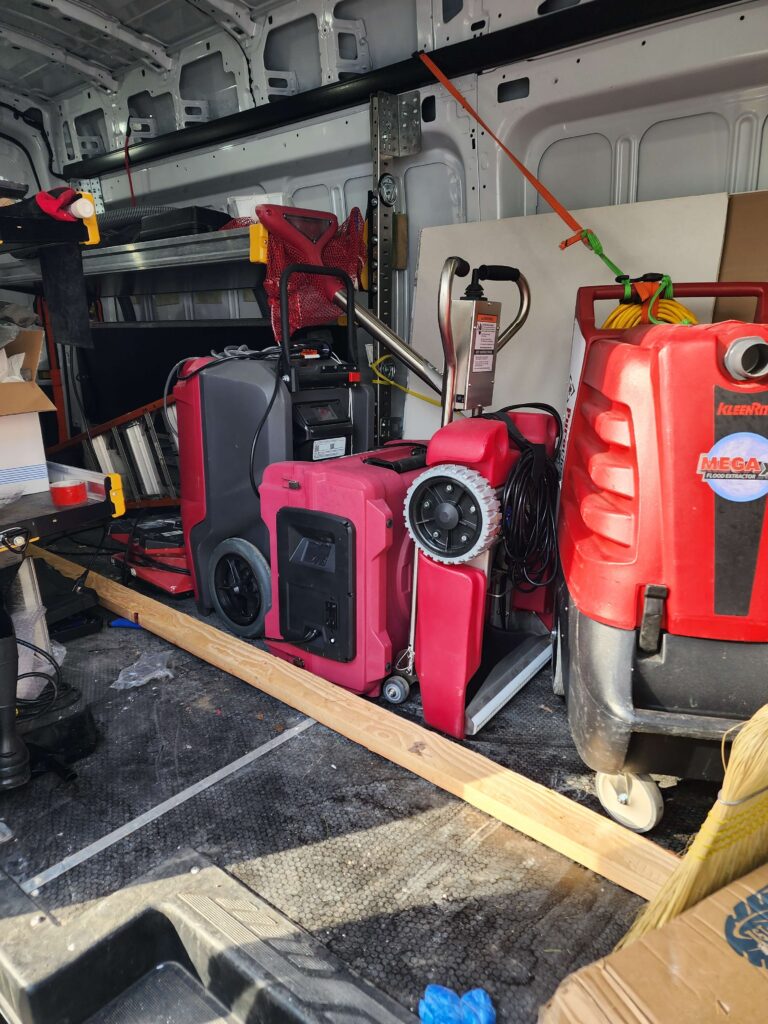
A flooded basement, burst supply line, or roof leak can leave materials wet long after the visible water is gone. This structural drying equipment review explains what professional restoration teams use to locate hidden moisture, control humidity, and dry a building without causing unnecessary demolition. For property owners in East Bridgeport, Shelton, and Milford, the goal is not simply to make a room feel dry. It is to return affected materials to an acceptable moisture level before mold, odors, warping, or structural deterioration take hold.
Why the Right Drying Equipment Matters
Water follows gravity, but it also travels sideways through flooring, wall cavities, insulation, cabinetry, and framing. A small leak behind a refrigerator can wet baseboards and drywall. A pipe break on an upper floor can affect ceilings, light fixtures, wall insulation, and hardwood below. Surface fans alone cannot confirm whether those materials are dry.
Professional structural drying is a measured process. Technicians document the affected area, identify the source, remove standing water, establish drying conditions, and monitor progress with calibrated instruments. The equipment is selected based on the category of water, the materials involved, the amount of moisture present, and the building’s layout.
There is a practical trade-off here. Using too little equipment may extend drying time and increase the chance of secondary damage. Using more equipment than the structure needs can create unnecessary noise, energy use, and cost. The right plan is based on readings and conditions, not guesswork.
Structural Drying Equipment Review: The Core Tools
Moisture meters and thermal imaging cameras
The most valuable equipment often does not make any noise at all. Moisture meters help technicians compare wet materials with dry reference materials and determine whether drywall, framing, flooring, and trim are returning to normal. Pin meters can test inside a material, while noninvasive meters can scan broad areas without making holes.
Thermal imaging cameras provide another layer of information. They show temperature differences that may indicate evaporation or moisture patterns behind a wall or under flooring. A thermal image is not proof of water by itself. Cool areas can also result from insulation gaps, air conditioning, or shade. That is why certified technicians verify thermal findings with moisture readings before deciding what needs to be dried or removed.
For a homeowner or facility manager, this technology matters because visible damage is rarely the full picture. Proper detection can preserve dry materials while preventing hidden wet areas from being overlooked.
Air movers
Air movers are the high-velocity fans commonly seen during water restoration. Their job is to move air across wet surfaces, increasing evaporation. They are particularly effective on exposed drywall, concrete, subfloors, framing, and some floor coverings after extraction is complete.
Not all air movers perform the same way. Low-profile units can direct airflow along floors and under cabinets. Axial air movers can move a large volume of air across open spaces. Centrifugal units are often chosen when focused airflow, stacking, or ducting is needed. The best choice depends on the surface and the space, not on which unit has the largest advertised airflow number.
Air movers require careful placement. Blowing air directly into a wall cavity without a drying plan may spread humid air through the building. Excessive airflow can also disturb soot after a fire loss or create problems in a contaminated sewage backup area. In those situations, containment, cleaning, and appropriate safety procedures come before routine drying.
Dehumidifiers
As air movers evaporate water from materials, that moisture enters the air. Without dehumidification, the air can become too humid to accept additional moisture, slowing the entire process. Dehumidifiers remove that water vapor and help maintain the conditions needed for continued drying.
Refrigerant dehumidifiers work well in many typical indoor water losses, especially when temperatures are moderate to warm. Low-grain refrigerant dehumidifiers remove moisture efficiently in drier conditions and are widely used for larger or more demanding losses. Desiccant dehumidifiers use a different process and can perform well in cooler environments or when very low humidity is needed.
The equipment choice depends on temperature, indoor humidity, affected materials, and the size of the drying chamber. A large commercial space may need multiple units or temporary ducting. A small bathroom leak may need only controlled airflow and one properly sized dehumidifier. The target is controlled drying, not turning the building into an excessively hot, dry environment that can damage wood finishes or create occupant discomfort.
HEPA air scrubbers and negative air machines
Air scrubbers are often used when water damage involves mold growth, contaminated water, dust-producing demolition, or odor concerns. These machines draw air through HEPA filtration and can help reduce airborne particulates within a controlled work area.
When paired with containment barriers, negative air machines can keep air moving from cleaner areas toward the affected work zone rather than allowing contaminants to migrate through a home or business. This is especially relevant for sewage backups, mold remediation, and projects involving significant drywall or insulation removal.
An air scrubber is not a substitute for removing contaminated materials or cleaning affected surfaces. It is one part of a larger remediation strategy. In a clean-water loss with no visible growth and minimal demolition, it may not be necessary. In a Category 3 sewage loss, it can be an essential protective measure.
Specialty drying systems
Some materials need more than standard air movers and dehumidifiers. Hardwood flooring, engineered wood, wall cavities, dense plaster, cabinets, and crawlspaces can retain moisture in ways that are difficult to address from the room surface.
Floor drying systems use mats and controlled pressure to pull moisture from beneath flooring or encourage airflow across the surface. They can sometimes save hardwood that would otherwise cup, buckle, or require replacement. Results depend on how long the floor was wet, the type of flooring, the adhesive or fasteners used, and whether water reached the subfloor.
Wall cavity drying systems may use small access points behind baseboards or through carefully selected openings to circulate air inside a wall. This can reduce demolition when drywall and insulation conditions allow. If insulation is saturated, contaminated, or supporting microbial growth, removal is usually the safer option.
Injectidry-style systems, cavity drying equipment, and directed heat may also be used for cabinets, structural framing, and difficult-to-reach spaces. Heat can accelerate evaporation, but it must be controlled. Unmonitored heat may create excessive humidity, stress wood materials, or affect contents and finishes.
What a Good Equipment Setup Looks Like
The equipment in a property should match a documented drying plan. Technicians should be able to explain what each unit is doing, where drain lines are routed, which areas are being monitored, and what conditions must be met before equipment is removed.
A professional setup also protects the property during operation. Cords should be managed to reduce trip hazards, equipment should be placed to avoid damage to finishes, and doors or containment barriers should be arranged to support the drying chamber. In occupied homes and active businesses, technicians should consider access, noise, pets, children, employees, and customers.
Daily or regularly scheduled monitoring is another sign of quality work. Technicians check temperature, relative humidity, humidity ratio, and material moisture content, then adjust equipment as conditions change. A drying system that was appropriate on day one may need to be reduced, repositioned, or supplemented on day three.
Questions to Ask After Water Damage
When evaluating a restoration provider, ask how they will identify hidden moisture and how they will verify drying is complete. Ask whether they use moisture documentation, thermal imaging, appropriate dehumidification, and specialty systems when flooring or wall cavities are involved. It is also reasonable to ask how they will protect unaffected areas and communicate with your insurance carrier.
Be cautious of anyone who promises a fixed drying time before inspecting the property. Many clean-water losses dry within a few days, but the timeline changes with material type, weather, source duration, contamination level, and the extent of water migration. A careful assessment is more valuable than a quick promise.
PuroClean of East Bridgeport approaches structural drying with the urgency of emergency response and the discipline of documented restoration. That means using moisture data to guide decisions, not relying on appearances or leaving equipment in place without a clear purpose.
When water enters your property, early extraction and properly managed drying can make the difference between a contained repair and a much larger recovery project. The most helpful next step is to have the affected area assessed promptly, so the drying plan protects both the building and the people who depend on it.

