


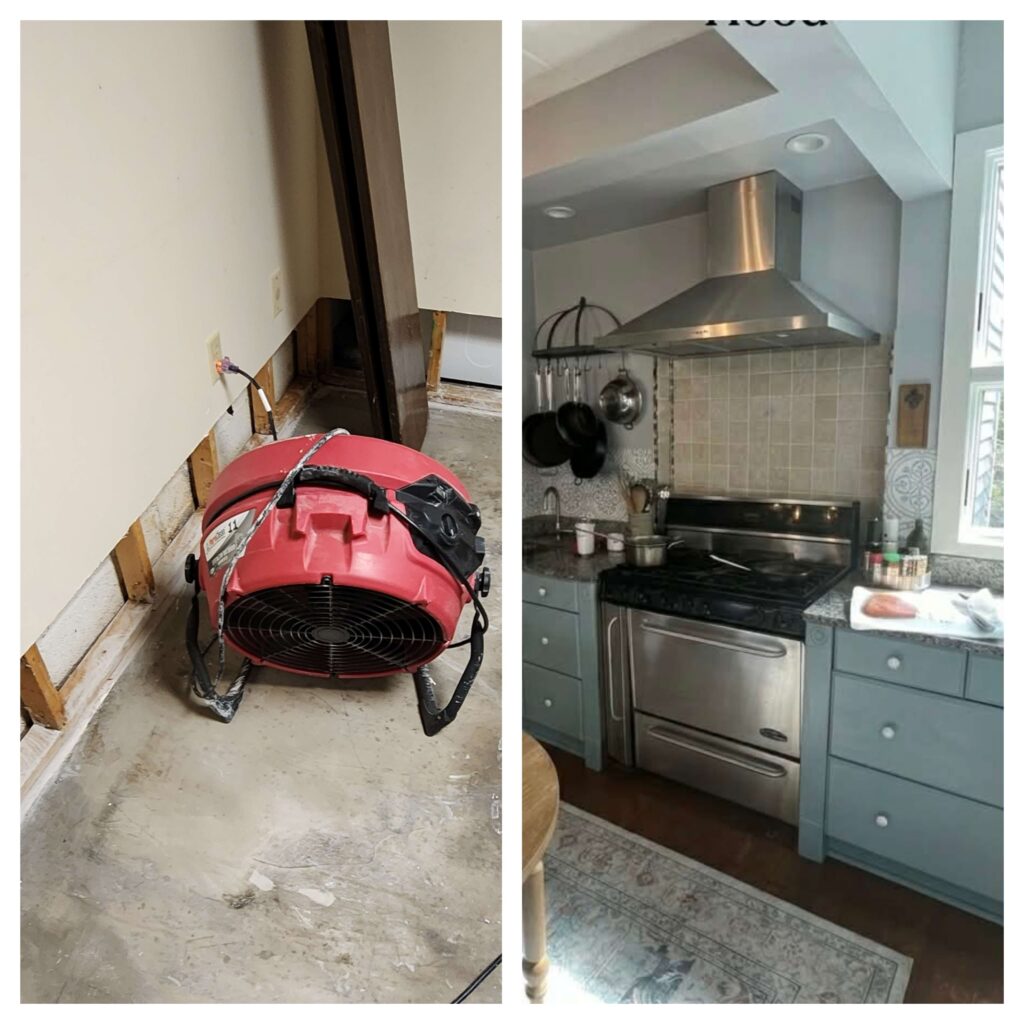
When water enters a property, the first question is usually simple: how bad is it? The next question matters just as much: what happens now? Understanding water mitigation versus restoration helps homeowners, property managers, and business owners make better decisions in the first few hours after a loss, when fast action can protect both the building and the recovery timeline.
These terms are often used together, and in real projects they usually overlap. But they are not the same thing. Mitigation is the emergency phase that reduces immediate damage. Restoration is the repair and recovery phase that brings the property back to its pre-loss condition. If you mix them up, it can be harder to set expectations, understand the scope of work, or know why certain steps must happen before others.
Water mitigation versus restoration: the key difference
Water mitigation is about stopping the situation from getting worse. Restoration is about putting the property back together.
Mitigation begins with emergency response. That may include shutting off the water source, extracting standing water, identifying moisture migration with thermal imaging, setting drying equipment, removing unsalvageable materials, and applying disinfectants when contamination is a concern. The purpose is stabilization. You are trying to limit structural damage, reduce the chance of mold growth, and create a safer environment for the next phase of work.
Restoration starts after the property has been stabilized and dried to acceptable moisture levels. That phase can include drywall replacement, flooring repairs, painting, trim work, cabinet repair or replacement, and reconstruction of affected areas. In some cases, restoration is minor. In others, especially after a major leak, appliance failure, burst pipe, or sewage backup, it can be extensive.
A useful way to think about it is this: mitigation protects what can still be saved, while restoration rebuilds what was damaged.
Why the distinction matters during an emergency
In a real loss event, most people do not care what the phase is called. They care about stopping the damage, protecting their family or occupants, and getting back to normal. That is exactly why the distinction matters.
If a response team goes straight to repairs without fully mitigating the water loss, hidden moisture can remain behind walls, under flooring, inside insulation, or beneath cabinets. The visible surface may look fine, but trapped moisture can continue damaging materials and create conditions for microbial growth. Repairs done too early often lead to rework, longer disruptions, and higher costs.
On the other hand, if a project stops at mitigation without a clear path to restoration, the property may be dry but still not functional. Missing drywall, removed baseboards, damaged flooring, and opened wall cavities are signs the emergency phase worked, not signs the job is complete. Both phases matter. They simply serve different purposes.
For commercial properties, the distinction affects business continuity. A retail space, office, medical suite, or multifamily building may need immediate containment and drying to prevent wider losses, but the restoration plan has to account for scheduling, access, tenant needs, and operational downtime. What looks like one water loss often becomes a project with several moving parts.
What happens during water mitigation
Mitigation is where urgency matters most. The longer water sits, the farther it spreads and the more expensive the job can become.
The first step is inspection. Technicians identify the source, determine whether the water is clean, gray, or contaminated, and map the affected areas with moisture meters and thermal imaging. Water rarely stays where you first see it. It can wick into drywall, subfloors, insulation, and framing, or migrate into adjacent rooms.
Next comes water extraction. Removing standing water quickly can reduce swelling, staining, delamination, and damage to structural materials. After extraction, technicians move into controlled drying. Air movers, dehumidifiers, and specialty drying systems are positioned based on the material types and how deeply the moisture has penetrated.
At the same time, certain materials may need to be detached, removed, or opened for drying. That could mean lifting carpet pad, drilling access points for wall cavity drying, removing saturated insulation, or detaching toe kicks and baseboards to save cabinetry. In a clean water loss, the goal may be to preserve as much as possible. In a contaminated loss such as a sewage backup, more aggressive removal and cleaning are often necessary because health risks change the protocol.
Mitigation also includes cleaning and disinfecting when appropriate. That step is especially important when the water source involves bacteria, waste, or other hazardous contaminants. The right response depends on the category of water, how long the loss has been present, and what materials were affected.
What happens during restoration
Once drying goals are met and the environment is stable, restoration work can begin. This is the phase most people picture when they think about fixing water damage.
Restoration may involve replacing drywall sections, reinstalling insulation, repairing trim, repainting walls, refinishing or replacing flooring, restoring cabinetry, and rebuilding damaged areas. Sometimes the work is limited to one room. Sometimes the project reaches across multiple spaces because water traveled farther than expected.
This phase also requires judgment. Not every damaged material should be replaced, and not every material can be saved. Hardwood floors, for example, may be recoverable with the right drying approach if the response is fast and cupping is limited. In other cases, prolonged saturation or contamination makes replacement the better option. The same is true for cabinets, trim, and wall assemblies.
Insurance coordination often becomes more visible during restoration because the scope of repairs needs to be documented clearly. Accurate records from the mitigation phase support that process. When emergency work is documented well, it becomes easier to explain what was affected, what was removed, and what is needed to complete the recovery.
Water mitigation versus restoration in common loss scenarios
A burst supply line under a sink is a good example of how the two phases connect. Mitigation would include stopping the leak, extracting water, checking surrounding cabinets and wall cavities, drying the affected materials, and removing anything that cannot be saved. Restoration would then address drywall repair, cabinet work, painting, and any finish replacement needed to return the area to normal use.
A sewage backup changes the picture. Mitigation is still the first step, but the health risk is much higher. Contaminated materials often need to be removed, the area must be thoroughly cleaned and disinfected, and drying must be carefully controlled. Restoration comes later, after the environment is safe and structurally ready for repair.
Commercial losses can be even more layered. If a pipe breaks above office suites or retail units, mitigation may include after-hours extraction, moisture mapping across neighboring spaces, containment, and equipment placement designed to reduce downtime. Restoration may need to happen in stages so parts of the property can reopen while repairs continue elsewhere.
Why speed changes the outcome
Water damage is not static. Drywall absorbs it. Wood swells. Adhesives weaken. Odors develop. Mold can begin growing quickly when moisture is left unresolved. The difference between a same-day response and a delayed response can mean the difference between drying materials in place and tearing them out.
That does not mean every wet material can be saved with enough equipment. It depends on the source of the water, the length of exposure, the material type, and whether contamination is present. But early mitigation consistently gives a property the best chance of a smaller, cleaner, and less disruptive restoration phase.
This is where certified technicians and proper equipment matter. Surface drying is not enough. Moisture has to be measured, tracked, and documented so the building is not closed up while hidden water remains. A property can look dry long before it actually is.
Choosing the right response team
When you are comparing providers, ask whether they handle both mitigation and restoration or only one side of the process. There is nothing wrong with a company specializing in one phase, but handoffs can slow communication if roles are unclear. A guided process tends to reduce confusion at a time when property owners are already dealing with enough stress.
You should also ask how they inspect for hidden moisture, what drying methods they use, how they document the job, and how they approach contaminated water losses. For homes and businesses in East Bridgeport, Shelton, and Milford, that practical clarity matters more than buzzwords. In an emergency, you want a team that can explain what is happening, act quickly, and adjust the plan as conditions change.
At PuroClean of East Bridgeport, the goal is not just to dry a property fast. It is to stabilize the loss correctly, protect what can be saved, and move the customer toward full recovery with a clear plan.
If you remember one thing, let it be this: mitigation buys time and limits damage, while restoration rebuilds what the water disrupted. Both are essential, and when the first step is handled with urgency and precision, the road back is usually shorter and far less stressful.

