


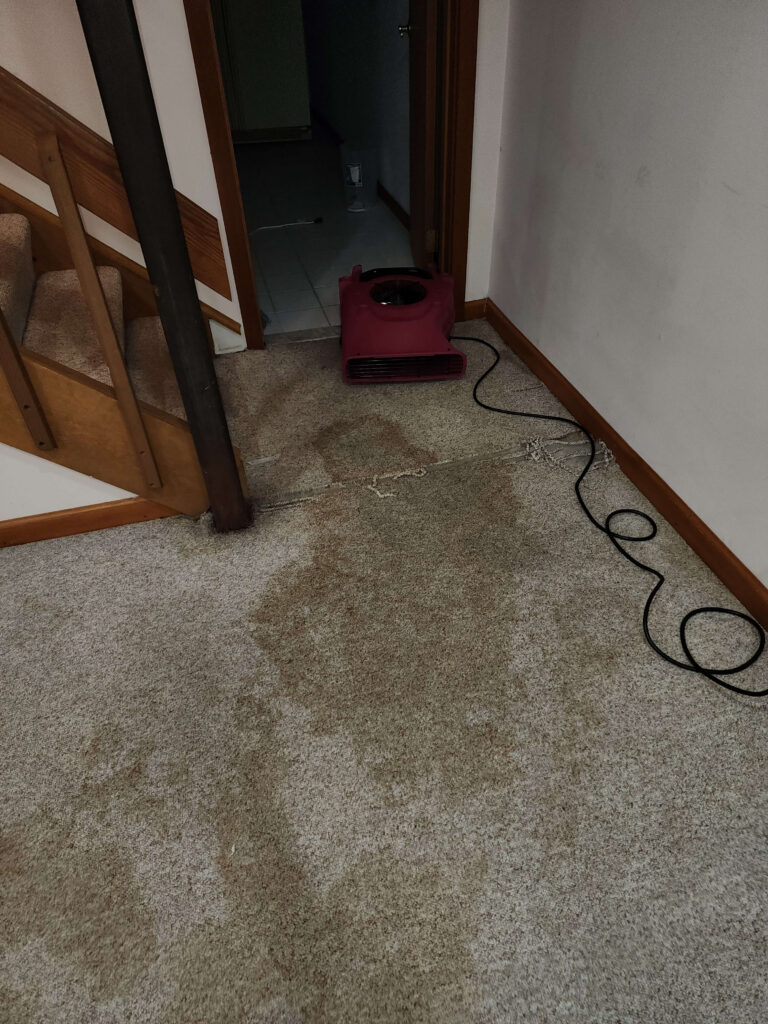
A carpet soaked by a burst pipe at 2 a.m. does not give you much time to debate. The real question is when should wet carpet be replaced, and the answer depends on what got it wet, how long it stayed wet, and what sits underneath it.
In many cases, wet carpet can be saved if the water is clean and professional drying starts quickly. In other cases, replacement is the safer and more cost-effective choice. For homeowners, property managers, and business owners in East Bridgeport, Shelton, and Milford, making the right call early can reduce mold risk, protect indoor air quality, and prevent hidden damage from spreading into the pad, subfloor, baseboards, and wall cavities.
When should wet carpet be replaced instead of dried?
The biggest factor is the category of water involved. If the carpet was affected by clean water from a supply line, sink overflow, or rain entering briefly through an opening, it may be restorable if extraction and structural drying begin fast. If the source involves sewage, toilet overflow with contamination, groundwater, or stormwater carrying debris and bacteria, replacement is often the responsible choice.
That is because carpet is not just a surface. It includes fibers, backing, seams, and usually a pad underneath that absorbs and holds moisture. Once contaminated water moves through those layers, proper cleaning becomes much more difficult, and the health risk changes the restoration decision.
Time matters just as much. A carpet that stayed wet for less than 24 hours is very different from one that sat damp for two or three days. After 24 to 48 hours, microbial growth can begin accelerating, especially in humid conditions or in rooms with poor airflow. By then, even a carpet that started with clean water may no longer be a simple drying job.
The three questions that usually decide it
A practical assessment usually comes down to three issues: water type, exposure time, and material condition.
1. What kind of water caused the damage?
Clean water events offer the best chance of saving carpet. A broken refrigerator line in a hallway or a pipe leak in a bedroom may allow for extraction, pad evaluation, controlled drying, and antimicrobial treatment if addressed quickly.
Gray water is more complicated. Water from washing machines, dishwashers, or certain drain backups may contain contaminants that raise the risk level. Sometimes restoration is still possible, but only after a careful inspection and with proper cleaning and disinfection protocols.
Black water usually means replacement. Sewage backups, rising floodwater, and heavily contaminated intrusion are not situations where most carpet should remain in place. The hazard is not just smell or staining. It is pathogens, residues, and contamination driven deep into porous materials.
2. How long has the carpet been wet?
If drying begins within the first 24 hours, the odds improve. If the carpet has been wet for more than 48 hours, replacement becomes more likely, especially if there is visible staining, odor, delamination, or dampness that has migrated into adjacent materials.
Many property owners underestimate how long moisture lingers below the surface. The face of the carpet may feel nearly dry while the pad underneath is still saturated. That trapped moisture can move into tack strips, trim, drywall, and wood framing. This is why moisture meters and thermal imaging matter. Surface appearance alone is not enough.
3. What condition is the carpet in now?
Even if the water category and timing are favorable, the carpet still has to be physically sound. If the backing is separating, seams are pulling apart, fibers are matted beyond recovery, or the pad has compressed and started to break down, replacement may make more sense than trying to save a material that will not perform well afterward.
Age also matters. If the carpet was already near the end of its useful life, had prior pet odors, wear patterns, or past water damage, restoration may cost more than the value of keeping it.
Signs your wet carpet is more likely headed for replacement
Some warning signs are obvious, while others are easy to miss in the first stressful hours after a loss. A strong musty odor is one of the biggest red flags. That smell often means moisture has been sitting long enough for microbial activity to develop in the carpet, pad, or subfloor.
Discoloration, rippling, separation at seams, or a crunchy feel underfoot can also point to deeper damage. If water reached baseboards or drywall edges, the issue may extend beyond the carpet itself. In commercial settings, especially offices, retail spaces, and multi-unit properties, replacement is also more likely when downtime, liability concerns, or occupant health are part of the equation.
If anyone in the property has asthma, allergies, or a compromised immune system, the threshold for replacement is lower. A carpet that might be technically salvageable in one building may not be the best choice in another where occupant sensitivity is a concern.
When wet carpet can often be saved
Not every wet carpet needs to go to the dumpster. If the water source is clean, the affected area is limited, and drying starts quickly, professional restoration can be successful.
That process is more involved than setting up a few fans. Effective mitigation usually includes water extraction, lifting and evaluating the carpet and pad where appropriate, targeted removal of unsalvageable materials, moisture mapping, dehumidification, air movement, and ongoing monitoring to confirm drying goals are met. In some cases, the pad may need to be replaced even if the carpet itself can be saved.
This is where technical precision matters. Moisture that remains beneath the carpet can create a false sense of progress. Certified technicians use moisture detection tools to verify what cannot be seen, helping avoid the common problem of a room that looks dry but still contains hidden moisture capable of causing odor or mold later.
Why DIY drying often misses the real problem
Homeowners and facility staff often act fast, which is good. Wet vacs, towels, and portable fans can remove some surface moisture. The problem is that carpet systems hold water in layers, and those layers dry at different rates.
Without proper extraction and measurement, moisture can stay trapped in the pad or subfloor. That leads to secondary damage, and secondary damage is where restoration gets more expensive. What began as a small leak can turn into carpet replacement, drywall removal, odor treatment, and mold remediation.
There is also the issue of contamination. If the source is not confirmed or if the water passed through building materials before reaching the carpet, it may not be as clean as it first appears. Acting quickly is smart, but guessing is risky.
For businesses and managed properties, replacement can be the practical move
Commercial carpet decisions are not just about material salvage. They also involve business continuity, tenant expectations, and health considerations. In an office, medical setting, retail space, or multi-unit property, the cost of keeping a questionable carpet can outweigh the cost of replacement.
If odor lingers, if drying would take too long, or if occupant confidence has been affected, replacement may be the cleaner path forward. The same is true when carpet tile allows a more targeted solution. In some commercial losses, selective replacement can restore operations faster than trying to preserve broadloom carpet with uncertain results.
What to do right away if your carpet is wet
Start by stopping the source if it is safe to do so. Move furniture and contents out of the affected area when possible, and avoid walking contaminated water through clean sections of the property. If the water may contain sewage or flood contaminants, keep people out of the area.
Then document the damage for insurance purposes and get a professional assessment as soon as possible. Fast response is not just about convenience. It directly affects whether the carpet can be restored or whether replacement becomes unavoidable. Companies such as PuroClean of East Bridgeport use moisture detection, thermal imaging, and structural drying methods to determine the true extent of water migration and recommend the safest next step.
A wet carpet is one of those problems that gets more expensive the longer it sits. The best decision is the one based on contamination level, elapsed time, and verified moisture conditions, not hope. If you are unsure whether your carpet is salvageable, treat it like the early stage of a larger loss and get it evaluated before hidden damage decides for you.

