


Key Takeaways for Homeowners
- Columbus, Ohio’s climate delivers increasingly intense rainfall events that overwhelm the combined sewer systems in older neighborhoods, backing up into basements and crawl spaces.
- The Residential Code of Ohio (RCO) incorporates IRC floodplain provisions requiring ASCE 24 compliance for structures in flood hazard areas, yet many pre-1990 homes fall short of current standards .
- Central Ohio’s freeze-thaw cycles and clay-rich soils create foundation vulnerabilities that allow rainwater to enter through cracks as small as 1/32 of an inch.
- Without IICRC S500 certified structural drying and S520 mold remediation, homeowners face mycotoxin exposure, wood-destroying fungi, and potential six-figure reconstruction costs.
- If you are in Columbus, Galloway, or surrounding Central Ohio neighborhoods and have experienced rainwater flooding, call PuroClean Home Savers immediately at (614) 689-0012. Our emergency response teams are standing by 24/7.
Why Columbus Homes Face Unique Flooding Challenges
Columbus sits within the humid continental climate zone, experiencing hot, humid summers and cold winters with significant precipitation year-round. What distinguishes Central Ohio from other Midwest markets is the combination of aging infrastructure in established neighborhoods like Clintonville, German Village, and Bexley, combined with expansive clay soils that swell when wet and shrink when dry, creating cyclical foundation stress.
The Residential Code of Ohio mandates that buildings in flood hazard areas comply with ASCE 24 standards for flood-resistant design. However, many Columbus homes were constructed decades before these requirements existed, leaving them vulnerable to groundwater intrusion, sewer backup during heavy rain events, and inadequate foundation drainage.
When rainwater flooding occurs, the clock starts immediately. IICRC S500 establishes that Category 1 clean water becomes Category 2 gray water within 24 to 48 hours, and Category 3 black water shortly thereafter. Professional intervention is not a luxury; it is a scientific necessity.
Mistake 1: Delaying Emergency Response Because “It Looks Like Just a Little Water”
The Hidden Volume Beneath Your Feet
Water follows the path of least resistance, traveling under flooring, behind baseboards, and into wall cavities through capillary action. A quarter-inch of visible water on a basement floor can represent hundreds of gallons absorbed into carpet padding, subflooring, and insulation.
- Step 1: Identify and stop the source of water if safely possible.
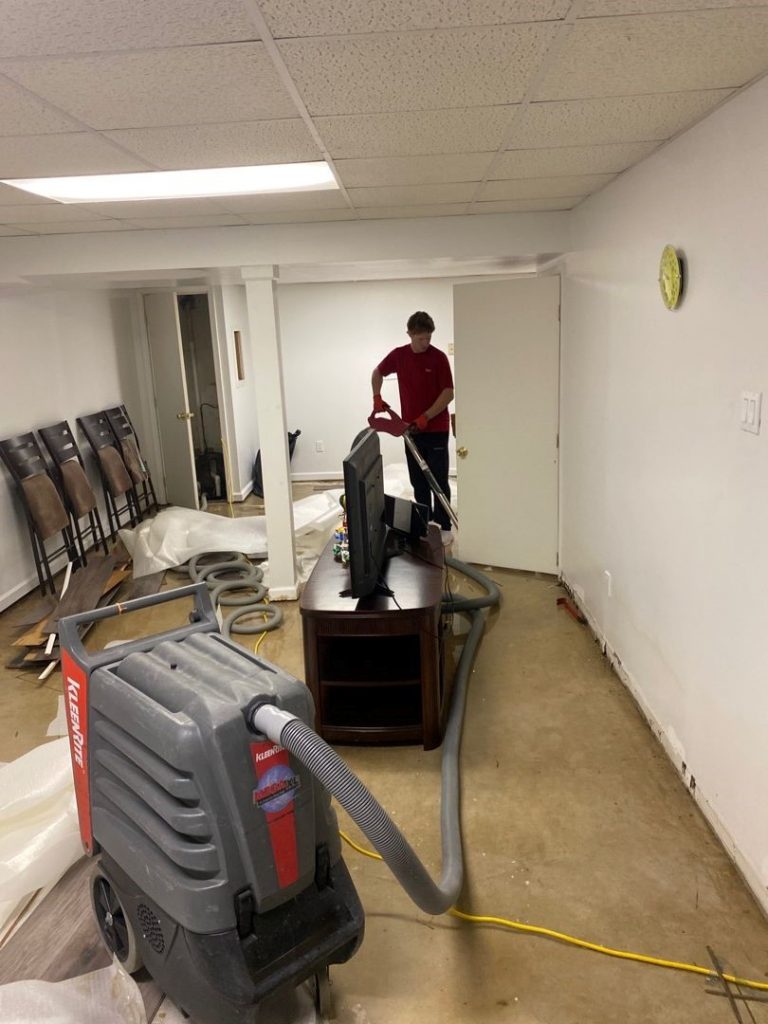
- Step 2: Remove standing water immediately using professional extraction equipment.
- Step 3: Remove wet porous materials (carpet, padding, cardboard, textiles) that cannot be salvaged.
- Step 4: Deploy air movers and LGR dehumidifiers sized to the space and class of loss.
- Step 5: Call PuroClean Home Savers at (614) 689-0012 for IICRC certified moisture mapping and structural drying.
Mistake 2: Trusting Visual Inspection Over Moisture Mapping
What You Cannot See Will Destroy Your Home
Drywall can feel dry to the touch while harboring 20 percent moisture content internally, well above the 12 percent threshold that supports mold growth. Moisture mapping using infrared thermal imaging and penetrating moisture meters reveals hidden saturation in:
- Exterior wall cavities where rainwater wicked up from the sill plate.
- Subfloor systems beneath hardwood and laminate flooring.
- Insulation batts that act as reservoirs for trapped moisture.
- HVAC ductwork in crawl spaces that distributes contamination throughout the home.
Without this data, restoration is guesswork, and guesswork leads to secondary damage.
Mistake 3: Using Bleach on Mold Contamination
Why Bleach Makes Mold Problems Worse
Sodium hypochlorite (bleach) is approximately 90 percent water. When applied to porous materials like drywall, OSB, or wood framing, the water component penetrates deeper than the bleach, actually feeding hidden mold colonies while the surface appears clean. Meanwhile, disturbed colonies release spores that colonize new areas.
IICRC S520 mandates physical removal of colonized porous materials, followed by HEPA vacuuming and application of EPA-registered antimicrobial biocides and sporicidal agents. Negative air pressure containment prevents cross-contamination during the process.
LSI Entities for Columbus mold remediation: Mycotoxins, HEPA filtration, air scrubbers, containment barriers, PPE, moisture meters, thermal imaging, psychrometric charts, and post-remediation verification (PRV).
Mistake 4: Neglecting Columbus’s Combined Sewer Overflow Risk
When Rainwater Becomes Sewage
Older Columbus neighborhoods still rely on combined sewer systems that handle both stormwater and sanitary waste. During intense rainfall events, these systems overflow, backing up into basements through floor drains and lower-level fixtures. This is not rainwater. This is Category 3 black water containing pathogenic bacteria, viruses, and chemical contaminants.
Standard homeowners insurance typically excludes sewer backup unless you carry a specific rider. If you experience backup flooding:
- Do not enter the water without proper PPE.
- Do not attempt cleanup with household equipment.
- Document everything photographically.
- Call PuroClean Home Savers immediately at (614) 689-0012 for hazmat-level remediation.
Mistake 5: Failing to Address Foundation Cracks After the Flood
The Freeze-Thaw Cycle in Central Ohio
Columbus experiences an average of 30 to 40 freeze-thaw cycles annually. Water that entered foundation cracks during a flood event will expand when frozen, widening cracks from hairlines to structural breaches. Clay soil exacerbates this by exerting lateral pressure against walls when saturated.
Professional restoration includes not just drying, but structural assessment. We evaluate foundation integrity, identify active leak points, and coordinate with structural engineers when wall stabilization is required. Simply drying the interior without addressing the exterior envelope guarantees repeat flooding.
Mistake 6: Skipping HVAC and Ductwork Inspection
Your Ductwork Is the Highway for Contamination
Columbus homes with basement or crawl space furnaces face elevated risk when flooding occurs. Water entering ductwork creates a distribution network for mold spores, bacteria, and odors. Once contaminated, every time the system cycles, it pushes these particles into living spaces.
IICRC standards require borescope inspection of duct interiors. If contamination is present, the system requires HEPA vacuuming, antimicrobial fogging, and sometimes full duct replacement. This is not a DIY task; it requires specialized equipment and training.
Mistake 7: Accepting Inadequate Drying and Rebuilding Too Soon
The Psychrometrics of Proper Restoration
Psychrometrics governs the relationship between air temperature, humidity, and moisture content in materials. Effective structural drying requires creating conditions where water molecules move from wet materials into the air, then removing that moisture from the air continuously.
Target conditions for Columbus restoration projects:
- Temperature: 70 to 80 degrees Fahrenheit.
- Relative humidity: Below 40 percent.
- Specific humidity: Monitored and adjusted daily.
Rebuilding before verifying dryness with calibrated moisture meters and thermal imaging is the single most expensive mistake homeowners make. It traps moisture, guarantees mold, and often requires complete demolition of newly installed materials within 6 to 12 months.
Frequently Asked Questions
Does home insurance cover mold caused by high humidity in Columbus, Ohio?
Standard HO3 policies in Ohio typically exclude mold damage caused by humidity, condensation, or maintenance issues. However, if mold results directly from a covered peril, such as sudden rainwater intrusion through a storm-damaged roof or window, and you mitigate promptly, remediation may be covered up to your policy’s mold sublimit. Documentation is critical. PuroClean Home Savers provides certified moisture reports and detailed loss documentation to support your claim. Call us at (614) 689-0012 immediately after discovery.
How does Columbus’s building code affect flood damage restoration?
The Residential Code of Ohio requires structures in flood hazard areas to comply with ASCE 24 standards, including elevation of electrical systems, use of flood-resistant materials below base flood elevation, and proper anchoring. If your home was built before these requirements or is in a designated flood zone, restoration may need to include code upgrades. PuroClean Home Savers coordinates with local building officials to ensure all reconstruction meets current RCO standards.
What should I do if my Columbus basement floods while I am at work?
First, ensure safety by shutting off electricity to the basement if you can do so without entering standing water. Second, call PuroClean Home Savers at (614) 689-0012 for emergency dispatch. Third, if safe, remove valuables and textiles to prevent staining and mold growth. Fourth, photograph everything for insurance. Fifth, do not enter Category 2 or 3 water without proper PPE. Our technicians can secure the scene and begin extraction within the critical first hour.
How long does professional water damage restoration take in Columbus?
For a typical residential basement (Class 2 loss), expect 3 to 5 days of active drying. Class 3 or 4 losses, where water has saturated ceilings and walls, require 7 to 10 days. Full reconstruction, including drywall, flooring, and trim, adds 2 to 4 weeks depending on material availability. PuroClean Home Savers provides daily moisture readings and never rushes to reconstruction before confirming dry standards.
PuroClean Home Savers: Columbus’s IICRC Certified Restoration Partner
Columbus homeowners deserve restoration services that match the complexity of their homes and the severity of Central Ohio’s weather patterns. PuroClean Home Savers employs IICRC S500 and S520 certified technicians who bring industrial-grade extraction equipment, LGR dehumidifiers, thermal imaging cameras, and HEPA-filtered negative air machines to every loss.
We understand the local housing stock, from the brick foursquares of Victorian Village to the mid-century ranches of Upper Arlington and the new construction of Dublin and Powell. We know how Ohio’s clay soils and freeze-thaw cycles compromise foundations. And we know how to work with insurance carriers to ensure your claim is handled correctly.
Rainwater flooding is an emergency. Every hour of delay increases the cost and the risk. If you are in Columbus, Galloway, or any Central Ohio neighborhood and need immediate assistance, call PuroClean Home Savers now at (614) 689-0012. We answer 24/7, arrive fast, and restore your home to pre-loss condition.