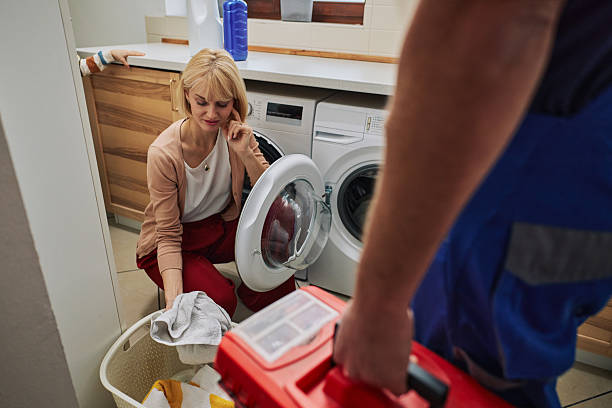
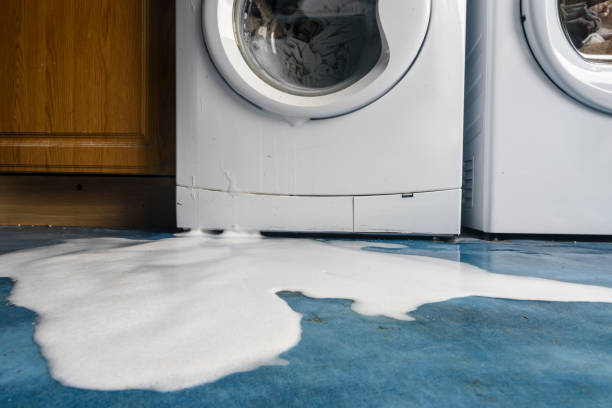
A washing machine sits quietly in a closet or utility room for years, and then one morning there is water on the floor. Washing machine leaks are one of the most frequent sources of residential water damage, and in Pembroke Park, where many homes are manufactured or mobile homes with lighter floor construction, a small leak can reach the subfloor before anyone notices. This guide covers the warning signs, how the water travels, and why a professional assessment matters before you assume the problem has dried up.
What Causes Washing Machine Leaks?
These leaks usually trace back to a handful of common failure points. The water supply hoses are the most frequent culprit: rubber hoses weaken with age and can bulge, crack, or loosen at the connection. The drain hose can slip out of the standpipe or develop a split. A clogged standpipe can make the drain overflow during a spin cycle, and worn door seals, pumps, or internal tubing can leak from inside the machine itself. Many of these problems build slowly, which is why a leak can run for weeks before the damage becomes obvious.
Sudden Burst or Slow Leak: Which Causes More Damage?
A burst supply hose is dramatic, but it usually gets noticed fast. A slow leak is quieter and can end up doing more total damage, because it can soak the flooring, the subfloor, and the bottom of nearby walls for weeks before anyone sees a stain. Both situations deserve a professional moisture assessment, but slow leaks are the ones most likely to turn into mold and structural damage by the time they are discovered.
Why Washing Machine Leaks Are a Bigger Risk in Manufactured and Mobile Homes
Pembroke Park includes manufactured and mobile home communities, and these homes can be more vulnerable to appliance leaks than a typical masonry house. Many use engineered wood subfloors that swell and weaken when saturated, and the underbelly insulation beneath the floor can hold water out of sight. Laundry areas are also often tucked into a closet or against an exterior wall, where a leak can go unnoticed for a long time. In this kind of construction, even a modest leak is worth having assessed rather than waiting to see if it dries.
Five Warning Signs of Washing Machine Leaks
Catching a leak early limits how far the water spreads. These are the five signs to watch for.
- Stains or discoloration on the floor near the machine. Even a faint ring or darkened area around the base of the washer can mean water is escaping regularly.
- Soft, spongy, or buckling flooring. Laminate, vinyl, and engineered wood can lift or soften when the material underneath is wet.
- A musty smell in the laundry area. A smell with no visible source can point to moisture trapped under flooring or inside a wall. Our post on musty smell with no leak covers other hidden causes worth ruling out.
- Swollen baseboards or bubbling paint on nearby walls. Water wicks upward from the floor into drywall and trim, often before any stain shows.
- An unexplained rise in your water bill. A supply line or valve that seeps continuously can show up as higher water usage before any damage is visible.
Does a Dried-Up Spill Mean the Damage Is Over?
No. A floor can look and feel dry on the surface while the subfloor, the padding, or the bottom of a wall is still holding moisture. Running a fan in the room can speed up surface drying, but it cannot tell you whether the structure underneath is actually dry. A professional assessment uses moisture meters and, where needed, thermal imaging to find what is still wet, and drying is monitored until readings confirm the structure has returned to a dry condition.
What Does Professional Mitigation Look Like After Washing Machine Leaks?
Professional mitigation typically includes extracting standing water, controlled removal of affected materials that cannot be dried in place, structural drying with air movers and dehumidification, cleaning, and ongoing monitoring. These steps follow the ANSI/IICRC S500 standard for water damage mitigation, restoration, and structural drying practices. Once the structure is dry, repairs and reconstruction can begin. Our post on water damage mitigation vs. restoration explains how the two phases fit together, and PuroClean’s national water damage restoration page covers the broader process.
Will Insurance Cover Washing Machine Leaks?
It depends on your specific policy, the cause of loss, your coverage limits, and any exclusions. Policies often treat a sudden failure differently from damage that developed gradually over time, which is one reason clear documentation matters. Photograph the area and any damaged materials before anything is moved, note when you first noticed the problem, and keep records of the work performed. Your insurer makes the coverage decision, and the goal of good documentation is simply to give them thorough, organized records. The Insurance Information Institute offers a helpful overview of how standard policies generally treat sudden and accidental water damage compared with gradual leaks and maintenance issues.
Is a Washer Leak Different in a Condo or Townhome?
In a condo or townhome, a leak near the washer can reach the unit below, which adds questions about responsibility and documentation across units. Our post on upstairs condo water damage walks through how that typically plays out. And because a water heater often sits in the same closet as the washer, our post on water heater leaks covers the related warning signs.
Get Certified Water Damage Mitigation & Restoration in Pembroke Park
Whether washing machine leaks have already soaked your floor or you want a certified partner on file before it happens, PuroClean of Hallandale Beach provides certified water damage mitigation and restoration for residential and commercial properties throughout Pembroke Park and the surrounding area.
- IICRC-certified technicians trained to the ANSI/IICRC S500 standard for water damage mitigation, restoration, and structural drying practices
- PuroClean of Hallandale Beach is licensed in Florida for mold remediation, EPA certified, and IICRC certified in Water Damage Restoration (WRT), Applied Structural Drying (ASD), Applied Microbial Remediation (AMRT), and Trauma & Crime Scene Cleanup (TCST)
- 35+ years of insurance claims and risk management experience, applied to thorough, carrier-ready documentation from the first extraction through final repairs
- Full-process management from initial mitigation through reconstruction and final repairs, so you have one continuous point of contact for the entire job
- 24/7 emergency availability for both residential and commercial properties throughout Pembroke Park, Hallandale Beach, Hollywood, Miramar, Pembroke Pines, and West Park
Don’t wait for washing machine leaks to spread into the subfloor. Call PuroClean of Hallandale Beach at (754) 263-0203 for certified water damage mitigation today.
Frequently Asked Questions
Can I use fans to dry the floor after washing machine leaks?
Fans can move air across the surface, but they cannot confirm that the subfloor, baseboards, or the bottom of the walls are actually dry. A professional moisture assessment is the only reliable way to know the drying is complete.
How long can a washing machine leak sit before mold starts?
Mold can begin to grow within 24 to 48 hours in damp materials, which is why a prompt assessment matters even when the leak looks small.
Does homeowners or renters insurance cover a leaking washing machine?
Coverage depends on your policy, the cause of loss, your limits, and any exclusions. Reviewing your policy and speaking with your insurer is the best way to understand your situation.
Who should I call first, a plumber or a water damage company?
If the leak is ongoing, a plumber or appliance technician can address the source. A water damage company assesses and dries the structure. Many situations need both, and the structure should still be assessed after the source is fixed.
Available 24/7/365 | IICRC Certified | (754) 263-0203 | Contact Us Online | Google Business Profile