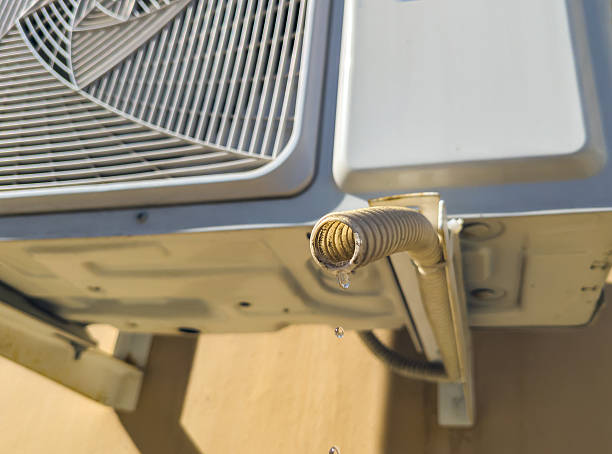
If you live in Miramar, your air conditioner probably runs nearly every day of the year, and every one of those days it’s pulling gallons of moisture out of your home’s air through a small, easy-to-forget PVC pipe. AC drain line leaks happen when that pipe clogs or fails, and the water has nowhere to go but into your ceiling, walls, or flooring. Because AC drain line leaks develop gradually and quietly, they’re often mistaken for something else entirely until mold or water stains make the problem impossible to ignore. Here are the five warning signs worth knowing before that happens.
Direct Answer: What causes AC drain line leaks in Miramar homes?
AC drain line leaks develop because South Florida’s long cooling season keeps the condensate drain line constantly wet, dark, and warm, which are ideal conditions for algae, mold, and bacterial slime to grow inside the pipe. Over time, that buildup narrows or fully blocks the line, and the resulting AC drain line leaks send water backing up into the drain pan and overflowing into the surrounding ceiling, wall, or closet space. A single AC unit in a Florida summer can remove 10 to 20 gallons of water from the air per day, so even a partial clog can turn into a meaningful AC drain line leak in a surprisingly short time.
1. A Musty Smell Is Often the First Sign of AC Drain Line Leaks
One of the earliest and most common signs of AC drain line leaks is a musty or mildew odor that appears specifically when the system starts up, then fades as the air moves through the home. This smell often comes from mold or algae growing inside the drain line or drain pan itself, well before any visible water damage appears — which is exactly why it’s worth taking seriously rather than dismissing as “just an old AC smell.”
2. Water Stains on the Ceiling Near the Air Handler
If your air handler is in an attic, closet, or upper-floor utility space, a clogged drain line can cause the drain pan to overflow, and that water often travels along ceiling joists before showing up as a stain somewhere unexpected. By the time a stain is visible, moisture has usually been present in that space for a while, which means mold may already be developing inside the ceiling material itself.
3. Standing Water or Dripping Near the Indoor Unit
Puddles near the air handler, a consistently full drain pan, or dripping from the unit itself are more advanced signs that the drain line is already blocked and water is actively backing up. In many South Florida homes, this shows up as water pooling near a utility closet, garage air handler, or even dripping through a ceiling vent.
4. A Float Switch Repeatedly Shutting Off the System
Most modern AC units include a safety float switch designed to shut the system down if the drain pan fills too high, preventing more serious water damage. If your AC keeps stopping unexpectedly, especially during peak humidity, a clogged or leaking drain line is one of the most common explanations, and it’s worth having checked before simply resetting the system repeatedly.
5. Rising Indoor Humidity Even With the AC Running
If your home feels muggier than usual despite the AC running consistently, a struggling or partially blocked drain system can be part of the reason — moisture isn’t being removed as efficiently as it should be, which creates the exact conditions mold needs to spread beyond the AC unit itself. If you’re noticing this alongside a musty smell but can’t find an obvious water source, our post on musty smell, no leak? hidden mold causes in Miramar covers other common causes worth ruling out.

Get Certified Mold & Water Damage Restoration in Miramar
Whether your home has already experienced mold or water damage from an AC drain line issue, or you want a certified partner on file before it happens, PuroClean of Hallandale Beach provides certified mold remediation and water damage restoration for residential and commercial properties throughout Miramar and the surrounding area.
- IICRC-certified technicians trained to the ANSI/IICRC S500 water damage and S520 mold remediation standards
- Led by founder Shawntel Jackson — a Florida Licensed Mold Remediator, EPA Certified, and IICRC Certified in Water Damage Restoration (WRT), Applied Structural Drying (ASD), Applied Microbial Remediation (AMRT), and Trauma & Crime Scene Cleanup (TCST)
- 35+ years of insurance claims experience, backed by Shawntel Jackson’s background in insurance claims and risk management
- 24/7 emergency availability for both residential and commercial properties throughout Miramar
Don’t wait for hidden AC-related moisture to turn into a larger mold problem. Call PuroClean of Hallandale Beach at (754) 263-0203 for a certified mold and water damage assessment today.

Frequently Asked Questions
Can I clear a clogged AC drain line myself?
Basic maintenance, such as periodic drain line flushing, is sometimes handled by homeowners, but once water damage or visible mold is present, a professional assessment is the safer next step to determine the full extent of what’s affected before anyone applies a cleaning product or attempts a repair.
How often should an AC drain line be checked in South Florida?
Given the near-year-round cooling season, many HVAC professionals recommend checking the drain line at least once or twice a year as part of routine maintenance, more often in homes with a history of clogs.
Does homeowners insurance cover AC drain line water damage?
Coverage varies significantly by policy and by whether the damage is considered sudden and accidental versus a result of ongoing lack of maintenance. Checking directly with your insurance provider, and having a professional assessment on record, helps clarify your specific situation.
Is mold from an AC drain line dangerous?
It follows the same general pattern as mold anywhere else in the home — small, contained growth is typically a mild irritant, while larger or long-standing growth can affect indoor air quality more significantly, particularly for people with asthma or mold allergies.
Sources: Florida Airflow — Why Does My AC Drain Line Keep Clogging? · Beacon Saves — Condensate Drains: Why They Clog and Simple Prevention Tips · Perdido Heating and Air — Is Your AC Drain Line Clogged? · Air-Ref Co. — Understanding HVAC Drain Line Clogs
Available 24/7/365 | IICRC Certified | (754) 263-0203 | Contact Us Online | Google Business Profile