


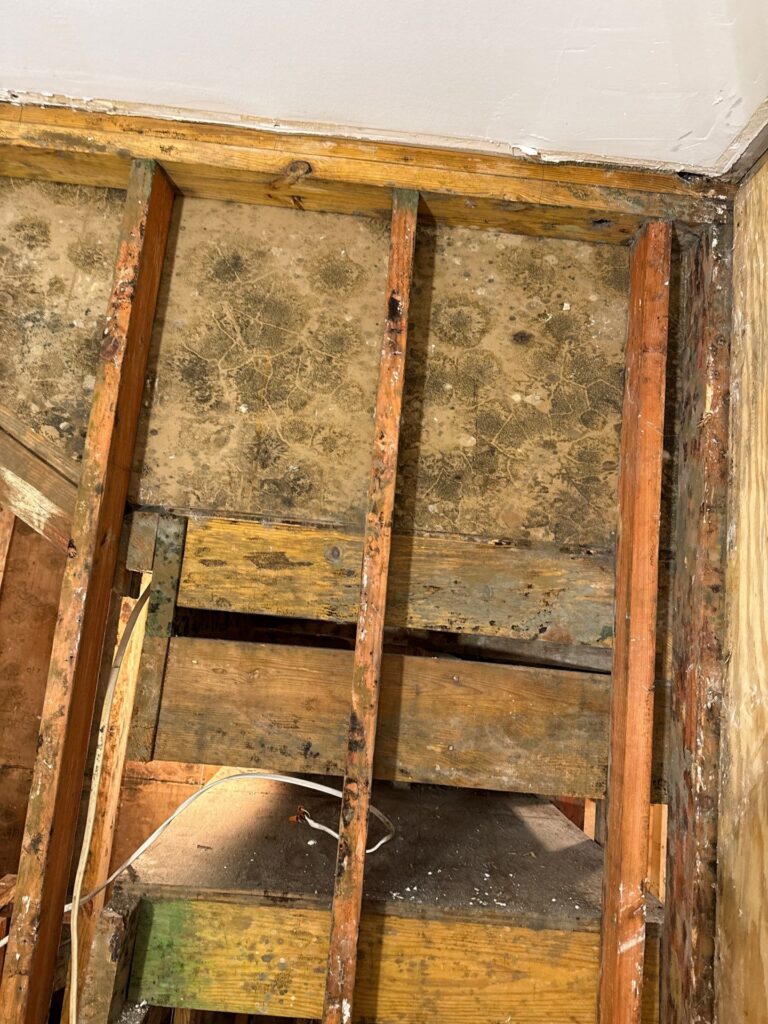
Mold plays an important role outdoors by breaking down organic material. Indoors, however, mold growth can damage building materials, impact indoor air quality, and create allergy-like symptoms in sensitive individuals – especially in humid coastal regions like Hilton Head, Bluffton, and Beaufort.
Many Lowcountry homeowners ask: “What causes mold in a house?”
The answer almost always comes back to one factor: moisture control.
Mold spores are always present in the environment, but they only grow when the right conditions exist. The EPA Mold Guide explains that mold needs only moisture, a food source, and time to grow.
Those conditions include:
- Moisture or elevated humidity
- A food source (drywall, wood, carpet, insulation, dust)
- Limited airflow
- Time – often 24-48 hours
When moisture is controlled, mold growth can often be prevented.
The Mold Formula
Indoor mold growth occurs when three conditions come together:
- Moisture + Time + Organic/Cellulose Material
- Leaks, humidity, flooding, condensation-> 24-48 hours -> drywall, wood insulation, carpet, dust
Control the moisture, and you control the mold.
Common Causes of Mold in Lowcountry Homes (and How to Prevent Them)
Hilton Head, Bluffton, and Beaufort homeowners face unique moisture challenges due to coastal humidity, frequent storms, and crawlspace construction. Below are the leading causes of mold growth – and how to prevent them.
1. Flooding and Water Intrusion
Cause: Flooding saturates structural materials such as drywall, flooring, insulation, and framing. Moisture can remain trapped long after surfaces “feel dry,” allowing mold to form within 24-48 hours.
Typical sources in the Lowcountry:
- Heavy rainfall & storm surge
- Foundation leaks
- Groundwater pressure
- Storm damage
Prevention & Response:
- Remove standing water quickly
- Begin drying immediately with air movers + dehumidifiers
- Use moisture meters to verify drying
- Improve exterior drainage
- Consider sump pumps in flood-prone areas
DIY cleanup is rarely effective after flooding. Professional drying prevents long-term damage and secondary mold growth.
2. High Indoor Humidity
In coastal South Carolina, humidity is one of the biggest contributors to mold.
The NOAA humidity guidance explains how warm, moisture-laden air increases mold risk in coastal climates.
Cause: When indoor humidity rises above 55-60%, mold can grow even without a leak.
High-risk areas:
- Bathrooms
- Laundry rooms
- Kitchens
- Basements & crawlspaces
Prevention:
- Keep indoor humidity between 30-50%
- Use dehumidifiers in moisture-prone areas
- Run exhaust fans while cooking or showering
- Use air conditioning during humid weather
- Monitor humidity with hygrometer
3. Poor Ventilation
Cause: Poor airflow traps moisture, allowing condensation to settle on cold surfaces.
Example include:
- Bathrooms without exhaust fans
- Kitchens venting not attics
- Laundry dryers not vented outside
Prevention:
- Vent bathrooms, kitchens, and laundry rooms outdoors
4. HVAC Imbalance & Negative Pressure
This issue is common in tightly sealed homes across Hilton Head and Bluffton.
Cause: Incorrectly balanced HVAC systems can pull humid air into walls, attics, and crawlspaces.
Prevention:
- Schedule routine HVAC inspections
- Keep filters clean
- Ensure proper supply/return balance
- Confirm attic and crawlspace ventilation
5. Leaking Pipes and Plumbing Issues
Cause: Slow leaks behind walls or under cabinets may go unnoticed for weeks, allowing mold to spread out of sight.
Warning signs:
- Warped cabinets
- bubbling paint
- Musty odors
- Higher water bills
Prevention:
- Inspect sinks, toilets, and appliances regularly
- Install leak detection sensors
- Repair leaks immediately
- Consider annual plumbing checks
6. Roof Leaks
Roof leaks are a major mod source in Hilton Head and Beaufort, especially after storms.
Cause: Damaged shingles, cracked flashing, or clogged gutters allow water into attics and ceiling cavities.
Prevention:
- Inspect your roof twice yearly and after storms
- Replace damaged shingles promptly
- Keep gutters clear
- Check attic spaces for moisture or staining
- Address ceiling discoloration immediately
7. Condensation on Cold Surfaces
Cause: Warm, humid indoor air condenses on cold surfaces like windows, pipes, or exterior walls.
Common in:
- Bathrooms
- Basements
- Around HVAC components
Prevention:
- Maintain balanced humidity
- Insulate cold surfaces
- Use exhaust fans
- Improve airflow
8. Basements and Crawlspaces
Crawlspaces are extremely common in the Lowcountry – and extremely vulnerable to mold.
Cause: High humidity, limited ventilation, and groundwater intrusion create ideal mold conditions.
Prevention:
- Use dehumidifiers
- Seal foundation cracks
- Install vapor barriers
- Improve ventilation
- Inspect regularly for dampness or odors
Professional Mold Removal in Hilton Head, Bluffton & Beaufort
Mold often grows in hidden areas, making professional remediation essential.
The CDC’s mold and health information highlights the importance of addressing mold promptly to reduce health risk.
PuroClean of Hilton Head technicians are IICRC – certified and trained to identify moisture problems, eliminate mold safety, and prevent recurrence using advanced equipment and industry-standard procedures.
Professional help is recommended when:
- Mold covers more than 10 sq. ft.
- Mold keeps returning
- Mold is in HVAC systems, attics, or wall cavities
- The moisture source is unclear
- There are respiratory or allergy concerns
Call PuroClean of Hilton Head for Mold Remediation & Moisture Control
If mold is affecting your home – or if you want to prevent future problems – PuroClean of Hilton Head can help!
We provide:
- Moisture inspections
- Mold remediation & containment
- structural drying & monitoring
- Prevention guidance
A professional inspection today can prevent a costly problem tomorrow.
Summary
- Mold grows indoors when excess moisture combines with organic materials and limited airflow.
- Water damage, leaks, humidity, and poor ventilation are the most common causes.
- Hilton Head, Bluffton, and Beaufort homes face added risks due to coastal humidity and crawlspace construction.
- Controlling moisture is the key to preventing mold.
- Professional help ensure safe remediation and long-term prevention.
FAQs: Mold in Hilton Head, Bluffton & Beaufort
What causes mold in a house most often?
Excess moisture from water damage, plumbing leaks, roof leaks, high humidity, poor ventilation, and condensation are the most common causes – especially in coastal South Carolina.
Can Mold grown without visible water leaks?
Yes. High humidity and condensation alone can support mold growth, particularly in airtight or poorly ventilated homes.
How fast can mold grow after water damage?
Often within 24-48 hours if materials remain wet.
Where does mold grow most in homes?
Bathrooms, kitchens, basements, crawlspaces, attics, HVAC systems, and anywhere moisture accumulates.
Can mold come back after removal?
Yes – if the moisture source isn’t corrected. Effective remediation includes identifying and addressing contributing conditions.