 PuroClean of Lafayette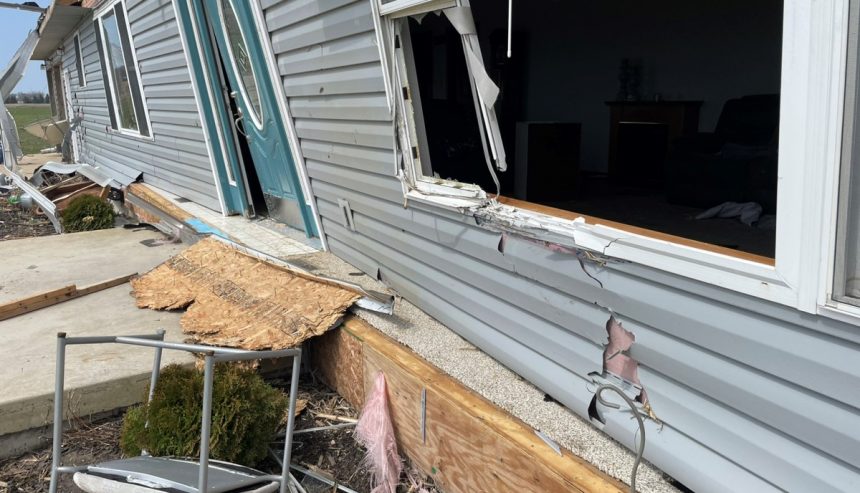
Table of Contents
When a tornado destroys a home, immediate action determines whether recovery is possible. Home restoration after severe storm damage requires rapid assessment, water mitigation, structural stabilization, and coordinated reconstruction. In Benton County, a March 2023 tornado with 115 mph winds left one family’s home severely damaged. Through structured storm damage restoration, expert mitigation, and a full rebuild, PuroClean in Lafayette, IN helped restore the property in five months.
Even when damage appears catastrophic, professional planning makes rebuilding achievable.
What Is Home Restoration After a Tornado?
Home restoration is the structured process of returning a property to a safe, functional condition after significant damage.
After a tornado, this may include:
- Emergency water mitigation, since wind-driven rain often penetrates walls and roofing systems.
- Structural stabilization, ensuring load-bearing walls and framing are safe.
- Debris removal and demolition, when parts of the home cannot be salvaged.
- Full reconstruction, including roofing, framing, drywall, flooring, and mechanical systems.
Tornado-related restoration often combines water damage repair, structural rebuilding, and contents restoration.
The Tornado Impact in Benton County
On March 31, 2023, a tornado touched down northwest of Oxford in Benton County. The storm carved a 15-mile path with peak winds of 115 mph.
The affected home sustained:
- Severe roof damage that exposed interior spaces to heavy rainfall and debris.
- Structural compromise in load-bearing walls and drywall throughout the property.
- Basement exposure and shattered exterior access points.
- Widespread water infiltration due to storm-driven rain entering the structure.
The destruction required both emergency mitigation and long-term reconstruction planning.
Phase 1: Immediate Storm Damage Assessment
Rapid evaluation is critical in any home restoration project.
Upon arrival, technicians:
- Used infrared thermal imaging to detect hidden moisture behind walls and beneath flooring, identifying materials that could still be salvaged.
- Assessed structural safety before entering compromised areas to protect workers and prevent further collapse.
- Determined which belongings could be saved through professional pack-out and cleaning services.
Early assessment prevents secondary damage such as mold growth and structural weakening.
Phase 2: Water Mitigation and Contents Restoration
Tornado damage almost always includes water intrusion.
The mitigation team performed:
- Standing water extraction, removing pooled water from floors and lower-level spaces to prevent material saturation.
- Deployment of commercial dehumidifiers and air movers to dry structural components according to IICRC standards.
- Daily moisture monitoring to track drying progress and confirm safe moisture levels.
Salvageable belongings were transported to an off-site facility for:
- Professional cleaning and deodorization.
- Smoke and odor neutralization.
- Secure storage during reconstruction.
Despite mitigation efforts, the home was later declared a total loss due to structural compromise.
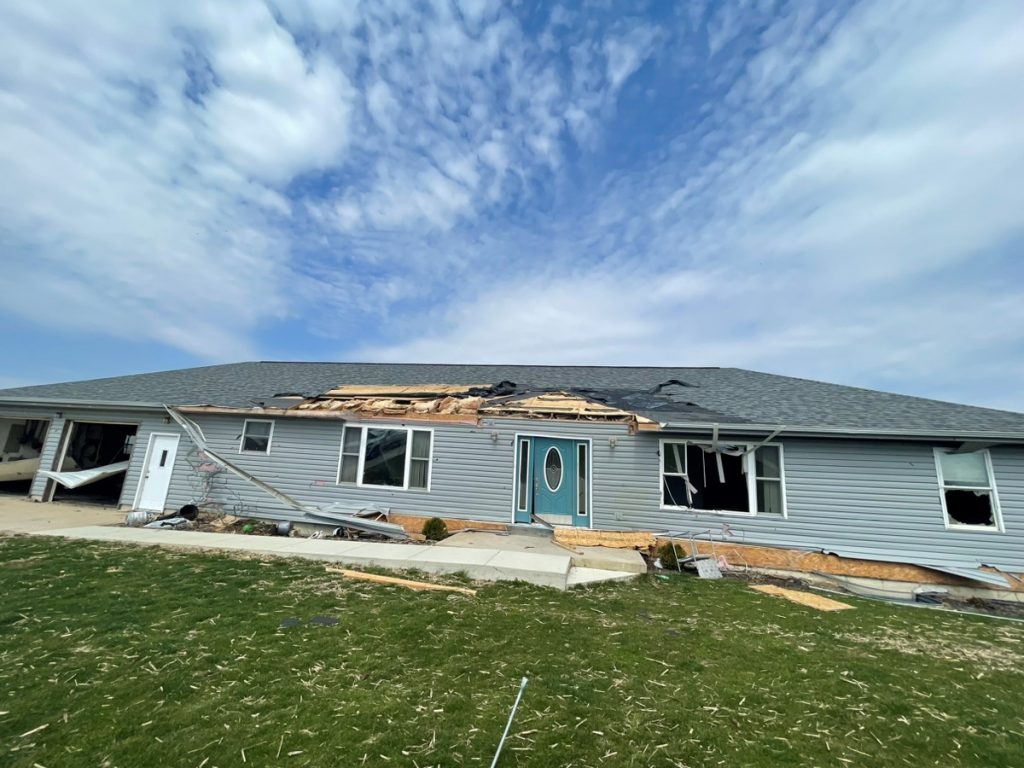


The tornado caused heavy damage in several areas of the home, including the roof, garage, and load-bearing walls.
Phase 3: Demolition and Structural Rebuild
After stabilization, the rebuild phase began.
The process included:
- Controlled demolition that preserved the original foundation and flooring where structurally viable.
- Structural framing reconstruction to restore the home’s load-bearing integrity.
- Roof installation, mechanical system restoration, and exterior finishing work.
Multiple contractors collaborated to complete the project efficiently, ensuring structural compliance with local building codes.
Timeline of the 5-Month Home Restoration
| Phase | Focus | Duration | Outcome |
|---|---|---|---|
| Emergency mitigation | Water extraction and stabilization | Weeks 1–4 | Prevented secondary damage |
| Structural evaluation | Safety assessment and engineering review | Weeks 4–8 | Determined rebuild scope |
| Demolition & rebuild | Framing, roofing, mechanical systems | Months 3–5 | Complete reconstruction |
| Final restoration | Finishes, inspections, occupancy approval | Month 5 | Family returned home |
Five months after the tornado—and just days before Christmas—the family moved back into their restored home.
Why Tornado Home Restoration Is Complex
Tornado-related property damage restoration is uniquely challenging because multiple damage types occur simultaneously.
Professionals must address:
- Wind damage that compromises structural integrity and roofing systems.
- Water damage caused by exposed interiors during storms.
- Potential electrical hazards from damaged wiring.
- Debris contamination and possible biohazard concerns.
Restoration requires coordination between mitigation specialists, contractors, engineers, and insurance adjusters.
Key Lessons From This Project
This Benton County case demonstrates that even when a home appears beyond repair, structured home restoration can deliver successful results.
Critical factors included:
- Immediate emergency response to reduce water-related secondary damage.
- Daily moisture monitoring to meet drying standards.
- Careful evaluation to preserve the foundation where possible.
- Seamless collaboration between mitigation teams and construction professionals.
Clear communication and project management kept the timeline on track.
We would also like to give a shout-out to several essential contractors who worked alongside us during this home restoration project:
- Lafayette Mechanical Services
- Henry Poor Lumber Company
- Flooring Express
- Nate’s Drywall
- Wilson Crane
- J&J Seamless Gutters
- Wilson Bros Construction
- Nattinger Overhead Doors
- CRDN Contents Restoration


Frequently Asked Questions
How long does tornado home restoration take?
The timeline depends on damage severity. Minor storm repairs may take weeks, while full structural rebuilds can take several months. In this Benton County case, complete restoration required five months due to structural loss.
Can a home be rebuilt if it’s declared a total loss?
Yes. A “total loss” often means the structure must be demolished and rebuilt, not that recovery is impossible. If the foundation remains viable, reconstruction can proceed safely.
What should homeowners do immediately after tornado damage?
Ensure personal safety first, then contact a professional restoration company for emergency mitigation. Quick action prevents mold growth and further structural damage.
Does insurance cover tornado-related home restoration?
Most homeowners insurance policies cover tornado damage, including structural repair and mitigation services. Coverage details vary by policy.
Why is professional water mitigation necessary after a tornado?
Hidden moisture inside walls and flooring can cause mold and structural weakening. Professional drying equipment ensures materials reach safe moisture levels.
Need Home Restoration in Lafayette, IN?
Severe storms can feel overwhelming, but recovery is possible with the right team. Home restoration requires rapid mitigation, structural expertise, and coordinated rebuilding.
PuroClean in Lafayette, IN provides 24/7 emergency response for storm damage, water mitigation, and full property damage restoration services. If your home has been affected by severe weather, call (765) 701-4242 today for immediate assistance.
Key Takeaways
- PuroClean in Lafayette, IN provides expert storm damage restoration services.
- Home restoration after a tornado requires immediate mitigation and long-term rebuilding.
- Infrared moisture detection helps identify salvageable materials.
- Water extraction and drying prevent mold and structural deterioration.
- Structural demolition and rebuild may follow severe damage.
- Coordinated contractors ensure code-compliant reconstruction.
- Even total loss properties can be successfully rebuilt.
Explore more helpful articles:


 PuroClean of Lafayette