


24/7 Call or Text 651-329-5436
Water Damage Restoration St. Paul MN for Older Homes, Duplexes and Businesses
Water damage restoration St. Paul MN property owners need is available 24/7 from PuroClean of Lakeville. From Victorian homes and early-1900s bungalows to duplexes and neighborhood storefronts, our IICRC-certified technicians extract water, dry the structure carefully and handle the repairs. We’re based in the Lakeville area, serve the entire south metro and also serve St. Paul.
Water damage in St. Paul? Call (952) 377-8477 any hour. We arrive on-site quickly. Free estimates. Licensed and insured.
Water Damage Restoration St. Paul MN for One of Minnesota’s Oldest Housing Stocks
St. Paul is Minnesota’s capital and the Ramsey County seat, and its homes are old by Midwest standards. The city’s comprehensive plan housing chapter reports a median age of 69 years for the city’s homes, and 57 percent of its single-family, duplex and triplex buildings were built before 1930. Walk almost any neighborhood and you’ll see foursquares, Victorians, bungalows and two- and three-unit buildings that have stood for a century or more.
Century-old homes handle water differently than new ones. These are the issues we see most when called for water damage restoration St. Paul MN older homes need:
- Galvanized and lead or early copper supply lines with corroded joints and old shutoff valves that don’t close.
- Cast-iron drain stacks that rust through inside walls, often between floors.
- Clay sewer laterals where tree roots from boulevard elms, maples and lindens work into the joints and cause basement backups.
- Stone and brick foundations with mortar that lets water through during a wet spring.
- Plaster and lath walls and ceilings that hold water longer than drywall but can often be saved.
- Old-growth hardwood floors and trim worth protecting with careful, controlled drying.
The Mississippi, Flood History and Water Damage Restoration St. Paul MN
The Mississippi River curves through the heart of the city, and it has a long flood record. The Minnesota DNR records that the Mississippi crested at St. Paul at 26.01 feet on April 16, 1965, still the record. In April 2023, the Metropolitan Airports Commission installed its metal plank floodwall at St. Paul Downtown Airport (Holman Field) as the river headed for major flood stage, the seventh deployment since the system was developed in 2008.
Most St. Paul homes sit far above the river on the bluffs and hills. Their water problems come from closer to home: aging pipes, root-clogged sewer lines, ice dams on steep roofs and basements that take on water when snowmelt and spring rain saturate the soil. Riverside neighborhoods and the West Side lowlands deal with higher groundwater in high-river years, too.
Ice Dams on Steep Old Roofs
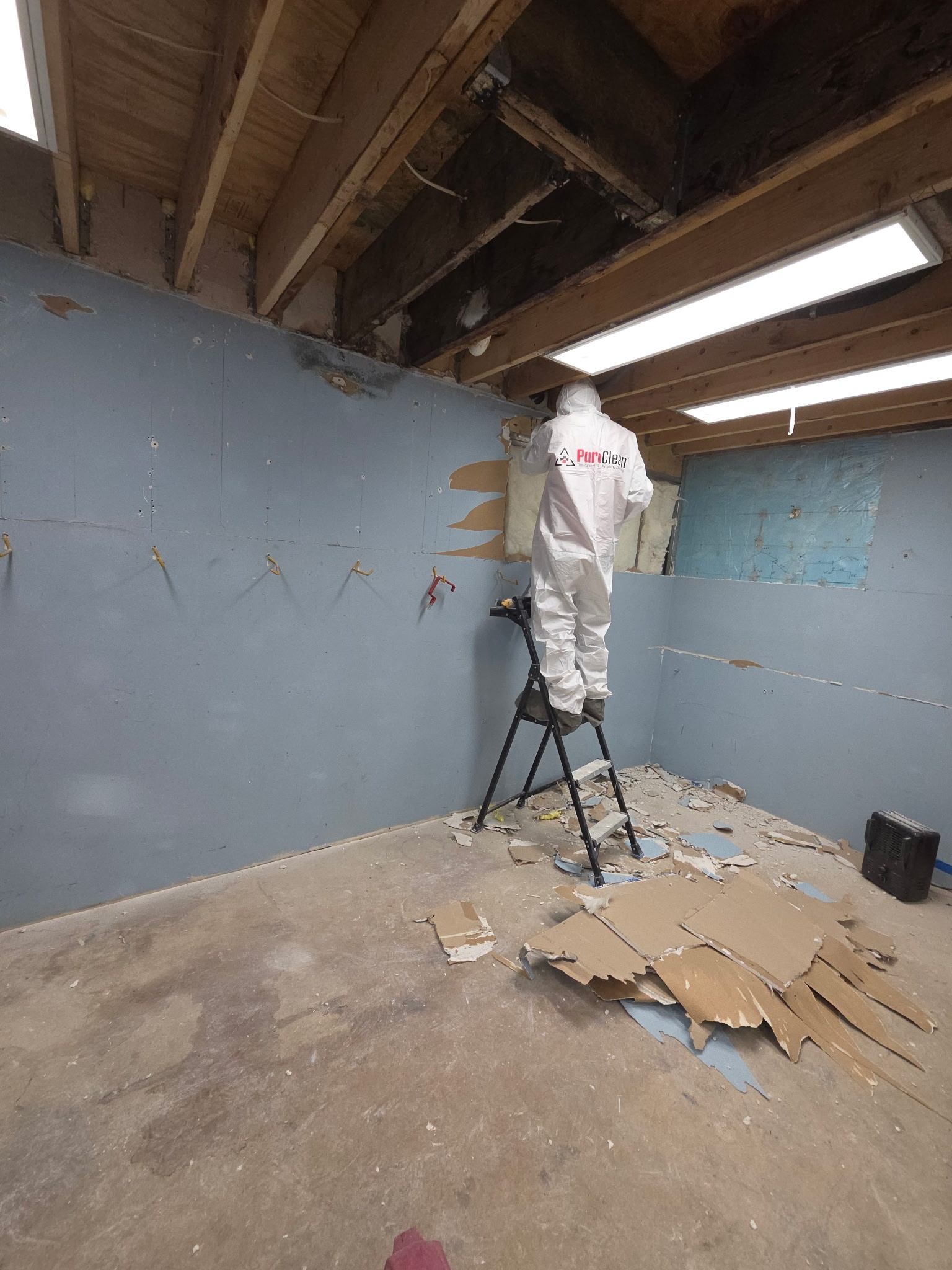
St. Paul’s older homes often have steep roofs, dormers, little attic insulation and leaky attic bypasses around chimneys and light fixtures. In a snowy winter, heat escapes into the attic, melts roof snow and the meltwater refreezes at the cold eaves. Water then backs up under the shingles and runs into the walls and ceilings below. Brown stains on upstairs ceilings in February, peeling paint near windows and icicles dripping inside a window frame are classic signs.
We dry the wet plaster, insulation and framing and document the damage. For the long-term fix, ask a roofer or insulation contractor about air sealing, insulation and ventilation. Ice dam leaks are a seasonal staple of water damage restoration St. Paul MN crews handle, and catching them early saves plaster.
Our Water Damage Restoration St. Paul MN Process
Respond
We answer 24/7 and arrive on-site quickly. We’ll help you find the shutoff on the phone, which in many older homes is near the meter on the front basement wall.
Assess
Our technicians confirm the source is stopped, check electrical safety, which matters in homes with older wiring, and classify the water.
Protect and extract
We move or lift furniture off wet floors, protect antiques and keepsakes and extract standing water from floors and carpet.
Map moisture
Water moves through balloon-framed walls, between floors and along pipes. Thermal cameras and moisture meters help us trace it and mark the wet zone.
Test before we cut
Homes built before 1978 may have lead paint, and older homes may have materials containing asbestos. We identify suspect materials and arrange testing before disturbing them.
Dry and monitor
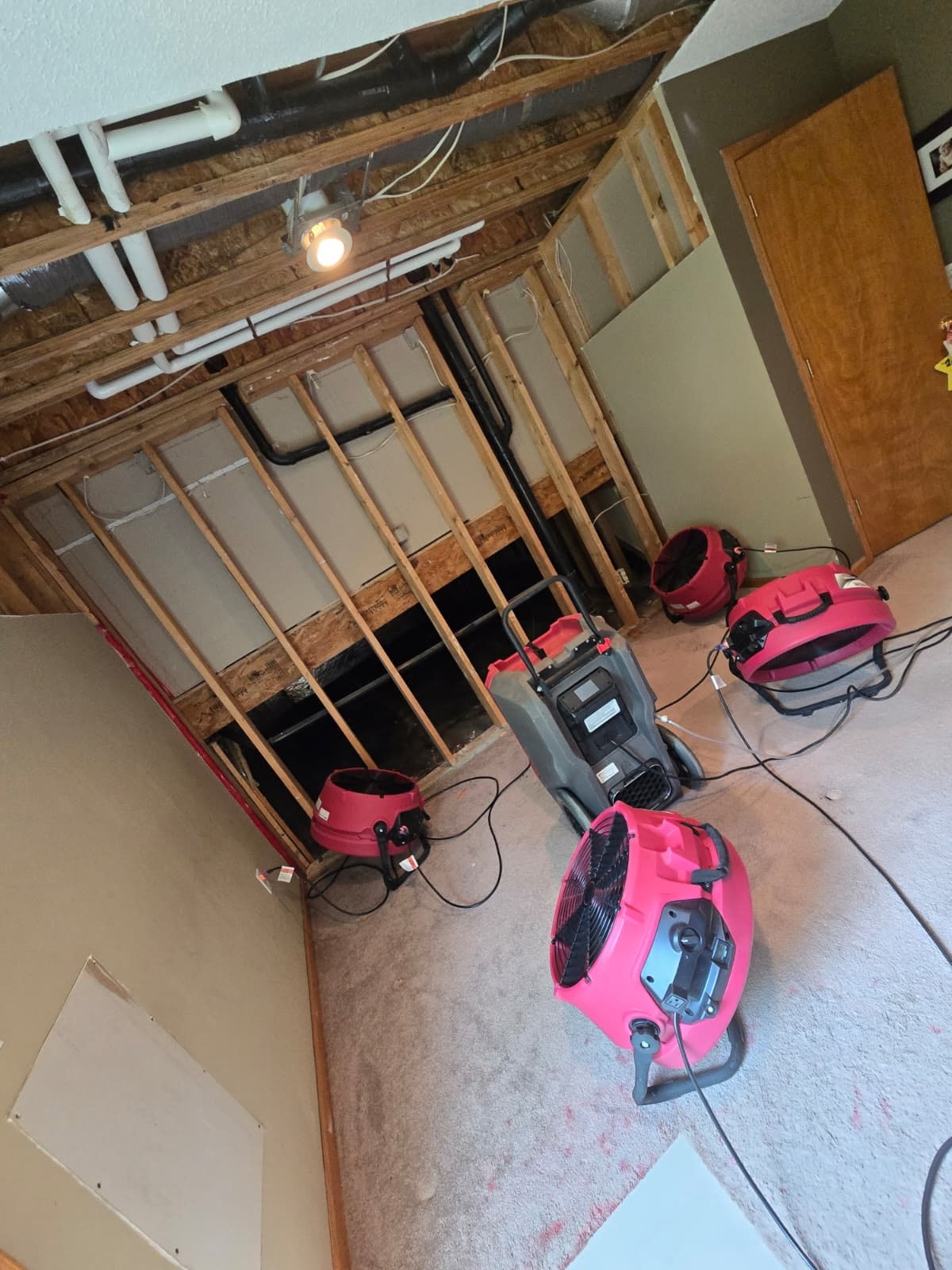
We use dehumidifiers and air movers with the latest technology, favoring steady, controlled drying for plaster and hardwood. Follow-up moisture-monitoring visits continue until materials reach their dry goal.
Rebuild
Our repairs and reconstruction team handles plaster and drywall repair, flooring, trim and paint, with care for the original character of your home.
Boilers, Radiators and Hot-Water Heat
Many older St. Paul homes still heat with a boiler and cast-iron radiators. These systems are durable, but they carry water through every room of the house. A radiator valve that weeps, a cracked radiator section after a cold snap or a failed relief valve on the boiler can put water on hardwood floors and into the ceiling below. Steam systems can spit water from air vents, and hot-water systems can leak at old pipe joints in the basement.
Signs to watch for include water stains on the floor around a radiator, a ceiling stain directly below one and a boiler that keeps needing water added. If a radiator is leaking, a heating contractor can isolate or repair it. Our part of water damage restoration St. Paul MN radiator leaks call for is drying the floor, subfloor and ceiling cavity below before the hardwood cups or the plaster fails. We monitor the boards closely so they dry evenly.
Enclosed Porches and Additions
Front and sleeping porches that were enclosed decades ago are some of the coldest spaces in an older home. Pipes that were later run through them, or sinks added to them, freeze first in a cold snap. Their low-slope roofs are also prone to leaks and ice buildup. If you’ve converted a porch to living space, make sure any plumbing there is protected from freezing and that the roof is in good condition before winter.
Water Damage Restoration St. Paul MN for Duplexes, Triplexes and Rentals
St. Paul has a large share of two- and three-unit buildings and rentals. When water travels from an upstairs unit to the one below, owners, tenants and insurers all need clear information. We document each unit separately with photos and readings, coordinate access with tenants and share records with the owner or property manager. That makes water damage restoration St. Paul MN landlords need simpler to manage, and it helps renters work with their own renter’s insurance for personal belongings.
Root-Blocked Sewer Lines and Water Damage Restoration St. Paul MN Backups
Tree-lined boulevards are part of St. Paul’s charm, and roots love the moisture inside old clay sewer pipes. Over time they can block the line from the house to the main. Early signs include gurgling drains, slow toilets and water rising in a basement floor drain when the washer drains. If wastewater backs up, stop using water and stay out of it.
Sewage is contaminated, so our crew uses protective gear, removes porous materials it touched, cleans and disinfects and then dries. A plumber can camera and clear or repair the line. Ask your agent about sewer backup coverage, which is often an endorsement. Our biohazard cleanup page has more detail.
Water Damage Restoration St. Paul MN, Season by Season
- Winter: Frozen pipes along uninsulated exterior walls and in enclosed porches, plus ice dams on steep roofs.
- Spring: Snowmelt and rain soak the soil around stone foundations, and the river runs high.
- Summer: Severe storms bring downpours, hail and falling limbs from mature trees. Our board-up service secures broken windows and openings until repairs.
- Fall: Leaves clog gutters and downspouts, sending water to the foundation right before freeze-up.
Saving Plaster and Hardwood During Water Damage Restoration St. Paul MN
We’d rather dry than demolish, especially in a historic home. Plaster on wood lath can usually be dried in place after clean water, though it may need patching. Old-growth hardwood often recovers with controlled drying; rushing it with heat causes cupping and cracks. Original trim can be removed, labeled and reinstalled if the wall behind it needs drying. Carpet pad and anything porous touched by sewage are the main things that usually go. We explain every decision before anything is removed.
Finished Basements in Century-Old Homes
Many St. Paul families have turned old basements into family rooms, offices or rental units. That adds living space, but basements in homes built a century ago were designed for coal bins and storage, not carpet and drywall. Stone and brick walls breathe moisture, floors may have no vapor barrier and floor drains connect to old sewer laterals. When water gets in, finished materials hide it, and damp stone walls behind framed drywall can grow mold out of sight.
If your basement is finished, run a dehumidifier in summer, keep storage off the floor and watch for a musty smell or peeling paint at the base of walls. After any leak, a moisture check behind the finished walls is worth it. During water damage restoration St. Paul MN basement jobs, we often open a small section of wall to confirm the framing and stone are drying, rather than guessing from the surface. If the space is a rental unit, we’ll coordinate with your tenant and document everything for you and your insurer, which is a common part of water damage restoration St. Paul MN landlords ask us to handle.
Mold, Fire and Smoke Cleanup
Damp stone basements and hidden leaks in old walls can lead to mold. The EPA recommends drying water-damaged materials within 24 to 48 hours to help prevent growth. Our mold removal service fixes the moisture source and then contains and removes affected materials.
Older wiring, chimneys and space heaters raise fire risk in historic homes. Our fire damage restoration team handles board-up, soot cleanup and smoke and odor removal, and we remove non-fire odors such as tobacco smoke. More about drying is on our water damage restoration page.
Commercial Water Damage Restoration St. Paul MN
From neighborhood storefronts to downtown offices and warehouses, St. Paul’s commercial buildings range from new to more than a century old. We serve offices, retail, rental and industrial properties, and PuroClean is trusted by businesses nationwide. Our crew can set up containment, protect inventory and records and plan drying around your hours where possible.
Before Water Damage Restoration St. Paul MN Crews Arrive
- Keep everyone away from water near outlets, old wiring and appliances.
- Shut off the main valve, often near the meter on the front basement wall. If it won’t turn, call St. Paul Regional Water Services or a plumber.
- Stop using drains if wastewater is coming up through a floor drain.
- If a plaster ceiling sags, stay out from under it.
- Photograph the source and damage.
- Call (952) 377-8477 for water damage restoration St. Paul MN service.
Insurance and Water Damage Restoration St. Paul MN Documentation
We work with insurance companies and can bill your insurer directly, but your insurer decides coverage. Sudden pipe bursts, gradual leaks, ice dams, groundwater seepage, sewer backups and river flooding can all be treated differently, and some require endorsements or separate flood coverage. We help document the claim with photos, moisture readings and a written scope, and we explain the work to your adjuster.
Protecting an Older St. Paul Home
- Have a plumber check for galvanized lines and old valves, and replace them before they fail.
- Camera-inspect your sewer lateral if you have big trees or slow drains.
- Air-seal and insulate the attic to reduce ice dams.
- Insulate pipes on exterior walls and in porches.
- Have a mason check stone or brick foundation mortar.
- Keep gutters clean and extend downspouts.
West Side Flats and Riverside Neighborhoods
Neighborhoods on the low ground near the river, including parts of the West Side, see the Mississippi’s influence most directly. In a high-river spring, groundwater rises and basements on low lots can see seepage through floors and foundation walls even when the river stays behind its banks and floodwalls. Watching the National Weather Service river forecast in spring, keeping a working sump pump if your home has one and moving valuables off the basement floor before a predicted crest are simple precautions. If water does come in, we document whether it appears to be groundwater or a plumbing leak, because that difference matters for repairs and for insurance during water damage restoration St. Paul MN claims.
Living in Your Home While It Dries
Most people stay home during drying. The equipment runs constantly and makes the work area warm and dry. Please keep it running, keep the area closed off from open windows and keep children and pets away from cords. In an older home, we may also recommend keeping interior doors open or closed in a particular pattern to control airflow. We’ll explain at each follow-up visit during water damage restoration St. Paul MN work.
Questions to Ask a Restoration Company
Ask whether the technicians are IICRC-certified, whether the company is licensed and insured and whether you’ll get a free written estimate. In an older home, also ask how they handle lead paint and asbestos testing, whether they try to save plaster and hardwood and whether they’ll show you moisture readings. Ask if they handle repairs and reconstruction and can bill your insurer. We welcome these questions when you call for water damage restoration St. Paul MN help.
Why Property Owners Call Us for Water Damage Restoration St. Paul MN
Our technicians are IICRC-certified, and we’re licensed and insured. We’re available 24/7, arrive on-site quickly and give free estimates. Board-up, repairs and reconstruction are handled by our team, and we can bill your insurer directly while helping document your claim. We serve the entire south metro from the Lakeville area, St. Paul included, and we explain what we find before starting work.
Nearby Areas We Serve
We also serve Mendota Heights, Inver Grove Heights, Woodbury and Eagan. See all cities on our service areas page.
Water Damage Restoration St. Paul MN FAQ
Can water damage restoration St. Paul MN crews save plaster walls?
Often, yes. Plaster can usually be dried in place after clean water, with patching where needed.
Does your water damage restoration St. Paul MN team work on duplexes?
Yes. We document each unit separately and coordinate with owners, tenants and property managers.
Is St. Paul part of your service area?
Yes. We’re based in the Lakeville area and serve St. Paul along with the entire south metro. We answer 24/7 and arrive on-site quickly.
Do you bill insurance directly?
Yes. We work with insurance companies and can bill your insurer directly. Your insurer decides coverage, and we help document the claim.
My radiator is leaking onto a hardwood floor. What should I do?
Wipe up what you can, put a pan or towels under the leak and call a heating contractor to isolate or repair the radiator. Then call us to check the floor and the ceiling below with moisture meters, because water can travel under the boards before it shows.
Are water damage restoration St. Paul MN estimates free?
Yes. Estimates are free.
Call for Water Damage Restoration St. Paul MN
Call (952) 377-8477 any time or contact us online.
Other Damage After the Water in St. Paul?
Water that sits for a day or two can lead to mold, and many house fires leave water damage behind from firefighting. If you’re dealing with either in St. Paul, see our mold remediation in St. Paul and fire and smoke damage restoration in St. Paul pages, or call (952) 377-8477 any time, 24/7, for a free estimate.

